Why Dilution Still Surprises Mining Engineering Teams
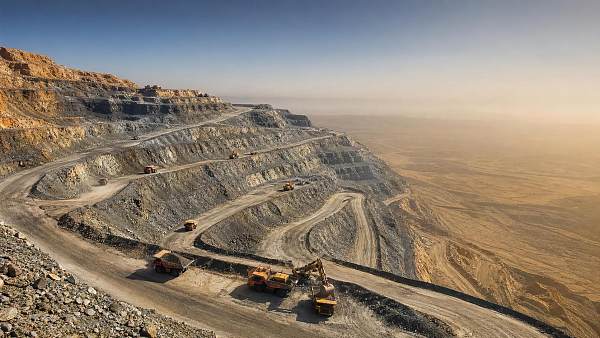
Dilution remains one of the most underestimated cost drivers in open pit mining, often catching mining engineering teams off guard despite advanced planning tools and tighter controls. For procurement analysts, project evaluators, and equipment stakeholders, understanding how geology, blast design, and construction machinery interact is essential to protecting ore value, improving recovery, and reducing downstream operational risk.
In practical terms, dilution is rarely caused by a single bad decision. It usually emerges from a chain of small mismatches: ore boundary interpretation that is 1–3 meters too generous, blast movement assumptions that fail under variable rock mass, excavator bucket selection that does not match bench geometry, or haulage discipline that breaks grade control separation. By the time the plant reports lower head grade, the cost has already spread across drilling, loading, hauling, crushing, processing, and reconciliation.
For B2B readers operating across mining, resource development, and heavy machinery supply, dilution is more than a technical mining issue. It affects equipment utilization, tender assumptions, contract risk allocation, ore reserve confidence, and the lifecycle economics of high-value assets. That is why mining engineering teams still get surprised by dilution even when they have software, surveys, and standard operating procedures in place.
Why dilution remains difficult to predict in open pit operations
Open pit dilution appears straightforward on paper: waste enters ore, average grade drops, and unit cost per payable tonne rises. Yet field conditions make the issue more dynamic. A block model may assume tidy contacts, but actual ore-waste boundaries can vary over 0.5–5.0 meters within a single bench, especially in folded, weathered, or structurally disturbed deposits. That variability is where many engineering assumptions begin to drift.
Geology is the first reason mining teams are caught off guard. Even when infill drilling density improves to 20–25 meter centers, uncertainty can remain high between blast holes. Short-range variability, vein pinching, alteration halos, and transitional material zones can create conditions where the planned dig line is technically accurate but operationally difficult to follow. In many cases, the dilution surprise starts before production begins.
The second reason is timing. Grade control information, blast design, loading instructions, and daily production targets often run on different cycles. Geological updates may occur every 24–72 hours, while production crews make decisions every 15–30 minutes. This mismatch means that engineering intent can be lost during execution, especially on high-tonnage benches where one shift may move 20,000–80,000 tonnes.
The third reason involves machinery behavior. An excavator operating with a 10–15 cubic meter bucket in fragmented ore will not cut the same way in mixed waste contacts or wet toe conditions. Loader operators may over-dig to maintain cycle time, and dozers may unintentionally push ore into waste windrows during floor clean-up. These are not unusual errors; they are common production realities that accumulate into measurable dilution.
Typical sources of dilution surprise
- Ore boundary uncertainty caused by insufficient short-range geological definition.
- Blast movement that exceeds modeled displacement by 10%–30% in weak or variable rock.
- Bench flitch height or bucket size mismatches that reduce selective mining capability.
- Operator focus on productivity metrics without equal emphasis on ore-loss and dilution control.
- Weak reconciliation loops between mine planning, geology, and processing teams.
For procurement and evaluation teams, this matters because dilution can distort the real value of equipment and services. A machine that appears cost-effective on hourly productivity may contribute to lower ore selectivity if attachment geometry, visibility, or control systems are not aligned with orebody conditions. In strategic reviews, the most important question is often not “How many tonnes per hour?” but “How many ore tonnes at planned grade?”
How geology, blasting, and equipment decisions interact
Dilution is best understood as an interaction problem rather than an isolated technical defect. Geological confidence sets the starting point, blast design determines how material moves, and loading equipment decides how precisely the broken rock can be separated. If one of these three controls underperforms, the other two have limited capacity to recover the lost accuracy. In many mines, teams manage each discipline well on its own but still miss the combined effect.
Take blast design as an example. In competent ground, burden and spacing may perform close to plan, with limited horizontal throw and acceptable fragmentation. But in heavily weathered ore or variable density domains, the same pattern can cause unexpected movement, backbreak, and ore-waste smearing. A blast that improves shovel productivity by 8% can still reduce mill feed value if the ore contacts are no longer visually distinguishable after firing.
Equipment selection then amplifies or limits the damage. A large rope shovel or hydraulic excavator may be ideal for bulk movement on 10–15 meter benches, yet less suitable where ore selectivity requires 2.5–5.0 meter flitches. Conversely, smaller loading units may preserve grade but raise unit mining cost if they create queue delays or underutilize haulage. This trade-off is exactly where procurement teams need benchmarked, application-specific evaluation rather than generic fleet comparisons.
This is also where strategic intelligence platforms become relevant. Decision-makers comparing dig systems, blast support solutions, and material handling workflows often need broader context than a single vendor datasheet can provide. In selective evaluations, some teams refer to independent market and equipment context such as 无 to compare operational assumptions against broader industrial benchmarks, although the mine-specific geology still remains the final determinant.
Interaction matrix for dilution control
The table below shows how three upstream decisions often shape dilution outcomes at the bench. It is especially useful for commercial evaluators who need to connect engineering variables with procurement implications.
The key conclusion is that dilution cannot be reduced by software alone. Mines need a linked design philosophy in which geology, blasting, and loading capability are reviewed together at least every quarter, and more often during pit pushbacks, transitional ore zones, or periods of rainfall-related wall degradation.
What dilution means for procurement, project evaluation, and commercial risk
For non-operational stakeholders, dilution often appears late because the first warning sign is financial rather than geological. Project models may assume a stable head grade and recovery profile over 12–36 months, but actual diluted feed changes throughput efficiency, reagent intensity, energy use, wear rates, and sometimes product specification compliance. A 3%–5% grade shortfall can materially alter annual cash flow, especially in high-strip or long-haul operations.
Procurement teams should therefore assess dilution exposure when evaluating mining fleets, contract packages, and support systems. This includes asking whether the proposed equipment can mine selectively at the required flitch height, whether machine guidance supports ore boundary visibility, whether bucket payload calibration is accurate enough for grade segregation, and whether haul road design allows separate ore streams without excessive rehandle.
Commercial evaluators should also be careful with benchmarking. Two operations can use similar excavators, truck classes, and crusher circuits yet show very different outcomes if one deposit has sharper contacts and lower blast movement. This is why institutional intelligence in mining and heavy machinery should be read as context, not as a direct substitute for orebody-specific engineering. The commercial lesson is simple: benchmark broadly, validate locally.
Four procurement questions that reduce dilution risk
- Can the selected loading fleet work effectively across both bulk waste movement and selective ore extraction without forcing compromises on either task?
- Does the dig system match the planned bench and flitch geometry, including toe clean-up and contact control in wet or fragmented conditions?
- Are blast support and survey services integrated tightly enough to update mine crews within the same production shift?
- Will the material handling layout preserve grade separation from pit face to ROM pad with minimal cross-contamination points?
The commercial impact can be reviewed through a simple decision framework. Instead of scoring only capex and hourly output, B2B buyers should add ore selectivity, compatibility with grade control practices, and the likelihood of reducing rehandle. In selective mining environments, a machine with a 5% higher unit rate may still create a lower total cost if it prevents 1%–2% additional dilution across millions of tonnes.
This wider view is particularly important for distributors and agents representing heavy equipment into mining jurisdictions. The best commercial position is not to promise universal performance, but to map machine strengths to rock conditions, bench design, and mine plan discipline. That creates stronger technical credibility and lowers after-sales disputes tied to unrealistic productivity assumptions.
Commercial warning signs during evaluation
- Productivity claims built around ideal fragmentation but not mixed ore-waste contacts.
- Selective mining requirements mentioned in the scope, but no matching attachment or bucket analysis provided.
- Haulage studies that optimize cycle time yet ignore ore stream separation and stockpile discipline.
- Project schedules that compress pre-strip, grade control, and blast reconciliation into unrealistic windows of less than 24 hours.
Practical controls that reduce dilution before it reaches the plant
The most effective dilution control measures are usually simple, repeated, and cross-functional. Mines that improve performance rarely depend on a single breakthrough technology. Instead, they tighten the link between short-term geology, blast movement understanding, selective loading discipline, and ROM management. The goal is not zero dilution, which is unrealistic in most open pits, but predictable dilution that stays within design tolerances.
One useful starting point is to define a mine-specific tolerance band. For example, some operations work with a planned dilution range of 3%–8% depending on orebody complexity, while others apply separate thresholds by domain, bench depth, or equipment type. Once a tolerance exists, teams can track actual performance every shift, every blast, and every monthly reconciliation cycle instead of waiting for quarter-end surprises.
Another strong control is to design benches and flitches around actual loading capability rather than theoretical selectivity. If the orebody requires 2.5-meter discrimination but the fleet and operating practice can only manage 4–5 meters consistently, the plan should be adjusted before production starts. Pretending the equipment will achieve a finer separation than it has demonstrated is one of the most common planning errors behind dilution drift.
Material handling discipline is equally important. Mines often lose grade not only at the face but also during rehandle, stockpile blending, and crusher feed scheduling. Even a well-mined ore parcel can be downgraded if front-end loaders, dozers, and haul trucks share poorly controlled pads. In high-volume operations, one or two contaminated stockpile movements per week can undo careful selective mining work.
Operational control checklist
The following table summarizes practical controls that engineering and procurement teams can evaluate together during audits, tender reviews, or mine improvement programs.
The main takeaway is that dilution control should be treated as a full-chain discipline. Mines gain the most when they reduce variation at several points at once rather than trying to eliminate it at a single node. This is also where heavy machinery suppliers can add value by supporting fit-for-purpose configuration, operator guidance, and application-specific commissioning.
Three implementation priorities
- Review the last 3–6 months of reconciliation to identify whether dilution spikes are linked to geology domains, blast types, or specific equipment shifts.
- Map every contamination point from the face to the crusher and assign an accountable owner for each one.
- Use procurement reviews to test whether the current fleet configuration supports the mine plan as executed, not just the mine plan as designed.
Common misconceptions and buyer-focused FAQs
A common misconception is that dilution is mainly a geology issue. Geology defines the challenge, but operating systems determine how much of that challenge becomes a real cost. Another misconception is that bigger equipment always lowers unit cost. In broad waste movement this may be true, but in selective mining zones larger tools can increase ore loss or waste inclusion if not matched to the bench design and contact complexity.
There is also a tendency to view dilution as an unavoidable production penalty rather than a manageable design parameter. While no mine can remove it completely, many can lower it materially through better blast reconciliation, tighter loading control, and cleaner material handling. The most effective mines often do not have the most complicated systems; they have the most disciplined feedback loops.
How should procurement teams compare equipment when dilution is a concern?
Compare at least five factors together: selective digging capability, bucket or attachment fit, operator visibility, machine control support, and compatibility with bench geometry. Hourly production should remain in the assessment, but it should not outweigh grade preservation where ore contacts are narrow or highly variable.
When does dilution usually become visible in project reviews?
It often appears 4–12 weeks after a change in geology domain, blast pattern, or loading practice. The delay occurs because diluted material may sit in stockpiles, blend through the ROM pad, or only become visible during plant reconciliation and metal accounting.
What signals suggest the problem is operational rather than geological?
Watch for sudden grade drops after specific blasts, recurring discrepancies on certain shifts, rising rehandle volumes, or uneven stockpile quality despite stable geological forecasts. These signs often indicate a process control issue rather than a reserve model failure.
Can benchmarking platforms help with dilution-related decisions?
Yes, if used correctly. Independent industrial intelligence can help buyers compare fleet classes, support services, operating standards, and lifecycle cost assumptions. However, benchmarking should guide the questions, not replace site-specific validation. Resources such as 无 are most useful when combined with local geological, operational, and commercial review.
Dilution still surprises mining engineering teams because it develops across disciplines, timeframes, and work fronts rather than within a single spreadsheet. The mines that control it best align geology, blasting, loading, and material handling into one operating logic. For procurement analysts, project evaluators, dealers, and industrial decision-makers, the priority is to assess not just equipment capacity, but equipment suitability for selective mining realities.
A stronger dilution strategy protects ore value, improves processing consistency, and reduces commercial risk across the mine-to-plant chain. If you are reviewing a fleet plan, evaluating a mining project, or comparing heavy machinery solutions against real operating constraints, now is the time to request a more detailed technical-commercial assessment. Contact us to explore a tailored benchmark, procurement review, or broader mining solutions discussion.
Recommended News
 Jul 13, 2026Open Pit Mining Methods: Key Cost, Safety, and Output Trade-OffsOpen pit mining explained: compare methods, stripping ratio, fleet efficiency, slope safety, and output risks to make smarter mine planning and expansion decisions.
 Jul 05, 2026CPAP Pressure Stability Metrics: What Really Matterscpap pressure stability metrics explained clearly: learn which data points truly matter for comfort, leak response, and therapy consistency before comparing CPAP devices.
 Jul 01, 2026How to Compare a Longwall Equipment Factory Before OrderingCompare a longwall equipment factory the smart way—beyond price. Learn how to evaluate quality, lead time, service, and lifecycle cost before ordering for safer, more reliable mining performance.
 Jun 24, 2026925 Sterling Silver Jewelry: How to Check Quality Before You Buy925sterlingsilverjewelry buying guide: learn how to verify hallmarks, spot plated substitutes, assess workmanship, and judge seller credibility before you buy with confidence.