Where Mining Engineering Models Fail in Weak Rock Conditions
In weak rock conditions, even proven mining engineering assumptions can break down fast—raising risks for open pit mining performance, slope stability, equipment selection, and project economics. This article examines where conventional models fail, why geological uncertainty matters more than expected, and how construction machinery planning, procurement, and technical evaluation can improve decision-making for mining stakeholders.
Why weak rock conditions disrupt standard mining engineering logic
Many mine plans are built on rock mass models that work reasonably well in competent formations but lose reliability when weak rock, weathered zones, or structurally disturbed ground dominate the slope or excavation envelope. In practice, weak rock does not fail in a clean, single-mode pattern. It deforms progressively, responds to moisture, and often shows strong variability over short distances such as 5 m to 20 m benches or within a single pushback.
This matters because mine design assumptions are often simplified around average strength values, stable groundwater interpretation, and predictable blasting response. In weak rock conditions, those averages can hide the exact mechanisms that drive instability: slaking, softening, bedding-controlled movement, ravelling, and equipment underperformance caused by poor floor conditions. A design that looked acceptable in a desktop study can become uneconomic or unsafe within 2 to 4 wet-season cycles.
For information researchers, procurement teams, and business evaluators, the key issue is not simply whether a mine plan is conservative. The issue is whether the engineering model captures the operational consequences of weak ground. If not, fleet sizing, haul road design, crusher feed planning, and maintenance schedules can all be based on distorted assumptions, creating downstream cost exposure across the project lifecycle.
This is where an intelligence-led review becomes valuable. G-MRH focuses on the intersection of geology, heavy equipment performance, lifecycle cost, and standards-based benchmarking. That broader lens is important because weak rock conditions are rarely just a geotechnical problem. They reshape procurement timing, equipment duty cycles, ESG risk management, and the commercial logic behind mine development.
What usually fails first: the assumptions, not the equations
Most mining engineering models do not fail because the mathematics is wrong. They fail because the input assumptions are too static for a dynamic rock mass. A slope model using limited drill spacing, generalized lithology coding, or dry-season groundwater interpretation may appear technically sound. Yet if pore pressure shifts, clay seams weaken, or excavation sequencing changes, the model can quickly become detached from field reality.
The operational warning signs often emerge early. Bench crest loss increases. Digging time per pass rises. Haul trucks lose speed on soft running surfaces. Rehandle volumes start climbing. These indicators can show up within the first 30 to 90 days of active mining, well before a formal geotechnical reassessment is complete.
- Average rock strength values hide local weak zones that control failure surfaces.
- Laboratory samples can overstate field performance if weathering and discontinuity persistence are underrepresented.
- Groundwater assumptions often lag actual seasonal behavior, especially during 3 to 6 month wet periods.
- Blast design calibrated for competent rock can increase damage and wall degradation in weaker formations.
Where conventional models fail in open pit mining and equipment planning
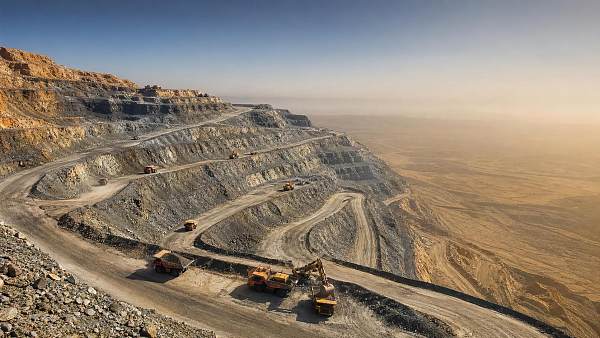
In open pit mining, weak rock conditions expose the gap between design-stage confidence and operating-stage reality. Conventional slope models frequently assume bench-scale and inter-ramp behavior can be extrapolated from limited datasets. That becomes risky where rock mass quality changes rapidly, where saturated horizons reduce shear strength, or where excavation-induced unloading triggers delayed deformation rather than immediate collapse.
The consequences extend beyond slope stability. Equipment selection also suffers when planners rely on nominal diggability classes or standard rolling resistance estimates. Weak, moisture-sensitive floors can increase tire wear, shorten undercarriage life, and reduce effective payload utilization. A truck-shovel fleet designed for planned cycle times may underdeliver if loading zones need frequent rehabilitation or if pit ramps degrade after each major rainfall event.
Procurement teams should therefore treat weak rock not as a local geological inconvenience but as a multiplier of equipment risk. A larger excavator may look productive on paper, yet it can become inefficient if bench access is unstable or if fragmentation becomes inconsistent. Likewise, standard dozer support may be insufficient where floor maintenance needs shift from weekly to daily intervention.
The table below summarizes common failure points between conventional mining engineering assumptions and field behavior in weak rock settings. It is especially useful for business evaluation teams comparing capex plans, mobile fleet proposals, and contract mining bids.
The practical takeaway is simple: if weak rock affects the mine envelope, engineering review should not stop at slope angle revision. It should also revisit machine class, tire and undercarriage strategy, dewatering capacity, support equipment ratio, and maintenance planning. In many projects, the hidden cost is not a single failure event but a persistent 5% to 15% efficiency loss across several operating systems.
Why equipment benchmark data matters more in weak ground
In competent rock, buyers can often compare heavy equipment on nominal payload, breakout force, engine power, and standard fuel curves. In weak rock, those headline numbers are not enough. Procurement teams need benchmark data tied to duty-cycle disruption, floor contact conditions, service interval sensitivity, and hydraulic performance under variable digging resistance.
That is one reason institutional buyers increasingly rely on technical repositories and benchmarking platforms rather than brochures alone. Where procurement scrutiny is high, stakeholders may also review adjacent intelligence such as 无 to compare whether product positioning aligns with actual site risk, service support scope, and lifecycle economics.
How procurement teams should evaluate weak rock risk before committing capital
For procurement managers and commercial evaluators, the main question is not whether weak rock exists. Most mines encounter some degree of it. The better question is whether the tender package, OEM proposal, or mining contractor scope has priced and engineered for it properly. A low initial quote can become expensive if it excludes drainage contingencies, floor conditioning assets, or reinforcement of access routes and working platforms.
A disciplined review should examine at least 5 core dimensions: geological confidence, hydrological uncertainty, equipment suitability, operating flexibility, and compliance exposure. Each dimension should be tested against both dry-season and wet-season conditions, because weak rock behavior can change materially within a single annual cycle. If site investigations are sparse, decision-makers should flag uncertainty explicitly rather than burying it inside blended productivity assumptions.
Commercial teams should also ask whether the mine plan includes realistic contingency windows. In weak ground, delays are not limited to failure remediation. They also arise from slower drilling, revised blast patterns, expanded scaling, additional geotechnical mapping, and more frequent road maintenance. Depending on deposit geometry and climate, these can extend mobilization or stabilization activities by 2 to 8 weeks.
The following table can be used as a procurement screening tool when evaluating open pit mining fleets, support equipment packages, or contractor submissions in weak rock environments.
This framework helps stakeholders move from generic equipment comparison to site-specific procurement judgment. In B2B mining decisions, that distinction is crucial. The cheapest unit or contractor is rarely the lowest-cost choice if weak rock conditions force higher support ratios, shorter component life, or repeated redesign work.
A practical 4-step review before approval
- Test geological confidence against actual excavation sequence rather than deposit-wide averages.
- Stress-test fleet assumptions under wet, degraded, and low-traction conditions.
- Review whether tendered support equipment and road maintenance resources are adequate for daily to weekly intervention cycles.
- Quantify the budget impact of slower cycle times, standby risk, and contingency earthworks before final award.
Where available, procurement teams should compare these findings with cross-market benchmark intelligence. G-MRH supports this by linking technical performance, standards awareness, tender context, and lifecycle cost reasoning across global mining and heavy-machinery markets.
Standards, monitoring, and model updates: what reduces failure risk
Weak rock risk cannot be eliminated, but it can be managed more effectively when model governance is treated as an ongoing operating process rather than a one-time design deliverable. In practical terms, that means combining geotechnical mapping, groundwater surveillance, slope movement monitoring, and equipment performance feedback into regular review loops. On higher-risk sites, these loops may need to run weekly; on more stable areas, monthly review may be sufficient.
From a compliance perspective, operators and buyers should align decisions with applicable Mine Safety Acts, site geotechnical management plans, and common engineering references used across ISO- and AS/NZS-oriented procurement environments. These frameworks do not prescribe a single weak rock solution, but they do reinforce the need for documented assumptions, monitoring triggers, response plans, and auditable engineering change control.
Model updates are particularly important after key transitions: first exposure of a new lithological domain, major rainfall periods, changes in dewatering performance, or noticeable deviations in equipment productivity. If a haul road or loading zone requires repeated rework over 2 to 3 consecutive weeks, it is often a sign that the underlying ground model and operating assumptions need revision, not just more maintenance effort.
For distributors, agents, and machinery partners, this is also a service opportunity. The strongest technical sales approach in weak rock environments is consultative rather than purely transactional. Buyers respond better when suppliers explain ground-condition implications for machine configuration, parts planning, service intervals, and availability support over the first 6 to 12 months.
What a stronger monitoring framework includes
- Bench-by-bench geological logging that captures weathering intensity and weak seam continuity.
- Groundwater and drainage checks before, during, and after major rainfall events.
- Slope and wall condition inspections tied to excavation progress, not just fixed calendar intervals.
- Fleet performance tracking that isolates losses caused by floor condition, traction, and access degradation.
A common misconception to avoid
One frequent mistake is to assume that more conservative slope angles alone solve weak rock risk. In reality, flatter slopes may improve stability margins but still leave major problems in haulage efficiency, water control, ore access timing, and equipment wear. The commercial model should therefore be updated together with the engineering model. Otherwise, the project may appear safer while still underperforming financially.
FAQ for mining stakeholders evaluating weak rock projects
How do I know if a mining model is too optimistic for weak rock conditions?
Look for signs of over-averaging. If the model relies on broad geotechnical domains, limited wet-season data, or static productivity assumptions across multiple pit stages, it may be optimistic. Another warning sign is when the study includes little detail on drainage, floor maintenance, or rehandle. In weak rock, these items often drive real operating cost more than headline slope geometry alone.
Which equipment issues become most important in weak ground?
Focus on traction, ground pressure, component wear, and access reliability. For mobile fleets, tire damage, undercarriage stress, and reduced speed can materially affect availability. For loading tools, bucket fill consistency and machine positioning are often more sensitive than nominal engine power. Support equipment capacity also matters, especially when road and floor rehabilitation shifts from periodic work to near-daily intervention.
What should procurement teams ask in a tender review?
Ask for assumptions behind productivity, not just the final number. Clarify whether the bid includes wet-season allowances, dewatering resources, standby support, geotechnical monitoring roles, and rework volumes. Request a clear statement on what happens if floor conditions deteriorate or if slope controls change. These questions often reveal whether the bidder truly understands weak rock mining or has simply priced a standard scenario.
Can digital tools or digital twins solve the problem?
Digital twins and monitoring platforms can improve visibility, but only if the site updates the underlying data frequently and links it to operational action. A digital model based on stale geology or incomplete hydrology will scale the same error faster. The value comes from integration: field mapping, instrument data, equipment performance records, and decision thresholds all need to connect within a practical review cycle.
Why decision-makers use G-MRH when mining engineering certainty is low
When weak rock conditions challenge mine planning, buyers and evaluators need more than isolated technical notes. They need cross-functional intelligence that connects engineering risk with procurement, asset reliability, regulatory context, and lifecycle cost. That is the space G-MRH is built to serve. Our institutional focus spans open-pit and underground mining, mineral processing, heavy earthmoving, bulk material handling, and digital mining transitions.
For procurement directors, EPC teams, dealers, and market researchers, this means faster access to benchmark-oriented insight: how equipment categories behave under demanding duty cycles, how technical specifications should be interpreted in commercial context, and where tender assumptions may understate field risk. It also means better alignment between engineering review and strategic sourcing in markets shaped by ESG scrutiny, commodity volatility, and infrastructure resilience demands.
If you are screening a weak rock project, reviewing a contractor package, or comparing heavy-machinery options for unstable ground, the most useful next step is a structured technical-commercial review. We can help assess parameter assumptions, equipment selection logic, likely delivery and support considerations, operating risk triggers, and standards-related questions. Where relevant, we can also help you interpret supporting market references, including 无, within a broader procurement and benchmarking framework.
Contact us to discuss slope-related equipment implications, fleet selection under weak ground constraints, tender risk screening, lifecycle cost comparison, compliance considerations, or timeline planning for upcoming mine development decisions. For teams working under tight evaluation windows of 7 to 15 days, an early review can reduce costly revisions later in the project cycle.
Recommended News
 Jul 13, 2026Open Pit Mining Methods: Key Cost, Safety, and Output Trade-OffsOpen pit mining explained: compare methods, stripping ratio, fleet efficiency, slope safety, and output risks to make smarter mine planning and expansion decisions.
 Jul 05, 2026CPAP Pressure Stability Metrics: What Really Matterscpap pressure stability metrics explained clearly: learn which data points truly matter for comfort, leak response, and therapy consistency before comparing CPAP devices.
 Jul 01, 2026How to Compare a Longwall Equipment Factory Before OrderingCompare a longwall equipment factory the smart way—beyond price. Learn how to evaluate quality, lead time, service, and lifecycle cost before ordering for safer, more reliable mining performance.
 Jun 24, 2026925 Sterling Silver Jewelry: How to Check Quality Before You Buy925sterlingsilverjewelry buying guide: learn how to verify hallmarks, spot plated substitutes, assess workmanship, and judge seller credibility before you buy with confidence.