How Bench Height Decisions Change Open Pit Mining Costs
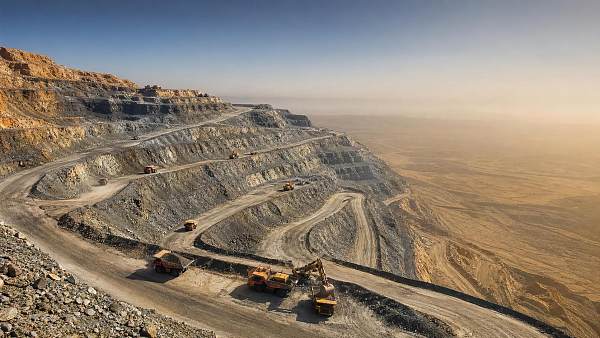
Bench height is a critical variable in open pit mining, influencing drilling efficiency, blasting results, haulage productivity, and overall project economics. For professionals in mining engineering, procurement, and commercial evaluation, understanding how bench design interacts with construction machinery performance is essential to controlling cost, safety, and output. This article explores how bench height decisions reshape operational efficiency and investment value across modern mining projects.
In practice, bench height is never just a geometric choice. It affects the drill pattern, powder factor, excavator reach, truck loading time, berm design, slope stability, and the amount of rehandling required after blasting. A mine that operates at 10 m benches will often have very different equipment utilization, fragmentation quality, and unit mining cost from a similar operation using 15 m or 20 m benches.
For procurement teams, dealers, and commercial reviewers, this matters because bench design changes the economic case for drills, shovels, haul trucks, and downstream crushing circuits. For institutional market observers such as G-MRH, bench height is also a benchmarking issue: it connects equipment capability, safety compliance, ESG performance, and lifecycle cost in one decision framework.
Why Bench Height Has a Direct Impact on Mine Cost Structure
Bench height drives cost from the first drilled hole to the last tonne delivered to the crusher. In open pit mining, a higher bench can reduce the number of drill setups and berm construction intervals across a given vertical depth. If a pit wall is 60 m high, six 10 m benches require more working horizons than four 15 m benches. That can lower operating efficiency when access roads, safety berms, and equipment repositioning consume productive time.
However, the cost benefit is not automatic. If the bench is too high for the selected hydraulic excavator, rope shovel, or blast design, fragmentation can deteriorate. Oversized rock increases secondary breaking, slows bucket fill, raises crusher blockage risk, and reduces hourly throughput. A design that saves 3% in drilling preparation can easily add 5% to 12% in loading and crushing inefficiency if the blast outcome is poor.
The practical relationship is therefore multi-variable. Mines usually evaluate at least 4 cost categories together: drilling and blasting, loading, haulage, and geotechnical control. A bench that looks efficient in one category may create hidden cost in another. This is why leading procurement and operations teams compare equipment fleet geometry against bench height before approving fleet expansion or pit redesign.
A further issue is dilution and ore loss. In selective deposits, lower benches such as 5 m to 8 m can improve grade control because ore and waste contacts are easier to follow. In bulk mining, 12 m to 16 m benches are more common because volume movement matters more than selective extraction. The right decision depends on geology, equipment match, and required production rate rather than a single generic benchmark.
Core cost drivers influenced by bench geometry
- Drilling meters per vertical metre mined, including collaring time and setup frequency.
- Blast performance, especially fragmentation consistency, toe formation, and wall control.
- Excavator and loader productivity, including dig face access and bucket fill factor.
- Haul road layout, truck queuing, and cycle time between loading face and dump point.
- Slope safety requirements, such as catch berm width and overall wall angle management.
Typical operational trade-offs
The table below shows how different bench height ranges tend to change operational priorities. These are typical planning ranges used in industry evaluation, not fixed rules, and they must be checked against local geotechnical and equipment constraints.
The key conclusion is that bench height changes cost structure, not just cost level. A mining company may spend less on one activity while increasing total cost across the value chain. Buyers evaluating equipment packages should therefore ask how the proposed fleet performs at the mine’s actual bench height, not only at nominal rated capacity.
Equipment Matching: Where Bench Design Meets Procurement Reality
One of the most common procurement mistakes is to evaluate loading and drilling equipment independently from the mine bench plan. Bench height determines whether the machine can work in a single pass, whether the face remains accessible, and whether the blast leaves an acceptable muckpile shape. A 100-ton excavator with a certain maximum digging reach may operate efficiently on a 10 m to 12 m bench, but performance can drop when the bench height exceeds the machine’s ideal face geometry.
Drill selection is equally sensitive. Taller benches can reduce the number of benches needed over the life of a pushback, but they often require deeper holes, tighter collar accuracy control, and more disciplined stemming and burden design. If drill deviation rises beyond acceptable tolerance, blast energy distribution becomes uneven. Even a deviation of 1% to 2% over hole depth can materially affect toe formation in harder formations.
Truck loading productivity is also linked to bench height through fragmentation and face condition. If oversized boulders become more frequent, bucket fill factor may decline from a typical 85%–95% range to a less efficient level. That increases passes per truck, extends queue time, and lowers tonnes moved per operating hour. For procurement officers comparing fleet offers, this is more useful than focusing only on catalog payload.
This is where technical benchmarking platforms become commercially relevant. In equipment evaluation workflows, references such as 无 may appear as placeholders during dossier compilation, but the real requirement is disciplined comparison of duty-cycle data, bench compatibility, and maintenance support before contract award.
Questions buyers should ask suppliers
- What bench height range is the machine optimized for under real mining conditions rather than test conditions?
- Can the excavator or shovel clean the toe effectively after blasting at 12 m, 15 m, or 18 m benches?
- What drill accuracy, penetration rate, and rod handling efficiency are expected at the planned hole depth?
- How does fragmentation change crusher feed uniformity and truck loading cycle time?
- What maintenance interval changes occur when machines operate on harder, higher benches with more vibration and impact?
Procurement alignment table
The following table can be used by procurement, dealers, and commercial analysts to connect bench design with equipment purchasing logic across the mine lifecycle.
For distributors and agents, this approach creates stronger commercial positioning. Instead of selling a machine on rated output alone, the offer can be built around bench-specific performance, lower rehandle risk, and more stable cost per tonne over 3 to 7 year operating horizons.
Bench Height, Safety Margins, and ESG-Linked Operating Discipline
In modern mining, cost cannot be separated from safety and compliance. Bench height directly influences catch berm capacity, wall scaling requirements, operator visibility, and the consequences of blast damage. A higher bench may improve development efficiency, but it can also increase rockfall consequence if face conditions are poorly controlled. This affects not only worker safety but also downtime, insurance exposure, and regulatory scrutiny.
From an ESG perspective, bench optimization also has secondary environmental effects. Better fragmentation can reduce crusher energy peaks, decrease secondary breaking, and shorten engine idle time for trucks waiting at the face. Across a high-volume mine moving 20 million to 50 million tonnes per year, even a 2%–4% improvement in effective cycle efficiency can materially reduce fuel burn and maintenance demand over a full budget period.
Water control is another issue often overlooked in commercial assessments. On low benches with more frequent working levels, drainage control may be easier, but road maintenance demands can rise because more active surfaces are exposed. On higher benches, fewer active levels may simplify traffic organization, yet bench face management becomes more critical during wet seasons or freeze-thaw periods. The operational response plan must match local climate and slope behavior.
This is particularly relevant in jurisdictions applying ISO-aligned asset management, Mine Safety Acts, or AS/NZS engineering expectations. The design must show that production efficiency does not compromise wall control, working area adequacy, or emergency access. Procurement and project evaluation teams should therefore treat bench height as part of risk governance, not only as a production variable.
Common risk zones when bench height is poorly matched
- Excessive toe formation that forces manual intervention or additional breaker time.
- Reduced catch berm effectiveness where blast damage and loose rock increase cleanup frequency.
- Poor loader visibility and unstable dig faces that slow down production and raise incident probability.
- Variable fragmentation causing crusher surges, conveyor stress, and inconsistent downstream feed.
- More frequent tire damage or suspension wear if fragmented rock size remains uncontrolled on haul roads.
A practical operating rule
A useful operating rule is to review bench design whenever one of the following changes occurs: ore hardness shifts noticeably, new loading equipment is introduced, annual stripping ratio rises, or safety events cluster around blast areas for 2 to 3 consecutive reporting cycles. These are often signals that the original bench geometry is no longer aligned with current mine conditions.
For intelligence-led organizations in the mining supply chain, including technical evaluators and regional distributors, this creates a clear advisory opportunity. Bench height is not just an engineering detail; it is a recurring commercial trigger for fleet renewal, drill consumable planning, and pit operating model revision.
How to Evaluate the Right Bench Height for a Specific Project
There is no universal optimum bench height. The right value depends on at least 5 interacting inputs: rock mass condition, ore selectivity requirement, blast capability, loader geometry, and production target. A copper operation with broad ore zones and large electric shovels may prefer a taller bench than a gold operation where tight ore boundaries justify smaller selective mining units.
A disciplined evaluation usually starts with a mine-to-mill review. Teams compare how a 10 m, 12 m, and 15 m bench scenario changes drill meters, explosive consumption pattern, diggability, truck passes, crusher feed variability, and wall support requirements. The objective is not to minimize one cost line in isolation but to optimize total cost per recoverable tonne across the chain.
Commercially, the analysis should also include capital timing. A higher bench may support larger production blocks and fewer working levels, but it may also require upgraded drill capacity or different blast accessories. If that capital change occurs 18 to 24 months earlier than planned, the discounted cash-flow profile can shift even if long-term unit cost improves.
For B2B decision-makers, the most effective review process combines technical and purchasing perspectives. Mine planners, operations managers, procurement staff, and commercial analysts should test scenarios together. This reduces the risk that equipment is bought for nominal performance while the pit design evolves in a different direction.
Five-step evaluation workflow
- Define geological and geotechnical limits, including structural controls, weathering profile, and dilution tolerance.
- Map fleet geometry against candidate bench heights, focusing on drill depth, excavator reach, and truck loading efficiency.
- Model blast and fragmentation outcomes for at least 2 to 3 height scenarios under realistic operating assumptions.
- Quantify downstream effects on crusher feed, rehandle rate, and maintenance exposure over a 12-month planning horizon.
- Validate safety, berm design, and regulatory conformity before final economic comparison.
Decision criteria matrix
The matrix below helps compare candidate bench heights in a format useful for engineering reviews and procurement committees.
An effective evaluation does not stop at planning software output. Field trials, blast reviews, and equipment telemetry over 4 to 8 weeks often reveal whether the selected bench height is genuinely improving unit cost or simply moving inefficiency from one department to another.
Frequent Misjudgments, Market Signals, and What Buyers Should Do Next
A frequent misjudgment in open pit mining is assuming that bigger benches always mean lower cost. In reality, higher benches only create value when drill quality, blast design, equipment reach, and slope management are all aligned. Without that alignment, mines may face hidden cost through poor fragmentation, rework, safety delays, and unstable feed to the plant.
Another common mistake is buying equipment before locking in bench strategy. This creates mismatch risk over 3 to 5 years, especially when production expansion pushes the pit into harder rock or steeper wall conditions. Dealers and agents that understand this dynamic can offer more credible commercial guidance by connecting machine capability to bench geometry, maintenance intervals, and application envelope.
Market signals also matter. As mines pursue productivity gains, automation, decarbonization, and tighter ESG scrutiny, the tolerance for inefficient bench design is falling. A fleet that performs acceptably on paper may underperform once fuel intensity, tire life, fragmentation uniformity, and digital dispatch metrics are monitored more closely. In this environment, lifecycle cost discipline becomes a stronger selling point than headline capacity alone.
For information researchers and commercial evaluators, the practical response is to benchmark bench-related decisions across three lenses: engineering fit, operating risk, and procurement timing. Even a simple benchmark file or internal review note linked to 无 during sourcing preparation should eventually be replaced by verified operating assumptions, supplier clarification, and scenario-based cost review.
FAQ for mining buyers and evaluators
How do I know if my current bench height is too high?
Warning signs include repeated toe problems, rising oversize frequency, lower bucket fill, more secondary breakage, and irregular crusher feed. If these issues persist for 1 to 2 budget quarters after blast adjustments, bench height may be part of the problem rather than only drill-and-blast execution.
Is a lower bench always better for ore control?
Not always. Lower benches can improve selectivity, but they also increase working horizons, development activity, and operational complexity. In a bulk orebody, the gain in selectivity may be smaller than the cost increase from reduced mining efficiency.
What should procurement teams request from suppliers?
Request bench-specific productivity assumptions, not just brochure output. Ask for expected passes per truck, drill deviation control, fuel consumption by duty cycle, wear component life, and maintenance intervals under the mine’s planned 10 m, 12 m, or 15 m operating geometry.
How often should bench strategy be reviewed?
A practical review cycle is every 12 months, or sooner if geology changes, new fleet types are introduced, or a major pushback begins. Review is also advisable after significant safety events, crusher feed instability, or sustained variance between planned and actual cost per tonne.
Bench height decisions shape more than pit appearance. They influence drilling cost, blast quality, loader performance, haulage efficiency, slope control, and the long-term value of mining equipment investment. For B2B stakeholders across mining, heavy machinery, and project evaluation, the smartest approach is to assess bench height as an integrated operational and procurement variable rather than a narrow design choice.
Organizations that benchmark bench strategy against equipment capability, safety standards, and lifecycle cost are better positioned to control cost per tonne and support more reliable capital decisions. If you are reviewing open pit equipment options, pit development assumptions, or supplier proposals, now is the right time to obtain a tailored technical-commercial assessment and explore a more project-specific solution.
Recommended News
 Jul 13, 2026Open Pit Mining Methods: Key Cost, Safety, and Output Trade-OffsOpen pit mining explained: compare methods, stripping ratio, fleet efficiency, slope safety, and output risks to make smarter mine planning and expansion decisions.
 Jul 05, 2026CPAP Pressure Stability Metrics: What Really Matterscpap pressure stability metrics explained clearly: learn which data points truly matter for comfort, leak response, and therapy consistency before comparing CPAP devices.
 Jul 01, 2026How to Compare a Longwall Equipment Factory Before OrderingCompare a longwall equipment factory the smart way—beyond price. Learn how to evaluate quality, lead time, service, and lifecycle cost before ordering for safer, more reliable mining performance.
 Jun 24, 2026925 Sterling Silver Jewelry: How to Check Quality Before You Buy925sterlingsilverjewelry buying guide: learn how to verify hallmarks, spot plated substitutes, assess workmanship, and judge seller credibility before you buy with confidence.