Mining Engineering Mistakes That Raise Stripping Costs
In open pit mining, stripping costs rarely surge because of one dramatic failure. More often, they rise through a series of avoidable engineering mistakes: inaccurate pit geometry, weak haul road design, poor equipment matching, short-term mine scheduling, and inadequate geotechnical control. For buyers, evaluators, and commercial decision-makers, the key point is simple: higher stripping cost is often a planning and execution problem before it becomes an equipment or fuel problem. Understanding where those errors originate is essential for judging operational efficiency, supplier fit, and project risk.
What users searching this topic usually need to know first
When someone searches for “Mining Engineering Mistakes That Raise Stripping Costs,” the real intent is usually not academic. They want to identify which engineering decisions increase waste removal cost, how those errors show up in operations, and what signals help them evaluate whether a mine plan, contractor, or equipment package is economically sound.
For the target audience here, the most important questions are practical:
- Which mistakes have the biggest cost impact?
- How can those mistakes be detected early?
- Are the cost drivers caused by mine design, equipment selection, road layout, blasting, scheduling, or supervision?
- What should procurement and commercial teams ask before approving machinery, contracts, or expansion plans?
The most useful content, therefore, is not broad theory. It is a decision-oriented breakdown of common stripping cost mistakes, their operational consequences, and the indicators that help readers assess risk.
Poor pit and phase design often locks in unnecessary waste movement
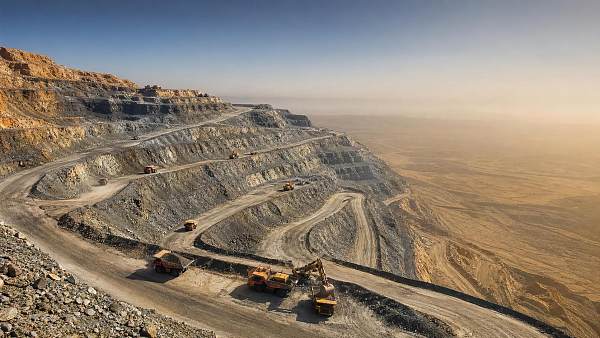
One of the most expensive mining engineering mistakes is poor pit staging. A deposit may be geologically attractive, yet stripping costs escalate if pushbacks, cutbacks, and phase transitions are designed without regard to haulage efficiency, mining sequence, and equipment access.
Typical design errors include:
- Overly aggressive phase expansion that exposes too much waste too early
- Bench widths that are impractical for the intended fleet
- Ramp placement that creates excessive travel distance or congestion
- Unbalanced pit geometry that forces repeated rehandling of material
These are not small drafting issues. They shape the life-of-mine stripping profile. If a phase design requires trucks to travel longer routes or compels excavators to work in constrained zones, the cost per bank cubic meter rises immediately. Fuel burn, tire wear, cycle time, and idle time all follow.
For procurement teams and commercial reviewers, this matters because a “high-cost fleet” is sometimes blamed for a problem that actually began in mine design. Before judging equipment economics, it is necessary to test whether the pit layout itself is imposing structural inefficiency.
Weak haul road design is one of the fastest ways to raise stripping cost
Haul roads are often underestimated because they look like supporting infrastructure rather than a direct production lever. In reality, poor haul road engineering can inflate stripping costs across the entire mining cycle.
Common haul road mistakes include:
- Insufficient road width for two-way traffic and safe passing
- Grades that exceed efficient truck operating range
- Inadequate drainage leading to soft sections and road failure
- Poor curve radii that reduce speed and increase tire damage
- Weak road maintenance planning that allows rolling resistance to climb
Even small increases in rolling resistance can materially affect truck productivity. A road that is too steep or poorly maintained increases fuel consumption, slows cycles, and reduces tire life. Over months, this turns into a major stripping cost problem, especially in high-volume waste movement campaigns.
This is also where buyers should be careful when comparing truck brands or haulage solutions. If site roads are substandard, equipment benchmarking can become misleading. A truck may appear inefficient when the actual root cause is road condition and layout. In some evaluation frameworks, even broad technical references or supplier comparisons such as 无 may be consulted, but they should never replace a site-specific road performance assessment.
Mismatched equipment selection creates hidden cost penalties
Another common error is fleet mismatch. This happens when the loading unit, haul trucks, support equipment, or blasting profile are not aligned with material characteristics and production targets. The result is not always immediate equipment failure. More often, it appears as chronic underperformance and elevated stripping cost.
Examples include:
- Excavators sized too large for narrow benches or fragmented working faces
- Truck bodies mismatched to material swell or density
- Dozers underpowered for dump management and floor cleanup
- Drill and blast outcomes that produce fragmentation unsuitable for the loading fleet
Fleet mismatch raises cost through lower fill factors, longer spot times, reduced bucket efficiency, queuing, and frequent operational adjustments. These penalties are often hidden inside average productivity numbers, so they are easy to miss during high-level reviews.
For distributors, agents, and equipment evaluators, the implication is important: the “best” machine is not the one with the strongest brochure metrics. It is the one that matches the mine geometry, bench height, rock conditions, road network, and stripping schedule. Poor matching can erase any theoretical advantage in payload, horsepower, or cycle time.
Short-term mine planning can undermine long-term stripping economics
A mine can hit monthly production targets and still perform poorly on stripping cost if planning is too short-term. This usually happens when teams chase immediate tonnage without protecting long-term access, waste sequencing, or operating flexibility.
Typical planning mistakes include:
- Deferring essential waste removal until it becomes urgent and expensive
- Mining ore zones in a sequence that worsens future haulage distance
- Allowing working faces to become too fragmented for efficient fleet deployment
- Failing to align drill-blast, loading, and haulage plans with seasonal constraints
These decisions often look acceptable in the short run because they preserve near-term cash flow or simplify scheduling. But they create later penalties: difficult access, unstable waste exposure, congestion, and lower equipment utilization. In many operations, stripping cost escalation is actually a symptom of planning discipline breaking down over time.
For business evaluators, this is a critical distinction. High stripping cost does not always mean the orebody is weak or the contractor is incapable. Sometimes it means the operation has borrowed efficiency from the future and is now paying it back at a premium.
Ignoring geotechnical realities leads to rework, dilution, and wasted movement
Geotechnical oversight is another major cost multiplier. If slope behavior, bench stability, groundwater, or rock mass conditions are poorly understood, stripping cost can increase through overbreak, extra support work, slope remediation, and material rehandling.
Frequent geotechnical-related mistakes include:
- Bench angles that are too aggressive for local ground conditions
- Inadequate dewatering and water management
- Failure to adjust excavation methods as lithology changes
- Delayed response to wall instability indicators
Once instability develops, the mine may need additional cutback work, cleanup, scaling, or redesign. That means more waste moved without corresponding value creation. In severe cases, the operation loses access to planned faces and must mine less efficient areas instead.
This area is especially relevant for investors, procurement leads, and tender reviewers because geotechnical risk often hides beneath apparently normal production assumptions. If slope and groundwater controls are weak, stripping cost projections may be too optimistic from the start.
Underestimating drill and blast quality drives downstream stripping inefficiency
Stripping cost is heavily influenced by how well rock is prepared before loading. Poor drill and blast practices can damage nearly every downstream cost metric.
When blasting is inconsistent, operations may face:
- Oversize material that slows excavators and requires secondary breakage
- Uneven fragmentation that reduces bucket fill consistency
- Backbreak and wall damage that create extra waste
- Poor floor conditions that disrupt truck spotting and loading cycles
In waste stripping, these effects are especially costly because volume is high and margins are controlled by throughput efficiency. A few extra seconds per pass or load cycle can become a large cost burden over millions of cubic meters.
This is why stripping analysis should not isolate hauling from upstream fragmentation quality. If commercial teams are assessing contractor performance or equipment suitability, they should ask whether poor productivity originates at the face rather than in the truck fleet.
Insufficient operating discipline turns engineering weaknesses into cost escalation
Engineering design does not operate by itself. Even sound plans lose value if execution discipline is weak. In many mines, stripping cost rises because field controls are inconsistent, data feedback is slow, and deviations are normalized until they become expensive.
Warning signs include:
- Frequent deviation from planned haul routes
- Road maintenance done reactively instead of systematically
- Bench floor conditions allowed to deteriorate
- Low compliance with loading and spotting standards
- Limited reconciliation between planned and actual movement
For management and commercial stakeholders, this is where operational maturity becomes visible. A mine with disciplined dispatch, maintenance, grade control, and reconciliation practices usually manages stripping cost more effectively than one relying on ad hoc corrections.
In some cases, reference points from broader industry intelligence sources such as 无 can help frame technical comparisons, but they are most useful when combined with site data, audit findings, and production reconciliation.
How buyers and evaluators can judge whether stripping costs are being driven by engineering mistakes
For non-operations readers, the practical question is not how to redesign a mine personally, but how to identify whether stripping cost inflation is avoidable. A useful evaluation framework includes the following checks:
- Mine design review: Are phase plans, ramp layouts, and bench dimensions realistic for the actual fleet?
- Road condition assessment: Are grade, width, drainage, and maintenance standards consistent with truck class and production intensity?
- Fleet matching: Do loading and haulage units fit material type, bench geometry, and shift plan?
- Planning quality: Is stripping scheduled proactively, or deferred until costs spike?
- Geotechnical control: Are slope assumptions, dewatering, and wall monitoring robust?
- Drill-blast performance: Is fragmentation supporting efficient excavation and haulage?
- Reconciliation discipline: Does actual movement consistently match plan, and if not, why?
These questions help separate unavoidable geological cost from preventable engineering cost. That distinction is central when comparing suppliers, reviewing mine contractors, evaluating bids, or interpreting operating performance.
Conclusion
Mining engineering mistakes that raise stripping costs are rarely isolated. They usually form a chain: weak pit staging leads to longer hauls, poor roads reduce truck performance, fleet mismatch lowers productivity, short-term planning creates future inefficiency, and weak geotechnical or blasting control adds rework. For decision-makers, the lesson is clear: stripping cost should be treated as a systems issue, not just a fuel or equipment line item.
The most reliable way to protect project economics is to examine how mine design, road engineering, fleet selection, planning discipline, and ground control interact. For researchers, procurement teams, commercial evaluators, and channel partners, this approach leads to better technical judgment, more realistic cost expectations, and stronger investment decisions.
Recommended News
 Jul 13, 2026Open Pit Mining Methods: Key Cost, Safety, and Output Trade-OffsOpen pit mining explained: compare methods, stripping ratio, fleet efficiency, slope safety, and output risks to make smarter mine planning and expansion decisions.
 Jul 05, 2026CPAP Pressure Stability Metrics: What Really Matterscpap pressure stability metrics explained clearly: learn which data points truly matter for comfort, leak response, and therapy consistency before comparing CPAP devices.
 Jul 01, 2026How to Compare a Longwall Equipment Factory Before OrderingCompare a longwall equipment factory the smart way—beyond price. Learn how to evaluate quality, lead time, service, and lifecycle cost before ordering for safer, more reliable mining performance.
 Jun 24, 2026925 Sterling Silver Jewelry: How to Check Quality Before You Buy925sterlingsilverjewelry buying guide: learn how to verify hallmarks, spot plated substitutes, assess workmanship, and judge seller credibility before you buy with confidence.