Mobile Crane OEM Selection: Capacity, Reach, Support
Mobile crane OEM selection is shifting from brand familiarity to measurable field performance
Choosing the right mobile crane OEM goes far beyond brand preference.
Technical evaluation now centers on capacity, reach, structural durability, support response, and lifecycle economics under demanding site conditions.
Across mining, construction, logistics, and infrastructure, asset decisions are becoming more data-led and risk-sensitive.
That change makes mobile crane OEM comparison a strategic exercise, not a simple catalog review.
A capable crane on paper may still underperform if boom geometry, load chart usability, local parts access, or service quality fail in practice.
The best mobile crane OEM is usually the one that matches duty cycle, terrain, compliance needs, and uptime targets with the lowest total operating risk.
Current market signals show higher scrutiny on real lifting envelopes and fleet resilience
Recent project environments have changed how a mobile crane OEM is assessed.
Jobsites now demand faster setup, better telematics, safer operation, and stronger support coverage across remote regions.
At the same time, transport restrictions, operator shortages, and tighter lifting plans are increasing the value of flexible crane configurations.
This trend is visible in rough terrain cranes, all terrain cranes, truck cranes, and heavy-duty mobile lifting fleets.
For many operations, the preferred mobile crane OEM is no longer the one with the highest nominal tonnage.
It is the one delivering stable performance within the exact lift radius, boom length, counterweight, and access limitations of the site.
Why the evaluation standard is becoming more demanding
- Higher project complexity requires more precise lift planning and chart interpretation.
- Remote operations make service delays more expensive than before.
- ESG and safety frameworks increase interest in load control, emissions, and digital monitoring.
- Capital discipline favors lifecycle value over initial purchase price.
- Mixed fleets need OEM compatibility in diagnostics, training, and spare parts systems.
Capacity is no longer a headline number; it must be verified within the actual lift scenario
The first question in mobile crane OEM selection should not be maximum rated capacity alone.
It should be how much the crane can safely lift at the required radius and boom configuration.
Many comparison errors happen when nominal capacity is treated as operational capacity.
In reality, load chart behavior under real working radius determines whether a crane fits the task.
Capacity factors that matter most
- Rated lifting capacity at the required radius, not at minimum radius.
- Boom length effect on capacity reduction.
- Counterweight options and setup restrictions.
- Ground pressure and outrigger deployment limits.
- Pick-and-carry capability where relevant.
- Wind rating and derating guidance for exposed sites.
A credible mobile crane OEM should present clear, readable load charts with transparent assumptions.
If chart interpretation is difficult, planning risk rises immediately.
Reach, boom design, and jobsite geometry are becoming decisive selection drivers
Reach is often the hidden reason one mobile crane OEM outperforms another in the same capacity class.
Longer telescopic boom, efficient jib options, and smooth extension logic can reduce crane changes and save setup time.
However, extra reach only adds value when structural rigidity and chart stability remain strong.
Boom flex, slow telescoping, or restrictive radius behavior can offset theoretical reach advantages.
In practical terms, mobile crane OEM comparison should map reach against real site geometry, not generic brochure dimensions.
Support quality is now a major risk control factor in mobile crane OEM choice
Support capability can determine whether a crane remains an asset or becomes a downtime source.
For that reason, mobile crane OEM service strength deserves equal weight with technical performance.
Fast parts fulfillment, field technicians, training support, and remote diagnostics now influence ownership value directly.
Support questions worth testing early
- What is the average lead time for critical spare parts?
- Are technicians available in the operating region?
- Is telematics access standard or optional?
- How are warranty claims handled in remote locations?
- Does the OEM offer operator and maintenance training?
- Can the support network handle mixed-fleet environments?
A strong mobile crane OEM should also provide documentation quality, software updates, and clear maintenance intervals.
These factors improve inspection discipline and reduce unplanned stoppages.
Lifecycle value is overtaking purchase price as the main commercial benchmark
Price remains important, but it rarely reflects true ownership cost.
The smarter mobile crane OEM evaluation looks at fuel use, maintenance burden, residual value, and reliability across the planned service life.
This is especially relevant in heavy industry, where downtime can outweigh monthly financing differences.
A disciplined mobile crane OEM review should convert these factors into a five-year or ten-year operating model.
The impact extends across safety, project delivery, and asset planning
A weak mobile crane OEM match affects more than lifting output.
It can increase safety exposure, delay critical path tasks, complicate transport logistics, and weaken fleet standardization.
By contrast, a well-matched OEM improves utilization, planning accuracy, and maintenance predictability.
In mining and resource operations, these advantages matter because projects often run in remote, high-consequence environments.
Priority points to watch during evaluation
- Fit between real lift profile and chart capacity.
- Boom and jib flexibility for future applications.
- Service footprint near actual operating zones.
- Compliance with local road, safety, and inspection rules.
- Data visibility for maintenance and utilization tracking.
- Residual value prospects in the target market.
A stronger decision framework combines technical evidence with operational realism
The most reliable mobile crane OEM selection process uses structured comparison rather than assumption.
Start with the lift matrix, site constraints, and annual duty profile.
Then compare OEMs using normalized specifications, support commitments, and lifecycle cost assumptions.
- Define the top lift cases by weight, radius, height, and frequency.
- Screen each mobile crane OEM against access, transport, and setup limits.
- Review load charts, boom options, and counterweight configurations in detail.
- Score service network strength, parts availability, and training support.
- Model ownership cost with downtime assumptions included.
- Validate final options through references, demonstrations, or field trials.
This approach reduces selection bias and improves confidence before capital is committed.
Next-step evaluation should focus on evidence, not claims
A mobile crane OEM should be judged by how well it performs in the intended environment, not by reputation alone.
Capacity, reach, support, and lifecycle value must be reviewed as one connected system.
When those elements align, crane selection becomes safer, more efficient, and commercially stronger.
Build the shortlist around verified lift cases, local service reality, and long-term operating economics.
That is the most practical path to identifying the right mobile crane OEM for durable field performance.
Recommended News
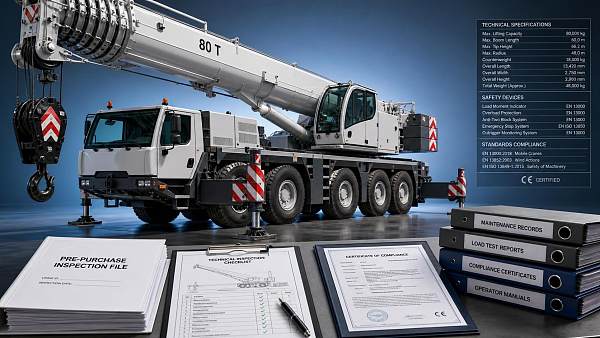
 Aug 25, 2026How to check technical compliance before buying mobile cranesTechnical compliance is the first check before buying mobile cranes. Learn how to verify certifications, load charts, inspections, and road legality to reduce risk and buy with confidence.
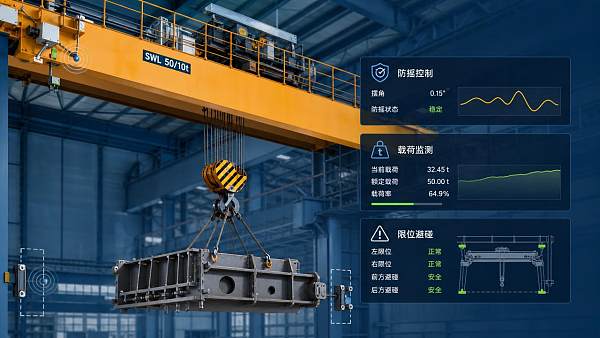
 Jun 12, 2026Advanced Crane Control Systems: Key Features That Reduce Lift RiskAdvanced crane control systems reduce lift risk with anti-sway, load monitoring, zoning, and diagnostics—helping mining and heavy industry teams improve safety, precision, and compliance.
 May 24, 2026Stability Control Algorithms in Cranes: How to Judge Real-World SafetyStability control algorithms in cranes: learn how to judge real-world safety through sensor reliability, fail-safe logic, wind and load response, and validation evidence before approval or purchase.
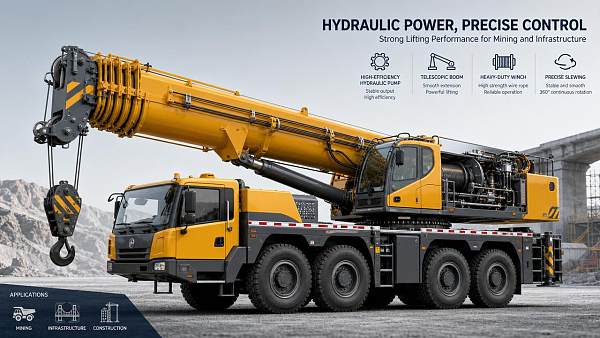
 May 23, 2026Hydraulic Pump Flow Rate Metrics That Matter in Mobile Crane SelectionHydraulic pump flow rate metrics guide smarter mobile crane selection by revealing real lifting speed, multi-function control, efficiency, and lifecycle cost before you buy.