How automation is changing job roles in underground mining
At the end of a shift, the most meaningful change in an underground mine may no longer be visible at the face. It may be happening in a control room on the surface, where an operator monitors autonomous loaders through a bank of screens, or in a maintenance office where sensor alerts identify a failing component before it stops production. The impact of automation on mine jobs is therefore not a simple story of machines replacing people. It is a structural change in where work happens, how decisions are made, and which capabilities keep a mine productive and safe.
For information researchers, workforce planners, procurement teams, and mining leaders, the central question is not whether automation will affect underground roles. It already is. The more useful question is which roles are being redesigned, which tasks remain human-critical, and how mine operators can manage a transition without creating new safety, skills, or operational risks.
Automation is moving people away from the production face
Underground mining has always combined physical intensity with uncertainty. Variable ground conditions, confined spaces, ventilation constraints, poor visibility, and the proximity of heavy equipment make routine work inherently demanding. Automation is being introduced first where it can reduce exposure to these conditions while improving repeatability.
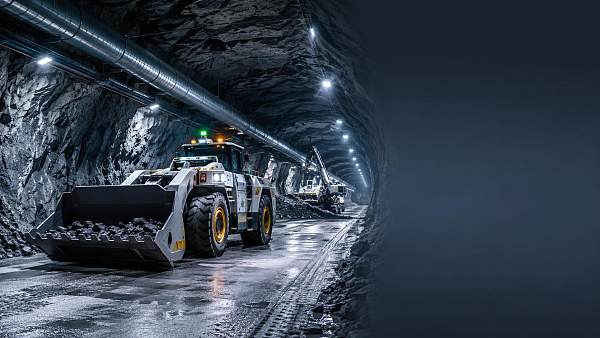
Autonomous and semi-autonomous load-haul-dump machines, remote drilling rigs, tele-remote rock breakers, automated charging systems, and underground fleet-management platforms are changing the pattern of work. A loader operator who once spent an entire shift underground may instead supervise multiple machines from a remote operating station. A driller may move from manual positioning toward validating drill plans, monitoring exceptions, and responding when geology or equipment behavior diverges from the model.
This does not mean that every underground task can, or should, be automated. Mines are dynamic environments. Broken ground, changing ore boundaries, water ingress, communication failures, and unexpected equipment interactions still require experienced human judgment. Automation tends to remove people from the most repetitive or hazardous parts of the cycle while increasing the importance of people who can interpret what the system is telling them.
Which traditional job roles are changing most?
The degree of change depends on mine method, fleet age, connectivity, orebody complexity, and the maturity of the site’s operating model. Still, several role categories are consistently being reshaped.
Equipment operators become system operators
The shift from direct machine control to remote or autonomous supervision is one of the most visible changes. Operators increasingly need to understand not only machine response, but also autonomous operating zones, traffic rules, communication status, payload data, and mission queues. Their practical knowledge of ore passes, drawpoints, ground behavior, and machine feel remains valuable; it is simply applied in a different way.
A control-room role also carries a different cognitive load. Instead of concentrating on a single machine in a physical work area, an operator may need to recognize emerging issues across several assets. Strong situational awareness, disciplined escalation, and confidence in digital interfaces become as important as precise steering or manual positioning.
Maintenance teams move toward condition-based work
Automation can make maintenance more technical, but it can also make it more planned. Sensors, onboard diagnostics, lubrication monitoring, battery-management systems, and fleet telemetry allow maintenance teams to identify abnormal conditions earlier. Rather than responding only after a breakdown, technicians may investigate a pattern of temperature drift, hydraulic pressure fluctuation, wheel-slip events, or repeated communication faults.
This creates demand for electro-hydraulic, electrical, software, network, and automation competencies alongside established mechanical skills. The strongest maintenance teams will not abandon hands-on troubleshooting; they will combine it with the ability to interpret fault codes, validate sensor data, and determine whether a problem originates in hardware, software logic, connectivity, or operating practice.
Mine planners and supervisors work with more live data
Short-interval control has long been essential in underground operations. Automation expands the volume and speed of data available to supervisors: machine location, cycle time, idle periods, tonnes moved, drill accuracy, fuel or energy use, ventilation status, and equipment health. This can improve decision-making, but only if the information is connected to clear operating priorities.
Supervisors are less likely to spend every hour locating equipment or collecting manual updates. Instead, they may focus on resolving constraints, balancing the production system, authorizing changes in automated areas, and ensuring that the digital view of the mine reflects actual conditions underground. Data does not eliminate leadership. In many cases, it makes thoughtful leadership more visible.
New technical roles appear around the mine
As automated systems expand, mines need people who can configure, protect, and improve them. Depending on site scale, these may include automation technicians, control-systems engineers, industrial network specialists, fleet-data analysts, digital-twin coordinators, cybersecurity personnel, and remote operations support teams.
Not every mine will build a large in-house analytics department. Some will rely on original equipment manufacturers, systems integrators, or centralized technical hubs. Yet even where expertise is outsourced, mine sites need internal personnel who understand enough to challenge assumptions, verify performance, and manage operational risk. A mine cannot safely outsource accountability for its own production system.
The impact of automation on mine jobs is not only about job numbers
Public discussion often frames mining automation as a choice between employment and technology. That framing is too narrow. The employment effect varies by commodity, region, mine life, production strategy, and the pace of investment. One site may reduce certain operating positions as autonomous equipment takes over repetitive tasks. Another may retain its workforce but redeploy people into maintenance, control, technical support, or expansion work.
More importantly, the quality and location of work may change. Some roles shift from underground to surface facilities. Others become more stable, technical, and less exposed to dust, noise, heat, and mobile-equipment interactions. At the same time, workers may face understandable concerns: whether their current experience will be recognized, whether training is accessible, and whether a remote role offers the same career path as traditional production work.
Those concerns deserve a practical response rather than reassurance alone. Successful transitions usually provide visible pathways from existing jobs into emerging ones. A veteran underground operator should be able to see how operational knowledge translates into tele-remote supervision, autonomous fleet support, or training roles. A fitter should understand which additional electrical, instrumentation, or diagnostic skills open the door to automated-equipment maintenance.
Safety improves only when automation is designed into the operating system
Reducing exposure to high-risk areas is a compelling reason to automate. Remote loading can keep people away from unsupported ground. Autonomous haulage can reduce direct interaction between workers and heavy mobile equipment. Automated ventilation controls can better match airflow to active areas, while remote inspection tools may limit unnecessary entry into potentially hazardous zones.
But automation introduces its own safety questions. What happens when a machine loses communication underground? Who has authority to intervene in an autonomous exclusion zone? How are pedestrians protected during mixed manual and autonomous operations? Can a control-room operator identify a real hazard when camera visibility is limited or sensor data is incomplete?
These issues require more than installing technology. Mines need documented operating procedures, clear segregation rules, effective communications infrastructure, emergency-response protocols, and training that reflects real failure modes. Cybersecurity is also becoming part of operational safety: a compromised network or poorly controlled remote-access pathway can have consequences beyond data loss.
The strongest safety case is built through careful design, testing, and workforce participation. Operators and maintainers often identify practical exceptions that are not obvious in a vendor demonstration or desktop risk assessment. Their input helps turn an automated system from a technical installation into a workable mine process.
Skills employers are likely to value more highly
Mining organizations do not need every employee to become a programmer. They do, however, need a workforce that is comfortable working alongside connected, data-generating equipment. The most valuable skills increasingly sit at the intersection of mining practice and digital capability.
- Operational judgment: understanding production sequences, ground conditions, and the consequences of changing a plan in real time.
- Digital literacy: using fleet-management interfaces, interpreting dashboards, following digital work orders, and recognizing when data quality is poor.
- Electrical and controls capability: particularly for battery-electric fleets, autonomous systems, sensors, and communication infrastructure.
- Diagnostic discipline: separating symptoms from root causes and using equipment data without becoming overly dependent on it.
- Human-machine collaboration: knowing when to trust an automated sequence, when to intervene, and how to document exceptions.
- Change readiness: adapting to revised procedures while continuing to protect safety and production standards.
Communication remains central. When operations are distributed between underground crews, surface control rooms, planners, and OEM support teams, poorly communicated handovers can quickly undermine the benefits of automation. The technology may be sophisticated, but its reliability still depends on people sharing a common understanding of priorities and constraints.
Why workforce planning must start before equipment arrives
A common mistake is to treat workforce planning as a downstream human-resources activity, beginning after an automation project has been approved. By that point, job design, training budgets, control-room layout, roster arrangements, and maintenance support models may already be constrained by technical decisions.
Workforce planning should begin alongside the automation business case. Mine leaders need to map current tasks, not just job titles. Which activities are hazardous? Which are repetitive? Which demand physical presence? Which depend on tacit experience that has never been formally documented? This creates a more realistic view of what will change and what must be preserved.
Training should also be role-specific. A remote loader operator needs different preparation from a network technician, and a frontline supervisor needs different information from a maintenance planner. Generic digital-awareness sessions can help build confidence, but they do not substitute for simulated practice, supervised field exposure, and competency assessment.
For organizations operating across jurisdictions, standards and regulatory expectations must be considered early. Requirements related to functional safety, machine guarding, communications, operator competency, and mine safety legislation can influence system design and staffing. Benchmarking equipment and operating practices against relevant ISO, AS/NZS, and mine-safety frameworks helps procurement and operations teams avoid treating compliance as an afterthought.
Digital twins will make roles more predictive, not less practical
Digital twins are often discussed as if they belong only to large, highly connected mines. In practical terms, their value lies in creating a usable operational representation of assets, processes, or mine areas. When linked to fleet, maintenance, ventilation, and planning data, a digital twin can help teams test sequences, identify bottlenecks, compare actual performance with expected performance, and examine the likely effect of a change before disrupting production.
This changes the work of engineers and planners. They can spend less time reconciling disconnected spreadsheets and more time investigating scenarios. It also raises the value of reliable field data. A digital model is only as useful as the equipment status, geological information, and operational rules that feed it.
There is a human lesson here: automation does not make practical mining knowledge obsolete. It makes that knowledge more important to capture, structure, and share. The people who know why a development heading repeatedly loses time, or why a particular loading point creates delays, are essential contributors to a credible digital operating model.
What to watch when assessing market trends
For researchers tracking the future of underground labor, equipment announcements alone are not enough. Look for evidence that automation is moving beyond trials: redesigned control rooms, revised job descriptions, apprenticeship programs in controls and mechatronics, upgraded underground communications, and maintenance strategies that include software and sensor support.
It is also useful to distinguish between automation that improves a single machine and automation that improves the entire mining system. An autonomous loader may deliver gains, but its value depends on reliable drawpoint access, traffic management, orepass availability, maintenance response, and downstream processing capacity. Workforce implications follow the same logic. A site may add a few remote operators, yet the larger change may be in planning, maintenance coordination, and technical governance.
G-MRH tracks these developments through the connected lenses of equipment reliability, duty-cycle performance, lifecycle cost, safety expectations, and industrial supply-chain readiness. For procurement directors and technical decision-makers, this broader perspective matters. The right automation investment is not simply the one with the most advanced features; it is the one a mine can operate, maintain, regulate, and staff over its full life cycle.
A transition defined by capability
The impact of automation on mine jobs will continue to be uneven. Some manual tasks will decline, some roles will be relocated, and entirely new technical occupations will emerge. Yet underground mining will remain dependent on people who understand the physical mine, respect its risks, and can make sound decisions when conditions do not follow the plan.
The most resilient workforce strategy is not to choose between experienced miners and digital specialists. It is to connect them. Mines that invest in retraining, clear role pathways, trustworthy operating data, and meaningful worker involvement are better positioned to capture productivity and safety benefits without losing the operational knowledge that makes those benefits possible.
Recommended News
 Oct 16, 2026Underground Tunnel Loaders: Planning Muck Removal in Narrow HeadingsChoose the right underground tunnel loader for narrow headings. Explore clearance, haulage, cycle times, and power options to reduce delays and plan reliable muck removal.
 Oct 14, 2026Choosing an Underground Loader: Payload, Clearance, and Ventilation NeedsChoose the right underground loader by comparing payload, clearance, and ventilation needs. Discover how to boost mine productivity and avoid costly sizing mistakes.
 Sep 07, 2026How automation is changing job roles in underground miningExplore the impact of automation on mine jobs, from remote operations and predictive maintenance to new skills, safer workflows, and workforce planning.
 Sep 02, 2026How to use bucket fill factor calculation to estimate loader productivityBucket fill factor calculation made practical: learn to estimate loader productivity with real payload, loose density, cycle time, and efficiency data.