Mining Engineering Choices That Affect Crusher Throughput
In open pit mining, small mining engineering decisions can create major differences in crusher throughput, equipment utilization, and total processing cost. From blast design and haul road conditions to crusher selection and supporting construction machinery, each variable affects plant performance. This article outlines the practical choices that matter most for buyers, evaluators, and industry decision-makers seeking more reliable output and stronger project value.
Why crusher throughput starts upstream of the crusher
Many procurement reviews focus on the crusher nameplate capacity, yet actual crusher throughput is often decided 50–500 meters before material reaches the feed opening. In open pit mining, fragmentation, moisture variation, haul consistency, and stockpile management directly affect the steady-state feed rate. For information researchers and commercial evaluators, this means plant performance should be assessed as a mine-to-crusher system, not as a single machine purchase.
A primary crusher may be sized for a nominal duty range, but if blasted rock arrives with excess oversize, slabby fragments, or high fines, the operating profile changes immediately. The result can be lower effective tons per hour, more chamber blockages, and higher liner wear. In practical reviews, the most useful question is not “What is the rated capacity?” but “What feed condition is required to sustain that capacity over a 10–12 hour shift?”
This is where G-MRH adds value for procurement directors, distributors, and technical assessors. By benchmarking crushing plants, loading fleets, and haulage interfaces against common engineering expectations, the platform helps buyers compare lifecycle value, compliance fit, and operating reliability across connected equipment classes. That perspective is especially important when commodity cycles tighten budgets and every percentage of utilization matters.
A disciplined throughput review usually covers 4 linked stages: blast fragmentation, loading consistency, haul road performance, and crusher feed control. If one stage is unstable, the plant can lose output even when major assets are in good mechanical condition. In other words, throughput risk is often a coordination problem before it becomes a machine problem.
The most common upstream variables that reduce effective tons per hour
- Inconsistent blast fragmentation that creates a mixed feed with boulders, flat rock, and excess fines, forcing slower choke management and more stoppages.
- Poor haul road conditions that increase truck cycle variability, causing surging feed for 20–30 minutes followed by underfed periods.
- Inefficient stockpile and hopper practices that allow segregation, leading to alternating coarse and fine feed bands.
- Mismatch between loader bucket size and hopper geometry, which can increase spillage, bridging risk, and unplanned clean-up time.
Which mining engineering choices matter most in day-to-day throughput?
For open pit operations, the highest-impact engineering choices are usually not exotic. They are basic decisions made early, then repeated every shift. Blast pattern geometry, bench height alignment with loading tools, truck payload consistency, and feeder control logic often shape crusher throughput more than headline machine power alone. Buyers comparing suppliers should therefore ask how each solution performs under variable feed, not only under ideal test conditions.
Fragmentation is the first lever. If the primary crusher regularly sees feed above its practical top-size tolerance, the site may need secondary breaking, slower feed, or extra operator intervention. If blasting is too aggressive, fines can rise and dust control becomes harder, especially in dry climates. A balanced target is normally a feed profile that minimizes both oversize events and excessive fines over weekly production cycles rather than chasing one-time peak blast results.
Road engineering is the second lever. Haul roads with poor drainage, inconsistent rolling resistance, or sharp queue points reduce truck arrival uniformity. That directly affects crusher utilization because a plant running at 70–85% of available hours due to irregular feed may never recover the planned tonnage through downstream optimization alone. Even a 2–4 minute delay added to each truck cycle can distort feed continuity over a full shift.
The third lever is excavation and loading discipline. Excavators and loaders do not simply move rock; they condition the feed presentation. Selective loading, controlled bucket dumping, and exclusion of large steel or tramp contamination all improve crusher throughput stability. For distributor and agency channels, this is a key sales conversation because the crushing circuit often succeeds or fails on how well ancillary equipment is matched to the plant.
Key engineering choices and their practical impact
The table below helps procurement teams evaluate mining engineering choices that influence crusher throughput, maintenance burden, and operating continuity in a realistic mine setting.
The main lesson is that crusher throughput is rarely protected by crusher specification alone. It is protected by fit between blasting, loading, roads, and feed control. In comparative sourcing, a lower-priced package can become more expensive if it requires tighter feed conditions than the mine can reliably produce.
A practical 5-point site review
- Measure top-size occurrence over at least 7 consecutive operating days rather than relying on one blast report.
- Compare truck cycle variability by shift, not only daily averages, to identify feed surging patterns.
- Check feeder stoppages, hopper clean-outs, and bridging events per week.
- Review liner wear trend against feed hardness and shape distribution.
- Confirm whether support machines can maintain access, clean-up, and stockpile management during peak throughput periods.
How should buyers compare crusher options, support equipment, and operating cost?
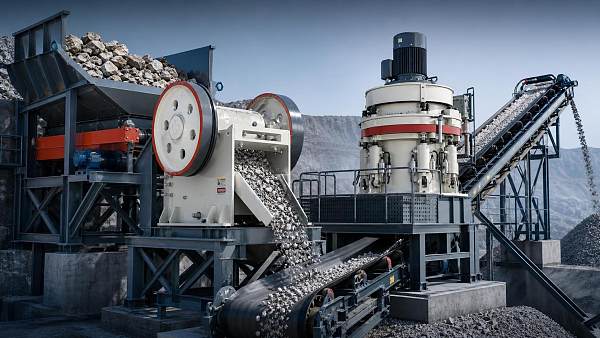
A sound procurement process compares not just crusher type, but the complete operating envelope. Jaw crushers, gyratory crushers, and cone-based downstream arrangements each respond differently to feed size, hardness, and variation. The right choice depends on whether the mine values coarse feed acceptance, continuous throughput, lower civil complexity, or simpler maintenance access. For business evaluation teams, the best decision is often the one that minimizes bottlenecks across 3–5 years, not just at commissioning.
Support equipment also changes the economics. Feeders, rock breakers, dozers, loaders, road maintenance units, and stockpile reclaim systems all affect sustained throughput. A crusher package that appears cost-efficient on paper may need more frequent auxiliary intervention, which adds labor, fuel, wear parts, and downtime. This is why G-MRH tracks heavy earthmoving and bulk material handling together rather than as isolated categories.
For international buyers, it is also wise to compare delivery lead times, parts stocking assumptions, and field service response windows. Depending on plant complexity and regional logistics, a practical spare parts replenishment window may range from 2–8 weeks. That matters because throughput losses from one unavailable liner set or feeder component can easily outweigh initial purchase savings.
In some sourcing workflows, teams also review general equipment intelligence references or archived procurement links such as 无 when organizing vendor files and internal comparisons. The value is not the label itself, but whether the package helps clarify duty cycle, serviceability, and total cost under mine-specific operating conditions.
Comparison framework for throughput-focused procurement
Use the following matrix to compare crusher throughput decisions with a commercial and operational lens rather than a simple capital expenditure lens.
This type of comparison helps procurement teams defend decisions internally. It links mechanical selection to mine availability, labor demands, and service risk. That is especially valuable for EPC reviews, dealer representation decisions, and distributor portfolio planning across multiple project regions.
Cost signals that are often underestimated
- Rehandle cost when oversize must be broken or diverted before the primary crusher.
- Road maintenance cost when wet-season deterioration increases truck delay frequency.
- Higher wear rates caused by poor feed shape, tramp metal exposure, or unstable choke feeding.
- Production opportunity cost during 4–12 hour stoppages that appear small individually but accumulate over a quarter.
What standards, compliance factors, and project checks should decision-makers review?
Crusher throughput decisions should never be separated from safety, access, and compliance. In mining projects, the best-performing layout is still a weak investment if it complicates isolation, guarding, lifting, dust suppression, or emergency response. Buyers should review whether the selected arrangement can align with applicable ISO practices, AS/NZS references where relevant, local Mine Safety Acts, and the site’s own lockout and access standards.
Civil and structural choices also affect throughput indirectly. Restricted maintenance platforms, poor chute access, or underspecified lifting beams can extend planned outages by several hours per intervention. Over a quarter or a year, those hours become lost tons. This is why engineering review should include maintenance planners, safety personnel, and operations supervisors, not only procurement and project engineers.
Environmental controls matter as well. Dust management, water availability, and stormwater handling can change how consistently a plant runs in dry or wet seasons. For example, material that flows normally in one season may bridge in hoppers during moisture spikes. A procurement team should therefore ask whether the plant has enough flexibility to operate across seasonal ranges instead of one fixed condition set.
For commercial intelligence users, this is where the broader G-MRH perspective is useful. The platform connects asset benchmarking with policy intelligence, project tender patterns, and ESG-related operational expectations. That helps buyers avoid technically acceptable but commercially weak decisions when entering new regions or comparing suppliers across different regulatory environments.
A practical compliance and implementation checklist
Review these 6 areas before final approval
- Isolation and lockout access for crusher, feeder, conveyors, and hydraulic attachments.
- Guarding, walkways, and working-at-height arrangements for inspections and liner changes.
- Dust suppression and water management provisions for dry-season and wet-season operation.
- Lifting and maintenance planning, including crane or fixed lifting point requirements.
- Integration with site traffic plans, especially where trucks, loaders, and maintenance equipment share operating zones.
- Spare parts and service response planning for the first 6–12 months after commissioning.
These checks improve more than compliance. They shorten interventions, reduce informal workarounds, and support stable crusher throughput over time. In many projects, that operational discipline delivers more value than a marginal difference in installed power.
FAQ: how do buyers avoid common throughput mistakes?
How should a buyer assess crusher throughput if ore characteristics change across the pit?
Use range-based evaluation, not a single design point. Review how the circuit behaves across likely feed variability in hardness, moisture, and top size over at least 3 operating scenarios. Ask suppliers what throughput derating is expected when feed departs from nominal assumptions. This approach is more realistic for phased pits, blended ore programs, and evolving benches.
What is the most overlooked reason for poor crusher throughput after commissioning?
Feed instability is often the hidden issue. Sites may commission a technically sound crusher, then underperform because of inconsistent blasting, truck surging, segregation in stockpiles, or inadequate feeder tuning. When throughput is below expectation, investigate the mine-to-hopper interface first. Mechanical troubleshooting alone may not solve the real bottleneck.
How many procurement criteria should be mandatory in a commercial comparison?
A practical minimum is 5 core criteria: feed acceptance range, maintenance access, auxiliary equipment dependence, spare parts lead time, and compliance fit. Some buyers add a sixth criterion for civil complexity or commissioning support. This structure gives sourcing teams a balanced view of capital cost, operating risk, and throughput resilience.
Is the lowest capital cost package usually the best option?
Not necessarily. A lower initial price can lead to higher lifecycle cost if the system needs more secondary breaking, more feeder intervention, or more downtime during maintenance. Buyers should compare at least a 12–24 month operating horizon, especially where spare parts logistics and remote service access are important.
Where can distributors and project evaluators organize early-stage technical references?
Many teams use internal tender libraries, engineering databases, and external reference links such as 无 when screening equipment packages. The key is to organize data around mine conditions, support capability, and throughput risk instead of storing only brochures or headline specifications.
Why work with a data-driven mining intelligence partner?
When crusher throughput is tied to blast design, earthmoving performance, plant layout, and regulatory conditions, decisions need more than catalog comparison. G-MRH supports this process by connecting mining, mineral processing, heavy machinery, and policy intelligence in one evaluation framework. That is useful for procurement teams preparing RFQs, commercial analysts testing project assumptions, and distributors deciding which equipment lines fit their regional market.
You can engage G-MRH to clarify 4 practical topics before a commitment is made: equipment selection against feed variability, realistic delivery and spare parts considerations, compliance and access review, and lifecycle cost trade-offs between alternative mine-to-crusher arrangements. This helps reduce avoidable risk early, when changes are still affordable.
For buyers managing active tenders or expansion studies, the most productive next step is a structured review of plant duty assumptions, support equipment matching, and maintenance access constraints. For dealers and agents, the priority may be market fit, portfolio benchmarking, or identifying where service capability will influence win probability more than price alone.
If you need support, contact G-MRH for parameter confirmation, crusher and support equipment selection, delivery lead-time discussion, compliance requirement review, spare parts planning, and quotation comparison guidance. A focused technical-commercial review at the start of the process can do more to protect crusher throughput than a late-stage correction after the plant is already underperforming.
Recommended News
 Jul 19, 2026Mining Crushers Selection Guide: Capacity, Feed Size, and Wear CostsMiningcrushers selection guide covering capacity, feed size, and wear costs. Learn how to compare crusher types, cut downtime, and choose the most cost-effective setup.
 Jul 08, 2026When to Choose a Linear Vibrating Screen SupplierVibrating screen supplier linear type selection starts with application fit, durability, and support. Learn when a specialist supplier can reduce downtime, improve screening efficiency, and protect long-term plant value.
 Jul 08, 2026How to Compare Cone Crusher OEMs for Low Operating CostCone crusher OEM low operating cost starts with total cost, not price. Learn how to compare wear life, energy use, uptime, and parts support to choose the best-value supplier.
 Jul 06, 2026Circular Vibrating Screen Supplier Checklist for Stable OutputVibrating screen supplier circular type checklist for stable output: compare structural strength, exciter reliability, media fit, and service support to reduce downtime and improve screening performance.