Industrial Mining Equipment Costs That Rarely Show Up Upfront
Industrial mining equipment costs rarely stop at the quoted purchase price. In practice, the biggest budget surprises usually come from installation, site readiness, wear parts, operator training, compliance upgrades, downtime, and energy use over the asset’s life. For mining researchers, equipment users, and procurement teams, the real question is not “What does this machine cost?” but “What will this machine truly cost to own, run, maintain, and keep compliant in this mine environment?” The short answer: often far more than the upfront quote, and those hidden costs can materially change fleet strategy, metallurgy equipment selection, and long-term project economics.
For readers comparing industrial mining equipment across open-pit, underground, mineral processing, and bulk material handling applications, this article focuses on the cost items that most often distort total lifecycle cost. It also explains how those costs affect mining equipment reliability, mining benchmarking, digital twins mining strategies, and capital planning in a market shaped by commodity volatility, ESG pressure, and mining decarbonization targets.
Why the quoted machine price is often the least useful number
A supplier quote is necessary, but it is rarely sufficient for decision-making. In industrial mining, the invoice price usually reflects the core unit configuration, basic documentation, and standard factory scope. It may not fully account for mine-specific conditions such as altitude, heat, dust loading, corrosive ore, haul road quality, geotechnical constraints, water management, or local regulatory requirements.
This matters because a machine that looks cost-competitive on paper can become expensive once it is adapted to actual site duty cycles. A haul truck, crusher, mill, conveyor system, loader, drill rig, or dewatering package may require structural upgrades, liner changes, filtration enhancements, fire suppression systems, autonomous readiness modules, or electrical modifications before it can perform reliably at the intended production rate.
For both information researchers and operators, the most important shift is this: compare equipment by total cost of ownership, not just capital expenditure. The lowest purchase price can easily become the highest lifecycle cost when reliability losses, unplanned maintenance, and poor application fit are included.
Which hidden costs usually hit mining projects first
The earliest hidden costs often appear before the equipment even starts production. These are commonly overlooked during initial budget screening because they sit outside the equipment line item but are directly caused by the equipment choice.
1. Site preparation and infrastructure upgrades
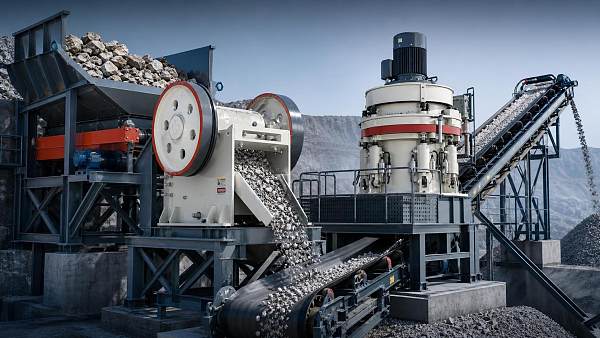
Heavy machinery may require reinforced foundations, crane access, wider haul roads, drainage works, fuel storage, substations, switchgear, compressed air systems, workshops, lubrication stations, and communication networks. In mineral processing, even a modest equipment change can trigger major civil and structural redesigns.
2. Transport, logistics, and import complexity
Oversize loads, remote mine access, port handling, inland transport, escort requirements, customs clearance, and insurance can add substantial cost. In landlocked or politically sensitive regions, logistics risk can materially affect project schedules and cash flow.
3. Commissioning and performance ramp-up
The machine may be delivered, but reaching stable throughput is another matter. Commissioning often requires vendor technicians, calibration, test runs, software tuning, process integration, and multiple shutdown windows. If the equipment is connected to a larger mining fleet or plant circuit, one delayed subsystem can affect the whole operation.
4. Training and competency development
Modern mining equipment increasingly depends on digital controls, diagnostics, automation features, and condition-monitoring tools. That means training is not optional. Buyers frequently underestimate the time and cost needed to train operators, maintenance crews, and planners to use the asset safely and efficiently.
How operating conditions quietly increase lifecycle cost
Industrial mining equipment is highly sensitive to operating context. Two identical machines can produce very different cost outcomes depending on ore hardness, abrasiveness, moisture, shift discipline, operator behavior, and maintenance quality.
For example, metallurgy equipment and comminution assets are especially exposed to feed variability. A crusher or mill selected on nominal design assumptions may consume more power, wear parts, and liner inventory if actual ore characteristics deviate from the test data. Likewise, mobile fleet assets can experience accelerated tyre wear, suspension stress, and fuel burn if haul profiles or road conditions are worse than assumed.
This is where mining benchmarking becomes useful. Comparing equipment only by rated capacity or brochure efficiency is misleading. More meaningful metrics include:
- Cost per operating hour
- Cost per tonne moved or processed
- Mean time between failures
- Maintenance labor hours per 1,000 operating hours
- Energy consumption per tonne
- Availability under actual site conditions
- Wear-part consumption by ore type and duty cycle
These measures help readers distinguish between theoretical performance and real mine economics.
Maintenance, wear parts, and downtime: the biggest hidden cost cluster
If one cost category consistently exceeds expectations in mining, it is the combination of maintenance burden, consumables, and production loss from downtime. This is also the area most closely linked to mining equipment reliability.
Wear parts are not a side cost
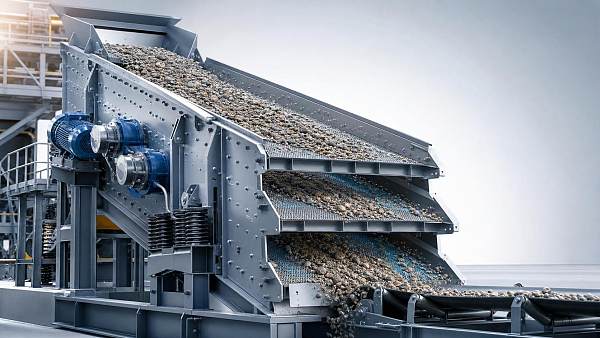
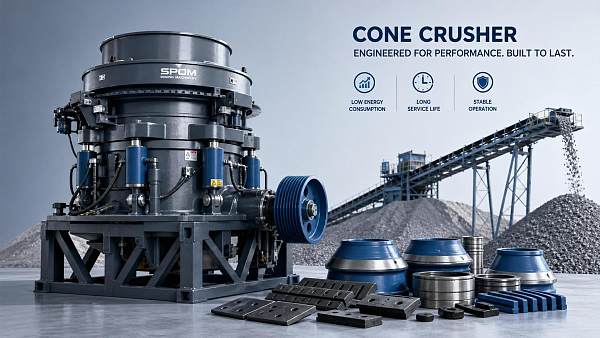
Ground engaging tools, mill liners, crusher wear parts, conveyor belts, rollers, pumps, seals, filters, hydraulic hoses, tyres, and lubrication materials can become major recurring expenses. In abrasive applications, wear-part turnover can define the economics of the asset more than the original purchase price.
Downtime multiplies cost beyond repair expense
When a machine fails, the visible repair bill is only one part of the problem. The larger cost may be lost production, idle labor, delayed blasting, plant starvation, missed shipment windows, or contract penalties. For process plants, one failed pump or conveyor can trigger upstream and downstream disruptions across the circuit.
Spare parts strategy affects reliability and working capital
Mining sites often struggle to balance parts availability against inventory carrying cost. If critical spares are not stocked, long lead times can extend outages. If too many are stocked, cash gets trapped in low-rotation inventory. The right answer depends on failure criticality, supplier responsiveness, and the mine’s tolerance for production risk.
This is why advanced buyers now evaluate equipment together with parts support models, field-service access, rebuild options, and predictive maintenance capability.
Energy, water, and decarbonization costs are no longer secondary
In many operations, utility-related expenses are now among the most important hidden cost drivers. This is especially true where mines face high diesel prices, unstable grids, carbon reporting pressure, or water scarcity.
Energy-intensive assets such as crushers, mills, ventilation systems, pumps, and material handling networks can create a long-term cost burden that dwarfs small differences in purchase price. A slightly more expensive machine with better energy efficiency may offer superior total value over years of operation.
Mining decarbonization is also changing cost visibility. Electrified fleets, battery systems, trolley assist, hybrid equipment, and zero-emission machinery may reduce future fuel and emissions exposure, but they can introduce new hidden costs in charging infrastructure, grid upgrades, thermal management, maintenance retraining, and battery replacement planning.
Similarly, water-efficient or dust-control-enhanced systems may require additional instrumentation, treatment integration, and monitoring obligations. These are not reasons to avoid cleaner technology, but they are reasons to assess cost structure more realistically.
Compliance, safety, and ESG requirements often add non-obvious cost
Equipment used in mining must operate within a demanding framework of safety rules, environmental permits, and engineering standards. Depending on jurisdiction and commodity type, hidden compliance costs can include guarding modifications, fire suppression, dust suppression, noise reduction, operator-assist technologies, emissions controls, telemetry, and documentation for audits or inspections.
International buyers also need to account for differences between factory-standard configuration and mine-site legal requirements under ISO frameworks, AS/NZS references, local Mine Safety Acts, and project-specific EPC specifications. What appears compliant in one region may require redesign or recertification in another.
For researchers and procurement professionals, this is a key lesson: compliance cost is not just a legal issue; it is a capital and operating issue. It affects commissioning speed, insurability, workforce acceptance, and the risk of unplanned retrofits after delivery.
Why digital systems can reduce hidden costs—or create new ones
Digital twins mining platforms, fleet management systems, condition monitoring, OEM telematics, and predictive analytics are often presented as cost-saving solutions. In many cases, they are. They can improve maintenance planning, reduce unplanned failures, optimize energy use, and support better mining benchmarking.
But digital layers also come with their own hidden costs. These may include sensor installation, connectivity infrastructure, software licensing, cybersecurity controls, integration with existing systems, data governance, cloud storage, and specialist staff capable of turning raw equipment data into operational decisions.
The practical takeaway is simple: digital tools should be evaluated like any other industrial asset. Ask whether they reduce downtime, improve utilization, or lower maintenance cost enough to justify implementation and ongoing support. If the digital stack is not aligned with site capability, it can become underused overhead rather than operational leverage.
Questions buyers and operators should ask before comparing equipment options
To avoid being misled by a low quoted price, buyers and users should ask more operationally grounded questions during evaluation:
- What assumptions were used for duty cycle, material properties, altitude, temperature, and moisture?
- What civil, electrical, and infrastructure scope is excluded from the quote?
- What are the expected wear-part intervals under comparable mine conditions?
- What availability has the equipment achieved at similar sites?
- How long are lead times for critical spares and rebuild components?
- What operator and maintainer training is required?
- What software, licensing, and connectivity costs apply over five years?
- What compliance modifications are needed for the project jurisdiction?
- How does the asset perform against decarbonization and energy-efficiency targets?
- What is the expected cost per tonne, not just the purchase price?
These questions help shift the discussion from sales specification to operational reality.
A practical framework for estimating the real cost of industrial mining equipment
For readers who need a more disciplined method, a useful framework is to break total equipment cost into six layers:
- Acquisition cost: base machine, optional packages, freight, taxes, insurance
- Deployment cost: installation, civil works, electrical integration, commissioning, training
- Operating cost: fuel, power, water, labor, consumables
- Maintenance cost: planned service, wear parts, repairs, rebuilds, field service
- Risk cost: downtime, parts delays, production loss, compliance failure, safety incidents
- End-of-life and transition cost: disposal, relocation, resale loss, technology obsolescence
This structure is especially useful when comparing heavy earthmoving equipment, processing plants, and bulk handling systems across different jurisdictions and mine plans. It also supports more credible investment cases for digital twins mining, low-emission upgrades, and lifecycle optimization programs.
Final assessment: the cheapest machine is often the most expensive decision
Industrial mining equipment costs that rarely show up upfront are usually the ones that shape long-term value: site adaptation, logistics, maintenance burden, wear parts, downtime exposure, compliance upgrades, energy intensity, and digital support requirements. For operators, these hidden costs affect daily reliability and workload. For researchers and technical buyers, they determine whether a machine truly fits the mine, the orebody, and the operating model.
The most useful way to evaluate industrial mining equipment is through lifecycle thinking supported by benchmarking, real operating data, and realistic mine assumptions. In a sector defined by volatile mining commodities, rising ESG expectations, and the push toward mining decarbonization, procurement decisions based only on sticker price are increasingly risky.
If there is one clear conclusion, it is this: a credible mining equipment decision should always ask what the asset will cost to perform, not merely what it costs to purchase.
Recommended News
 Jul 19, 2026Mining Crushers Selection Guide: Capacity, Feed Size, and Wear CostsMiningcrushers selection guide covering capacity, feed size, and wear costs. Learn how to compare crusher types, cut downtime, and choose the most cost-effective setup.
 Jul 08, 2026When to Choose a Linear Vibrating Screen SupplierVibrating screen supplier linear type selection starts with application fit, durability, and support. Learn when a specialist supplier can reduce downtime, improve screening efficiency, and protect long-term plant value.
 Jul 08, 2026How to Compare Cone Crusher OEMs for Low Operating CostCone crusher OEM low operating cost starts with total cost, not price. Learn how to compare wear life, energy use, uptime, and parts support to choose the best-value supplier.
 Jul 06, 2026Circular Vibrating Screen Supplier Checklist for Stable OutputVibrating screen supplier circular type checklist for stable output: compare structural strength, exciter reliability, media fit, and service support to reduce downtime and improve screening performance.