Crushing Plants: The Hidden Bottleneck in Material Throughput
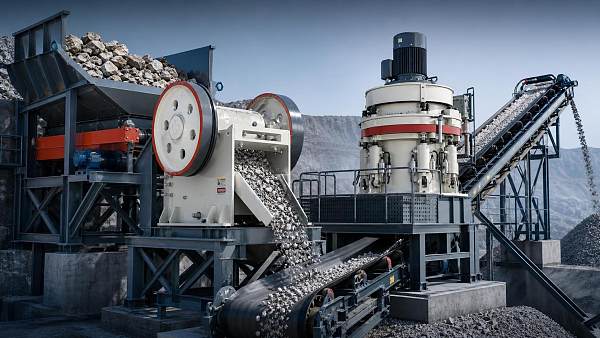
In mining engineering and bulk materials processing, crushing plants often become the hidden bottleneck that limits throughput, raises operating costs, and disrupts production targets. From open-pit mining to underground mining, operators relying on mining equipment, excavators, construction machinery, and other heavy machinery must understand how crushing efficiency shapes the performance of the entire material chain. This article explores where the constraints begin and how modern mining technology can help remove them.
When material throughput stalls, the root cause is often not the mine, the haul fleet, or the downstream plant. It is the crushing plant. For information researchers and site operators, the practical takeaway is straightforward: if the crusher circuit is undersized, poorly configured, unevenly fed, or frequently stopped by maintenance issues, the entire operation pays for it through lower output, higher energy consumption, excessive wear, and unstable product sizing. In other words, crushing plants are not just a processing step. They are a production control point.
For most operations, the key question is not simply “How large is the crusher?” but “Can the whole crushing circuit sustain target throughput under real operating conditions?” That includes feed variability, moisture, oversize material, liner wear, chute design, equipment availability, and coordination with conveying, screening, and stockpiling systems. Understanding those constraints is what separates a nameplate-capacity plant from a high-performing one.
Why crushing plants become the hidden bottleneck
A crushing plant becomes a bottleneck when its real-world handling capacity falls below the material demand placed on it by the mine plan or downstream process. This happens more often than many teams expect because plant performance is usually affected by multiple small inefficiencies rather than one obvious failure.
Common bottleneck sources include:
- Inconsistent feed size: Large rock variation, slabby material, or unblasted oversize reduces crusher efficiency.
- Poor feed presentation: Uneven loading, segregation, and surging lead to unstable crushing conditions.
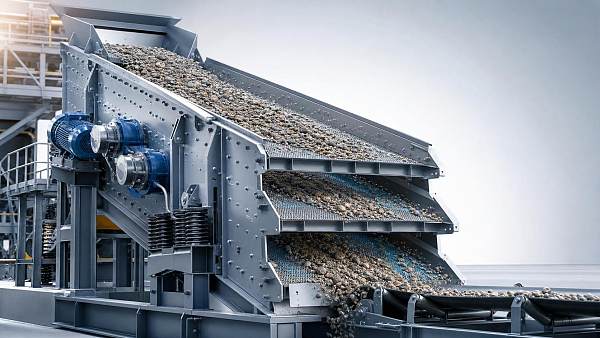
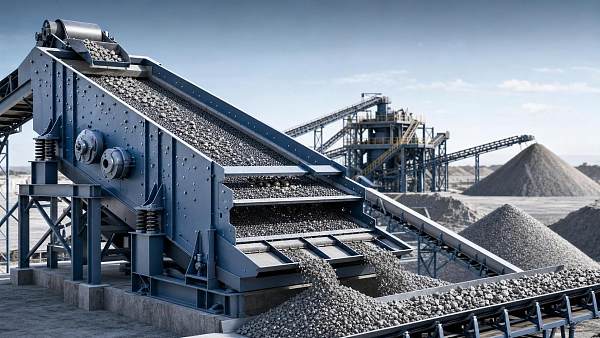
- Screening mismatch: If screens are undersized or blinded, they recirculate excess load back into the circuit.
- Moisture and clay content: Sticky feed can block chutes, blind screens, and lower effective throughput.
- Liner wear and crusher settings drift: As wear progresses, reduction ratios and product consistency can deteriorate.
- Conveyor and transfer constraints: Even if the crusher has capacity, poor transfer design can choke the circuit.
- Frequent downtime: Maintenance delays, blockages, and unplanned stoppages reduce average hourly output.
In both open-pit mining and underground mining, the crushing stage often absorbs feed variability from the upstream operation. Excavators, loaders, haul trucks, feeders, and other heavy machinery may perform well individually, yet plant throughput still drops because the crushing circuit cannot process what the mine delivers in a stable way.
What operators and planners should check first
If a site is missing throughput targets, the first step should be to evaluate the crushing plant as a system, not as a standalone machine. Operators and planners should focus on a few high-impact checks before considering major capital expansion.
- Compare design capacity with actual sustained capacity: Nameplate numbers are often based on ideal feed conditions. Real performance should be measured over full shifts and different ore conditions.
- Track choke points by hour: Identify where material queues form, where stoppages begin, and how long recovery takes.
- Review crusher utilization versus availability: A crusher may be mechanically available but still underperform due to unstable feeding or downstream limitations.
- Measure recirculating load: Excess return material often signals poor screening efficiency or unsuitable crusher settings.
- Check feed distribution: Uneven wear and poor chamber utilization usually point to feed issues, not only crusher issues.
- Examine transfer points and chute geometry: Material handling failures frequently appear outside the crusher itself.
This kind of structured review helps both decision-makers and plant personnel distinguish between a true equipment shortfall and a control, maintenance, or process-design problem.
How crushing inefficiency affects the entire mining and processing chain
When a crushing plant underperforms, the negative effects spread quickly across the site. This is why crushing is such a critical part of mining technology and bulk material handling strategy.
The main operational impacts include:
- Reduced mine productivity: If trucks or loaders must wait because the crusher pocket is full, upstream mining equipment loses effective operating time.
- Higher unit costs: Lower throughput means fixed costs are spread over fewer tonnes.
- Increased energy intensity: Poor crushing efficiency often raises kilowatt-hours per tonne processed.
- More wear on downstream equipment: Inconsistent particle size can overload mills, screens, conveyors, and pumps.
- Production instability: Variable crusher output disrupts blending, stockpiling, and plant scheduling.
- Maintenance pressure: Frequent blockages and overloads accelerate component wear and increase intervention frequency.
For users and operators, the practical lesson is that throughput loss is rarely isolated. A poorly performing crushing plant can reduce the efficiency of excavators, construction machinery, conveying systems, and mineral processing equipment across the entire operation.
Signs that your crusher circuit is the real constraint
Some bottlenecks are visible, but many are hidden behind normal daily disruptions. The following signs often indicate that the crusher circuit, rather than another area, is the true throughput limiter:
- The haul fleet experiences recurring delays at the tipping point.
- The crusher is frequently started and stopped instead of running steadily.
- Screen decks blind or overload under certain ore or weather conditions.
- Conveyor spillage increases around transfer points.
- Liner wear becomes uneven or faster than expected.
- Product gradation fluctuates enough to affect downstream process stability.
- Daily tonnage targets are missed even when drilling, blasting, and loading perform to plan.
These symptoms matter because they point to system-level throughput losses. If teams only focus on the crusher motor or chamber, they may miss the larger issue of feed preparation, circuit design, or plant integration.
Practical ways to improve crushing plant throughput
Improving throughput does not always require buying a bigger machine. In many cases, the best gains come from optimizing how existing mining equipment and crushing assets work together.
High-value improvement actions include:
- Improve blast fragmentation: Better feed size distribution reduces oversize handling and crusher stress.
- Stabilize feed rate: Feeders, surge bins, and operator discipline help maintain continuous chamber loading.
- Optimize closed-side settings: Small setting adjustments can materially affect capacity and product size.
- Upgrade screen performance: Better media selection and maintenance can reduce recirculating load.
- Redesign chutes and transfer points: Flow improvements often reduce blockages and downtime.
- Strengthen liner management: Planned change-outs based on wear data prevent throughput decline late in liner life.
- Use condition monitoring: Vibration, temperature, power draw, and wear tracking help detect loss of efficiency early.
- Train operators on circuit behavior: Skilled operators can respond faster to changing feed conditions and avoid unstable operation.
For sites running mobile or semi-mobile systems, crusher relocation strategy, feeder setup, and truck-dump coordination can also significantly improve utilization. For fixed plants, the biggest opportunities often come from screen-crusher-conveyor alignment rather than from the crusher alone.
Where modern mining technology makes the biggest difference
Modern mining technology is making crushing plants more transparent, predictable, and controllable. This is especially important for operations that need to balance high throughput, lower lifecycle cost, and ESG performance.
The most useful technologies include:
- Real-time plant monitoring: Throughput, power draw, downtime events, and feed conditions can be tracked continuously.
- Digital twins and simulation: Engineers can model circuit performance before making layout or equipment changes.
- Automated control systems: Crusher settings, feeder speed, and screen loading can be adjusted dynamically.
- Predictive maintenance tools: Data analytics helps schedule interventions before failures reduce production.
- Integrated fleet-to-plant coordination: Haulage and crushing activities can be synchronized to reduce surging and idle time.
For information researchers comparing technologies or suppliers, the key value is not digitalization by itself. It is whether the technology improves sustained throughput, reduces downtime, lowers energy per tonne, and supports safer operation under variable feed conditions.
How to evaluate crushing plants before investing in upgrades or new equipment
Whether assessing a brownfield upgrade or a new installation, buyers and technical teams should avoid evaluating crushing plants only by peak capacity claims. A stronger assessment framework includes operational realism and lifecycle performance.
Important evaluation questions include:
- What feed size range, moisture level, and material hardness was used to define capacity?
- What is the expected availability under actual site conditions?
- How does the circuit handle clay, fines, or variable ore domains?
- What are the wear-part replacement intervals and costs?
- How easy is maintenance access, especially for liners, screens, and blocked chutes?
- Can the plant expand with future mine output requirements?
- How well does it integrate with existing conveyors, stockpiles, and downstream processing equipment?
- What safety, emissions, and energy-efficiency standards does it meet?
This is where technical benchmarking becomes valuable. A crushing solution that looks strong on paper may still create a throughput bottleneck if it cannot handle duty-cycle variability, maintain product consistency, or support reliable maintenance planning.
The bottom line for operators and decision-makers
Crushing plants are often the hidden bottleneck because their limitations are distributed across feed quality, plant design, equipment condition, and system coordination. That makes the problem easy to underestimate and expensive to ignore.
For operators, the priority is to identify where unstable feed, wear, screening inefficiency, and transfer problems are stealing tonnes per hour. For decision-makers and researchers, the priority is to judge crushing performance by sustained throughput, reliability, maintainability, and lifecycle cost rather than by headline capacity alone.
In mining, mineral processing, and bulk material handling, throughput is built through system balance. When the crushing plant is properly designed, fed, monitored, and maintained, the benefits extend far beyond the crusher itself: better mine productivity, lower unit cost, more stable downstream performance, and stronger operational resilience.
Recommended News
 Jul 19, 2026Mining Crushers Selection Guide: Capacity, Feed Size, and Wear CostsMiningcrushers selection guide covering capacity, feed size, and wear costs. Learn how to compare crusher types, cut downtime, and choose the most cost-effective setup.
 Jul 08, 2026When to Choose a Linear Vibrating Screen SupplierVibrating screen supplier linear type selection starts with application fit, durability, and support. Learn when a specialist supplier can reduce downtime, improve screening efficiency, and protect long-term plant value.
 Jul 08, 2026How to Compare Cone Crusher OEMs for Low Operating CostCone crusher OEM low operating cost starts with total cost, not price. Learn how to compare wear life, energy use, uptime, and parts support to choose the best-value supplier.
 Jul 06, 2026Circular Vibrating Screen Supplier Checklist for Stable OutputVibrating screen supplier circular type checklist for stable output: compare structural strength, exciter reliability, media fit, and service support to reduce downtime and improve screening performance.