How to vet a mining safety equipment supplier
Choosing the right mining safety equipment supplier is not mainly a price decision. For procurement teams, commercial evaluators, and channel partners, the real question is whether a supplier can prove compliance, deliver reliable equipment for harsh mine conditions, support uptime in the field, and remain commercially dependable across the life of a contract. If you are screening an open-pit mining equipment supplier for Africa projects or other large mining developments, the safest approach is to vet technical capability, regulatory alignment, after-sales service, repair infrastructure, and financial strength together—not in isolation.
What buyers are really trying to confirm before approving a supplier
When someone searches how to vet a mining safety equipment supplier, they are usually not looking for generic supplier management advice. They want to reduce operational risk before issuing a purchase order, entering a framework agreement, or committing to a tender. In mining, a weak supplier does not just create delays. It can expose the mine owner, EPC contractor, distributor, or procurement lead to compliance failures, unsafe working conditions, excessive downtime, spare-parts shortages, and reputational damage.
That is why the best supplier assessments answer five practical questions early:
- Is the equipment compliant with the mine’s applicable safety and engineering standards?
- Has the supplier proven field performance in similar open-pit or heavy-duty environments?
- Can they support maintenance, repairs, and parts availability at site level?
- Are they commercially stable enough for long-term projects and warranty obligations?
- Can they respond fast enough when safety-critical equipment fails?
If a supplier cannot give credible, documented answers to these points, low pricing should not outweigh the risk.
Start with compliance evidence, not marketing claims
The first screen for any mining safety equipment supplier should be formal compliance verification. Mining buyers should ask for more than brochures and self-declarations. You need evidence that the products and processes align with the regulations and standards relevant to the intended market and mine type.
Depending on the equipment category and destination, that may include:
- ISO-certified quality systems, such as ISO 9001
- Occupational health and safety management systems such as ISO 45001
- Region-specific or country-specific mining and workplace compliance documentation
- Electrical, fire-retardant, visibility, ergonomics, and machine guarding certifications where applicable
- Testing reports from accredited laboratories or recognized third parties
- Material traceability and manufacturing quality records
For buyers evaluating equipment for open-pit operations, this matters because site conditions are severe: dust, vibration, heat, impact, long duty cycles, and operator fatigue all increase risk. A supplier that understands mining standards should be able to explain exactly which standards their equipment meets, where the limitations are, and what operating conditions the certification covers.
If you receive vague answers such as “built to international standards” without named standards, dates, issuing bodies, and test records, treat that as a warning sign.
Check whether the supplier has real mining application experience
A compliant product on paper is not enough. Mining safety equipment must perform in real conditions. Procurement teams should therefore ask for installed references in environments similar to their own project.
The most useful reference checks are not broad customer lists. They are specific case examples covering:
- Mine type: open-pit, underground, processing plant, haul road, workshop, or loading zone
- Commodity environment: iron ore, copper, coal, gold, aggregates, or multi-mineral operations
- Climate conditions: high heat, seasonal rain, desert dust, coastal corrosion, altitude
- Duty profile: continuous shifts, heavy vehicle interaction, blasting proximity, mobile workforce exposure
- Service duration: how long the equipment has been in use
- Failure history and corrective actions
Ask reference customers what happened after delivery. Did the supplier help with installation, training, commissioning, and troubleshooting? Were consumables and replacement parts available locally? Were there recurring failures? This is often where supplier quality becomes visible.
For cross-border buyers, especially those reviewing mining tenders in Africa, practical field history can be more valuable than polished presentations. The right supplier will usually have a clear track record in remote or infrastructure-constrained operating regions.
Evaluate after-sales service and heavy machinery repair capability
One of the most overlooked aspects of supplier vetting is service depth. Mining operations do not buy safety equipment only once; they buy ongoing support, response time, and uptime protection. This is especially important when the supplier also supports equipment connected to broader fleet or site safety performance.
Review the supplier’s after-sales structure in detail:
- Local or regional service centers
- Field technician availability
- Service-level agreements and response times
- On-site commissioning support
- Preventive maintenance programs
- Spare-parts inventory policy
- Technical training for operators and maintenance teams
- Heavy machinery repair capability, either in-house or through authorized partners
A mining safety equipment supplier that cannot support troubleshooting and repairs in the field may create hidden lifecycle costs far above the initial purchase price. In many cases, the real procurement advantage comes from suppliers that combine compliant equipment with practical maintenance support and clear escalation procedures.
Distributors and agents should also verify whether service rights are exclusive, shared, or subcontracted. A supplier may appear to have broad coverage, but local execution may depend on third parties with inconsistent technical competence.
Look beyond product price to total cost of ownership
Experienced procurement professionals know that the cheapest quotation may be the most expensive choice over the contract period. To properly vet a supplier, compare total cost of ownership rather than ex-works or landed price alone.
Include the following in your comparison model:
- Expected operating life
- Failure rates and mean time between service events
- Replacement cycle for wear parts or consumables
- Training requirements
- Downtime impact if equipment fails
- Warranty coverage and exclusions
- Repair turnaround time
- Freight cost for emergency parts
- Compliance risk and possible re-certification costs
For large projects, this comparison should be formalized in a weighted supplier scorecard. A higher-priced supplier may still offer stronger value if they reduce downtime, lower incident risk, simplify audits, and shorten maintenance delays.
In some industrial sourcing portals, buyers may also encounter placeholder product entries such as 无. These should never replace full technical and commercial verification; they are at most a starting point for deeper due diligence.
Test commercial strength and contract reliability
Even technically strong suppliers can become high-risk vendors if their commercial base is weak. Mining projects often involve long lead times, phased deliveries, warranty commitments, and post-installation support obligations. You should therefore review the supplier as a business, not just as a manufacturer.
Key commercial checks include:
- Years in operation and ownership structure
- Manufacturing footprint and supply-chain dependency
- Insurance coverage
- Export experience and trade documentation capability
- Financial statements or credit references where available
- Claims history, dispute patterns, or legal actions
- Ability to support performance bonds, guarantees, or tender documentation
This is especially relevant for EPC contractors, dealers, and sourcing teams bidding into large capital projects. If a supplier cannot maintain delivery discipline, honor warranty obligations, or survive a commodity-cycle downturn, the buyer may inherit the risk at the worst possible time.
Assess documentation quality and technical transparency
Strong suppliers are usually strong documenters. Weak suppliers often hide behind incomplete manuals, unclear datasheets, and inconsistent version control. For safety-related procurement, documentation quality is a major signal of operational maturity.
Check whether the supplier can provide:
- Detailed datasheets with named standards and ratings
- Installation and maintenance manuals
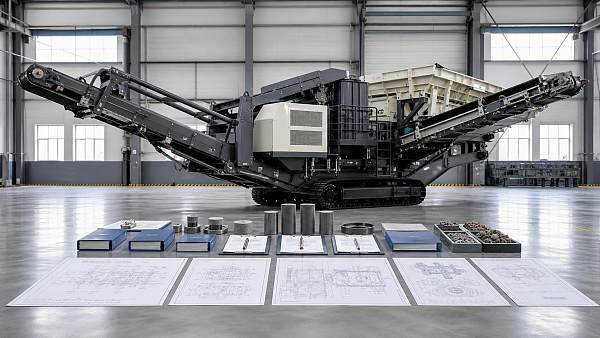
- Parts lists and drawings
- Inspection and testing records
- Training materials
- Warranty terms in clear language
- Revision control for updated product specifications
If technical information changes from one document to another, or if critical values are missing, escalate the review. In mining procurement, documentation gaps often become audit problems later.
Ask how the supplier handles incidents, failures, and recalls
One of the best ways to judge a supplier is to ask what happens when something goes wrong. Every serious industrial supplier should have a process for non-conformance management, root-cause analysis, corrective actions, and customer notification.
Ask direct questions such as:
- How are field failures reported and classified?
- What is the average response time for safety-critical incidents?
- How are defective batches traced and isolated?
- What recall or replacement procedures are in place?
- Who pays for labor, freight, and replacement in a warranty event?
A mature answer shows discipline. A defensive or unclear answer suggests the supplier may struggle under pressure.
Verify support for your specific geography and mine operating model
A supplier may be excellent in one market and unsuitable in another. Mining buyers should check local support capability against their own operating reality. This is critical for projects in remote regions, cross-border logistics corridors, and developing mining jurisdictions.
Review:
- Import and customs experience in the target country
- Regional stockholding strategy
- Availability of local language technical support
- In-country repair partners and technician travel time
- Training support for local workforce capability building
- Ability to meet project localization or local-content expectations
For buyers evaluating an open-pit mining equipment supplier, the difference between a global brand and an effective regional supplier often comes down to execution on the ground, not logo recognition.
A practical supplier vetting checklist for procurement teams
If you need a simple working framework, use this shortlist before supplier approval:
- Confirm applicable mining safety and quality certifications.
- Request third-party test reports and compliance evidence.
- Review project references in similar mining environments.
- Check service network, technician access, and spare-parts support.
- Evaluate heavy machinery repair capability and escalation paths.
- Compare total cost of ownership, not just quoted price.
- Assess financial stability and contract performance history.
- Review documentation quality and revision control.
- Ask for incident-response and corrective-action procedures.
- Validate local support for the exact project geography.
If a supplier performs well on these points, they are much more likely to be a reliable long-term partner rather than only a low-cost bidder.
Final takeaway
To vet a mining safety equipment supplier properly, buyers should focus on proof, not promises. The strongest suppliers can demonstrate compliance, survive technical scrutiny, support uptime in harsh mine conditions, and back their products with service, repairs, and commercial reliability. For information researchers, procurement teams, business evaluators, and channel partners, the safest decision is usually the supplier that combines certified performance, field credibility, service depth, and transparent documentation—even if the unit price is not the lowest.
In mining, supplier selection is risk management. The better your vetting process, the lower your exposure to safety failures, downtime, and costly procurement mistakes.
Recommended News
 Sep 10, 2026What Compliance Documents Should a Mining Equipment Supplier Provide?What documents should a mining equipment supplier provide for compliance proof? Explore essential certificates, safety records, testing evidence, and traceable documentation.
 Sep 07, 2026Do Mining Equipment Safety Standards Differ by Country?Do different countries use different standards for mining equipment safety? Explore ISO, MSHA, CE, ATEX, and local compliance rules before ordering equipment.
 Sep 05, 2026How Do You Calculate Total Cost of Ownership for Mining Machinery?How to calculate total cost of ownership for construction machinery in mining? Explore TCO factors, downtime, fuel, maintenance, and lifecycle savings.
 Sep 01, 2026How Reliable Are Mining Equipment Manufacturers’ Performance Claims?How reliable are performance claims from mining equipment manufacturers? Learn how to verify OEM data, benchmark reliability, and turn claims into measurable commitments.