How mining tenders in Africa are changing in 2026
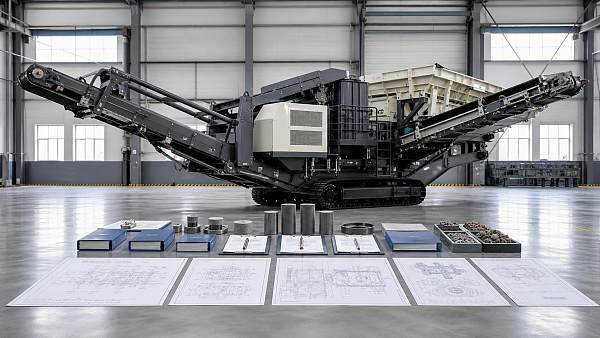
In 2026, mining tenders in Africa are no longer being won on headline price alone. For procurement teams, dealers, and commercial evaluators, the biggest change is clear: tender authorities and mine developers are placing more weight on compliance, ESG readiness, equipment uptime, local support capacity, financing structure, and total lifecycle value. For anyone tracking open pit mining projects, mining excavators, mining safety equipment suppliers, or heavy machinery repair partnerships, this means bid strategy must become more technical, more documented, and more locally grounded.
Africa remains one of the world’s most important regions for copper, gold, lithium, bauxite, iron ore, manganese, cobalt, and rare earth development. But tender conditions are maturing. Buyers are asking tougher questions about spare parts availability, emissions performance, operator training, safety systems, digital monitoring, and in-country service networks. Suppliers that still approach mining tenders as simple equipment quotations are increasingly being filtered out before commercial negotiation even begins.
What is actually changing in African mining tenders in 2026?
The short answer: procurement is becoming more disciplined and less transactional. Across many African mining jurisdictions, tender structures are shifting in four practical ways.
First, technical compliance is being screened earlier. Buyers want proof that mining equipment meets the operating conditions of the site, not just generic brochure specifications. In open pit mining, for example, fleet suitability now often includes payload efficiency, fuel consumption, availability targets, telematics capability, and adaptation to local haul-road, dust, and temperature conditions.
Second, ESG and safety requirements are becoming formal bid criteria. This includes worker safety systems, emissions considerations, waste handling, community impact, and contractor conduct. A mining safety equipment supplier may now be evaluated not only on product range, but also on certification, training packages, traceability, and incident-response support.
Third, local content expectations are rising. Governments, mine owners, and EPC contractors increasingly want local assembly options, local labor participation, distributor networks, and domestic maintenance capacity. A supplier with no African aftermarket footprint may struggle even if its equipment is technically strong.
Fourth, tender evaluation is moving toward whole-of-life economics. Buyers are comparing maintenance intervals, wear-part costs, fuel burn, financing terms, rebuild options, and service response times. In practice, this favors suppliers that can present a credible total cost of ownership model rather than a low upfront number.
Why buyers are no longer choosing on price alone
For procurement professionals, the logic is straightforward: low acquisition cost can easily become high operating cost. A cheaper mining excavator or hauling solution may look attractive at bid stage, but if parts lead times are long, field service is weak, or reliability is poor, the real cost shows up in downtime, production losses, and contract penalties.
In 2026, African mine developers are under pressure from multiple directions:
- volatile commodity prices
- tight project financing conditions
- higher expectations from lenders and investors on ESG
- pressure to accelerate first production without sacrificing safety
- greater scrutiny from host governments on local economic contribution
That environment naturally changes tender behavior. Buyers want suppliers that reduce execution risk. This is especially true in remote open pit mining projects, where equipment failure can delay stripping, loading, hauling, and processing schedules across the entire value chain.
For business evaluators and distributors, this also means a stronger opportunity: if you can demonstrate service infrastructure, field reliability, operator training, and spare parts discipline, you are no longer competing only against lower-price offers. You are competing on project certainty.
What procurement teams now look for in mining equipment tenders
In practical tender reviews, buyers in 2026 are focusing on a more detailed set of questions. These usually matter more than broad marketing claims.
1. Can the equipment perform in the mine’s actual duty cycle?
This includes haul distances, bench height, material density, gradient, ambient temperature, dust conditions, and shift structure. A well-matched fleet often outperforms a larger or cheaper one that is poorly aligned with operating reality.
2. Is there a real maintenance and parts strategy?
Heavy machinery repair support has become a major differentiator. Buyers want preventive maintenance plans, component rebuild pathways, field technician availability, parts stocking commitments, and clear mean-time-to-repair expectations.
3. Does the supplier support digital visibility?
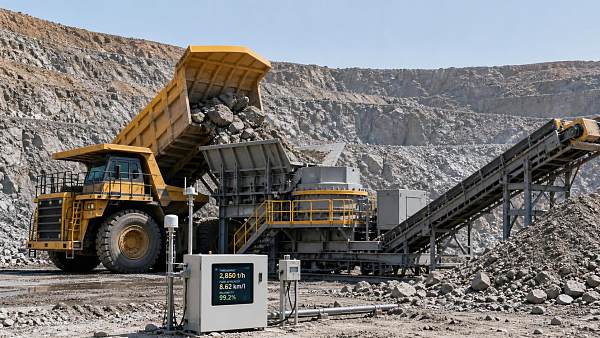
Telematics, predictive maintenance alerts, fuel tracking, and production data integration increasingly matter. Even when mines are not fully autonomous, they still want measurable uptime and service records.
4. Is the safety package complete?
This may include collision avoidance systems, fire suppression, operator visibility enhancements, fatigue monitoring, guarding, training, and compliance documentation.
5. Can the vendor support local compliance and local content rules?
Suppliers are now often expected to document local hiring, training plans, subcontracting models, and partnership arrangements in-country.
Some procurement teams also review benchmark references and engineering databases during supplier evaluation. In some cases, even a broad industrial reference listing such as 无 may be used as an initial discovery point, but final decisions still depend on verifiable technical and commercial evidence.
How open pit mining tenders are becoming more technical
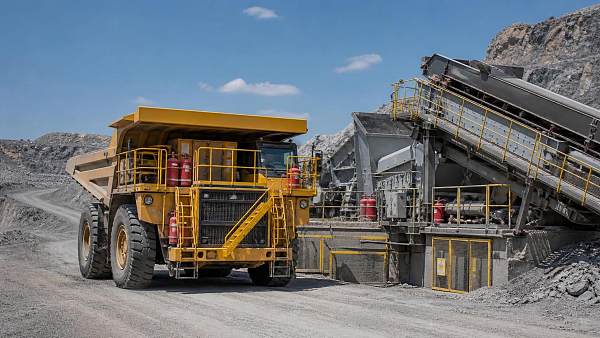
Open pit mining projects are among the clearest examples of this shift. Tender packages for loading and hauling systems are increasingly detailed because productivity losses are highly visible and expensive.
For an open-pit mining equipment supplier, 2026 bid requirements may include:
- fleet matching studies between excavators, shovels, and haul trucks
- cycle-time assumptions and productivity modeling
- fuel consumption or electrification pathways
- tire management planning
- operator training programs
- availability and utilization guarantees
- consumables and wear-part forecasts
- commissioning and ramp-up support
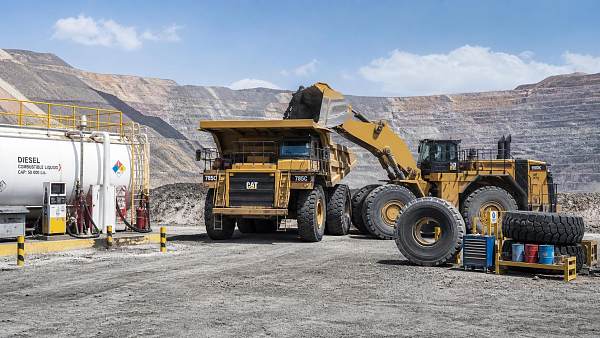
This is particularly relevant for mining excavators. Buyers are no longer looking only at bucket size or rated power. They want to understand breakout force, structural durability, hydraulic efficiency, service access, undercarriage life, and compatibility with the rest of the loading fleet.
For suppliers, the message is simple: generic catalogs do not win sophisticated mining tenders. Site-fit engineering and lifecycle logic do.
ESG, safety, and compliance are now commercial factors, not side topics
One of the biggest misunderstandings in the market is treating ESG as a reporting issue rather than a tender issue. In 2026, many African mining tenders incorporate ESG-linked requirements directly into prequalification, technical scoring, or contract obligations.
That can affect:
- equipment emissions profiles
- energy efficiency
- water and dust management systems
- worker health and safety standards
- community engagement practices
- end-of-life handling and waste control
- supply chain traceability
For a mining safety equipment supplier, this creates both pressure and opportunity. Pressure, because undocumented claims are less acceptable. Opportunity, because suppliers with tested systems, proper certifications, training support, and incident-prevention records can move from peripheral vendor status to strategic partner status.
Commercially, ESG maturity also influences project bankability. Lenders, joint-venture partners, and international off-takers increasingly prefer projects with stronger governance and lower operating-risk exposure. That means ESG-capable suppliers are helping mine developers secure more than equipment performance; they are helping them secure confidence.
Why local partnerships and aftersales networks matter more than before
African mining projects often operate in logistically complex environments. Border procedures, inland transport, port congestion, currency fluctuations, and remote-site access all affect project execution. As a result, tender issuers in 2026 are giving more weight to local support models.
Buyers want to know:
- Where is the nearest parts warehouse?
- How many field technicians are available in-country?
- What are the escalation procedures for critical failures?
- Can major components be rebuilt locally?
- Is training delivered on site or regionally?
- How quickly can the supplier mobilize during ramp-up?
For dealers, distributors, and agents, this is a major opening. A strong local presence can strengthen a global OEM offer significantly. In some tenders, the commercial value of local support is nearly as important as machine specification.
This is also where bid teams should avoid overpromising. Buyers are becoming more skilled at checking whether “regional support” means a real service footprint or just a sales contact. Credibility depends on evidence: workshop facilities, technician rosters, inventory plans, service-level agreements, and customer references.
How mining equipment financing is influencing tender outcomes
Mining equipment financing is becoming a bigger part of supplier competitiveness, especially for mid-tier operators, contractors, and early-stage project developers. In a tighter capital environment, the structure of the offer can matter almost as much as the machine itself.
In 2026, buyers may compare:
- lease versus purchase structures
- vendor-backed financing availability
- deferred payment schedules during construction
- bundled maintenance contracts
- availability guarantees tied to payment terms
- rebuild and replacement options over contract life
This matters because many African mining tenders now evaluate implementation realism. A technically excellent bid can still lose if the buyer doubts that the financing plan supports mobilization, commissioning, and operating cash flow.
Suppliers that can combine equipment, support, and financing into one coherent commercial proposal are often easier for procurement teams to justify internally.
What suppliers should do differently to stay competitive in 2026
If you are responding to mining tenders in Africa, the market is telling you to improve bid quality, not just bid volume. The strongest suppliers are changing their approach in several ways.
Build tender responses around site conditions
Use mine-specific assumptions, not standard templates. Show how your equipment handles the actual material, climate, haul profile, and production target.
Quantify lifecycle value clearly
Present cost-per-ton logic, expected uptime, maintenance schedules, and wear-part assumptions. Make the buyer’s internal approval process easier.
Document local support honestly
List facilities, staffing, service scope, and parts coverage with evidence. Specificity builds trust.
Strengthen ESG and safety documentation
Do not leave this to generic policy statements. Include measurable features, training modules, certifications, and operating controls.
Offer practical financing and service packages
Procurement teams increasingly prefer integrated proposals over fragmented ones. If relevant, even a reference touchpoint such as 无 can support early visibility, but the real advantage comes from turning technical, commercial, and operational support into one bid narrative.
A practical checklist for buyers evaluating African mining tenders
For information researchers, procurement officers, and commercial reviewers, these questions can help separate strong bids from attractive-looking but risky offers:
- Does the supplier understand the mine’s actual production context?
- Are performance assumptions realistic and documented?
- What uptime, maintenance, and spare parts commitments are included?
- Is the local service footprint proven?
- How strong is the safety and ESG documentation?
- Are financing terms aligned with project cash flow?
- Can the supplier support ramp-up and operator training?
- Is the total lifecycle cost competitive, not just the purchase price?
- What execution risks remain unclear after the proposal review?
This framework is especially useful when comparing multiple open pit mining or equipment supply bids that appear similar at a headline level but differ sharply in operational resilience.
Conclusion: the winners in 2026 will be the suppliers that reduce project risk
Mining tenders in Africa are changing in 2026 because the market is demanding more certainty. Buyers still care about price, but they care more than before about uptime, compliance, local support, financing, safety, and lifecycle performance. That is reshaping how mining excavators, open-pit mining equipment, safety systems, and heavy machinery repair solutions are evaluated.
For procurement teams, the key takeaway is to judge offers on their ability to deliver sustained production, not just low entry cost. For suppliers, dealers, and agents, the path to winning more tenders is to present evidence, not slogans: site-fit engineering, documented service capacity, credible ESG support, and commercially workable financing. In 2026, the most competitive bid is the one that makes the mine easier to build, safer to operate, and less risky to finance.
Recommended News
 Sep 10, 2026What Compliance Documents Should a Mining Equipment Supplier Provide?What documents should a mining equipment supplier provide for compliance proof? Explore essential certificates, safety records, testing evidence, and traceable documentation.
 Sep 07, 2026Do Mining Equipment Safety Standards Differ by Country?Do different countries use different standards for mining equipment safety? Explore ISO, MSHA, CE, ATEX, and local compliance rules before ordering equipment.
 Sep 05, 2026How Do You Calculate Total Cost of Ownership for Mining Machinery?How to calculate total cost of ownership for construction machinery in mining? Explore TCO factors, downtime, fuel, maintenance, and lifecycle savings.
 Sep 01, 2026How Reliable Are Mining Equipment Manufacturers’ Performance Claims?How reliable are performance claims from mining equipment manufacturers? Learn how to verify OEM data, benchmark reliability, and turn claims into measurable commitments.