How to read mining standards before buying equipment
Before investing in mining excavators or partnering with an open-pit mining equipment supplier, buyers must understand how mining standards shape safety, performance, and lifecycle value. From open pit mining projects to mining tenders in Africa, the right benchmarks help procurement teams assess compliance, compare mining safety equipment supplier claims, and make smarter decisions on mining equipment financing and heavy machinery repair.
For information researchers, procurement teams, commercial evaluators, and regional distributors, reading a standard is not just a legal exercise. It is a practical way to verify whether a machine can survive 4,000 to 6,000 operating hours per year, integrate into a mine’s safety system, and deliver predictable maintenance intervals over a 5 to 10 year ownership cycle.
In global mining and heavy-equipment sourcing, standards sit at the intersection of engineering performance, ESG obligations, tender eligibility, and asset risk control. This is especially important when comparing offers across jurisdictions such as Australia, Southern Africa, Latin America, or Southeast Asia, where the technical baseline may look similar on paper but differ in compliance detail.
This guide explains how to read mining standards before buying equipment, what clauses matter most in real procurement, and how to translate compliance language into better decisions on uptime, financing, repair planning, and supplier selection.
Why Mining Standards Matter in Equipment Procurement
Mining standards define more than minimum safety. They influence machine guarding, braking performance, operator visibility, fire suppression compatibility, structural integrity, electrical protection, noise exposure, and maintenance access. For a buyer evaluating excavators, haul trucks, crushers, conveyors, or drill rigs, these requirements shape whether an asset is suitable for a specific duty cycle and operating environment.
A standard becomes especially valuable when equipment is sourced from different countries. One manufacturer may reference ISO frameworks, another may align with AS/NZS requirements, and a third may emphasize local mine safety legislation. Without reading these references carefully, procurement teams may compare purchase prices while missing hidden differences in operator protection, inspection intervals, or component durability.
For open pit mining projects, the consequences are measurable. A machine that fails to meet site-specific braking, access, or visibility criteria can trigger retrofit costs, delayed commissioning, or insurance complications. In some projects, a 2 to 4 week delay in acceptance testing can be more expensive than a 3% to 5% difference in purchase price.
What standards actually help buyers evaluate
A useful reading approach is to connect each standard requirement to one of four buying questions: Is the equipment safe for the intended mine? Can it perform under expected loads and conditions? Will it pass tender and audit review? Can it be maintained efficiently over time? This keeps the review commercial, not just technical.
- Safety fit: emergency stops, guarding, access ladders, cabin protection, and fire-risk mitigation.
- Performance fit: rated payload, operating temperature range, gradeability, dust sealing, and endurance assumptions.
- Compliance fit: tender acceptance, legal registration, inspection records, and traceable conformity documents.
- Service fit: maintenance points, parts interchangeability, repair procedures, and diagnostic access.
The table below shows how standards affect practical buying outcomes across common mining equipment categories.
The key conclusion is simple: standards convert vague quality claims into testable procurement criteria. For B2B buyers, that reduces technical ambiguity and creates a clearer basis for total cost evaluation.
How to Read a Mining Standard Without Getting Lost in Technical Language
Many buyers receive compliance packs filled with declarations, drawings, manuals, and references to ISO or national standards. The problem is not access to documents. The problem is prioritization. A 40-page standard may contain only 8 to 12 clauses that materially affect bid comparison, financing approval, or field maintenance requirements.
Start with scope and definitions. These two sections tell you what equipment category the standard applies to, which operating assumptions are built into it, and what exclusions exist. If a supplier cites a standard for “earth-moving machinery” in general, verify whether the clause set truly covers mining-specific duty conditions rather than lighter construction use.
A practical 5-step reading method
- Identify the standard family: ISO, AS/NZS, Mine Safety Act guidance, or local regulatory requirement.
- Read the scope first to confirm machine type, operating environment, and intended use.
- Mark all “shall” statements, because these usually define mandatory compliance points.
- Separate safety clauses from performance clauses and documentation clauses.
- Map each clause to a procurement decision: acceptance, retrofit risk, service burden, or tender eligibility.
The word “shall” often matters more than “should.” In practical review, “shall” indicates a mandatory requirement, while “should” often signals recommended practice. That distinction can affect whether a supplier’s deviation is acceptable, requires engineering justification, or disqualifies the offer in a strict mining tender.
Documents buyers should request with the standard reference
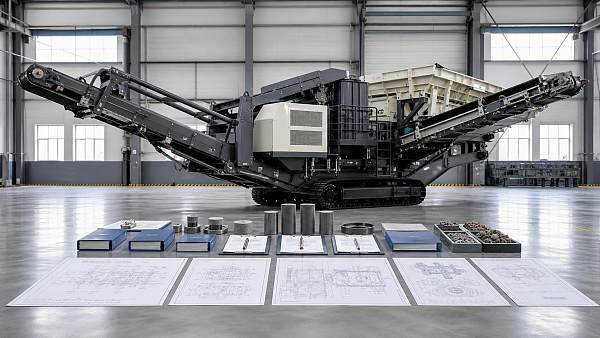
Do not accept a one-line statement such as “complies with international standards” without backup. A serious review package usually includes a conformity matrix, test or inspection records, major assembly drawings, operating manuals, maintenance procedures, and a list of safety devices. In higher-value deals, a clause-by-clause checklist saves time during technical clarification.
For teams screening multiple suppliers, even a generic reference like 无 should be treated as a placeholder until supported by verifiable technical evidence. The point is not the label; it is the traceability behind the claim.
The next table provides a simple method for reading a standard section and turning it into a commercial review action.
When buyers use this method, standards stop being abstract documents and become decision tools. This is particularly helpful for commercial teams that must coordinate engineering, HSE, legal, and finance within a 2 to 6 week tender review window.
The Clauses That Most Often Change Buying Decisions
Not every line in a mining standard has equal commercial weight. In practice, several clause groups repeatedly influence whether a machine is approved, renegotiated, or rejected. Buyers should focus on the sections that affect site acceptance, operating risk, and lifecycle support.
1. Safety systems and operator protection
Review emergency stopping devices, braking redundancy, seat restraints, visibility aids, anti-slip access, fire suppression interfaces, and protection against unintended movement. In surface mining, visibility and braking clauses are critical when trucks operate on ramps above 8% to 10% grade or in dusty low-visibility shifts.
2. Duty cycle and environmental assumptions
Standards may assume ambient temperatures, dust levels, vibration loads, or moisture conditions that do not match the target mine. A machine built for intermittent construction use may struggle in a mining application running 16 to 20 hours per day. Buyers should verify cooling capacity, filtration arrangements, sealing quality, and maintenance intervals under site conditions.
3. Maintenance access and repairability
A compliant machine can still become a poor asset if service points are hard to reach or component replacement requires long downtime. Look for provisions affecting access platforms, lockout points, safe isolation, lubrication reach, and diagnostic interfaces. These factors directly influence heavy machinery repair time and workshop labor efficiency.
Commercial red flags hidden inside technical compliance
- Compliance limited to a previous revision of a standard, not the revision required by the tender.
- Conformity based on optional accessories rather than standard delivery configuration.
- Testing performed under factory conditions only, without mine-site operating assumptions.
- Key safety devices listed as “available on request,” which can add 6 to 10 weeks to delivery.
These issues often surface late, after commercial alignment but before final approval. That is why clause review should happen before financing terms, shipping commitments, and aftersales promises are finalized. A standard is most useful when it shapes early-stage comparison, not only final-stage compliance paperwork.
For distributors and agents, this also affects channel reputation. Selling a unit that later requires major retrofits can erode trust faster than losing a bid on upfront price. Reading the standard closely protects both the end user and the intermediary.
Using Standards to Compare Suppliers, Tenders, and Lifecycle Cost
Mining buyers often compare suppliers that appear similar on a specification sheet: same bucket class, same payload range, similar engine rating, and similar list price. Yet standards-based review can reveal major differences in delivered value. This matters in mining tenders in Africa and other growth regions, where logistics, maintenance support, and compliance readiness can be as important as machine capacity.
A standards-led comparison is especially effective when linked to lifecycle cost. If one supplier offers a lower price but requires additional guarding, upgraded fire systems, or more frequent brake inspections, the financial picture changes quickly. Over a 36 to 60 month ownership period, these differences can outweigh the initial discount.
A supplier comparison framework for procurement teams
The framework below translates mining standards into a practical sourcing scorecard. It is useful for direct buyers, EPC teams, and dealers screening multiple principals.
This comparison method helps buyers move beyond brochure claims. It also supports mining equipment financing reviews, because lenders and internal approval boards increasingly want to know whether the asset has stable operating assumptions, documented compliance, and predictable service risk.
Where standards influence financing and resale value
Financing providers may not read every technical clause, but they care about acceptance risk, maintainability, and residual value. Equipment with incomplete compliance records or site-specific retrofit exposure may face tougher approval conditions, higher contingency assumptions, or lower resale confidence after 3 to 5 years.
For buyers managing regional fleets, the same logic applies to parts planning and workshop standardization. Machines aligned to comparable standards are easier to integrate across multiple sites, reducing training complexity and avoiding fragmented maintenance procedures.
Common Mistakes Buyers Make When Reviewing Mining Standards
One of the most common mistakes is assuming that certification language alone proves operational suitability. A machine may comply with a broad machinery framework and still fail to match mine-specific exposure to abrasive dust, high temperatures, long-haul cycles, or local safety enforcement expectations.
Another mistake is reviewing standards too late in the buying process. If procurement waits until after commercial negotiation, non-conformities become expensive. At that stage, the options are usually reduced to three: accept the risk, pay for retrofit, or restart the tender. None of these is ideal when project mobilization is already scheduled.
Four frequent review errors
- Using only brochures or summary sheets instead of the cited standard sections and support documents.
- Ignoring revision status, even though some tenders specify the latest applicable edition.
- Failing to connect compliance to maintenance access, parts support, and heavy machinery repair realities.
- Treating supplier declarations from different legal jurisdictions as equal without checking supporting evidence.
A further issue is weak cross-functional review. Mining equipment purchases often need input from procurement, HSE, engineering, maintenance, and commercial leadership. If only one function reads the standard, critical issues may be missed. A 60-minute structured review workshop can often identify 5 to 10 clarification points before they turn into contract problems.
FAQ for buyers and evaluators
How many standards should a buyer usually verify before purchase?
For most heavy mining assets, buyers should verify at least 3 categories: machinery safety standards, electrical or hydraulic safety provisions where relevant, and mine-site legal requirements. In more complex plants, the number can rise to 6 or more linked standards.
How long does a proper compliance review take?
A first-pass commercial and technical review may take 3 to 7 business days for one machine category. A full clause-by-clause comparison across multiple bidders can take 2 to 3 weeks, depending on document quality and clarification cycles.
Can dealers and distributors use the same method?
Yes. In fact, distributors benefit strongly because standards-based screening helps them qualify principals, reduce warranty disputes, and position their offer more credibly in public and private tenders.
Even when a supplier introduces a reference such as 无, the procurement principle remains unchanged: every claim must connect to a verifiable clause, document set, and delivery configuration.
A Practical Pre-Purchase Checklist for Mining Equipment Buyers
A disciplined checklist is the fastest way to convert mining standards into action. It helps research teams filter vendors, supports procurement during bid clarification, and gives commercial evaluators a documented basis for approval. It is also useful when comparing aftermarket support offers, especially where remote operations require dependable repair planning.
Pre-purchase checklist
- Confirm the exact standard references and revision dates cited in the offer.
- Verify scope alignment with the machine type, mine method, and intended duty cycle.
- Request a conformity matrix showing each mandatory clause and corresponding evidence.
- Review safety systems in delivered configuration, not only optional upgrade form.
- Assess maintenance access, service intervals, and spare part availability for the first 12 months.
- Check whether local legal requirements add extra conditions beyond ISO or AS/NZS references.
- Quantify retrofit exposure in time and cost before issuing final purchase approval.
When this checklist is used consistently, procurement becomes less reactive and more strategic. It creates a common language between engineering and commercial teams, and it improves traceability if tender decisions are later audited.
For organizations following global resource and heavy-machinery intelligence, this approach also aligns with broader asset governance. Standards review is not a paperwork burden. It is part of protecting uptime, workforce safety, capex discipline, and long-term fleet value.
If you are comparing mining excavators, open-pit support equipment, crushing systems, or site service machinery, a careful reading of mining standards can reduce surprises long before commissioning day. To evaluate supplier claims, benchmark compliance more effectively, or build a stronger equipment selection process, contact us to discuss your project, request a tailored review framework, or learn more solutions for mining procurement and technical benchmarking.
- mining equipment
- heavy machinery
- excavators
- crushing plants
- open-pit mining
- mining procurement
- mining safety
- mining tenders
- open-pit mining equipment
- heavy machinery repair
- open-pit mining equipment supplier
- mining equipment financing
- mining safety equipment supplier
- mining tenders in Africa
- mining excavators
- open pit mining
- mining standards
Recommended News
 Sep 10, 2026What Compliance Documents Should a Mining Equipment Supplier Provide?What documents should a mining equipment supplier provide for compliance proof? Explore essential certificates, safety records, testing evidence, and traceable documentation.
 Sep 07, 2026Do Mining Equipment Safety Standards Differ by Country?Do different countries use different standards for mining equipment safety? Explore ISO, MSHA, CE, ATEX, and local compliance rules before ordering equipment.
 Sep 05, 2026How Do You Calculate Total Cost of Ownership for Mining Machinery?How to calculate total cost of ownership for construction machinery in mining? Explore TCO factors, downtime, fuel, maintenance, and lifecycle savings.
 Sep 01, 2026How Reliable Are Mining Equipment Manufacturers’ Performance Claims?How reliable are performance claims from mining equipment manufacturers? Learn how to verify OEM data, benchmark reliability, and turn claims into measurable commitments.