How Mining Regulations Can Stall Projects Before Groundbreaking
Before a mine breaks ground, mining regulations and mining standards can reshape timelines, budgets, and supplier decisions. For procurement teams, engineers, and project leaders, understanding how permitting, ESG rules, and green mining certificate standards affect mining equipment suppliers is essential to avoiding costly delays. This article explores the regulatory barriers that stall projects early and what decision-makers must assess to keep development on track.
For large mining and heavy-machinery projects, the most expensive delay often happens before excavation starts. A project may have orebody potential, financing, and shortlisted equipment vendors, yet still lose 6–18 months to licensing gaps, environmental review cycles, land-use disputes, or safety documentation deficiencies. These early-stage setbacks can push procurement schedules out of alignment with commodity price windows and contractor mobilization plans.
This matters across the full G-MRH decision chain: technical evaluators need to confirm standards compatibility, procurement teams must validate supplier compliance packages, and executives must understand how regulatory uncertainty changes total project economics. In practice, mining regulations are not just legal checkpoints; they are commercial variables that affect capex timing, equipment selection, tender structure, and the credibility of the delivery plan.
Why Mining Regulations Delay Projects Before Construction Starts
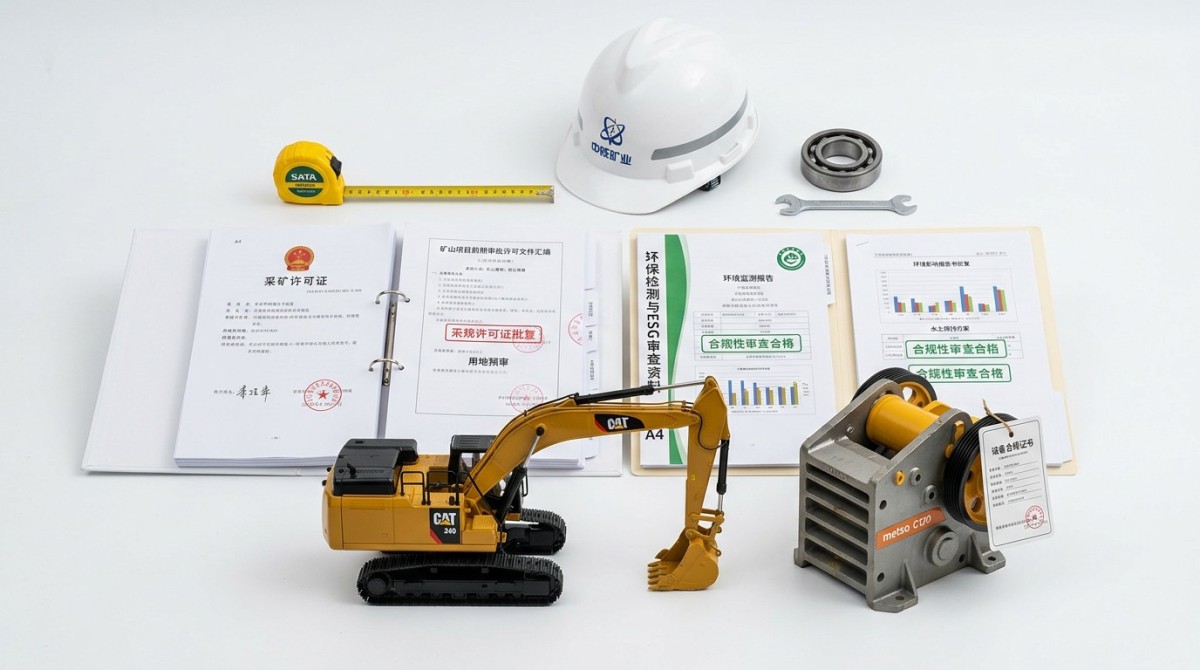
Mining regulations can stall a project long before site preparation because approvals are rarely linear. In many jurisdictions, developers must complete 3–7 parallel workstreams: exploration-to-mining tenure conversion, environmental impact assessment, water rights, community consultation, tailings review, occupational safety documentation, and transport or power corridor approvals. If one stream lags, the entire development sequence can freeze.
The challenge is compounded when mining standards differ across regions. A supplier package acceptable in one market may be insufficient in another if local authorities require additional machine guarding records, emissions disclosure, fatigue-management documentation, or proof of compliance with ISO, AS/NZS, or Mine Safety Act obligations. Even a 30-day clarification cycle can become a 90-day delay once engineering revisions and legal review are added.
For greenfield projects, regulatory agencies also examine whether proposed fleets, processing systems, and bulk material handling assets are aligned with current ESG expectations. A mine plan designed 24 months earlier may no longer satisfy updated biodiversity offsets, water discharge thresholds, or diesel-emission reduction targets. That means procurement teams may need to revisit technical specifications after tenders have already been issued.
Another common source of delay is document fragmentation. EPC firms, OEMs, and local contractors may each hold different parts of the compliance record, but regulators expect a unified submission trail. When there is no clear owner for the regulatory data room, pre-construction approvals slow down, and the schedule risk transfers directly into supplier lead times and contract variation exposure.
Four early-stage bottlenecks that regularly affect mine development
- Permitting sequences are misread, with teams assuming that land access, environmental review, and construction approval can move independently when they are actually linked.
- Equipment compliance files are incomplete, especially for autonomous fleets, high-capacity crushers, dust-control systems, and electrified or hybrid machinery.
- Stakeholder engagement begins too late, adding 8–20 weeks of response time when community concerns or local employment requirements trigger redesign.
- Water, tailings, and energy infrastructure are treated as secondary approvals even though they often govern whether the main mining permit can proceed.
How delay risk translates into commercial pressure
A delayed permit rarely stays a legal issue. It changes shipment windows for 100-ton excavators, haul trucks, crushing circuits, and conveyor systems that may have manufacturing lead times of 20–52 weeks. If procurement commits too early, the project risks storage costs or idle assets. If it commits too late, the mine loses commissioning time and may miss an entire seasonal operating window in remote regions.
For institutional buyers using G-MRH-style benchmarking, the key insight is simple: regulatory readiness should be evaluated with the same discipline as mechanical performance and lifecycle cost. A supplier with slightly higher unit pricing but stronger compliance support may reduce overall project risk more effectively than a lower-priced vendor with weak documentation capabilities.
The Regulatory Areas Procurement and Engineering Teams Must Map Early
Not every regulation carries equal schedule impact. The most important task in the first 60–120 days of project definition is to identify which approvals directly control construction start, equipment mobilization, and plant commissioning. This requires a combined legal, engineering, ESG, and procurement view rather than a siloed permit tracker.
In mining, the highest-impact regulatory areas usually include environmental approval, mine safety compliance, water use and discharge permissions, explosives licensing, power connection, and transportation permits for oversized loads. On top of this, projects targeting critical minerals increasingly face national-security screening, local content obligations, and carbon-related disclosure expectations.
The table below summarizes how different regulatory areas influence supplier selection and schedule certainty during pre-groundbreaking planning.
The main takeaway is that regulatory mapping should be translated into supplier qualification criteria. If a vendor cannot provide machine-level compliance data, emissions information, or route-specific logistics support early in the bid cycle, that vendor may introduce more schedule risk than headline pricing suggests.
H4-level review points for project teams
Document maturity
Assess whether compliance files are draft-level, tender-level, or construction-ready. Many projects fail because teams assume a data sheet equals a regulatory package. In reality, authorities may expect testing records, hazard studies, maintenance plans, and operator procedures in a more structured format.
Jurisdiction fit
Do not assume international compliance automatically satisfies local law. A machine aligned with one standard may still require local guarding modifications, language-specific manuals, or additional electrical and fire-suppression checks before site entry is approved.
Approval dependency logic
Map which permit depends on which engineering submission. If water approval depends on process design, and process design depends on final equipment duty assumptions, then procurement timing is directly tied to permit quality.
How ESG Rules and Green Mining Standards Reshape Supplier Decisions
ESG is no longer a reporting layer added after project design. In mining, it increasingly influences whether a project can reach construction approval at all. Regulators, lenders, and host governments now expect more detailed evidence on emissions, water stewardship, land disturbance, workforce safety, and social license risks before major assets are installed.
This shifts the supplier evaluation process. Mining equipment suppliers are now assessed not only on output, availability, and maintenance cost, but also on diesel intensity, electrification readiness, automation safety, noise profile, dust reduction capability, and end-of-life service planning. A supplier that cannot support green mining certificate requirements may slow the permitting case, even if the equipment is technically sound.
In practical terms, procurement teams should separate ESG claims into measurable and non-measurable categories. Measurable factors include fuel burn per operating hour, water recycling efficiency, particulate control performance, and the percentage of components with documented serviceability. Non-measurable claims such as “eco-friendly” or “sustainable design” have limited value unless they are linked to project approval needs.
Supplier screening criteria for ESG-sensitive projects
- Check whether the supplier can provide operating data for baseline, improved, and low-emission configurations over a 12-month planning horizon.
- Review if the vendor supports electrified, hybrid, or zero-emission transition pathways instead of only a single diesel-based option.
- Confirm compatibility with digital twins, telemetry, and duty-cycle monitoring so that ESG performance can be audited after startup.
- Ask whether spare parts, field service, and training are locally supportable within 24–72 hours in remote mining regions.
The comparison below shows how ESG-related requirements can affect early supplier rankings before site works begin.
The key conclusion is that ESG-aligned supplier selection reduces both approval friction and future retrofit costs. For projects with 10-year to 25-year operating horizons, choosing assets that can adapt to stricter emissions or water-use rules is often more valuable than optimizing only for first-year capex.
A Practical Pre-Groundbreaking Checklist for Procurement, Engineering, and Project Leaders
The most effective way to prevent regulatory delays is to build a pre-groundbreaking review gate before major purchase commitments are locked in. This gate should be completed before final award of long-lead items, not after. For many mines, that means conducting a structured review 90–150 days before targeted construction mobilization.
The checklist should cover both site approvals and asset-specific readiness. It is not enough to know that a project permit is “in progress.” Decision-makers need to know which submissions are accepted, which are under technical comment, and which depend on final equipment details that have not yet been frozen.
Five-step implementation sequence
- Build a permit dependency map linking mine plan, plant design, water systems, transport routes, and equipment packages.
- Create a supplier compliance matrix covering standards, ESG disclosures, operating data, and site-entry requirements.
- Stress-test long-lead items against realistic approval dates, including a contingency band of 4–12 weeks.
- Align contract terms with permit uncertainty, including hold points, documentation obligations, and shipment release triggers.
- Review the full package with engineering, legal, HSE, and commercial leads before notice to proceed is issued.
A disciplined review process also improves negotiation leverage. When buyers know exactly which documents are required for a crushing plant, haul fleet, dewatering system, or conveyor package, they can specify deliverables in the contract instead of relying on post-award clarification. That reduces variation claims and improves site-readiness confidence.
For G-MRH-oriented teams, benchmarking should extend beyond machine output and lifecycle cost. The stronger procurement question is: which supplier can support the project’s regulatory path with the least friction over the next 12, 24, and 36 months? This forward view is especially important where national policy, permitting scrutiny, and decarbonization rules are evolving quickly.
Common mistakes to avoid
Awarding before approval maturity
If long-lead machinery is awarded while key permits remain concept-stage, the project may inherit schedule liability with limited ability to reconfigure scope without cost.
Treating compliance as a legal-only issue
Most delays are technical-commercial in nature. They arise where permitting assumptions, supplier documents, and engineering design are not aligned.
Ignoring future standards tightening
A fleet that passes today’s review may become costly to retrofit if carbon reporting, dust limits, or electrification requirements tighten within 3–5 years.
FAQ: What Decision-Makers Usually Ask Before Mining Projects Move Forward
How early should mining equipment suppliers be reviewed for regulatory fit?
Ideally during pre-feasibility to early definitive planning, often 6–12 months before major awards. If supplier compliance review begins only after tender selection, teams may discover missing safety, emissions, or logistics documentation too late to protect the planned mobilization date.
Which equipment categories create the highest early approval risk?
High-impact categories usually include autonomous haul systems, large excavators, crushers, conveyors, tailings-related systems, and power-intensive process equipment. These assets often trigger deeper scrutiny because they affect safety, dust, noise, fuel use, water demand, and transport logistics.
Do green mining certificate requirements always increase cost?
Not always. They can raise upfront evaluation time and some capex lines, but they may lower long-term risk by reducing retrofit needs, easing financing review, and improving approval credibility. Over a multi-year mine life, avoided redesign and compliance disruption can offset part of the initial premium.
What is the best internal team structure for managing pre-groundbreaking risk?
A cross-functional group works best: project management, engineering, procurement, HSE, legal, and operations. Weekly or biweekly review cycles are often more effective than monthly reporting when the project is within 120 days of key approval gates.
Mining regulations can delay a project long before any visible construction begins, and the cost of that delay is rarely confined to legal review. It affects supplier selection, lead-time control, capex deployment, ESG positioning, and the credibility of the entire development schedule. The most resilient mining projects are those that treat regulation, standards compliance, and equipment benchmarking as one integrated decision framework.
For procurement directors, technical evaluators, EPC teams, and executive decision-makers, G-MRH provides a practical lens to compare heavy industrial assets against engineering standards, compliance expectations, lifecycle economics, and market realities. If you are assessing mining equipment suppliers, planning a new development, or refining a tender strategy under changing regulatory conditions, now is the time to get a clearer benchmark. Contact us to discuss your project priorities, request tailored intelligence, or explore more mining and heavy-machinery solutions.
Recommended News
 Sep 10, 2026What Compliance Documents Should a Mining Equipment Supplier Provide?What documents should a mining equipment supplier provide for compliance proof? Explore essential certificates, safety records, testing evidence, and traceable documentation.
 Sep 07, 2026Do Mining Equipment Safety Standards Differ by Country?Do different countries use different standards for mining equipment safety? Explore ISO, MSHA, CE, ATEX, and local compliance rules before ordering equipment.
 Sep 05, 2026How Do You Calculate Total Cost of Ownership for Mining Machinery?How to calculate total cost of ownership for construction machinery in mining? Explore TCO factors, downtime, fuel, maintenance, and lifecycle savings.
 Sep 01, 2026How Reliable Are Mining Equipment Manufacturers’ Performance Claims?How reliable are performance claims from mining equipment manufacturers? Learn how to verify OEM data, benchmark reliability, and turn claims into measurable commitments.