How to Vet Mining Equipment Suppliers Without Costly Delays
Choosing mining equipment suppliers is no longer just about price or lead time. Buyers must verify mining standards, mining regulations, and supplier readiness for ESG demands tied to global e-waste recycling trends, green mining certificate standards, and mine site decarbonization case studies. This guide helps procurement and technical teams reduce risk, avoid costly delays, and assess long-term fit in a market shaped by electric fleet adoption rates, AI driven exploration breakthroughs, and the future of remote mining operations.
Why supplier vetting now determines project schedule risk
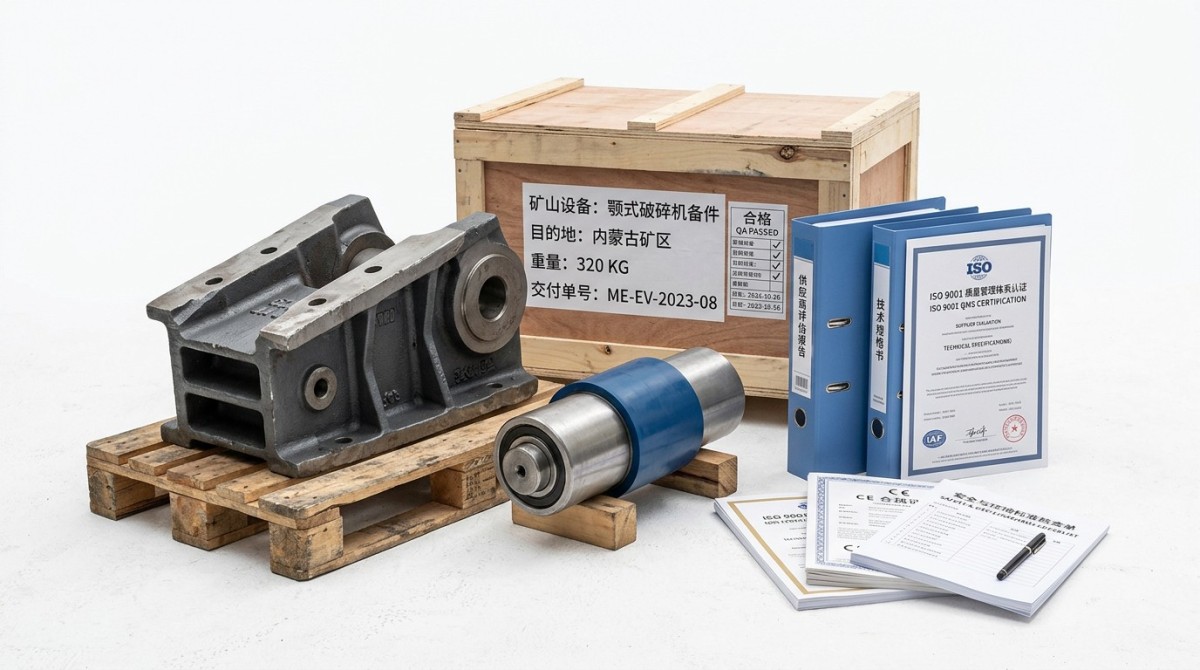
In mining, supplier selection affects commissioning dates, ramp-up curves, maintenance planning, and contract exposure. A weak supplier can delay a shovel rebuild by 2–4 weeks, extend crushing plant startup by 30–90 days, or create spare-parts gaps that shut down critical paths. For procurement teams, the issue is no longer whether a quotation looks competitive. The real question is whether the supplier can support the full equipment lifecycle under site conditions, legal requirements, and project delivery milestones.
This is especially important in cross-border sourcing. Mining equipment often moves through 3–5 approval layers before purchase: technical review, commercial review, compliance review, project controls, and executive sign-off. If supplier documents are incomplete at any stage, the delay compounds. Even basic mismatches, such as wrong electrical standards, incomplete factory acceptance records, or unclear Incoterms responsibilities, can stop a project team from releasing purchase orders.
For technical evaluators and project managers, the cost of poor vetting is usually hidden at first. It appears later as rework, site modifications, warranty disputes, or low duty-cycle performance. A truck body may meet nominal capacity but fail under abrasive ore. A conveyor component may pass workshop inspection but underperform in dust, humidity, or temperature swings from 10°C to 45°C. Early supplier verification reduces those expensive surprises.
G-MRH supports this process by turning fragmented market signals into procurement intelligence. Instead of relying only on brochures or sales claims, teams can compare suppliers against international engineering standards, typical delivery patterns, lifecycle cost considerations, and ESG alignment. That matters when the equipment category is capital intensive and site disruption can cost far more than an apparent purchase discount.
What buyers should verify before requesting final bids
- Technical fit: confirm operating duty, throughput range, payload, power requirements, wear profile, and environmental limits rather than accepting generic catalog values.
- Manufacturing readiness: check production slots, long-lead components, sub-supplier dependence, and realistic shipment windows such as 8–16 weeks for major assemblies.
- Compliance status: review ISO-related quality systems, applicable Mine Safety Act obligations, AS/NZS relevance where required, and traceable testing or inspection records.
- Aftermarket support: verify spare-parts planning, field service response, training scope, and escalation procedures for the first 6–12 months after commissioning.
How to evaluate mining equipment suppliers without slowing procurement
The best supplier vetting process is structured, fast, and evidence-based. It should help a buyer narrow risk in 3 stages: prequalification, technical-commercial validation, and final implementation review. This keeps sourcing disciplined without turning evaluation into a bureaucratic bottleneck. For high-value mining equipment, these 3 stages often fit within a 10–20 business day window if the supplier provides complete documentation and responsive technical support.
Prequalification screens out suppliers that are clearly unfit. Here, buyers review manufacturing scope, export experience, basic compliance documents, service coverage, and references related to similar duty cycles. Technical-commercial validation then tests whether the equipment can perform as promised under real site conditions. Final implementation review focuses on delivery, inspection, installation support, and commissioning readiness.
Many delays happen because teams evaluate price first and capability second. That sequence often forces rework. A lower quote can become more expensive if it requires nonstandard foundations, longer installation time, or duplicate spare holdings. A supplier should therefore be judged on schedule reliability, engineering clarity, and support capacity, not simply unit price or headline lead time.
The table below provides a practical mining equipment supplier evaluation matrix for procurement, engineering, and commercial teams. It helps compare suppliers on the factors most likely to affect schedule, compliance, and operating continuity.
A useful rule is to reject any supplier that cannot provide clear evidence across all 4 areas. In mining procurement, ambiguity itself is a risk signal. If a supplier cannot define lead-time assumptions, test scope, or service boundaries before award, those gaps rarely disappear after the contract is signed.
A 4-step due diligence workflow for buyers
- Issue a structured request package with technical duty, standards, expected delivery date, and documentation list.
- Score supplier responses against 5 key checks: fit, compliance, schedule, service, and total ownership impact.
- Run clarification calls within 3–5 business days to resolve assumptions and identify hidden gaps.
- Approve only after confirming inspection hold points, shipping plan, and post-delivery support responsibilities.
Where G-MRH adds decision value
For information researchers and business evaluators, one of the hardest tasks is separating legitimate industrial capability from polished marketing. G-MRH helps shorten that gap by benchmarking heavy equipment categories against recognized engineering norms, duty-cycle expectations, and supply-chain realities across mining, mineral processing, earthmoving, and green mining transitions.
That allows buyer teams to ask sharper questions. Instead of “Can you supply this machine?” they can ask, “Can you support this machine under this ore profile, this annual operating pattern, and this maintenance strategy?” That shift improves supplier comparison and reduces selection errors before capital is committed.
Which technical and compliance checks prevent the most costly delays?
Mining equipment supplier vetting must include both engineering suitability and compliance readiness. Focusing on only one side is risky. A technically capable supplier may still create delays if documentation is incomplete, while a paperwork-heavy supplier may still fail if the equipment cannot handle actual throughput, wear, or maintenance intervals. Buyers need a balanced review covering at least 6 items before final award.
Start with the operating envelope. Clarify material characteristics, target tonnage, shift pattern, climate, altitude, and interface with upstream and downstream systems. A crusher, pump, or conveyor component that performs in a test facility may not hold up in remote mining operations with long maintenance intervals and limited on-site inventory. Technical teams should ask for design assumptions, not only output claims.
Then review compliance. Depending on geography and project structure, buyers may need alignment with ISO-based quality systems, Mine Safety Act requirements, electrical codes, pressure-related standards, welding traceability, or AS/NZS references. ESG-linked reviews are also becoming more relevant. Buyers increasingly ask how suppliers support decarbonization roadmaps, repairability, component recycling, and long-term efficiency rather than only initial capex.
The next table shows how technical checks and compliance checks work together in mining equipment procurement. It can be used during supplier qualification meetings, technical bid clarifications, or executive review sessions.
The most reliable suppliers answer these questions clearly and early. They do not hide behind broad statements such as “compliant to international standards” or “tested before shipment” without specifying scope. Mining buyers should expect line-by-line responses, especially for safety-critical or process-critical items.
Six technical signals that deserve extra scrutiny
- Duty cycle mismatch between brochure rating and actual continuous use profile.
- Unclear wear-life assumptions for abrasive, corrosive, or wet materials.
- No firm statement on power quality tolerance, voltage, or control interface compatibility.
- Factory testing that excludes the components most likely to fail during startup.
- Insufficient spare-parts recommendations for the first 12 months of operation.
- ESG language that is general but unsupported by process, material, or lifecycle detail.
Common procurement mistakes when comparing mining equipment suppliers
A common mistake is treating all suppliers as interchangeable once their main specifications look similar. In reality, two offers with the same nominal capacity can carry very different delivery risk, maintenance burden, and documentation quality. One supplier may include FAT, installation guidance, spare-parts logic, and clear exclusions. Another may leave key scope items open, creating change orders after award.
Another mistake is separating technical and commercial evaluation too sharply. Procurement may focus on payment terms and shipment dates, while engineering focuses on performance, but the biggest risks sit between them. For example, a short quoted lead time may depend on the buyer approving drawings within 5 days, releasing deposits immediately, or accepting substitute components. If those conditions are buried in the quotation, the promised schedule may never materialize.
Buyers also underestimate aftermarket capability. In remote mining operations, support response time matters almost as much as the machine itself. If field service requires international mobilization, visa lead time, and no regional spare stock exists, even a minor fault can create 7–15 days of lost availability. A cheaper acquisition can therefore become an expensive operating choice.
Decision-makers should also be careful with unverified green claims. As electric fleet adoption rates rise and mine decarbonization becomes a board-level topic, suppliers increasingly promote sustainable features. Those claims should be checked against actual power demand, service intervals, battery or component handling implications, and end-of-life management rather than broad environmental branding.
Red flags that often lead to delay or dispute
Commercial red flags
Watch for quotations that lack milestone dates, inspection hold points, packing scope, or clear Incoterms definitions. These gaps often cause disputes during shipment release and customs preparation. A supplier that cannot explain what is included in price, testing, and documentation is not yet ready for reliable execution.
Technical red flags
Be cautious when datasheets show broad ranges without site-specific adaptation. If a supplier cannot define acceptable feed size variation, continuous operating hours, lubrication intervals, or wear-part expectations, it becomes hard for engineering teams to integrate the equipment into plant planning and maintenance systems.
Operational red flags
A supplier may look acceptable on paper but fail operationally if no local support chain exists. Ask whether critical parts can be supplied within 48–72 hours, whether remote diagnostics are available, and whether site training is included for operators and maintainers. These details strongly influence first-year reliability.
FAQ and next steps for procurement teams
Mining equipment supplier vetting is most effective when teams align early on what “qualified” actually means. That usually includes 5 core dimensions: technical fit, compliance fit, schedule credibility, service readiness, and lifecycle cost logic. The questions below address the issues most often raised by researchers, evaluators, and project leaders during supplier selection.
How long should supplier vetting take?
For standard procurement packages, an initial review can often be completed in 7–10 business days if the supplier provides complete data. For complex systems or multiple jurisdictions, 2–4 weeks is more realistic. Delays usually come from missing drawings, unclear compliance scope, or unanswered service questions rather than from the evaluation method itself.
What matters more: price, lead time, or service capability?
In mining, service capability often determines the real cost of ownership. A supplier with a slightly higher price but stronger documentation, better spare planning, and faster support can reduce startup risk and avoid costly downtime. Price and lead time still matter, but they should be tested against execution assumptions and first-year support commitments.
Which documents should buyers request first?
Start with 4 groups of documents: technical datasheets and drawings, compliance and quality records, manufacturing and delivery schedule, and aftermarket support scope. For critical packages, also request FAT plans, recommended spares for 6–12 months, and a list of buyer inputs needed to hold the quoted lead time.
How can teams evaluate ESG readiness without slowing the deal?
Keep ESG review practical. Ask how the supplier addresses energy use, repairability, hazardous material handling, component recovery, and support for decarbonization targets. The goal is not to force a separate sustainability project. It is to ensure the equipment and supplier fit the mine’s broader operating and reporting direction.
Why work with G-MRH during supplier screening?
G-MRH helps teams compare mining equipment suppliers through technical benchmarking, regulatory context, lifecycle cost perspective, and market intelligence across open-pit mining, underground mining, mineral processing, bulk handling, heavy construction, and green mining transitions. This reduces guesswork and gives procurement, engineering, and management teams a shared decision framework.
Why choose us for mining equipment supplier assessment
If your team is evaluating mining equipment suppliers and needs a clearer path from research to award, G-MRH can support the decision with structured, industry-grounded analysis. We help buyers review technical parameters, compare supplier capability, assess delivery feasibility, interpret standards relevance, and identify lifecycle cost risks before they become project delays.
You can contact us for support on parameter confirmation, supplier shortlist review, compliance and certification checks, expected delivery windows, spare-parts planning, ESG-related screening, and customized procurement comparison frameworks. This is especially useful when your project involves multiple jurisdictions, complex heavy-equipment interfaces, or pressure to compress award timelines without increasing risk.
For procurement teams, business evaluators, and project leaders, a well-vetted supplier is not just a vendor choice. It is a schedule protection strategy. The earlier the technical, commercial, and compliance gaps are identified, the easier it becomes to avoid costly delays and make confident capital decisions.
Reach out to discuss your equipment category, application scenario, delivery target, or standards checklist. We can help you structure supplier comparison, challenge unclear quotations, and focus due diligence on the issues most likely to affect approval, shipment, commissioning, and long-term operating reliability.
- ai driven exploration breakthroughs
- future of remote mining operations
- electric fleet adoption rates
- mine site decarbonization case studies
- green mining certificate standards
- global e-waste recycling trends
- mining equipment
- mineral processing
- underground mining
- open-pit mining
- green mining
- mining procurement
- mining regulations
- mining operations
- mining standards
- mining equipment suppliers
Recommended News
 Sep 10, 2026What Compliance Documents Should a Mining Equipment Supplier Provide?What documents should a mining equipment supplier provide for compliance proof? Explore essential certificates, safety records, testing evidence, and traceable documentation.
 Sep 07, 2026Do Mining Equipment Safety Standards Differ by Country?Do different countries use different standards for mining equipment safety? Explore ISO, MSHA, CE, ATEX, and local compliance rules before ordering equipment.
 Sep 05, 2026How Do You Calculate Total Cost of Ownership for Mining Machinery?How to calculate total cost of ownership for construction machinery in mining? Explore TCO factors, downtime, fuel, maintenance, and lifecycle savings.
 Sep 01, 2026How Reliable Are Mining Equipment Manufacturers’ Performance Claims?How reliable are performance claims from mining equipment manufacturers? Learn how to verify OEM data, benchmark reliability, and turn claims into measurable commitments.