Mining Standards vs Regulations: What Actually Changes Procurement?
For procurement teams, the real question is not whether mining standards or mining regulations matter more, but how each changes supplier qualification, risk allocation, and total lifecycle value. From mining equipment suppliers to green mining certificate standards, today’s buying decisions are also shaped by mine site decarbonization case studies, electric fleet adoption rates, and the future of remote mining operations.
Why mining standards and mining regulations affect procurement in different ways
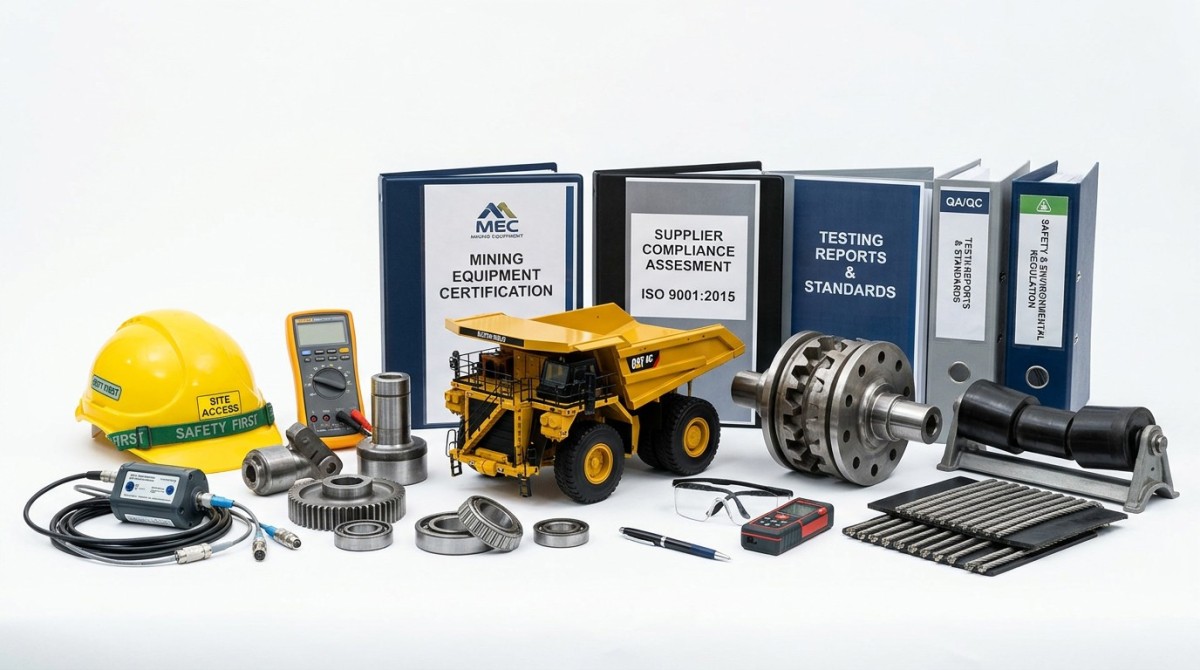
In mining procurement, standards and regulations are often discussed together, yet they influence decisions through different mechanisms. Standards usually define how equipment, systems, or processes should perform, be tested, or be documented. Regulations, by contrast, define what must legally be met at a mine site, in a jurisdiction, or across worker safety, environmental protection, and operational control. This distinction matters from the first supplier screening stage through final contract award.
For technical evaluators and project managers, standards shape specification clarity. They help compare haul trucks, crushers, electrified auxiliaries, conveyor components, ventilation systems, and digital monitoring platforms on a common basis. For procurement personnel and commercial reviewers, regulations shift risk. A non-compliant supplier may still offer attractive pricing, but the downstream cost of rework, delay, permit issues, or operational interruption can far exceed the initial bid advantage within 3–12 months of project execution.
A practical way to separate the two is simple. Standards often answer, “How should this asset or process be designed, tested, or benchmarked?” Regulations answer, “What does the operator legally need to prove, maintain, report, or enforce?” In mining, both can be decisive, especially where autonomous fleets, emissions reduction programs, tailings-related controls, and remote operations are under greater scrutiny than they were 5–10 years ago.
This is where G-MRH adds value for information researchers, sourcing teams, and decision-makers. Instead of treating mining standards and mining regulations as abstract compliance topics, G-MRH benchmarks them against procurement impact: qualification thresholds, lifecycle cost exposure, documentation burden, maintenance reliability, ESG alignment, and tender competitiveness across open-pit, underground, mineral processing, and heavy earthmoving segments.
A procurement-oriented definition that avoids confusion
When buyers confuse standards with regulations, three procurement errors usually follow. First, they over-specify optional technical requirements and eliminate capable suppliers too early. Second, they underweight legal obligations and invite approval or commissioning delays. Third, they fail to align contracts with site-specific risk allocation, especially on spare parts, operator training, digital interoperability, and emissions-related documentation.
- Standards commonly support comparability, test methods, tolerances, engineering interfaces, maintenance planning, and product certification pathways.
- Regulations commonly govern worker safety rules, mine acts, environmental permits, reporting obligations, noise or emissions limits, and site operating approvals.
- Procurement decisions usually need both layers reviewed within 2–4 stages: prequalification, technical bid review, commercial review, and contract finalization.
The result is not academic. It directly changes approved vendor lists, bid exceptions, payment milestones, warranty language, and site acceptance criteria. In heavy-industry procurement, that difference can decide whether a lower-cost supplier becomes a viable partner or a hidden liability.
What actually changes in supplier qualification, bid comparison, and contract terms?
The biggest procurement change is not whether a document says “standard” or “regulation.” It is how that document changes the threshold to qualify, the evidence required, and the consequences of failure. A supplier may meet recognized engineering standards for a crushing plant, battery-electric loader, or dust suppression system, yet still fail site entry because local regulations require additional guarding, emergency controls, reporting functions, or environmental management provisions.
For sourcing teams comparing 3–5 shortlisted vendors, standards generally improve bid comparability. Regulations determine bid admissibility. That means standards help evaluate technical merit, but regulations often determine whether a supplier can proceed to negotiation at all. In cross-border projects, this distinction becomes sharper because imported equipment can satisfy one region’s common engineering practice while still requiring redesign, re-documentation, or additional third-party review before commissioning.
The second change appears in contract structure. If regulatory exposure is high, buyers usually tighten document deliverables, factory acceptance test protocols, training obligations, and warranty carve-outs. If standards drive most of the risk, contracts tend to focus more on performance verification, maintenance intervals, parts interchangeability, and reliability under defined duty cycles such as 18–20 operating hours per day or high-dust environments with frequent load fluctuations.
The table below shows how mining standards and mining regulations typically alter procurement logic across common evaluation checkpoints used by procurement directors, EPC teams, and technical committees.
The key takeaway is that standards help buyers compare quality and engineering fit, while regulations decide whether operational risk is legally manageable. In procurement practice, both should be reviewed in parallel, not sequentially. Waiting until contract signing to examine regulatory gaps often adds 2–8 weeks of redesign, approval, or site clarification work.
Three places where procurement teams usually feel the impact first
The first is vendor screening. If a supplier cannot provide traceable technical documentation, inspection plans, and conformity references, the standard-related gap is already visible. The second is legal review. If a product cannot be deployed without site-specific modification, regulation-related cost exposure emerges early. The third is execution planning. If installation, training, and maintenance obligations are vague, both standards and regulations become contract risk multipliers.
- Screen technical conformity before price comparison, especially for long-life assets expected to run 7–15 years.
- Map site regulations before issuing final RFQ terms, especially in underground, explosive, or low-ventilation environments.
- Tie contract milestones to documentation, FAT, SAT, training, and commissioning evidence rather than shipment alone.
This approach reduces procurement friction and prevents the common mistake of treating compliance as a post-award issue instead of a sourcing criterion.
How should buyers evaluate standards, certification, and regulatory exposure by scenario?
Mining procurement is never one-size-fits-all. An autonomous haul truck fleet, a dewatering package, a flotation upgrade, and a green mining electrification project do not carry the same compliance burden. Buyers need a scenario-based evaluation model. In practice, there are at least 4 recurring scenarios: brownfield replacement, greenfield expansion, decarbonization retrofit, and remote-operation digitalization. Each changes the balance between performance standards and regulatory exposure.
For brownfield replacement, interface standards and interchangeability usually dominate. The procurement team must confirm dimensions, control system compatibility, maintenance access, and spare part continuity. For greenfield projects, regulations often become more visible because site approval, infrastructure readiness, and environmental conditions are still being defined. For decarbonization projects, the review expands to include battery systems, charging or energy distribution, ventilation impacts, and reporting obligations linked to emissions strategy.
Remote mining operations add another layer. Digital twins, condition monitoring, and remote-control systems may improve uptime, but they also affect cyber governance, data handling, fail-safe logic, and operator accountability. In these cases, mining regulations may not only govern physical safety but also how control systems are validated, escalated, and supervised in real operation windows such as 24/7 production cycles.
The following table helps procurement and technical teams determine what changes most by application scenario, especially when assessing mining equipment suppliers, green mining certificate standards, and future remote operations capability.
This scenario method improves decision speed because it aligns evaluation with actual project risk. Instead of checking every document with equal weight, the procurement team can prioritize the 5–7 issues most likely to affect commissioning, operating cost, or compliance exposure.
What technical and commercial reviewers should examine together
For technical evaluation teams
Review benchmark standards, test protocols, materials, operating envelopes, ambient assumptions, and maintenance requirements. In mining, a machine that performs well in controlled conditions may underperform in abrasive ore handling, high-altitude hauling, or wet-process environments unless the duty-cycle assumptions are explicit.
For procurement and commercial teams
Review documentation burden, spare parts lead times, training scope, claims procedures, and site modification responsibilities. Typical heavy-equipment lead times can vary from 8–16 weeks for standard assemblies to 6–12 months for major units, so compliance-related redesign risk must be identified before purchase order release.
For executive decision-makers
Focus on lifecycle exposure. A supplier with a lower capital quote may create higher total ownership cost if regulation-driven changes require re-engineering, retraining, or additional site approvals after delivery.
Common mistakes in mining procurement and how to avoid them
One common mistake is assuming that a product built to recognized international standards will automatically satisfy local mine site regulations. It may not. Many mining projects fail at the intersection of technically sound equipment and incomplete jurisdictional fit. This is especially common in cross-border tenders involving mobile equipment, process skids, electrical systems, and digital control solutions.
Another mistake is evaluating green mining certificate standards only as branding or sustainability signals. In procurement reality, decarbonization-related criteria increasingly influence fleet planning, infrastructure design, and reporting obligations. If the site is considering electric fleet adoption within the next 2–5 years, today’s procurement decision should test upgrade pathways, power compatibility, thermal loads, and charging footprint assumptions rather than only current diesel replacement cost.
A third mistake is underestimating documentation. Procurement teams may focus on machine price, capacity, and delivery schedule, while the true bottleneck becomes manuals, inspection records, risk assessments, training packs, and system integration data. In regulated mining environments, incomplete documentation can delay FAT closure, SAT acceptance, or insurer review even when equipment is physically ready for operation.
G-MRH addresses these gaps by combining technical benchmarking with procurement intelligence. That means buyers can assess not only whether equipment looks compliant on paper, but whether it is commercially and operationally suitable for the mine’s asset strategy, maintenance reality, and ESG roadmap.
A practical 4-step procurement review model
- Define the mandatory regulatory baseline for the mine site, country, and operating environment before issuing the final technical package.
- Map applicable engineering standards to the asset category, including testing, integration, materials, reliability, and maintenance expectations.
- Score suppliers across 3 dimensions: conformity evidence, execution capability, and lifecycle support responsiveness.
- Convert unresolved gaps into contract clauses, deliverables, hold points, and acceptance milestones rather than verbal clarifications.
This 4-step approach reduces ambiguity and creates a cleaner negotiation process. It also helps align engineering, procurement, legal, and operations teams around the same decision logic, which is essential when projects have compressed shutdown windows or phased commissioning over 2–3 stages.
FAQ for buyers comparing standards and regulations
Which matters more in mining procurement: standards or regulations?
Neither should be treated as universally more important. Standards usually shape technical comparison and performance assurance, while regulations shape legal operability and site risk. In early sourcing, standards may dominate. Near award and commissioning, regulations often carry greater decision weight.
How many compliance checks should be built into a mining equipment RFQ?
A practical structure is 5 key checks: applicable standards, jurisdictional regulations, documentation deliverables, testing and acceptance requirements, and post-installation obligations such as training or maintenance support. More can be added for high-risk assets, but these 5 are a useful baseline.
Do green mining projects change procurement criteria significantly?
Yes. Decarbonization projects often expand evaluation beyond equipment output and unit price. Buyers should assess electrical compatibility, ventilation implications, charging or energy interface constraints, thermal conditions, reporting needs, and future retrofit flexibility over a 3–10 year planning horizon.
What is the most overlooked risk in remote mining operations procurement?
It is usually the gap between system capability and site governance. Remote systems may be technically advanced, but if alarm management, fail-safe actions, operator accountability, and communication fallback logic are not clearly allocated, regulatory and operational risks remain unresolved.
Why work with G-MRH when procurement decisions carry technical and regulatory risk?
Mining procurement increasingly requires more than catalog comparison. Buyers need a clear view of how standards, regulations, equipment performance, project timing, and ESG expectations interact across the full asset lifecycle. G-MRH supports that process through independent intelligence, technical benchmarking, and market context that help procurement teams move from document collection to decision confidence.
Our advantage is practical breadth across 5 industrial pillars: open-pit and underground mining, mineral processing and metallurgy, heavy earthmoving and construction, bulk material handling, and green mining with digital twins. This allows technical evaluators, sourcing specialists, and executives to compare options using a consistent framework that reflects site realities rather than isolated supplier claims.
If your team is reviewing mining equipment suppliers, planning a decarbonization roadmap, qualifying a remote operations package, or checking green mining certificate standards against procurement relevance, we can help clarify where standards influence comparability and where regulations change contractual or operational exposure. That includes support for parameter confirmation, supplier shortlisting, bid evaluation structure, delivery timeline expectations, and compliance document review.
Contact G-MRH if you need a more decision-ready view of technical requirements, lifecycle cost trade-offs, likely lead-time pressure points, or jurisdiction-sensitive compliance considerations. Useful discussion topics include equipment selection criteria, tender specification alignment, certification expectations, spare parts strategy, decarbonization readiness, and quotation comparison for complex mining and heavy-machinery projects.
- future of remote mining operations
- electric fleet adoption rates
- mine site decarbonization case studies
- green mining certificate standards
- mining equipment
- mineral processing
- bulk material handling
- underground mining
- green mining
- mining procurement
- mining regulations
- mining operations
- mining standards
- mining equipment suppliers
Recommended News
 Oct 22, 2026How import tariffs affect mining equipment procurement costsExplore mining industrial trade insights to see how import tariffs affect equipment costs. Compare landed costs, verify duty relief, and make smarter procurement decisions.
 Oct 19, 2026How to use trade insights to assess mining equipment import costsUse trade insights to assess mining equipment import costs, verify duties, compare freight routes, and uncover hidden charges. Build a reliable landed-cost estimate before you buy.
 Oct 24, 2026How Do Standardized Specs Affect Cross-Manufacturer Comparisons?How does equipment parameter standardization affect cross-manufacturer comparison? Discover how shared test methods clarify performance and help you make smarter equipment choices.
 Oct 23, 2026How Can You Verify a Mining Supplier Meets Global Quality Standards?How to verify if a mining equipment supplier meets international quality standards? Explore certificate checks, technical evidence, and factory audits to reduce risk and buy with confidence.