Gold Mining Investment Insights for Cost-Driven Projects
For project managers and engineering leads navigating cost-sensitive resource developments, gold mining investment insights are essential to balancing capex, operational risk, and long-term asset performance. From equipment selection and processing efficiency to ESG compliance and commodity volatility, informed decisions can determine whether a project achieves resilient returns or faces margin pressure in an increasingly competitive mining landscape.
In gold project development, the challenge is rarely limited to orebody potential alone. A strong reserve can still underperform if haulage distances expand by 15% beyond design, if recovery drops 2–4 percentage points, or if power and water assumptions prove too optimistic during ramp-up.
For B2B decision-makers, practical evaluation must connect geology, engineering, procurement, and compliance. That is why effective gold mining investment insights should translate directly into project controls, equipment selection logic, contractor scope management, and lifecycle cost planning rather than staying at a purely financial headline level.
Why Cost-Driven Gold Projects Require a Different Investment Lens
Cost-driven gold developments are typically shaped by tighter financing thresholds, phased expansion plans, and stricter payback expectations. In many cases, sponsors target a 3–5 year payback window, while lenders and boards demand clear mitigation for fuel inflation, labor shortages, and schedule slippage.
This changes how project teams should read gold mining investment insights. Instead of focusing only on gold price upside, managers must test whether the project remains robust under lower-grade feed, 8–12 week procurement delays, and 10%–20% swings in key consumables such as diesel, steel, and grinding media.
The three cost pressures that matter most
- Initial capital intensity across mining fleet, crushing, grinding, tailings, and power infrastructure.
- Operating cost sensitivity tied to strip ratio, recovery rate, maintenance frequency, and reagent consumption.
- Compliance and social license costs linked to water stewardship, emissions, safety systems, and closure obligations.
Where project teams often misread value
A common error is selecting the lowest quoted equipment package without modeling downtime, spare parts lead times, or duty-cycle fit. A crusher with lower purchase cost may create a 6% throughput bottleneck, while under-sized dewatering or tailings systems can trigger expensive rework within the first 12 months.
Another mistake is treating processing recovery as fixed. In reality, a 1% recovery shift on a mid-scale operation can materially affect annual ounces and unit cost. For engineering leads, this is where metallurgy, ore variability, and plant controllability must be integrated into investment screening from the start.
The table below outlines how project managers can frame cost-risk priorities when reviewing gold mining investment insights across the development cycle.
The key takeaway is that investment quality depends on execution quality. Strong gold mining investment insights help teams identify where a project can absorb variance and where a single weak assumption can undermine returns.
Core Technical Drivers Behind Investment Performance
In mining and heavy-industry projects, technical design choices often define commercial outcomes more than headline commodity forecasts. For gold operations, four engineering variables typically shape the bulk of value creation: mining method, processing route, fleet productivity, and infrastructure reliability.
Mining fleet and material movement economics
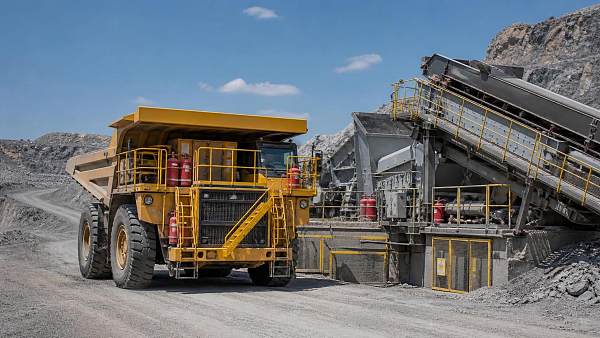
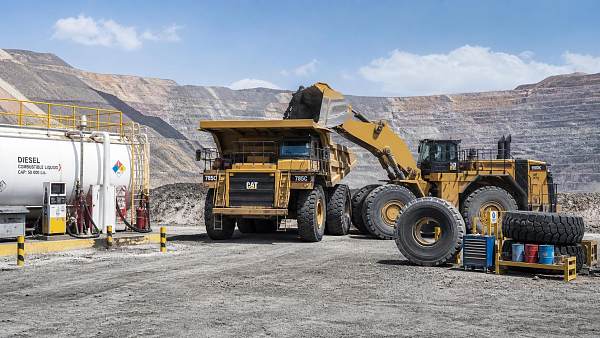
Haulage is frequently one of the largest operating cost components in open-pit mines. A mismatch between excavator bucket size and truck payload can reduce loading efficiency by 8%–12%. Likewise, poor road geometry or excessive queue time can push fuel burn and tire wear well beyond budget.
For project managers, gold mining investment insights should therefore include more than equipment nameplate capacity. Useful evaluation examines payload match, duty cycle, maintenance access, parts availability, and whether automation or dispatch systems can improve utilization in remote sites.
Practical equipment screening criteria
- Target mechanical availability above 85% during steady-state operation.
- Check component life assumptions for engines, undercarriage, pumps, and wear liners.
- Confirm spare parts replenishment windows, ideally within 2–6 weeks for critical items.
- Review energy consumption per tonne moved or processed, not just rated power.
Processing recovery and plant configuration
The plant design decision between gravity concentration, CIL/CIP, flotation, or hybrid flowsheets should be tied to ore characteristics and variability, not copied from adjacent mines. Recovery assumptions should be tested against at least 2–3 metallurgical domains, especially where sulphides, clay content, or preg-robbing behavior may affect performance.
Engineering teams should also examine power intensity, water recycling rates, reagent handling complexity, and tailings management requirements. A lower-capex plant can become higher-cost over a 10-year life if it requires frequent shutdowns, excessive regrind, or expensive detoxification steps.
The matrix below helps compare technical factors that often drive investment outcomes in cost-sensitive gold projects.
The conclusion from most technical reviews is straightforward: returns improve when the plant and mining system are designed for realistic variability, not just best-case averages. That is a central feature of actionable gold mining investment insights.
Procurement Strategy, Tender Discipline, and Lifecycle Cost Control
Procurement decisions in gold mining can lock in cost advantages or create long-term constraints. For EPC teams and owner’s engineers, the real question is not only how to secure competitive pricing, but how to avoid future penalties from short equipment life, fragmented warranties, and late commissioning support.
A disciplined tender process usually requires 4 core filters: technical compliance, total landed cost, service support depth, and schedule certainty. In volatile markets, long-lead packages such as mills, crushers, thickeners, substations, and mobile fleet components should be evaluated with a 12–18 month visibility horizon.
What project teams should request in supplier evaluations
- Detailed scope boundaries for supply, installation supervision, and commissioning assistance.
- Component-level maintenance intervals and expected wear-part consumption.
- Service network capability for remote or cross-border operations.
- Training requirements for operators, maintainers, and control-room staff during the first 90 days.
Lifecycle cost matters more than sticker price
A bid that is 7% cheaper upfront may still be more expensive over five years if it increases power draw, requires more shutdown hours, or lacks local field service. This is particularly relevant in remote gold provinces where freight, customs delays, and technician mobilization can extend outages by 5–14 days.
Institutional buyers using benchmark-oriented platforms often combine pricing data with engineering comparables, duty-cycle records, and standards alignment. In that context, references such as 无 may appear in supply-chain documentation, but they should only support, not replace, rigorous technical due diligence.
The procurement checklist below can help project leaders convert gold mining investment insights into practical sourcing decisions.
The strongest sourcing outcomes come from combining technical benchmarking with commercial discipline. That approach is especially relevant for organizations tracking tenders, fleet performance, and heavy-equipment suitability across multiple regions and commodities.
ESG, Regulatory Exposure, and Operational Resilience
Modern gold mining investment insights must account for more than geology and cost. Regulatory approvals, tailings governance, water use intensity, and decarbonization expectations can materially influence project schedule and financing readiness. In some jurisdictions, permitting timelines can vary from 6 months to more than 24 months depending on land access and environmental complexity.
For project managers, the practical issue is integration. ESG planning should begin during design, not after procurement. Decisions such as dry-stack versus conventional tailings, diesel fleet versus hybrid support systems, or closed-loop water recovery can change both capex and long-term license-to-operate risk.
Resilience factors that investors and boards increasingly watch
- Water balance robustness under seasonal variability and drought periods.
- Tailings design integrity and monitoring discipline across the full mine life.
- Energy strategy, including grid dependence, backup capacity, and emissions pathway.
- Workforce safety systems, training frequency, and emergency response readiness.
The role of benchmarking and market intelligence
This is where a technical intelligence platform such as G-MRH can add decision support. By comparing heavy-duty assets, duty-cycle performance, and standards alignment across open-pit, processing, bulk handling, and green mining applications, project teams can evaluate whether a lower-cost option is truly fit for purpose under site-specific conditions.
In addition, monitoring commodity cycles and regional tender activity helps managers time purchases and phase development more effectively. If steel-intensive packages are trending upward or freight capacity is tightening, advancing procurement by even 8–10 weeks may protect both budget and schedule confidence.
Common Mistakes in Gold Project Evaluation and How to Avoid Them
Even experienced teams can misjudge risk when projects move quickly from concept to execution. The most frequent errors are not dramatic technical failures, but small assumption gaps that compound over time across mine planning, process design, procurement, and commissioning.
Four recurring mistakes
- Using a single gold price case instead of downside, base, and upside scenarios.
- Ignoring maintenance logistics for remote operations with 2–4 week access constraints.
- Underestimating owner’s team capability needed for startup and contractor coordination.
- Assuming ESG obligations can be deferred until late-stage permitting.
A practical avoidance framework
A sound project review process typically includes 5 steps: validate reserve and metallurgy assumptions, test mining and process bottlenecks, compare total cost of ownership across suppliers, map permitting dependencies, and assign clear accountability for startup readiness. Each step should have measurable gates rather than general narrative approval.
When used this way, gold mining investment insights become an operational management tool. They help engineering leads defend budgets, help procurement teams justify supplier choices, and help project sponsors understand where resilience is built into the asset base.
For cost-driven gold developments, the most reliable returns come from disciplined planning across mine design, plant performance, equipment support, and compliance execution. Strong gold mining investment insights connect these variables early, allowing teams to reduce uncertainty before capital is committed and before avoidable inefficiencies are built into the project.
Organizations operating across mining, resources, and heavy machinery can gain an advantage by combining market intelligence with technical benchmarking, especially when evaluating fleet productivity, lifecycle cost, processing reliability, and regional tender dynamics. For project managers and engineering leaders, that means better decisions at both board and site level.
If you are assessing a new gold project, optimizing an expansion, or comparing procurement pathways across multiple jurisdictions, now is the right time to refine your assumptions and risk controls. Contact us to discuss tailored evaluation priorities, get a project-specific framework, and explore more solutions for resilient mining investment planning.
Recommended News
 Oct 04, 2026When do prefabrication equipment systems reduce project delays?Prefabrication equipment systems reduce project delays when scope, interfaces, suppliers, and logistics align early. Explore a practical framework for faster delivery.
 Sep 10, 2026What Compliance Documents Should a Mining Equipment Supplier Provide?What documents should a mining equipment supplier provide for compliance proof? Explore essential certificates, safety records, testing evidence, and traceable documentation.
 Sep 07, 2026Do Mining Equipment Safety Standards Differ by Country?Do different countries use different standards for mining equipment safety? Explore ISO, MSHA, CE, ATEX, and local compliance rules before ordering equipment.
 Sep 05, 2026How Do You Calculate Total Cost of Ownership for Mining Machinery?How to calculate total cost of ownership for construction machinery in mining? Explore TCO factors, downtime, fuel, maintenance, and lifecycle savings.