Critical Minerals Supply Chain Report: Key Bottlenecks
Critical minerals supply chains are entering a more fragile phase
This critical minerals supply chain report examines the chokepoints shaping global resource security, from mine development and processing capacity to logistics, policy risk, and equipment constraints.
Designed for information researchers, it highlights the key bottlenecks affecting availability, cost, and industrial resilience across strategic mineral value chains.
The market is no longer defined only by ore availability.
It is shaped by permitting delays, refining concentration, freight volatility, energy costs, and shortages in specialized mining and processing equipment.
For a comprehensive industry view, this critical minerals supply chain report must connect geology, industrial policy, infrastructure, and engineering execution.
Signals now reshaping the global supply picture
Several trend signals show why critical mineral flows remain exposed despite strong investment announcements.
First, mine pipelines have expanded, but commissioning timelines continue to slip.
Second, downstream processing remains concentrated in a limited number of countries.
Third, transport and power infrastructure are lagging behind extraction plans in many frontier regions.
Fourth, ESG scrutiny has intensified, creating higher approval thresholds for new projects.
These shifts make any critical minerals supply chain report incomplete unless it captures operational readiness, not just headline capacity.
Where bottlenecks are becoming more visible
- Long lead times for permits, water rights, and community approvals.
- Insufficient refining and separation capacity for lithium, nickel, graphite, cobalt, and rare earths.
- Port congestion, rail deficits, and weak inland logistics in mining corridors.
- Limited availability of mills, crushers, flotation systems, and autonomous haulage fleets.
- Shortages of skilled labor for commissioning, maintenance, and digital mine operations.
The main causes behind supply chain friction
The bottlenecks are structural rather than temporary.
A useful critical minerals supply chain report should separate demand pressure from physical execution limits.
This pattern is especially visible where mineral extraction relies on imported equipment, foreign engineering teams, and unstable grid power.
Processing remains the most critical chokepoint
Mining output often receives more public attention than refining.
Yet the strongest conclusion from any critical minerals supply chain report is that processing capacity remains the decisive constraint.
A project can reach first ore and still fail to support secure supply.
The reason is simple.
Concentrates must still move through chemical conversion, separation, purification, and precursor manufacturing stages.
Why midstream capacity is difficult to build
- High environmental compliance costs for acids, reagents, emissions, and tailings.
- Complex process know-how with few qualified technology providers.
- Demand uncertainty for long-payback conversion facilities.
- Heavy power requirements and sensitivity to electricity pricing.
- Tight quality tolerances for battery, magnet, and alloy applications.
This is where industrial intelligence platforms and benchmarking references become relevant, including 无.
Logistics and heavy-equipment availability are amplifying delays
Logistics bottlenecks are no longer secondary issues.
They now shape commissioning speed, working capital needs, and schedule reliability across mining and processing projects.
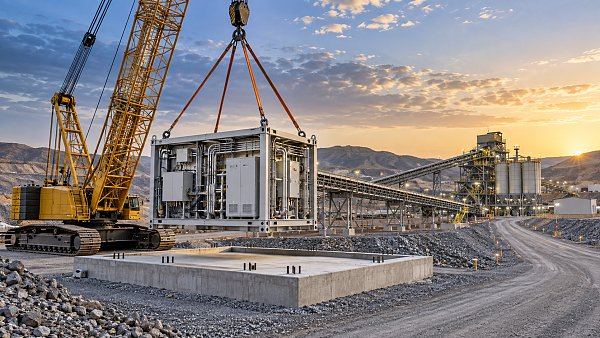
Oversized modules, grinding mills, haul trucks, and substation packages require synchronized shipping and site preparation.
If one segment slips, the entire value chain can stall.
The critical minerals supply chain report perspective therefore must include heavy-industry execution constraints, not only mineral economics.
Typical field-level friction points
- Delayed customs clearance for specialized parts and control systems.
- Limited crane capacity and transport permits for oversized cargo.
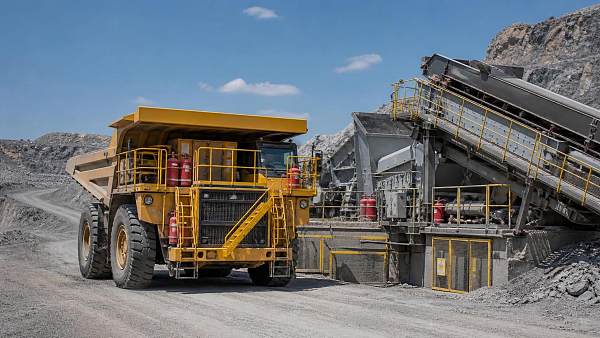
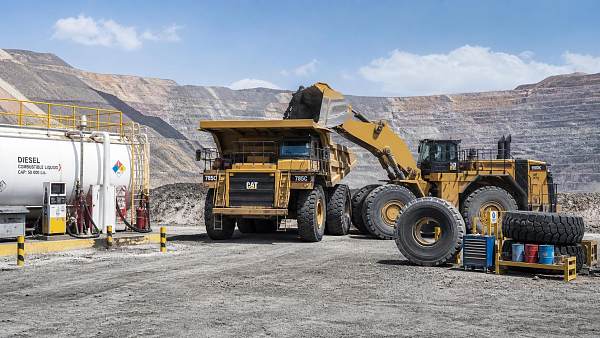
- Remote-site fuel, tire, and spare parts shortages.
- Poor reliability of contractor mobilization in frontier regions.
- Competition for electrification equipment and industrial transformers.
The impact extends across multiple business links
Supply chain stress affects more than upstream extraction.
It alters financing, procurement, contracting, technology selection, and downstream manufacturing decisions.
In practical terms, resilience now depends on integrated visibility.
That includes ore quality, processing route, asset reliability, freight routing, and regional policy shifts.
What deserves closer monitoring over the next cycle
The most useful response is not broad diversification alone.
The stronger approach is to monitor a focused set of leading indicators within the critical minerals supply chain report framework.
- Average permit approval time by jurisdiction and project type.
- Actual versus announced refining and chemical conversion capacity.
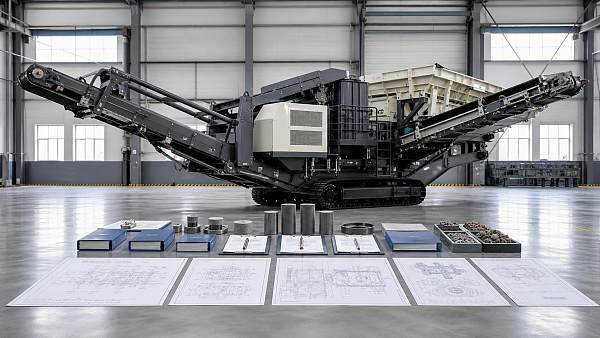
- Lead times for crushers, mills, pumps, filters, and haulage systems.
- Grid connection readiness for processing and electrified mine fleets.
- Freight cost volatility on mineral export and reagent import corridors.
- Policy changes affecting local beneficiation, royalties, and export licensing.
A secondary watchpoint is the gap between resource nationalism and project bankability.
More state intervention can support domestic value capture, but it can also slow external capital formation.
Practical response options are becoming clearer
Several actions can improve resilience without waiting for a complete market reset.
Reference tools such as 无 can support benchmarking where technical transparency is limited.
Next-step judgment for a tighter minerals environment
The core finding of this critical minerals supply chain report is straightforward.
The biggest risks now sit between the mine and the end market.
Processing concentration, infrastructure deficits, policy intervention, and equipment scarcity are the dominant bottlenecks.
The next step is to build an evidence-based watchlist for each target mineral chain.
Compare announced capacity with executable capacity.
Track long-lead assets, energy access, and logistics readiness together.
That approach turns a critical minerals supply chain report from a static document into a practical decision framework.
Recommended News
 Oct 04, 2026When do prefabrication equipment systems reduce project delays?Prefabrication equipment systems reduce project delays when scope, interfaces, suppliers, and logistics align early. Explore a practical framework for faster delivery.
 Sep 10, 2026What Compliance Documents Should a Mining Equipment Supplier Provide?What documents should a mining equipment supplier provide for compliance proof? Explore essential certificates, safety records, testing evidence, and traceable documentation.
 Sep 07, 2026Do Mining Equipment Safety Standards Differ by Country?Do different countries use different standards for mining equipment safety? Explore ISO, MSHA, CE, ATEX, and local compliance rules before ordering equipment.
 Sep 05, 2026How Do You Calculate Total Cost of Ownership for Mining Machinery?How to calculate total cost of ownership for construction machinery in mining? Explore TCO factors, downtime, fuel, maintenance, and lifecycle savings.