Processing Machinery Failures That Often Delay Output
Processing Machinery Failures That Often Delay Output
Unplanned processing machinery failures rarely begin with a dramatic shutdown.
More often, they start as minor instability, rising vibration, uneven feed, or inconsistent product quality.
Then output slips, maintenance hours climb, and downstream schedules begin to drift.
For operations that rely on continuous throughput, that pattern can become expensive very quickly.
In practical terms, evaluating processing machinery means looking beyond nameplate capacity.
The bigger question is how reliably the equipment performs under real duty cycles, variable material conditions, and maintenance constraints.
That is where common failure modes become a useful decision tool, not just a maintenance topic.
Why processing machinery failures hit output so hard
Most plants are tightly linked systems.
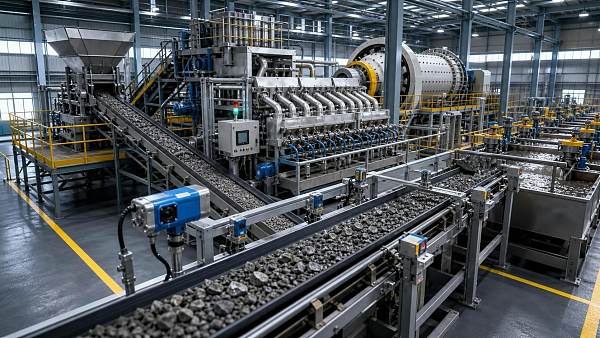
When one piece of processing machinery slows down, every connected stage feels the impact.
A blocked crusher, unstable conveyor, or failed pump does not only affect one asset.
It reduces feed consistency, interrupts recovery rates, and increases restart losses across the line.
This also means short stoppages can cause more damage than their duration suggests.
The hidden cost usually appears in reduced hourly output, off-spec material, and labor diverted into reactive fixes.
The early warning signs that matter
- Increasing vibration at bearings, housings, or drive assemblies
- Higher motor current under unchanged load conditions
- Inconsistent particle size, slurry density, or material flow
- Frequent nuisance trips from sensors or control devices
- Rising lubricant temperature or visible contamination
- Maintenance intervals becoming shorter without process changes
These signals are useful because they show whether processing machinery is losing resilience before a hard failure appears.
Mechanical wear is still the most common cause
In heavy industrial settings, wear is unavoidable.
What matters is how quickly wear develops and how predictably it can be managed.
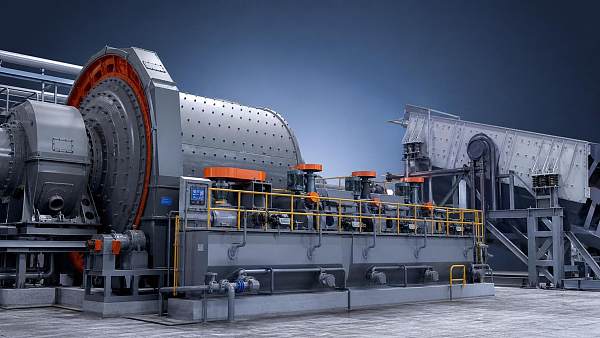
Processing machinery handling abrasive ore, fines, slurry, or oversized feed is especially exposed.
Liners, seals, impellers, rollers, screens, and chutes often fail first.
Once geometry changes, flow behavior changes with it, and output quality usually drops before operators see the full cause.
Where wear turns into delay
- Worn crusher parts reduce reduction efficiency and create recirculation load
- Damaged screen media lowers separation accuracy and overloads downstream equipment
- Pump wear reduces pressure stability and disrupts material transfer
- Conveyor idler and belt wear create tracking problems and unscheduled stoppages
- Seal failures allow dust, slurry, or moisture into critical assemblies
From a technical assessment standpoint, durable processing machinery should show stable wear life, serviceable component access, and clear replacement intervals.
Lubrication failure is small on paper, big in practice
Lubrication issues are often underestimated because they seem routine.
In reality, poor lubrication is one of the fastest ways to shorten the life of processing machinery.
Wrong viscosity, contamination, over-greasing, under-greasing, or blocked delivery lines can all trigger premature damage.
The result is usually bearing distress, overheating, excessive drag, and eventual seizure.
In dusty or wet environments, lubrication control becomes even more important.
A strong design includes protected lubrication points, contamination barriers, and easy inspection access.
If these are missing, maintenance discipline must work much harder to keep processing machinery reliable.
What to review during evaluation
- Lubrication point accessibility during normal service windows
- Compatibility with automated or centralized lubrication systems
- Seal design against water, dust, and slurry ingress
- Condition monitoring options for oil quality and bearing temperature
Misalignment and vibration can quietly cut capacity
Not every damaging fault causes an immediate trip.
Misalignment often develops gradually after installation, heavy loading, or repeated thermal cycles.
That makes it especially dangerous for processing machinery expected to hold steady output every shift.
Couplings, shafts, pulleys, gearboxes, and drive frames can all transfer the problem across the system.
The first sign may be noise, hotter bearings, or rising power draw.
Later, components fatigue faster, fasteners loosen, and machine stability drops.
In actual operations, this is where minor condition issues begin to look like recurring reliability problems.
Practical controls
- Use laser alignment during installation and major maintenance
- Track vibration trends instead of relying on single readings
- Check structural looseness around bases and supports
- Compare vibration behavior under full and partial load
Control system instability creates modern failure risk
Mechanical faults still dominate, but digital instability now causes a growing share of output loss.
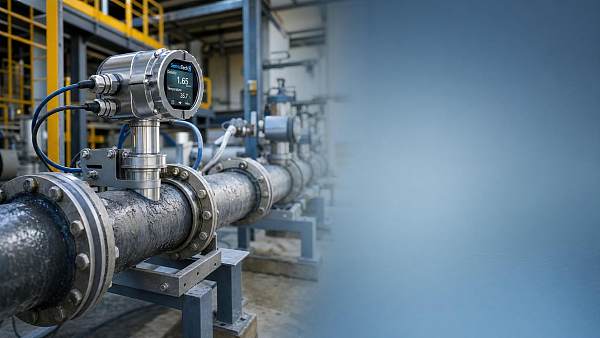
Processing machinery increasingly depends on sensors, variable speed drives, PLC logic, and interlocked protection systems.
When those controls drift, fail, or become poorly tuned, the process may keep running badly before it stops completely.
That period of unstable operation can be just as costly as a shutdown.
Typical examples include false level readings, erratic feeder response, drive faults, communication loss, and poorly tuned speed control.
Each one can reduce throughput, increase wear, or push processing machinery outside its intended operating window.
Feed variability overloads otherwise sound processing machinery
Sometimes the machine is not the original problem.
Processing machinery often fails early because feed conditions move outside design assumptions.
Moisture changes, oversized lumps, tramp material, density swings, and inconsistent loading all raise stress.
Over time, that stress becomes blockage, accelerated wear, or repeated overload trips.
This is especially important during procurement and benchmarking.
A supplier may present excellent performance data under ideal feed conditions.
The better question is how the processing machinery performs when material quality becomes inconsistent, as it often does in live production.
Questions worth asking
- What is the acceptable feed variability range?
- How does the machine respond to overload events?
- Are wear parts designed for abrasive or wet duty?
- What protection exists against tramp metal or blockages?
A practical framework for comparing reliability risk
When assessing processing machinery, it helps to separate headline performance from dependable performance.
That sounds simple, but it changes the quality of the decision.
A strong evaluation framework usually combines five checks.
- Review duty-cycle evidence, not just rated capacity.
- Compare wear life under comparable material conditions.
- Check access, safety, and time required for routine maintenance.
- Assess automation reliability and fault recovery logic.
- Estimate lifecycle cost from downtime exposure, not only spare prices.
This approach works because output delays rarely come from one isolated defect.
They usually come from the interaction between design limits, operating variability, and maintenance execution.
Reliable processing machinery is the equipment that handles that interaction with the least disruption.
Final takeaway
The processing machinery failures that delay output most often are rarely surprising in hindsight.
Mechanical wear, lubrication breakdown, misalignment, control instability, and feed variability remain the main trouble points.
The difference between frequent disruption and stable throughput is how early those risks are identified and compared.
In real industrial selection work, the best processing machinery is not simply the fastest or largest option.
It is the one that stays predictable under pressure, remains maintainable in the field, and recovers quickly from upset conditions.
That is the standard worth using when output reliability is on the line.
Recommended News
 Sep 06, 2026What Are the Latest Automation Trends in Mineral Processing Equipment?What are the latest trends in mineral processing equipment automation? Explore AI control, ore sorting, digital twins, predictive maintenance, and energy optimization for smarter plants.
 Jul 22, 2026How to Evaluate a Mineral Processing Equipment ManufacturerMineral processing equipment manufacturer selection affects recovery, uptime, and cost. Learn how to assess technical fit, reliability, service, and lifecycle value before you buy.
 Jul 21, 2026Common Inspection Points When Sourcing a Used PE Pipe Extrusion LineUsed PE pipe extrusion line buyers: learn the key inspection points for mechanics, controls, tooling, and safety to avoid hidden costs and source with confidence.
 Jul 15, 2026How to Compare Slurry Density Monitoring Data Suppliers by Data QualitySlurry density monitoring data supplier comparison starts with data quality. Learn how to assess accuracy, drift, calibration traceability, and field reliability before you choose.