How to Evaluate a Mineral Processing Equipment Manufacturer
Choosing a mineral processing equipment manufacturer is rarely a simple sourcing exercise. The decision shapes throughput stability, metallurgical recovery, maintenance burden, and the cost profile of an entire plant. In current mining and resource markets, where capital discipline, ESG compliance, and supply chain resilience all matter, a weak manufacturing partner can create delays that outlast the commissioning phase.
That is why evaluation needs to move beyond brochures and nominal capacity figures. A credible mineral processing equipment manufacturer should be judged through technical fit, engineering standards, lifecycle economics, field reliability, and the ability to support assets across demanding operating conditions. For organizations tracking projects from copper concentrators to rare earth circuits, this broader lens produces better procurement decisions.
Why manufacturer selection carries more weight today
Mineral processing circuits are under pressure from several directions at once. Ore bodies are becoming more complex, water and energy constraints are tightening, and investors expect disciplined project delivery.
At the same time, buyers are comparing suppliers across jurisdictions with different standards, labor conditions, freight risks, and compliance obligations. A mineral processing equipment manufacturer now sits inside a larger industrial risk framework, not just a mechanical supply contract.
This is especially clear in markets linked to critical minerals and energy transition materials. Processing performance influences not only output, but also concentrate quality, waste handling, water reuse, and carbon intensity.
Platforms such as G-MRH reflect this shift by benchmarking heavy industrial assets against ISO, AS/NZS, and mine safety expectations. That context matters because procurement decisions increasingly depend on verifiable engineering and operating evidence.
What a mineral processing equipment manufacturer should actually deliver
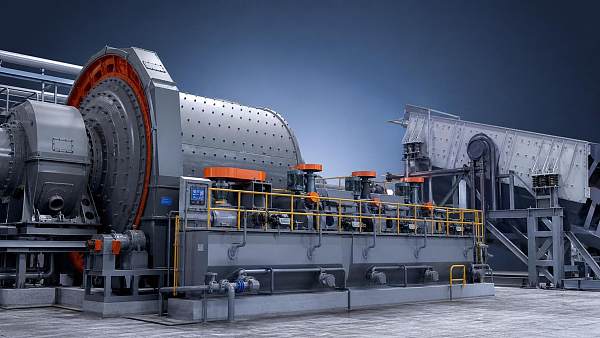
The term covers more than a fabricator that builds tanks, crushers, screens, or flotation cells. A capable mineral processing equipment manufacturer should combine process understanding with mechanical design, production control, and after-sales execution.
In practice, that means the supplier should understand feed variability, duty cycles, wear profiles, instrumentation integration, and maintainability. Equipment that looks compliant on paper may still fail commercially if the manufacturer cannot adapt designs to the actual ore and site conditions.
The strongest suppliers usually show capability in three layers. First, they can design for process performance. Second, they can manufacture consistently at industrial scale. Third, they can support the asset after installation with parts, troubleshooting, and upgrades.
Start with process and application fit
The first question is not whether the supplier is well known. It is whether the equipment matches the application with enough precision to avoid hidden performance loss.
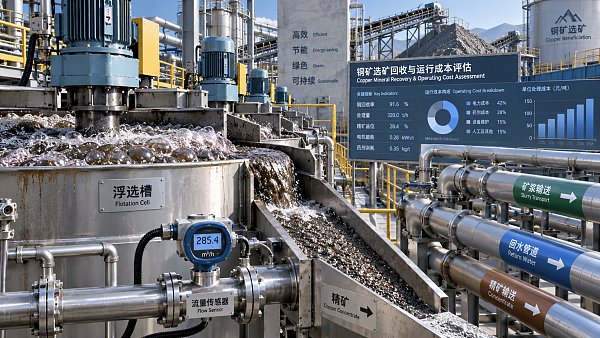
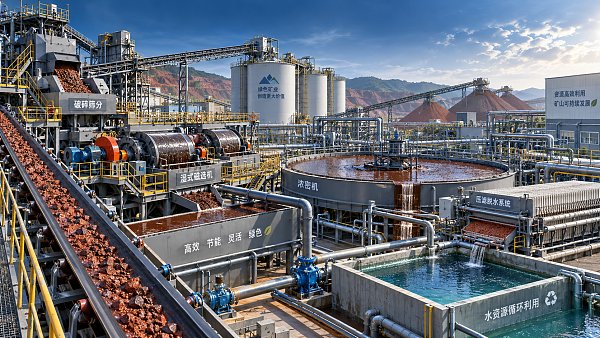
A manufacturer supplying grinding, classification, gravity separation, magnetic separation, flotation, filtration, or thickening systems should be able to explain the operational assumptions behind each design. Those assumptions need to align with ore hardness, particle size distribution, moisture, target recovery, and downstream constraints.
Where the response stays generic, risk rises quickly. A serious mineral processing equipment manufacturer should be comfortable discussing site-specific variables rather than repeating a standard catalog pitch.
Useful technical checks at this stage
- Ask for reference applications with similar ore characteristics, not only similar equipment names.
- Review design basis documents, test work links, and expected recovery or throughput windows.
- Check how the supplier handles feed variability and ramp-up conditions.
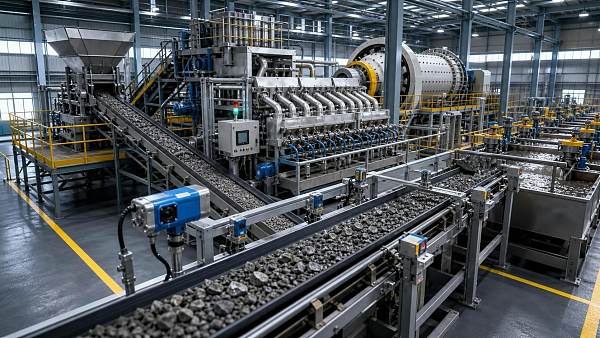
- Confirm interfaces with pumps, drives, controls, structural supports, and plant automation.
Engineering quality is more than compliance paperwork
Certificates matter, but they are only one layer of evaluation. The deeper issue is whether engineering discipline shows up in drawings, materials selection, weld quality, tolerances, and traceability.
A dependable mineral processing equipment manufacturer should present clear documentation for QA procedures, inspection hold points, non-destructive testing where relevant, and material certifications for wear-critical components.
This becomes important in abrasive and corrosive circuits. Liners, impellers, screen media, chutes, and slurry-contact surfaces can determine maintenance frequency more than the machine frame itself.
Look closely at reliability, not just nameplate performance
High-capacity equipment that stops often is rarely a value purchase. Reliability should be reviewed through wear life, mean time between failures, ease of access, parts availability, and operating data from comparable plants.
This is where field references become more useful than polished case studies. Ask how the equipment performed after twelve months, not only during acceptance testing.
A strong mineral processing equipment manufacturer should also show how failure modes were addressed in later revisions. Continuous design improvement is often a better indicator than broad marketing claims.
Signals that usually deserve extra scrutiny
- Very limited installed base in comparable mineral circuits.
- No clear wear-part strategy or unrealistic replacement intervals.
- Weak detail on shutdown time, lifting access, or maintenance tools.
- Reference projects that cannot be independently verified.
Total cost of ownership often changes the ranking
The lowest capital quote can become the highest cost option after two operating seasons. Evaluation should include energy draw, liner consumption, spare inventory, labor intensity, unplanned downtime, and retrofit exposure.
For many projects, lifecycle cost is where a premium mineral processing equipment manufacturer separates itself from a cheaper competitor. Better metallurgy, longer wear life, and faster service response can offset a higher purchase price.
It helps to compare suppliers using a structured cost model rather than line-item pricing alone. This is particularly relevant in remote operations where freight, customs delays, and emergency spares can distort the economics.
A practical comparison lens
- Capital equipment price and included scope.
- Expected wear consumption by year.
- Power demand across actual operating loads.
- Service team response time and regional inventory.
- Upgrade path for capacity changes or ore variability.
Supply chain strength and service coverage matter in the field
A mineral processing equipment manufacturer may have sound engineering but weak global execution. That gap becomes visible during shipment, installation, commissioning, and the first major shutdown.
Lead times should be tested against fabrication capacity, subcontractor dependence, and exposure to single-source components. Delivery promises are only credible when backed by production planning and logistics experience.
After-sales support deserves equal weight. Remote diagnostics, site attendance, spare parts stocking, and technical training all affect uptime. Buyers dealing with multi-country projects should verify service reach across the relevant mining region, not only the supplier’s home market.
G-MRH’s cross-regional perspective is useful here because supply capability varies sharply between the African copper belt, Australian iron ore operations, and emerging rare earth projects. A supplier that performs well in one corridor may still struggle in another.
ESG, safety, and digital capability are now part of equipment value
Environmental and safety performance should not be treated as secondary attachments. Equipment design affects dust control, water recovery, reagent handling, guarding, noise, and maintenance exposure.
A forward-looking mineral processing equipment manufacturer should also explain how monitoring, condition data, and digital interfaces are handled. Plants moving toward digital twins or predictive maintenance need equipment that can produce usable operational data.
This does not mean every project needs the most advanced automation package. It does mean that asset transparency, emissions awareness, and safety-by-design have become normal decision criteria in serious procurement reviews.
A workable evaluation framework
A disciplined review process usually produces better outcomes than an informal comparison of proposals. The aim is to reduce subjectivity and make trade-offs visible early.
- Define the operating case, ore assumptions, and non-negotiable standards.
- Screen each mineral processing equipment manufacturer for application relevance and installed references.
- Score technical compliance, reliability evidence, lifecycle cost, and service depth.
- Test claims through reference calls, audits, and document reviews.
- Compare commercial terms only after technical risk is visible.
This kind of framework also helps align engineering, operations, and commercial teams around the same decision logic. When disagreements appear, the discussion can return to evidence instead of opinion.
Where to focus next
The best choice is usually the manufacturer that can prove fit across process performance, compliance, reliability, and long-term support. Brand recognition helps, but evidence carries more weight than reputation when the plant enters continuous duty.
A practical next step is to build a short evaluation matrix around the most critical equipment packages, then test each mineral processing equipment manufacturer against real operating data, service capability, and lifecycle assumptions. That approach creates a clearer path from technical review to a defensible sourcing decision.
Recommended News
 Oct 13, 2026Using mineral recovery rate data to estimate cost per tonne recoveredUse mineral recovery rate data cost analysis to calculate cost per tonne recovered, compare process upgrades, and uncover better investment decisions. Learn the practical framework.
 Oct 03, 2026Global iron ore processing trends reshaping plant design decisionsGlobal iron ore processing trends are reshaping resilient plant design—explore smarter strategies for ore variability, energy, water, tailings, and product flexibility.
 Sep 06, 2026What Are the Latest Automation Trends in Mineral Processing Equipment?What are the latest trends in mineral processing equipment automation? Explore AI control, ore sorting, digital twins, predictive maintenance, and energy optimization for smarter plants.
 Jul 22, 2026How to Evaluate a Mineral Processing Equipment ManufacturerMineral processing equipment manufacturer selection affects recovery, uptime, and cost. Learn how to assess technical fit, reliability, service, and lifecycle value before you buy.