Vibrating Screen Frequency Metrics That Actually Predict Separation Quality
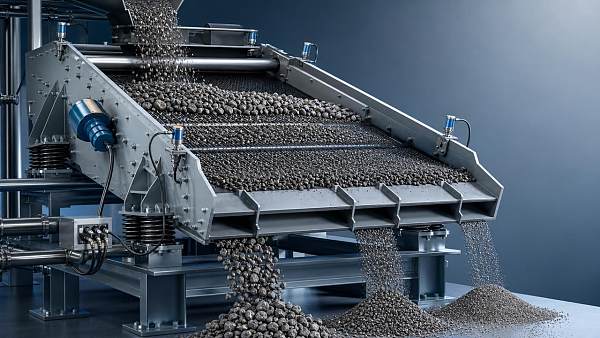
For technical evaluators, not all screen settings explain real plant performance. The most useful vibrating screen frequency metrics are the ones that connect directly to separation quality, throughput stability, and misplaced material risk. This article examines which frequency indicators matter, how they interact with amplitude and operating conditions, and why a data-based approach leads to more reliable screening decisions in demanding mineral processing environments.
What technical evaluators are really trying to predict
When engineers search for vibrating screen frequency metrics, they are rarely looking for theory alone. They want indicators that help predict whether a screen will actually separate material at the target cut size.
That means the key question is not simply “what is the operating frequency?” The better question is “which frequency-related measurements correlate with separation efficiency, carryover losses, and process stability under real load?”
For technical evaluators, the highest-value metrics are those that reduce uncertainty during equipment selection, troubleshooting, and performance audits. A frequency number without context can be technically correct but operationally misleading.
In mineral processing, two screens can run at similar frequency and still deliver very different results. Bed depth, moisture, aperture design, stroke profile, and feed variability all change how vibration translates into particle stratification.
Why frequency alone does not predict screening quality
Frequency is important because it governs how often the screen deck excites the material bed. But separation quality depends on whether those repeated excitations create enough opportunity for near-size particles to contact the apertures.
High frequency can improve stratification for fine materials, especially when bed depth is controlled. However, if amplitude is too low or the deck is overloaded, increased frequency may not improve separation at all.
Likewise, a lower frequency with a larger stroke may move coarse material effectively while performing poorly on fine separations. This is why technical evaluators should avoid treating frequency as an isolated KPI.
The practical lesson is simple: useful vibrating screen frequency metrics are composite or contextual metrics. They must connect vibration behavior to material response, not just machine motion measured at the drive.
The frequency metrics that actually matter in performance reviews
The first essential metric is actual operating frequency under load, not nameplate frequency. A screen may be designed for a given frequency range but operate differently because of belt condition, motor control drift, or process constraints.
Under-load frequency tells evaluators whether the machine is sustaining intended excitation during production. This matters because unloaded test values often look acceptable while loaded values reveal energy losses or unstable operating regimes.
The second important metric is frequency stability over time. Short-term fluctuations can indicate drive inconsistency, structural looseness, or control issues. Stable frequency supports repeatable particle motion, which is critical for predictable separation.
The third metric is the ratio between frequency and amplitude, often interpreted through stroke behavior and acceleration. This ratio is more useful than frequency alone because it reflects how aggressively the deck is acting on the material bed.
The fourth key metric is deck acceleration, usually expressed in g. Although not a pure frequency metric, acceleration captures the interaction between frequency and stroke. It is often a better predictor of stratification potential than hertz alone.
The fifth metric is frequency consistency across measurement points. If one side of the screen shows different dynamic response than the other, separation quality may suffer through uneven travel, poor bed distribution, or localized pegging.
The sixth metric is frequency relative to material residence time. A screen can have the correct nominal frequency but still underperform if particles do not remain on the deck long enough to realize the benefit of repeated vibration cycles.
In some technical documentation, suppliers highlight advanced solutions or monitoring packages, sometimes alongside references such as 无. For evaluators, the real test is whether reported metrics tie to measurable plant outcomes.
How frequency interacts with amplitude, stroke, and g-force
Frequency should always be interpreted together with amplitude. A high-frequency, low-amplitude screen typically suits finer classification because it encourages frequent particle agitation without excessively launching the material bed.
By contrast, coarser screening often benefits from larger stroke amplitude. That larger motion promotes conveying and deck clearance, but if frequency is not balanced correctly, fine separation can become less effective.
Acceleration, or g-force, links these parameters in a practical way. Because acceleration rises with both frequency and stroke, it helps evaluators compare screen aggressiveness across different machine designs and operating settings.
Still, more g is not automatically better. Excessive acceleration can shorten component life, increase noise, worsen structural loading, and even reduce efficiency if material is thrown too aggressively and aperture contact time falls.
The best vibrating screen frequency metrics therefore do not reward the highest readings. They reward settings that match the material, cut point, moisture condition, and throughput target while preserving mechanical reliability.
Which metrics best correlate with separation quality
For technical assessment, the strongest indicators are those that can be linked to measurable outcomes: undersize recovery, oversize contamination, misplaced near-size particles, and tonnage consistency across shifts and ore domains.
Among frequency-related variables, loaded operating frequency plus deck acceleration often provides the best first-pass insight. If both are within design range and stable, the screen has a better chance of maintaining repeatable separation conditions.
Another highly useful metric is frequency variance during feed changes. When feed tonnage or moisture rises, some screens maintain dynamic consistency while others drift. Screens that remain dynamically stable usually produce more predictable quality.
A third strong indicator is side-to-side frequency or acceleration symmetry. Uneven response often creates uneven bed depth, which directly increases misplaced material. In practice, asymmetry is frequently more informative than average frequency alone.
Finally, evaluators should correlate frequency metrics with process outputs over time. If a frequency adjustment improves efficiency only during dry ore campaigns but not during wet sticky feed, that limitation should shape purchasing decisions.
How to evaluate frequency metrics during plant testing
Field evaluation should begin with baseline measurements under normal production load. Testing a screen empty or at reduced feed may confirm mechanical function, but it will not reveal the frequency behavior that governs separation performance.
Measure actual operating frequency, stroke, and acceleration at multiple points on the screen body. Ideally, collect data near the feed end, discharge end, and both lateral sides to detect uneven motion or structural anomalies.
At the same time, record process conditions: feed rate, particle size distribution, moisture, percent near-size, deck inclination, and open area condition. These variables are necessary to interpret whether a frequency metric is genuinely meaningful.
Next, compare dynamic measurements with process outputs such as mass balance, aperture efficiency, product contamination, and recirculating load effects. Without output correlation, even well-recorded vibration data remains incomplete for decision-making.
Trend analysis is especially valuable. A screen that meets target frequency on day one but drifts over weeks may be less suitable than a machine with slightly lower initial values but better dynamic consistency through real production cycles.
Common mistakes when interpreting vibrating screen frequency metrics
One common mistake is relying on motor speed or drive setting as a substitute for actual deck frequency. Transmission losses, slip, and structural response can produce meaningful differences between intended and realized motion.
Another mistake is assuming that higher frequency always means better fine screening. This overlooks the need for enough stroke and enough residence time for particles to stratify and contact the screening surface effectively.
A third error is ignoring material properties. Sticky ore, high moisture feed, flaky particles, and high near-size fractions can all change the relationship between vibration settings and separation quality, even on the same machine.
Evaluators also sometimes compare frequency figures across suppliers without normalizing for screen type, deck design, motion pattern, and application duty. Linear, circular, and elliptical motion screens should not be benchmarked superficially.
Finally, many assessments underweight frequency stability. A machine that delivers the right average frequency but fluctuates significantly can produce unstable process outcomes, especially where cut size control is commercially critical.
What technical evaluators should ask suppliers and operators
To move from brochure claims to decision-grade evidence, ask for loaded operating frequency ranges, not just design values. Request the test conditions, ore type, throughput, and deck configuration used to generate those figures.
Ask whether the supplier provides acceleration maps, stroke measurements, and side-to-side motion verification. These data points help determine whether the machine produces uniform screening conditions across the active deck area.
It is also useful to ask how dynamic performance changes with wear, media selection, and variable speed control. A screen that performs well only in a narrow operating window may present hidden lifecycle risk.
Operators should be asked where separation losses typically emerge: feed end overload, mid-deck blinding, or discharge carryover. Their answers often reveal whether frequency metrics are being interpreted correctly or too simplistically.
In procurement reviews, some references may include placeholder product mentions such as 无. These are secondary to the real requirement: verifiable correlation between vibration data and plant performance.
A practical framework for judging predictive value
A useful evaluation framework starts with four questions. Is the measured frequency the actual loaded frequency? Is it stable through operating changes? Is it paired with suitable stroke and acceleration? Does it correlate with process results?
If the answer to any one of these questions is no, then the metric has limited predictive value. It may still describe the machine, but it does not yet explain the quality of separation achieved in practice.
From there, technical evaluators can rank confidence levels. High confidence comes from repeated measurements under multiple feed conditions, tied to efficiency and misplaced material data. Medium confidence comes from dynamic data without full output correlation.
Low confidence usually means the assessment depends on nominal frequency, supplier literature, or unloaded tests. In high-value mineral processing circuits, that level of evidence is rarely sufficient for sound equipment decisions.
Conclusion
The most useful vibrating screen frequency metrics are not the most impressive numbers on a datasheet. They are the measurements that explain real separation behavior under real operating load.
For technical evaluators, loaded operating frequency, stability over time, frequency-amplitude relationship, deck acceleration, and motion symmetry offer far better insight than frequency alone. These metrics become truly valuable when linked to process outputs.
In other words, the goal is not to find the highest frequency. The goal is to identify the dynamic conditions that consistently deliver clean separation, stable throughput, and lower misplaced material risk.
When frequency metrics are interpreted in context, screening decisions become more defensible, supplier comparisons become more rigorous, and plant performance predictions become much more reliable.
Recommended News
 May 17, 2026Impact Crusher Wear Part Life: Cost Drivers and Replacement TimingImpact crusher wear part life affects uptime, cost per ton, and replacement planning. Learn the key wear drivers, warning signs, and smart timing strategies to cut downtime and improve supplier decisions.
 May 16, 2026Crushing Ratio Calculation Methods That Prevent OversizingCrushing ratio calculation methods explained: learn how to prevent oversizing, cut energy waste, compare crusher performance, and improve plant efficiency with practical evaluation guidance.
 May 15, 2026Crusher Throughput Capacity Benchmarks for Real Plant PlanningCrusher throughput capacity benchmarks explained for real plant planning. Learn how to compare sustained vs nameplate rates, avoid costly sizing errors, and improve crusher, screen, and conveyor decisions.
 May 15, 2026Vibrating Screen Frequency Metrics That Actually Predict Separation QualityVibrating screen frequency metrics that matter most: learn how loaded frequency, stability, amplitude, and g-force better predict separation quality, throughput, and plant performance.