Impact Crusher Wholesale: Capacity, Wear Parts, and Margin Risks
In impact crusher wholesale, procurement teams must balance capacity, wear-part costs, and margin exposure before committing capital. For mining and heavy-industry buyers, a competitive unit price means little if throughput drops, maintenance intervals shorten, or aftermarket support fails under site conditions. This article outlines the key technical and commercial factors that shape total value, helping purchasers compare suppliers with greater confidence and lower sourcing risk.
What matters most in impact crusher wholesale for procurement teams?
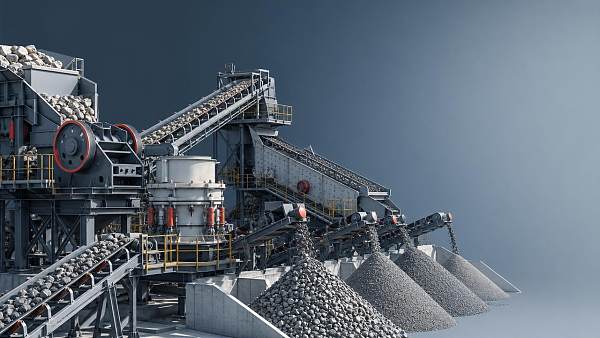
In large-scale mining, quarrying, recycling, and aggregate operations, an impact crusher is rarely a standalone purchase. It sits inside a production chain where feed consistency, downstream screening, spare inventory, power availability, and shutdown costs all affect financial outcomes.
That is why impact crusher wholesale decisions should not focus only on ex-works price. Procurement teams need to test supplier claims against duty cycle, abrasion profile, service response, and expected cost per ton across the asset life.
For buyers working across regions, G-MRH adds value by benchmarking crushing equipment against practical industrial criteria: throughput stability, wear behavior, maintenance design, compliance alignment, and commercial resilience under volatile commodity and freight conditions.
- Capacity must be verified under realistic feed size, moisture, and rock hardness rather than ideal laboratory assumptions.
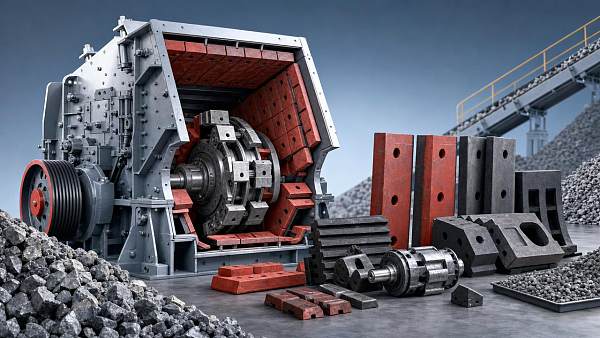
- Wear-part economics should include blow bars, liners, apron settings, and expected replacement frequency.
- Margin risk should cover freight, customs, warranty limits, parts lead times, and penalties from production interruption.
How capacity should be evaluated beyond nameplate tons per hour
Many sellers in impact crusher wholesale quote a broad throughput range. That range can be useful, but it is not enough for procurement approval. Actual output depends on feed top size, fines content, rotor speed, chamber design, recirculation load, and the required finished product gradation.
A crusher rated at the same tons per hour as another unit may still deliver lower net plant performance if it generates excess flaky material, requires tighter maintenance intervals, or suffers from frequent blockages during wet-season operation.
Capacity checks that reduce sourcing error
- Request throughput data at multiple feed sizes, not one headline figure.
- Match the machine to rock type, including compressive strength and abrasiveness.
- Confirm whether quoted capacity assumes open circuit or closed circuit operation.
- Check motor power draw against site electrical infrastructure and generator limits.
- Review expected reduction ratio and target product shape for the planned market.
Procurement teams should also ask whether the supplier can provide installation guidance, commissioning logic, and wear calibration support. A well-sized rotor can still underperform if the apron gap and feed discipline are not properly controlled.
The table below helps buyers compare impact crusher wholesale offers using operating conditions instead of catalog language alone.
For procurement directors, these questions turn a supplier quote into a usable comparison file. They also help distinguish between nominal capacity and bankable production capacity.
Wear parts: the hidden cost center in wholesale crusher buying
In impact crusher wholesale, wear parts often determine long-run profitability more than the original machine price. Blow bars, impact plates, liners, side wear plates, and fasteners can create a large variance in cost per ton, especially in abrasive ore or hard stone applications.
A lower-cost crusher can become the more expensive option if wear life is short, replacement requires extended crane time, or local inventory is weak. Procurement teams should compare not only unit cost of parts but also replacement labor, downtime exposure, and stocking strategy.
Key wear-part questions before award
- What metallurgical options are available for blow bars, such as high chrome or martensitic combinations?
- What is the expected wear life range under comparable material conditions?
- Can wear parts be changed safely on site without excessive dismantling?
- Are parts interchangeable across crusher sizes or generations?
- What emergency lead time applies for regional delivery?
Some buyers also ask suppliers to include an initial wear-parts package with the capital purchase. This can stabilize the first months of operation and protect margin when start-up conditions are still being optimized.
The following cost-oriented table is useful when comparing impact crusher wholesale proposals with different spare-part philosophies.
A disciplined wear-parts review often reveals where a cheap quote becomes an expensive operating reality. This is especially relevant in remote mining corridors where every maintenance delay carries high opportunity cost.
Where margin risk appears in impact crusher wholesale contracts
Margin risk in impact crusher wholesale does not come from one line item. It emerges when several moderate risks accumulate: optimistic performance assumptions, incomplete scopes, unstable freight rates, poor spare support, and warranty language that leaves too much responsibility with the buyer.
For institutional procurement, the best practice is to map technical risk and commercial risk together. A crusher with decent specifications but weak contract structure can still damage project economics.
Common sources of margin erosion
- Quoted capacity that depends on unrealistic feed preparation.
- Missing accessories such as foundations details, hydraulic packs, or control integration.
- Freight or duty changes not locked at the correct commercial stage.
- Warranty exclusions tied to wear, feed variability, or installation conditions.
- Slow technical support during commissioning or breakdown events.
Buyers should also assess supplier responsiveness during tender clarification. Delayed or vague technical replies often indicate future aftermarket friction. In many cases, this is a stronger warning sign than headline price differences.
Where suitable, procurement teams may review reference materials and neutral intelligence sources such as 无 to compare service assumptions, risk language, and market context without relying only on sales literature.
How to compare impact crusher types for different operating scenarios
Not every duty favors the same impact crusher configuration. Horizontal shaft impact units are often chosen for aggregate shaping and secondary reduction, while some applications may call for alternative crushing technologies if abrasion is extreme or fines generation must be tightly controlled.
The procurement goal is not to force one machine into every circuit. It is to identify where impact crushing creates the best value relative to feed condition, product requirement, maintenance capability, and operating budget.
Scenario-based fit
This comparison helps procurement teams avoid a frequent mistake: selecting by initial price and output alone without checking whether the crusher’s value proposition matches the actual application.
What standards, documentation, and supplier evidence should buyers request?
Heavy-industry procurement increasingly requires documentation that supports engineering review, safety compliance, and asset traceability. Exact certification needs depend on jurisdiction and project scope, but buyers should request a clean and auditable documentation package before final award.
Minimum document checklist
- General arrangement drawings and foundation load information.
- Motor and electrical data sheets for integration with plant systems.
- Recommended wear-part list and maintenance intervals.
- Safety instructions, lockout points, and maintenance access notes.
- Inspection, packing, and shipment scope definitions.
G-MRH’s analytical approach is useful here because procurement teams often need more than brochures. They need benchmark-oriented review across ISO-aligned engineering expectations, regional mine safety practices, and lifecycle cost implications.
FAQ: practical questions buyers ask about impact crusher wholesale
How should we compare two similar offers with different wear-part pricing?
Calculate estimated cost per ton, not just machine price. Include expected blow bar life, liner frequency, labor hours for replacement, and likely downtime cost. In abrasive applications, this comparison can reverse the apparent savings of a lower initial quote.
Is impact crusher wholesale suitable for very hard rock?
It can be, but suitability depends on abrasiveness, target product, and maintenance tolerance. For very abrasive material, buyers should compare impact units against cone or jaw-based circuits using lifecycle economics, not preference or habit.
What delivery risks should procurement teams check early?
Confirm manufacturing lead time, export packing scope, spare-parts dispatch capability, and any critical bought-out components such as motors or hydraulic systems. Delays often come from these interfaces rather than from the crusher frame itself.
What is a common mistake in impact crusher wholesale tenders?
A common mistake is accepting a capacity promise without matching it to actual feed conditions and desired product gradation. Another is underestimating the commercial impact of weak aftermarket support in remote or high-throughput sites.
Why informed buyers use a wider intelligence lens before placing orders
Crusher sourcing now sits within a broader industrial context. Commodity volatility, project financing discipline, ESG scrutiny, and cross-border supply chain uncertainty all influence procurement timing and supplier selection. That is especially true for buyers supporting mine expansion, EPC delivery, or contract crushing mobilization.
An institutional intelligence platform can help teams test vendor claims against market reality. It also supports internal approval by connecting technical choice with lifecycle cost, compliance logic, and project risk management. In some evaluations, buyers may cross-reference sources such as 无 when building a more defensible sourcing position.
Why choose us for procurement support and next-step evaluation
G-MRH supports procurement teams that need more than supplier quotations. We help buyers frame technical comparisons, stress-test commercial assumptions, and connect crusher selection with broader mining, mineral processing, and heavy-equipment realities.
You can engage us for practical decision support on the issues that most affect impact crusher wholesale outcomes:
- Parameter confirmation, including feed size, expected throughput, circuit fit, and power assumptions.
- Supplier comparison, including wear-part strategy, spare coverage, and contract risk review.
- Delivery-cycle assessment, including critical path items and aftermarket readiness.
- Application-based selection between impact crushing and alternative solutions where wear or product shape drives value.
- Documentation and compliance checks aligned with project engineering, safety, and international industrial expectations.
If your team is preparing a tender, validating a supplier shortlist, or negotiating final terms, contact us with your feed material profile, target output, maintenance constraints, and delivery window. That allows a more precise review of product selection, cost exposure, certification expectations, and quotation quality before capital is committed.
Recommended News
 May 17, 2026Impact Crusher Wear Part Life: Cost Drivers and Replacement TimingImpact crusher wear part life affects uptime, cost per ton, and replacement planning. Learn the key wear drivers, warning signs, and smart timing strategies to cut downtime and improve supplier decisions.
 May 16, 2026Crushing Ratio Calculation Methods That Prevent OversizingCrushing ratio calculation methods explained: learn how to prevent oversizing, cut energy waste, compare crusher performance, and improve plant efficiency with practical evaluation guidance.
 May 15, 2026Crusher Throughput Capacity Benchmarks for Real Plant PlanningCrusher throughput capacity benchmarks explained for real plant planning. Learn how to compare sustained vs nameplate rates, avoid costly sizing errors, and improve crusher, screen, and conveyor decisions.
 May 15, 2026Vibrating Screen Frequency Metrics That Actually Predict Separation QualityVibrating screen frequency metrics that matter most: learn how loaded frequency, stability, amplitude, and g-force better predict separation quality, throughput, and plant performance.