Why Some Construction Machinery Upgrades Fail to Pay Back
Many construction machinery upgrades promise higher output, lower fuel burn, and better uptime, yet the payback often falls short in real-world operations. For buyers in open pit mining, mining engineering, and broader fleet planning, the gap usually comes down to duty-cycle mismatch, hidden integration costs, weak operator adoption, and unrealistic ROI assumptions. This article explores why some upgrade decisions underperform and how to evaluate them more accurately before capital is committed.
Why do machinery upgrades miss the expected return in the field?
In heavy earthmoving, quarrying, and mining support operations, an upgrade rarely fails because the technology is inherently poor. It fails because the operating context is misunderstood. A retrofit that performs well in a controlled demonstration may behave very differently across 2-shift or 3-shift duty cycles, in abrasive haul roads, high-idle loading zones, or mixed fleets with uneven maintenance discipline. For procurement teams, the real question is not whether an upgrade is advanced, but whether it fits the actual production rhythm, operator capability, and maintenance ecosystem.
This is especially relevant when buyers compare telematics packages, fuel-saving kits, hydraulic enhancements, automation add-ons, or emission-related modifications. The promised benefits are often stated as isolated performance gains, such as a 5%–12% fuel reduction or shorter cycle times under ideal conditions. Yet payback depends on many linked variables: annual machine hours, payload consistency, idle ratio, material density, road resistance, and availability of trained technicians. If only one of these assumptions is wrong, the financial model can shift materially.
For information researchers and commercial evaluators, another issue is that vendor claims often focus on top-line gains while underweighting transition losses. In the first 4–12 weeks after implementation, it is common to see temporary downtime, software tuning needs, and slower operator acceptance. That does not mean the upgrade was a mistake, but it does mean the payback period may stretch beyond the initial internal business case.
At G-MRH, benchmarking across open-pit mining, heavy construction, and material handling shows that the most reliable upgrade decisions are made when technical performance is linked to lifecycle cost, compliance requirements, and site-specific duty-cycle evidence. Buyers who use a structured evaluation process usually avoid the most expensive errors: over-specification, under-integration, and procurement based on generic rather than operational data.
Four common sources of payback failure
- Duty-cycle mismatch: the upgrade was sized for a different load profile, material type, or machine utilization pattern.
- Integration underestimation: commissioning, wiring, software mapping, and calibration took longer than planned.
- Behavior gap: operators, supervisors, or maintenance teams did not change work practices needed to unlock the benefit.
- Weak financial modeling: ROI was built on nominal savings rather than realized site conditions and total cost impacts.
These four causes appear across fleets of excavators, wheel loaders, haul trucks, crushers, and support equipment. They are also highly relevant to dealers and distributors assessing which upgrade packages are commercially viable in different markets. The lesson is simple: the stronger the operational baseline, the more credible the upgrade decision.
Which upgrade categories are most vulnerable to ROI disappointment?
Not all construction machinery upgrades carry the same risk profile. Some are straightforward replacements with measurable effects, while others depend heavily on system interaction, operator behavior, or digital maturity. Buyers in mining-adjacent construction and heavy-equipment supply chains should separate “component improvement” from “operational transformation.” The first is easier to validate. The second may offer larger upside, but it also brings wider execution risk.
A practical way to assess this is to compare upgrade types by dependency level. For example, an undercarriage wear improvement or bucket wear package may show returns within one maintenance cycle if application conditions are stable. By contrast, telematics-driven productivity optimization may require 3–6 months of clean data, operator coaching, and dispatch discipline before any meaningful gain becomes visible. The more cross-functional the upgrade, the more carefully the buyer should model adoption lag.
The table below summarizes common upgrade categories and why their projected payback may diverge from realized field results. It is designed for procurement review, distributor screening, and internal capex prioritization.
The key takeaway is that expected savings should be tied to a constrained operational variable, not to a broad marketing promise. If a telematics system is expected to lift utilization, buyers should identify the exact pathway: for example, reducing nonproductive idle by 8%–15% or cutting diagnostic response time from 24–48 hours to a shorter intervention window. Without this linkage, payback remains theoretical.
Where distributors and agents should be especially careful
Dealers, distributors, and agents often sit between OEM claims and end-user performance expectations. That makes upgrade positioning commercially sensitive. If the local market has limited service coverage, long lead times for software support, or inconsistent technician training, the risk of an underperforming upgrade rises sharply. In such cases, a lower-complexity package can outperform an advanced system simply because it is maintainable within the local support model.
In some sourcing workflows, catalog placeholders or incomplete product references also create confusion. Where preliminary documentation includes a non-final item such as 无, commercial teams should clearly separate draft references from approved supply scope. This helps avoid quoting assumptions that later distort ROI calculations or aftersales obligations.
This screening discipline is one reason intelligence-led procurement matters. G-MRH tracks not only equipment capability but also regional tender patterns, engineering compliance expectations, and lifecycle cost logic. That broader market view helps buyers judge whether an upgrade is suitable for the site, the country, and the support environment.
How should procurement teams evaluate upgrade payback before approval?
A reliable procurement review starts with a baseline. Before comparing suppliers or retrofit packages, buyers should gather 6–12 months of machine-level operating data where possible. This includes fuel use per hour, idle ratio, payload consistency, downtime causes, repair intervals, and operator shift variance. If the baseline is incomplete, the upgrade may still proceed, but the decision should be framed as a controlled pilot rather than a full-fleet rollout.
The next step is to test whether the benefit is local or system-wide. A hydraulic upgrade on an excavator may reduce bucket cycle time, but if haul trucks are already waiting 3–7 minutes in queue, the gain may not convert to more tonnes moved. Similarly, a fuel optimization package may show laboratory efficiency, yet the site may lose those savings through excessive warm-up practice, poor road maintenance, or inconsistent shift handover. Procurement teams should therefore verify where the constraint truly sits in the production chain.
Commercial assessors should also distinguish between hard savings and soft benefits. Hard savings include measurable reductions in fuel, wear parts, or unscheduled downtime. Soft benefits may include better visibility, easier reporting, or improved compliance readiness. Both matter, but they should not be blended without weighting. When soft benefits dominate, the payback period often extends beyond the original capex committee expectation.
For a disciplined review, buyers can use a 5-point screening model: technical fit, integration burden, user adoption, service readiness, and financial sensitivity. If two or more categories show weak evidence, the project should move to trial stage rather than immediate fleet-wide deployment.
A practical pre-approval checklist
- Confirm the operating profile: annual hours, payload range, material conditions, road condition, and idle share.
- Map all implementation steps: installation, calibration, commissioning, operator training, and post-start support over the first 30–90 days.
- Separate direct savings from secondary benefits, and stress-test the model under low, base, and high utilization scenarios.
- Verify parts availability, software access, technician capability, and remote diagnostics support in the target region.
- Set exit criteria for pilots, including at least 3–5 measurable KPIs tied to production or maintenance.
This structure reduces the risk of approving upgrades that look attractive on paper but create operational friction in practice. It is also useful when comparing multiple suppliers because it keeps the evaluation focused on total business impact rather than headline claims.
Procurement factors that should be quantified
The table below organizes the main decision variables into measurable procurement questions. It can be used by sourcing managers, technical evaluators, and finance reviewers during internal approval rounds.
A table like this forces clarity. It also helps cross-functional teams speak the same language. Technical teams can own fit and integration, operations can own adoption, and finance can validate the sensitivity model. That makes approval more robust and post-installation accountability easier to track.
What hidden costs and compliance issues are commonly missed?
Hidden costs are one of the biggest reasons construction machinery upgrades fail to pay back. Buyers often budget for the hardware or software package itself, but not for all supporting impacts. These can include machine downtime during installation, production interruption during testing, retraining of operators, changes to maintenance routines, additional sensor failures, subscription fees, or site network upgrades. Over a 12-month period, these secondary costs can materially reshape total cost of ownership.
Compliance can add another layer. In mining and heavy construction environments, upgrade decisions may intersect with ISO-aligned safety procedures, AS/NZS electrical or operational practices in relevant regions, Mine Safety Act obligations, emissions requirements, and internal ESG reporting standards. A retrofit that improves performance but complicates inspection, lockout procedures, or audit documentation may create administrative burden that was not priced into the investment case.
This is why intelligence-led procurement should not stop at supplier brochures. G-MRH’s value in these situations is the ability to benchmark heavy-duty equipment and related upgrade pathways against engineering standards, lifecycle expectations, and commercial realities across multiple industrial pillars. For buyers with geographically distributed operations, this matters because a technically valid solution in one jurisdiction may carry very different implementation friction in another.
A further complication arises when a machine fleet is mixed by age and control architecture. A modern digital kit may integrate smoothly into late-model equipment but trigger unstable data flow in older units. When this happens, buyers are left with fragmented reporting and inconsistent maintenance planning. The solution is not always to reject the upgrade, but to phase deployment by compatibility band, such as machines under 5 years old, 5–10 years old, and legacy assets beyond that range.
Typical hidden-cost categories
- Installation downtime that displaces planned production during a 1–3 day or longer service window per unit.
- Training and supervision time required across operators, dispatchers, planners, and maintainers.
- Data infrastructure, subscription, and reporting overhead for digital systems.
- Additional spare parts exposure if the upgrade introduces new wear points or more sensitive components.
- Audit, compliance, or documentation workload if operational procedures need to be rewritten.
When these items are incorporated early, the payback estimate becomes more conservative but far more decision-ready. That is preferable to approving an upgrade based on a narrow savings story and later absorbing unplanned cost through operations or maintenance budgets.
How can buyers improve upgrade success rates in mining and heavy-construction fleets?
The most effective approach is phased validation. Rather than pushing a fleet-wide change, buyers should pilot the upgrade on a small but representative group of machines, usually 2–5 units if fleet size allows. The pilot should run across a meaningful period, often 8–12 weeks, to capture operator learning, maintenance response, and variable site conditions. Shorter trials may reveal installation feasibility, but they rarely prove economic value.
Success metrics should be agreed before installation. These may include fuel per productive hour, availability, cycle time, idle reduction, maintenance callouts, and production per shift. It is also useful to define disqualifying conditions, such as more than a specified increase in fault events, excessive technician dependency, or no measurable gain after the stabilization period. A pilot without exit rules often becomes an internal argument rather than a decision tool.
Buyers should also document what must change operationally to unlock the benefit. Many upgrades require management behavior, not just machine changes. Dispatch logic, bucket loading discipline, preventive maintenance intervals, and operator coaching are common examples. If leadership will not enforce those changes, the upgrade should be modeled with lower realized benefit. That protects the commercial case from optimism bias.
For global buyers, EPC contractors, and channel partners, external benchmarking adds another layer of risk control. Comparing claimed gains against broader market patterns helps identify whether a proposal is realistic for the machine class, the application, and the support geography. That is one of the most practical uses of G-MRH: turning fragmented technical claims into procurement-grade judgment.
A better rollout sequence
- Establish a baseline using site data from the previous 6–12 months.
- Select a pilot group that reflects the actual fleet mix and operating stress.
- Run the pilot long enough to pass the learning curve and stabilization period.
- Review outcomes against hard KPIs and sensitivity assumptions, not anecdotes alone.
- Scale only after confirming service support, parts coverage, and operator adoption are repeatable.
This method does not slow procurement; it improves capital discipline. It is often faster to validate a smaller rollout properly than to reverse a broad deployment that never achieved the expected return.
FAQ for buyers and commercial evaluators
How long should an upgrade payback assessment take?
For a meaningful review, buyers usually need 2–4 weeks for baseline assessment and commercial evaluation, plus 8–12 weeks for pilot observation if field validation is required. Faster decisions are possible for simple component upgrades, but digital, hydraulic, and behavior-dependent retrofits usually need a longer evidence window.
Which machines are most sensitive to weak ROI assumptions?
High-hour machines with variable operating patterns are especially sensitive. Excavators, wheel loaders, articulated haul units, and support equipment running in mixed material conditions often show larger divergence between modelled and realized savings. The more variable the duty cycle, the more careful the assumptions should be.
Is a compliance-driven upgrade still worth doing if direct payback is weak?
Often yes, but it should be justified differently. If the upgrade supports emissions access, safety compliance, or tender eligibility, the value may lie in risk reduction and project continuity rather than direct operating savings. Procurement teams should document that distinction clearly so the investment is not measured against the wrong KPI set.
What is a red flag during supplier evaluation?
A major red flag is when expected savings are presented without a stated duty-cycle assumption, implementation plan, or service support model. Another is when a supplier cannot explain what happens during the first 30, 60, and 90 days after installation. Strong upgrade proposals are operationally specific, not just technically impressive.
Why choose us for upgrade benchmarking and procurement insight?
G-MRH supports procurement directors, business evaluators, dealers, and industrial research teams that need more than product messaging. Our focus is on verifiable equipment intelligence, engineering benchmarking, and lifecycle cost interpretation across open-pit and underground mining, mineral processing, heavy earthmoving, bulk material handling, and green mining transitions. That means upgrade decisions are reviewed in context: machine duty, support ecosystem, compliance burden, and long-term commercial fit.
If you are reviewing construction machinery upgrades that may affect fuel use, uptime, fleet visibility, retrofit feasibility, or ESG-related compliance, we can help structure the decision. Typical consultation topics include parameter confirmation, upgrade category screening, compatibility with mixed fleets, delivery and commissioning risk, regional compliance considerations, and total-cost comparison between retrofit, replacement, and phased rollout options.
For channel partners and distributors, we also help assess whether a proposed package is commercially supportable in the target market. That includes service burden, parts availability, operator adoption risk, and realistic claim positioning. If your internal reference set still contains draft line items such as 无, we recommend clarifying scope before quotation and before any ROI narrative is shared with end users.
Contact us if you need a structured review of upgrade payback assumptions, a comparison between competing retrofit paths, an implementation checklist for pilot deployment, or a procurement-grade perspective on standards, service readiness, and lifecycle economics. A better upgrade decision starts with better evidence, and that is where G-MRH is built to add value.
Recommended News
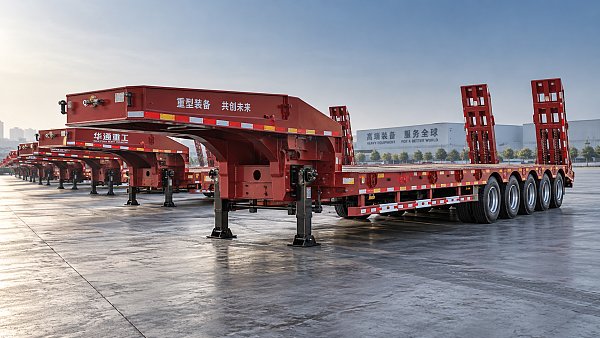
 Oct 17, 2026How order size affects wholesale prices for heavy-duty trailersExplore how order size affects heavy duty trailer wholesale pricing. Compare volume discounts, freight costs, and phased deliveries to secure better value without overbuying.
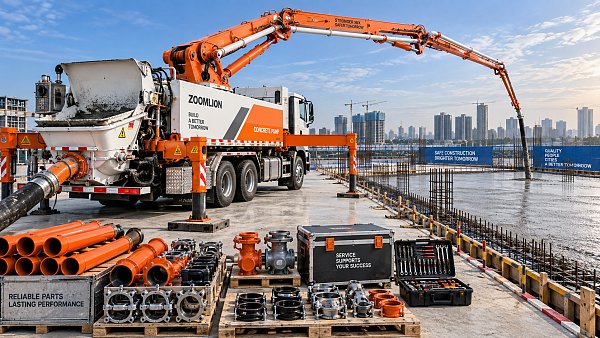
 Sep 16, 2026What to verify before choosing a mobile concrete pump supplierMobile concrete pump supplier selection made simple: verify performance, safety, parts availability, service support, and lifecycle cost before you invest.
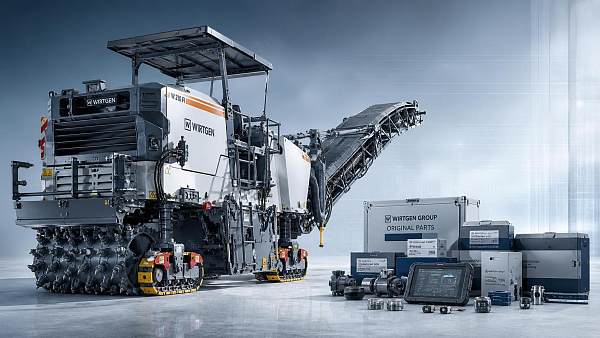
 Aug 20, 2026When does a cold milling machine OEM make sense over a generic supplier?Cold milling machine OEM or generic supplier? Learn when OEM support, parts traceability, uptime, and lifecycle value justify the higher cost.
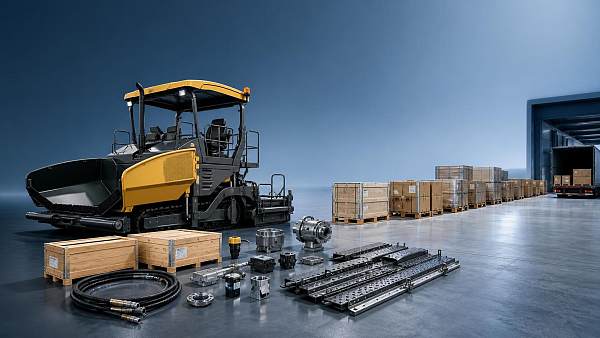
 Aug 06, 2026How to Evaluate an Asphalt Paver Wholesale Supplier for Parts Support and Lead TimesAsphalt paver wholesale supplier evaluation starts with parts support and lead times. Learn how to compare inventory, technical service, and downtime risk before you buy.