Construction Machinery Downtime Often Starts with Small Neglect
In construction machinery and mining engineering, costly downtime rarely begins with a catastrophic breakdown. More often, it starts with small neglect: a missed walk-around inspection, delayed lubrication, a loose hose clamp, contaminated filters, or abnormal vibration that nobody documents. For operators, site supervisors, and equipment researchers, the practical takeaway is clear: improving mining equipment reliability is usually less about reacting to major failures and more about controlling minor issues before they multiply into safety incidents, lost production, and expensive repair events.
Across excavators, loaders, haul trucks, crushers, conveyors, and other heavy machinery used in open-pit mining, underground mining, and construction environments, the same pattern repeats. Small maintenance lapses shorten component life, increase unplanned shutdowns, and raise total lifecycle costs. The organizations that reduce downtime most effectively are usually the ones that make routine inspection, lubrication discipline, and early fault reporting part of daily operating culture—not just a maintenance department responsibility.
What is the real search intent behind “Construction Machinery Downtime Often Starts with Small Neglect”?
The core search intent behind this topic is practical and preventive. Readers are not simply looking for a general explanation of downtime. They want to understand why seemingly minor maintenance mistakes lead to major equipment failure, which neglected areas matter most, and what actions can reduce downtime in real operating conditions.
For this audience—especially information researchers and equipment users or operators—the most important questions are usually:
- What kinds of “small neglect” actually cause serious downtime?
- How can operators detect early warning signs before failure occurs?
- Which inspection and maintenance tasks have the highest impact on reliability?
- How do these issues affect safety, productivity, and operating cost?
- What practical routines should teams implement on site?
That means the most useful article is one that focuses on failure pathways, high-risk neglect points, daily prevention routines, and decision-making priorities, rather than generic statements about maintenance being important.
Why small neglect causes big downtime in heavy machinery
Heavy equipment operates under high load, vibration, dust exposure, heat, moisture, and frequent shock. In these duty cycles, a small issue rarely stays small for long. A minor hydraulic seep can reduce pressure stability. A blocked air filter can affect engine efficiency. Low lubrication quality can accelerate wear in pins, bushings, bearings, and slew systems. A loose fastener can turn into structural fatigue. What starts as a low-cost correction becomes a major repair when the machine continues operating under stress.
This matters even more in mining and construction because downtime costs are not limited to the repair itself. One machine failure can disrupt an entire production chain. If an excavator stops, trucks wait. If a crusher trips, material flow backs up. If a conveyor bearing fails, downstream processing may stall. In high-throughput operations, the hidden cost of downtime often exceeds the direct maintenance invoice.
That is why equipment reliability depends on early intervention. In most cases, catastrophic failure is the final stage of a visible but ignored deterioration process.
Which small maintenance oversights most often lead to equipment failure?
Not every neglected task carries the same risk. Some oversights repeatedly appear across construction machinery, earthmoving fleets, and mining equipment maintenance records.
1. Inadequate daily inspection
Operators are the first line of defense. When walk-around checks are rushed or skipped, early signs such as oil drips, cracked hoses, loose bolts, unusual tire wear, damaged guards, and abnormal undercarriage wear go unnoticed. These are often the earliest indicators of larger mechanical problems.
2. Poor lubrication practices
Incorrect grease intervals, wrong lubricant selection, over-greasing, under-greasing, or contamination can all shorten component life. Lubrication failures commonly affect bearings, articulation points, slew rings, bucket pins, and drivetrain components. In dusty mining and quarry conditions, lubricant contamination is especially destructive.
3. Filter neglect
Dirty air, fuel, hydraulic, and oil filters reduce system efficiency and increase wear. In diesel-powered heavy machinery, clogged filters can affect combustion quality and engine performance. In hydraulic systems, contamination can damage pumps, valves, and actuators—often with very high replacement cost.
4. Ignoring abnormal sounds, vibration, or heat
Operators often notice changes before sensors trigger alarms. Whining hydraulics, hotter-than-normal housings, uneven travel response, delayed boom movement, or unusual crusher vibration can all indicate developing faults. If these symptoms are not reported immediately, failure progression continues unchecked.
5. Delayed replacement of wear parts
Teeth, liners, edges, screens, belts, rollers, seals, and hoses are consumable components. Running them beyond safe wear limits usually affects neighboring parts. For example, a worn bucket tooth changes digging efficiency and load stress. A damaged conveyor roller may lead to belt damage. A worn crusher liner can reduce throughput and strain power draw.
6. Weak record-keeping and handover communication
Small issues become expensive when they are noticed but not documented. If one shift hears abnormal noise and the next shift is not informed, the machine may continue operating until damage becomes severe. Reliability improves when fault reporting is simple, consistent, and actionable.
How neglect affects safety, productivity, and total cost
Many readers search this topic because they want to understand the business and operational impact, not only the mechanical cause. Small neglect affects three areas at once: safety, output, and cost.
Safety risk
Leaks, worn brakes, steering play, damaged guards, overheating, electrical faults, and unstable attachments can create immediate risk to operators and surrounding crews. In mining and heavy construction environments, even a small mechanical defect can escalate into a serious incident due to machine size, operating loads, and site conditions.
Productivity loss
Machines do not need to be fully broken down to lose productivity. Reduced hydraulic efficiency, poor engine breathing, worn ground-engaging tools, and misaligned systems all reduce cycle speed, fuel efficiency, and operating precision. Teams may not classify this as downtime, but it is still lost production.
Cost escalation
Neglect usually increases total ownership cost in several layers:
- higher fuel or energy consumption
- accelerated component wear
- more unplanned shutdowns
- larger secondary damage
- higher labor hours for emergency repair
- spare parts procurement under time pressure
- possible contract penalties or production delays
In other words, the cheapest maintenance task is often the one completed before failure develops.
What operators and site teams should check first every day
For execution-level readers, the most useful guidance is practical. A strong daily routine does not need to be complicated, but it must be disciplined. The following checkpoints usually offer high preventive value across excavators, loaders, dozers, haulage equipment, and processing machinery:
- Fluid levels and leaks: engine oil, coolant, hydraulic fluid, fuel, transmission fluid
- Hoses and fittings: cracks, abrasion, loose connections, swelling, seepage
- Lubrication points: verify scheduled greasing and inspect for contamination
- Filters and breathers: check restriction indicators and visible contamination
- Undercarriage or running gear: track tension, roller condition, tire damage, abnormal wear
- Attachments and wear parts: bucket teeth, cutting edges, crusher liners, screen media, conveyor rollers
- Electrical and safety systems: alarms, lighting, cameras, isolation points, emergency stops
- Temperature, noise, and vibration: compare with normal machine behavior
The key is not merely checking boxes. Teams should define what “normal” looks like for each machine class and train operators to escalate deviations immediately.
How to build a low-downtime maintenance culture instead of relying on reactive repair
Reliable heavy machinery operation depends on process discipline as much as hardware quality. Many fleets already have maintenance schedules, but downtime remains high because the site culture is still reactive. A low-downtime culture usually includes the following elements:
Clear ownership
Operators inspect. Maintenance teams verify and correct. Supervisors track recurring issues. Reliability improves when responsibilities are defined and small defects do not sit in a gray zone.
Simple reporting systems
If fault reporting takes too long, people stop reporting. Good sites use short digital forms, shift logs, photo-based reporting, or machine condition apps that make abnormal findings easy to record.
Priority-based maintenance planning
Not every defect requires immediate shutdown, but every defect should be classified. Teams should separate cosmetic issues from reliability-critical issues and safety-critical issues.
Trend monitoring
Repeated hose failures, chronic overheating, frequent contamination, or recurring bearing wear often point to root causes such as installation quality, operating misuse, wrong parts, or environment mismatch. Tracking trends helps organizations stop repeating the same repair.
Operator involvement
Operators should not be treated only as machine users. They are the earliest condition monitors on site. Training them to identify early symptoms is one of the highest-return actions in construction and mining equipment maintenance.
When minor neglect signals a deeper fleet management problem
Sometimes repeated “small” issues are not isolated mistakes. They indicate a broader weakness in asset management. If the same equipment class repeatedly suffers avoidable downtime, decision-makers should investigate deeper questions:
- Are maintenance intervals realistic for the actual duty cycle?
- Is the machine specification suitable for site conditions?
- Are lubricants, filters, and wear parts meeting required standards?
- Is there too much pressure to keep machines running despite warning signs?
- Are inspection reports converted into timely work orders?
- Is there a training gap among operators or technicians?
For procurement researchers and industrial buyers, this is also where lifecycle evaluation becomes important. The best equipment choice is not just the machine with strong nominal performance. It is the machine supported by maintainable design, parts availability, clear service intervals, robust contamination control, and predictable reliability under actual field conditions.
How to reduce downtime in construction and mining equipment: practical priorities
If the goal is to reduce unplanned downtime quickly, the highest-value actions are usually straightforward:
- Standardize pre-start and shutdown inspections for each machine class.
- Strengthen lubrication discipline with correct product, interval, and contamination control.
- Replace wear parts on condition or schedule before secondary damage occurs.
- Train operators to recognize abnormal machine behavior and report it early.
- Use maintenance records to identify repeat failure patterns.
- Align maintenance planning with real operating conditions, not only handbook assumptions.
- Review reliability-critical consumables and components for quality and suitability.
These actions may seem basic, but in heavy-duty environments they are often the dividing line between stable uptime and chronic disruption.
Conclusion
Construction machinery downtime often starts with small neglect because heavy equipment failure is usually progressive, not sudden. Minor leaks, missed lubrication, ignored vibration, worn parts, and poor reporting create the conditions for larger breakdowns. For operators, maintenance teams, and industrial researchers, the main lesson is practical: reliability is built through daily discipline, early detection, and consistent follow-up.
In both construction and mining engineering, the most effective way to improve equipment availability is not only investing in stronger machines, but also preventing small defects from becoming major stoppages. When teams treat routine care as a production strategy rather than a housekeeping task, they protect safety, improve output, and reduce lifecycle cost across the entire operation.
Recommended News
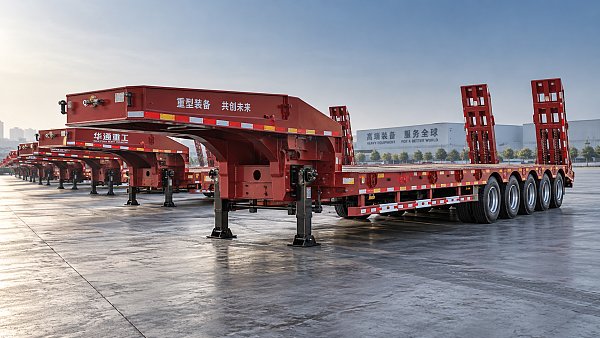
 Oct 17, 2026How order size affects wholesale prices for heavy-duty trailersExplore how order size affects heavy duty trailer wholesale pricing. Compare volume discounts, freight costs, and phased deliveries to secure better value without overbuying.
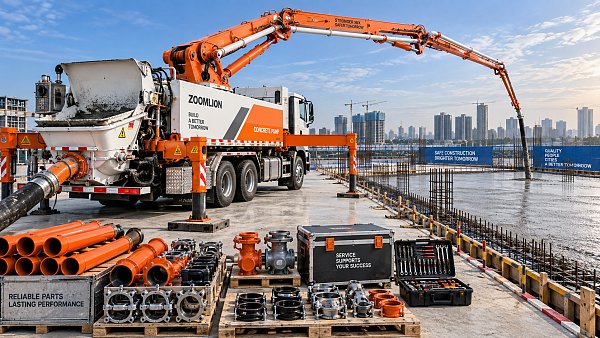
 Sep 16, 2026What to verify before choosing a mobile concrete pump supplierMobile concrete pump supplier selection made simple: verify performance, safety, parts availability, service support, and lifecycle cost before you invest.
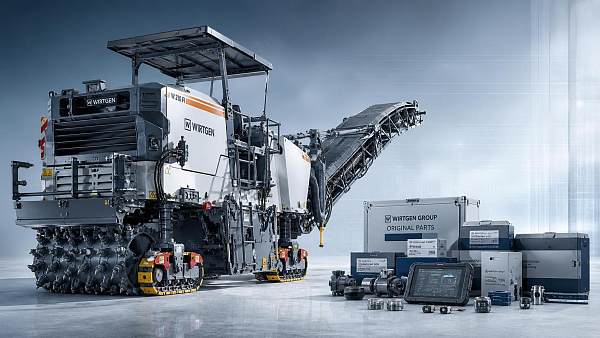
 Aug 20, 2026When does a cold milling machine OEM make sense over a generic supplier?Cold milling machine OEM or generic supplier? Learn when OEM support, parts traceability, uptime, and lifecycle value justify the higher cost.
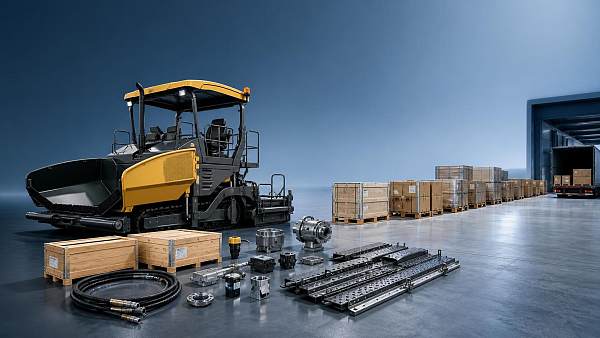
 Aug 06, 2026How to Evaluate an Asphalt Paver Wholesale Supplier for Parts Support and Lead TimesAsphalt paver wholesale supplier evaluation starts with parts support and lead times. Learn how to compare inventory, technical service, and downtime risk before you buy.