When heavy machinery repair costs more than replacement
When heavy machinery repair begins to exceed replacement value, buyers must look beyond workshop invoices to lifecycle economics, mining standards, and operational risk. For stakeholders in open pit mining, from mining excavators procurement to mining tenders in Africa, the real decision involves uptime, compliance, financing, and supplier capability. This guide helps assess heavy machinery repair costs, compare open-pit mining equipment supplier options, and align decisions with long-term asset performance.
For procurement teams, commercial evaluators, distributors, and technical researchers, the threshold between repair and replacement is rarely a simple dollar figure. A 12-year-old excavator may still have usable structural life, yet repeated hydraulic failures, delayed parts supply, and rising fuel burn can turn “repair” into the more expensive option over the next 24–36 months.
In mining and heavy earthmoving, the wrong decision affects more than maintenance budgets. It can reduce fleet availability below target, delay contract milestones, increase safety exposure, and weaken tender competitiveness. That is why institutional buyers increasingly evaluate total cost of ownership, compliance with ISO and AS/NZS practices, and duty-cycle fit before approving a rebuild or a capital replacement.
Understanding the Real Break-Even Point
The first mistake many operators make is comparing a repair invoice with a purchase price. In reality, the break-even point sits at the intersection of 5 factors: repair cost, remaining service life, downtime impact, fuel efficiency, and compliance risk. If a major overhaul costs 45%–60% of replacement value but only restores 2–3 years of unstable service life, replacement often becomes the stronger commercial decision.
This issue is especially visible in open-pit mining equipment. A production excavator, haul truck, or wheel loader working 4,000–6,500 hours per year cannot be judged like low-utilization construction equipment. Under high duty cycles, wear accelerates across engines, undercarriages, booms, hydraulic pumps, and electronic control systems. One successful rebuild in the past does not guarantee the next one will generate a positive return.
A practical rule used by many commercial teams is to review replacement seriously when annual maintenance cost rises above 12%–18% of current asset value, or when unplanned downtime exceeds 8%–10% of scheduled operating time. These are not universal cutoffs, but they provide a disciplined starting point for comparing heavy machinery repair costs against replacement alternatives.
For buyers studying mining tenders in Africa or remote resource projects, logistics should also be priced into the decision. A repair strategy that depends on imported components with 6–12 week lead times may look cheaper on paper but fail operationally when a machine sits idle through a shipment delay or customs bottleneck.
Core indicators that signal repair is losing value
- Three or more major subsystem failures within 12 months, such as engine, transmission, swing system, or hydraulic pump.
- Parts and labor costs for a single overhaul exceeding 40% of equivalent used replacement cost.
- Machine availability falling below 85% in production-critical applications.
- Fuel consumption worsening by 10%–20% compared with comparable units in the same fleet.
- Safety, emissions, or site-compliance gaps that cannot be corrected economically during rebuild.
The table below provides a practical screening model for the repair-versus-replace decision in heavy machinery fleets.
The key takeaway is that repair economics must be tied to future performance, not past sunk cost. Once maintenance spending and lost uptime begin to compound, replacement usually protects production value more effectively than another major workshop cycle.
Why Mining Conditions Change the Economics
Mining equipment operates under different stress profiles than most general industrial assets. In open-pit sites, machines face abrasive material, long haul distances, steep gradients, high ambient dust, and shift patterns that may run 20–22 hours per day. Under these conditions, the cost of failure is not only mechanical. It can also cascade into blasting schedules, crusher feed interruption, and contractor penalties.
For this reason, G-MRH-style benchmarking logic is valuable: equipment should be measured against duty-cycle performance, component life in similar operating conditions, and alignment with site standards. A machine that remains acceptable in a municipal construction fleet may be commercially unsuitable in a copper, iron ore, or coal production environment where availability targets often sit above 88%–92%.
Commercial teams should also factor in the relationship between commodity prices and capital timing. During strong commodity cycles, replacing a weak asset earlier may be justified because every extra hour of loading or hauling has a larger revenue impact. During a softer cycle, a structured rebuild may still be appropriate if it extends service life by 18–24 months without creating elevated shutdown risk.
Another major variable is site geography. Procurement teams evaluating open-pit mining equipment supplier options for Africa, Australia, or Latin America must compare local service presence, warehousing depth, field technician response time, and rebuild capability. A lower purchase price loses value quickly if support lead times stretch from 72 hours to 3 weeks.
Typical cost drivers in mining asset decisions
1. Downtime cost per hour
A 100-ton excavator or production loader can affect multiple downstream units. Even without quoting site-specific revenue numbers, many operations internally assign an hourly downtime cost model. Once this cost is added, a “cheaper” repair can become the more expensive choice in less than 6 months.
2. Parts availability and freight
For older fleets, critical components may require remanufacturing or long-distance sourcing. Freight, customs, and emergency procurement charges can lift total repair expense by 15%–30%, especially in remote projects.
3. Compliance upgrades
If a rebuild also requires braking system updates, operator protection improvements, telemetry integration, or emissions-related modification, the real project cost may exceed the workshop estimate by a wide margin.
The following table shows how mining context changes decision priorities across common buyer groups.
In short, mining magnifies the cost of unreliable equipment. That is why replacement analysis must be tied to production reality, not only maintenance history.
A Practical Framework for Procurement and Evaluation Teams
A disciplined decision framework helps buyers avoid two costly errors: replacing too early and rebuilding too long. For information researchers and procurement professionals, the most useful model is a 4-layer review that combines technical condition, commercial return, supplier capability, and project timing. This creates a comparable basis across machines, brands, and regional sourcing options.
The technical layer should start with an inspection report covering structural integrity, engine hours, hydraulic performance, electronic systems, and wear-part condition. A machine with acceptable frame life but poor hydraulics may justify targeted repair. A machine with structural fatigue, outdated control systems, and chronic powertrain issues usually does not.
The commercial layer must compare three numbers over a fixed horizon, often 24 or 36 months: expected repair cost, expected downtime cost, and total replacement cost including delivery, commissioning, and training. This is where many replacement decisions become clearer, particularly if financing or trade-in options reduce upfront pressure.
The supplier layer is equally important. In open-pit mining equipment procurement, buyers should compare not only unit pricing but also response commitments, field service capacity, rebuild warranty scope, parts stocking depth, and digital monitoring support. Even a neutral listing such as 无 can remind evaluators how often procurement records contain incomplete supplier support data, which should never be overlooked in high-value machinery decisions.
Four-step assessment process
- Establish current asset condition using inspection, service history, and hour-based wear trends.
- Model 24–36 month ownership cost under both repair and replacement scenarios.
- Assess supplier reliability across parts lead time, field support radius, and warranty response.
- Match the decision to production plans, commodity outlook, and tender pipeline timing.
Key procurement checks
- Does the supplier maintain regional inventory for critical components with lead times under 7–14 days?
- Is the machine aligned with site standards, operator training requirements, and safety protocols?
- Can the supplier support commissioning, diagnostics, and digital monitoring across multiple sites?
- What residual value is realistic after another 2–3 years of service?
When these checks are documented well, replacement decisions become easier to defend internally. They also improve negotiations with dealers, rebuild contractors, and financing partners because the buying team can show measurable risk rather than subjective preference.
How to Compare Supplier Options Without Focusing Only on Price
Comparing open-pit mining equipment supplier options requires more than evaluating invoice totals. Two offers that appear close in capital cost may differ materially in availability support, commissioning quality, rebuild standards, and spare-parts continuity. For procurement departments serving large mine sites or EPC contractors, these differences can outweigh a 5%–8% purchase price gap.
A strong supplier comparison should include new equipment, certified rebuild, and good-quality used alternatives where relevant. The right answer depends on application intensity, deployment speed, and asset strategy. In some operations, a certified rebuild can bridge a 12-month capital gap. In others, only new equipment with stronger telemetry and lower fuel burn will support productivity targets.
Distributors and agents should pay close attention to support economics. A machine family with shared components across 3 or 4 core models can reduce stocking complexity and improve service speed. By contrast, niche legacy units may trap working capital in slow-moving parts while still failing to guarantee uptime.
It is also worth testing supplier transparency. Ask for detailed maintenance scope, exclusions, recommended consumables, and expected service intervals. If a provider avoids specific numbers around overhaul duration, parts availability, or warranty terms, the risk premium should be reflected in the evaluation.
Supplier comparison matrix
The table below can be used by procurement or commercial teams when shortlisting heavy machinery replacement or rebuild suppliers.
Price still matters, but it should be the final filter rather than the first one. In high-value industrial assets, the winning offer is usually the one that balances performance certainty, support depth, and controllable lifecycle cost.
Common Mistakes, Risk Controls, and Final Action Points
One common mistake is allowing sunk-cost thinking to dominate the process. If a company has already spent heavily on a machine over the last 18 months, decision-makers may feel pressure to “recover value” through another repair. In practice, this often extends a declining asset beyond its economic life and raises exposure to unplanned failure during peak production periods.
Another mistake is evaluating equipment in isolation from the rest of the fleet. If one aging loader requires unique parts, special technician skills, or a separate inventory profile, its indirect cost may be much higher than the workshop estimate suggests. Fleet standardization can lower maintenance complexity, training burden, and procurement overhead across a 2–5 year horizon.
Risk control should include both technical and commercial safeguards. On the technical side, insist on pre-purchase inspections, documented rebuild scope, and defined acceptance criteria. On the commercial side, tie contracts to delivery milestones, warranty language, and support response commitments. Where possible, include a serviceability review before final approval, especially for remote mining jurisdictions.
For teams tracking market opportunities from the African copper belt to Australian iron ore hubs, timing matters. If project mobilization is less than 90 days away, the fastest reliable option may outperform the theoretically cheapest one. If the asset plan supports a longer transition, a fuller supplier comparison can improve lifecycle value materially.
FAQ
How do I know when repair costs have become too high?
A good trigger is when major repair cost approaches 45%–60% of replacement value and still does not secure stable service life beyond 24–36 months. Add downtime, freight, and compliance upgrade costs before deciding.
Is used equipment a valid alternative to new replacement?
Yes, if inspection quality is strong, parts support is proven, and the expected operating profile is clear. Used units can be effective for lower-intensity duty cycles or interim fleet bridging, but they need stricter condition verification.
What matters most for mining excavators procurement?
Look at availability, component life under similar duty cycles, local service response, structural condition, and parts lead times. Procurement teams should also compare fuel efficiency and integration with existing maintenance systems.
Can supplier intelligence improve decision quality?
Absolutely. Verified data on support capacity, standards alignment, tender history, and lifecycle cost patterns often reveals risk that is not visible in quotations alone. Even a placeholder record such as 无 highlights how important complete supplier documentation is in formal evaluation workflows.
When heavy machinery repair costs more than replacement, the best decision is rarely the one with the lowest immediate invoice. It is the one that protects uptime, aligns with mining standards, fits the project timeline, and delivers the strongest ownership outcome over the next 2–5 years. For researchers, buyers, and channel partners working across mining and heavy equipment markets, a structured lifecycle approach turns a difficult maintenance question into a more reliable commercial decision. To evaluate supplier options, benchmark asset risk, or refine a fleet replacement plan, get in touch for a tailored assessment and deeper market intelligence.
Recommended News
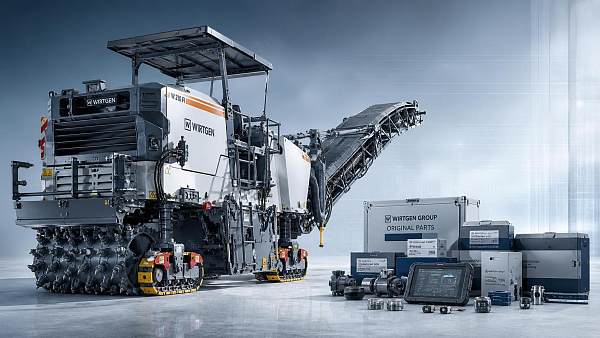
 Aug 20, 2026When does a cold milling machine OEM make sense over a generic supplier?Cold milling machine OEM or generic supplier? Learn when OEM support, parts traceability, uptime, and lifecycle value justify the higher cost.
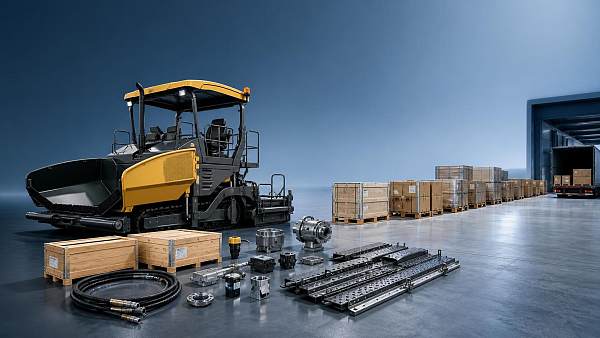
 Aug 06, 2026How to Evaluate an Asphalt Paver Wholesale Supplier for Parts Support and Lead TimesAsphalt paver wholesale supplier evaluation starts with parts support and lead times. Learn how to compare inventory, technical service, and downtime risk before you buy.
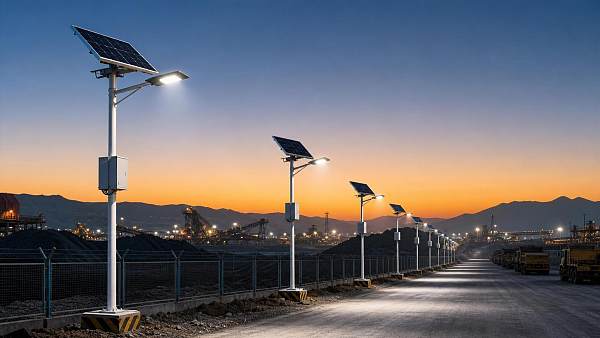
 Jun 24, 2026Solar Street Lights: Cost, Lifespan, and Off-Grid PlanningSolar street lights guide: compare real cost, lifespan, battery replacement, and off-grid planning to choose reliable lighting for industrial and remote sites.
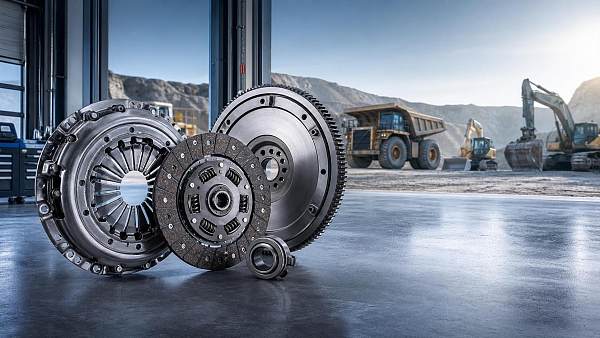
 Jun 19, 2026Clutch Kits: Signs It’s Time to Replace vs RepairClutch kits: learn the key signs that show when repair is enough and when replacement is the smarter choice to reduce downtime, protect reliability, and cut long-term costs.