Pavement Milling Machine OEM: Key Specs That Matter
Choosing a pavement milling machine OEM is not a brochure exercise. In heavy construction and road rehabilitation, real value comes from measurable engineering performance.
A reliable pavement milling machine OEM must deliver precision cutting, stable output, fuel-efficient power, durable structure, and dependable support across the machine lifecycle.
These factors matter across public infrastructure, mine-site roads, industrial yards, logistics corridors, and high-load transport routes. Specification gaps quickly become cost, downtime, or compliance problems.
This guide explains the key specs that matter when reviewing any pavement milling machine OEM, with emphasis on practical evaluation, risk control, and long-term operating value.
Definition and Scope of a Pavement Milling Machine OEM
A pavement milling machine OEM is the original equipment manufacturer that designs, engineers, assembles, and supports the machine under its production and quality system.
The term covers more than machine branding. It includes cutter drum design, drive systems, frame structure, control software, emissions compliance, parts traceability, and after-sales service capability.
In practical evaluation, a pavement milling machine OEM should be assessed as a full engineering source, not only as a seller of finished units.
This distinction is important in the broader heavy-machinery sector. Road equipment often works beside pavers, graders, trucks, compactors, and material plants under demanding duty cycles.
Current Industry Focus in Pavement Milling Machine OEM Evaluation
Specification review has become more disciplined because project owners expect better surface accuracy, lower emissions, tighter timelines, and stronger lifecycle economics.
In global infrastructure and industrial works, several signals now shape pavement milling machine OEM selection:
- Demand for precise depth control on highways, ports, and airside pavements.
- Higher scrutiny of engine emissions, fuel use, and idle management.
- Need for stronger wear resistance under abrasive aggregate conditions.
- Preference for telematics, diagnostics, and predictive maintenance support.
- Closer review of spare parts lead time and field service coverage.
Key Specs That Matter Most
Cutting Width and Depth Control
Cutting width determines pass efficiency. Wider drums increase coverage, but only when the machine can maintain stability, power balance, and accurate depth across variable pavement conditions.
Depth control is often more important than headline width. A strong pavement milling machine OEM should provide fine adjustment, consistent leveling, and repeatable cutting accuracy.
Drum Configuration and Tooling System
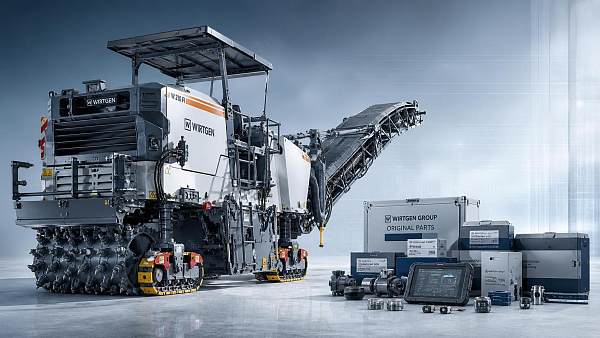
The drum is the machine’s core working component. Drum diameter, bit spacing, rotation stability, and quick-change capability directly affect milling texture, throughput, and tool consumption.
A capable pavement milling machine OEM usually offers multiple drum options for standard milling, fine milling, micro-milling, and specialty surface correction.
Engine Output and Fuel Efficiency
Rated horsepower alone is incomplete. The engine must hold torque under heavy load, support auxiliary systems, and operate efficiently during long shifts or high-temperature conditions.
The better pavement milling machine OEM platforms combine compliant engines with optimized hydraulic demand, efficient cooling, and low-idle logic to reduce fuel burn.
Conveyor Capacity and Material Flow
Material removal must match cutting output. Poor conveyor design leads to blockage, spillage, or interrupted production, especially on urban works or continuous industrial resurfacing.
Check belt width, discharge height, swing angle, wear protection, and service access. These details often separate a strong pavement milling machine OEM from a basic assembly supplier.
Structural Durability and Wear Protection
Heavy-duty milling creates vibration, shock, and abrasion. Frame rigidity, rotor housing reinforcement, anti-wear liners, and reliable weld quality are critical for long service life.
This becomes more important on quarry access roads, mining camps, bulk terminals, and freight yards where surfaces may contain hard aggregate and uneven base layers.
Controls, Automation, and Diagnostics
Modern machines increasingly depend on automatic leveling, load monitoring, and telematics. These functions improve consistency and support faster troubleshooting in the field.
A serious pavement milling machine OEM should provide accessible fault codes, remote diagnostics options, and clear maintenance data, not just a digital interface.
Business Value Across Heavy Industry Projects
The right pavement milling machine OEM supports far more than road resurfacing. Milling quality influences downstream paving performance, schedule certainty, and total rehabilitation cost.
In integrated industrial environments, specification quality also affects traffic reopening time, site safety, and pavement life under repeated heavy axle loads.
- Lower rework through stable texture and accurate cut depth.
- Better machine utilization through faster maintenance access.
- Reduced operating cost through efficient fuel and tool consumption.
- Improved compliance with emissions and worksite safety requirements.
- Stronger residual value from documented OEM support history.
For organizations comparing lifecycle economics, the best pavement milling machine OEM is usually the one with balanced performance, not simply the highest advertised power figure.
Typical Project Scenarios and Specification Priorities
These examples show why pavement milling machine OEM comparison should reflect actual job conditions, not only general catalog data.
Practical Evaluation and Risk Checks
A disciplined review process improves decision quality. The following checks help verify whether a pavement milling machine OEM can support demanding field performance.
- Review verified cutting width, depth range, and production data under comparable material conditions.
- Check engine certification, cooling capacity, and hydraulic efficiency for local climate and duty cycle.
- Inspect drum options, toolholder design, and wear-part replacement procedures.
- Confirm frame reinforcement, anti-wear treatment, and critical component sourcing.
- Assess telematics, fault reporting, software update support, and technician access.
- Verify spare parts availability, service response commitments, and documentation quality.
It is also useful to compare warranty terms with expected wear exposure. Weak warranty language can indicate uncertainty in the pavement milling machine OEM support model.
Final Considerations and Next-Step Action
A high-value pavement milling machine OEM combines engineering depth with field reliability. The best choice should meet precision, durability, compliance, and support requirements together.
When comparing options, build a specification matrix around drum system, depth accuracy, engine efficiency, structure, conveyor performance, diagnostics, and lifecycle service.
That approach creates a clearer basis for selecting a pavement milling machine OEM suited to modern infrastructure, industrial roadworks, and long-term asset performance.
The next practical step is to request validated test data, service commitments, and parts support details, then compare them against the exact operating conditions of the target project.
Recommended News
 Sep 16, 2026What to verify before choosing a mobile concrete pump supplierMobile concrete pump supplier selection made simple: verify performance, safety, parts availability, service support, and lifecycle cost before you invest.
 Aug 20, 2026When does a cold milling machine OEM make sense over a generic supplier?Cold milling machine OEM or generic supplier? Learn when OEM support, parts traceability, uptime, and lifecycle value justify the higher cost.
 Aug 06, 2026How to Evaluate an Asphalt Paver Wholesale Supplier for Parts Support and Lead TimesAsphalt paver wholesale supplier evaluation starts with parts support and lead times. Learn how to compare inventory, technical service, and downtime risk before you buy.
 Jun 24, 2026Solar Street Lights: Cost, Lifespan, and Off-Grid PlanningSolar street lights guide: compare real cost, lifespan, battery replacement, and off-grid planning to choose reliable lighting for industrial and remote sites.