Why some mining standards raise costs and cut risk
Why do some mining standards raise upfront costs yet lower total risk? In practice, stricter standards usually require better materials, tighter engineering tolerances, more testing, stronger documentation, and more disciplined maintenance planning. That does increase purchase and compliance costs at the start. But for buyers in open pit mining, mining excavators, and mining tenders in Africa, the trade-off is often commercially sound: fewer breakdowns, lower incident exposure, better insurability, stronger tender eligibility, and more predictable lifecycle cost.
For procurement teams, commercial evaluators, and distributors, the key point is simple: a cheaper machine or system that falls short on critical standards can become far more expensive through downtime, repair events, regulatory non-compliance, project delays, and contract disputes. The real question is not whether standards add cost, but which standards create measurable operating and commercial value.
What buyers really need to know: which standards add value, and which only add cost?
User search intent behind this topic is usually transactional and evaluative, not academic. Readers want to understand whether compliance-driven price premiums are justified when sourcing heavy equipment, safety systems, processing assets, or support services.
The most useful way to assess this is to separate standards into three practical categories:
- Risk-critical standards: Those linked to operator safety, structural integrity, fire suppression, braking systems, electrical protection, machine guarding, dust control, and emergency response.
- Performance-linked standards: Those affecting uptime, wear life, fatigue resistance, energy efficiency, maintainability, and interoperability.
- Administrative or market-access standards: Those that mainly support documentation, auditability, export acceptance, financing, insurance, or tender qualification.
Risk-critical and performance-linked standards often justify higher cost because they directly affect operations. Administrative standards may still matter, especially when entering regulated jurisdictions or large mining tenders in Africa, but their value should be judged by commercial necessity rather than engineering benefit alone.
Why stronger mining standards increase upfront cost
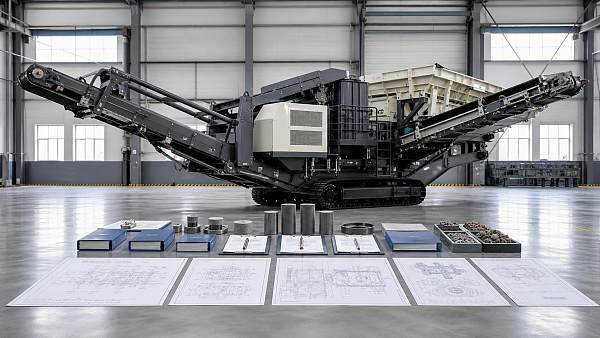
Higher standards raise cost for clear technical and commercial reasons. Manufacturers and suppliers may need to invest in better steel grades, sealed electrical systems, enhanced braking packages, certified hydraulics, redundant safety controls, onboard diagnostics, fire suppression integration, and third-party testing. They may also need traceable quality records, factory audits, and localized compliance packs.
For example, an open-pit mining equipment supplier offering equipment built to stronger international or site-specific standards may include:
- Higher-spec wear components and structural reinforcement
- Certified operator protection systems
- Improved dust, heat, or moisture resistance for harsh duty cycles
- Integrated condition monitoring and fault diagnostics
- Documentation for inspection, commissioning, and audit trails
- Parts support and maintenance procedures aligned with compliance requirements
All of this costs money before the machine even reaches site. Buyers notice it immediately in capex, but the benefit usually appears later in lower operational volatility.
How those same standards cut risk over the equipment lifecycle
In mining, the most expensive risks are rarely visible on the quote sheet. They appear as lost production hours, safety incidents, secondary component damage, contractual penalties, and reputation loss. Stronger standards reduce these hidden costs in several ways.
1. Lower probability of catastrophic failure
Better design verification and component quality reduce the chance of critical failures in high-load systems such as booms, undercarriages, braking circuits, power systems, crushers, and conveyors. A standard that requires stronger validation may prevent one major event that would otherwise erase any upfront savings.
2. Improved worker safety and lower legal exposure
Mining safety standards are not just technical checklists. They shape incident probability, site access permissions, insurer confidence, and contractor accountability. Choosing a qualified mining safety equipment supplier can reduce exposure tied to fire, collision, visibility failure, entrapment, dust inhalation, or electrical malfunction.
3. Higher uptime and more predictable maintenance
Equipment built to robust standards typically supports more structured maintenance intervals, clearer parts traceability, and better fault isolation. That matters for large fleets where one unplanned outage can disrupt haulage, loading, or processing sequences across an entire pit or plant.
4. Better tender and financing outcomes
Compliance can influence more than operations. It can affect eligibility in public and private tenders, support lender confidence in mining equipment financing, and reduce buyer hesitation in cross-border projects. In some procurement environments, lower-standard equipment may not even survive technical evaluation.
Where procurement teams see the biggest payoff
Not all asset classes deliver the same return from stronger standards. For procurement personnel and business evaluators, the best payoff usually appears in assets where failure consequences are severe.
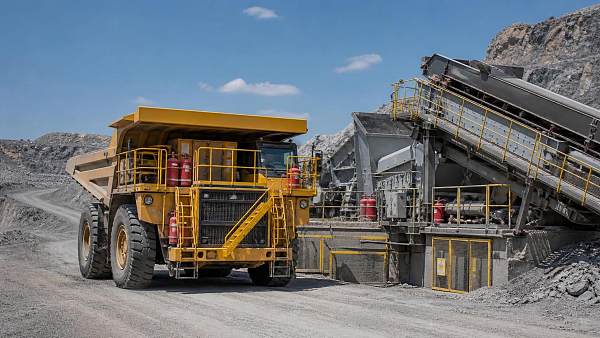
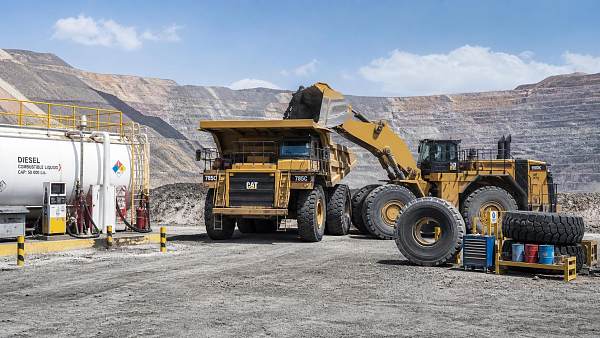
- Mining excavators and haulage fleets: Downtime directly hits production targets and fuel efficiency.
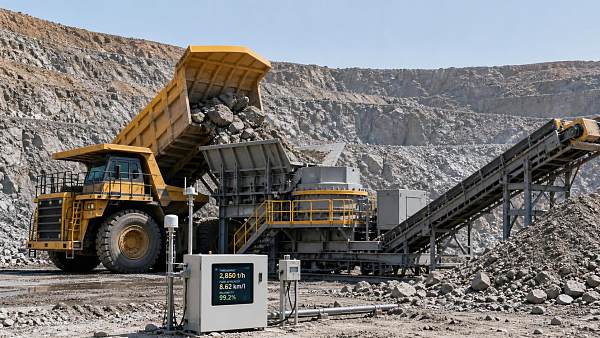
- Crushing and processing plants: Failure cascades can stop throughput across multiple stages.
- Bulk material handling systems: Belt, drive, and transfer-point issues create safety and productivity risks.
- Electrical and control systems: Compliance affects both safety and system integration.
- Safety-critical retrofits: Fire suppression, braking upgrades, monitoring systems, and visibility packages often justify their cost quickly.
In contrast, buyers should be more cautious about paying large premiums for standards that do not materially improve performance, risk profile, or market access in the intended operating environment.
How to evaluate whether a higher-standard machine is worth the premium
A practical evaluation should move beyond sticker price. Buyers should compare the premium against avoided risk and operational gain.
Ask these commercial questions first
- Will this standard improve tender qualification or customer acceptance?
- Will it reduce expected downtime in our duty cycle and climate conditions?
- Will it lower incident probability or insurance friction?
- Will it simplify maintenance, parts stocking, or technician training?
- Will financiers, auditors, or major clients require it anyway?
Then verify these technical points
- Which exact standards are met, and to what revision level?
- Is compliance self-declared or third-party verified?
- Which components are upgraded because of the standard?
- What failure modes is the standard intended to reduce?
- What evidence exists from field use in similar mines or regions?
Where suppliers provide only generic compliance language, buyers should request detailed technical schedules, test reports, and maintenance implications. A vague “built to international standards” claim is not enough for serious capex decisions.
Why this matters especially in African mining tenders and cross-border sourcing
In many African mining markets, buyers face a difficult mix of aggressive pricing, variable aftersales support, tough operating environments, and evolving regulatory expectations. Under these conditions, standards act as a filtering tool.
For mining tenders in Africa, stronger compliance often helps buyers:
- Compare suppliers on a more objective basis
- Reduce the risk of low-cost, low-durability imports
- Support local approval, site acceptance, and HSE review
- Improve residual value and resale credibility
- Strengthen claims management if disputes arise
This is also where distributors and agents can create real value. A distributor that understands standard mapping, documentation, commissioning, and heavy machinery repair support is often more useful than one competing on price alone.
In some sourcing workflows, buyers may also encounter generic listings such as 无. These references are only useful if they can be tied back to verified specifications, parts support, and compliance evidence.
The hidden cost of buying below standard
The argument against stricter standards usually focuses on capex savings. The problem is that under-spec purchases often trigger a chain of downstream costs that are harder to predict and harder to recover.
Common hidden costs include:
- Frequent unscheduled shutdowns
- Higher wear rates and shorter component life
- More complex heavy machinery repair events
- Operator resistance or retraining needs
- Safety non-conformances and corrective action costs
- Spare parts inconsistency across fleet units
- Losses tied to missed production or delivery commitments
For commercial teams, this means the cheapest offer can easily become the highest-cost option over three to seven years.
What good buyers do differently
Experienced mining buyers do not ask whether standards are “good” in the abstract. They ask where standards materially change business outcomes. Their process usually includes:
- Defining the operating environment and duty cycle clearly
- Identifying safety-critical and uptime-critical systems
- Matching standards to actual site risk, not marketing language
- Comparing total cost of ownership, not just purchase price
- Checking repair capability, parts access, and regional support
- Verifying whether compliance supports tenders, financing, and insurance
That is the difference between buying a compliant asset and buying a commercially resilient one.
Final takeaway
Some mining standards do raise costs, but the better ones do so for a reason. They improve safety, reliability, maintainability, tender acceptance, and long-term commercial predictability. For procurement professionals, evaluators, and channel partners, the right question is not “Why is this compliant machine more expensive?” but “What specific risks and operating costs does this premium remove?”
In mining, standards create value when they protect uptime, people, and project economics. If a standard helps prevent failures, supports financing, improves site acceptance, or lowers lifecycle cost, it is not just a compliance expense. It is a risk-control investment.
- mining equipment
- heavy machinery
- bulk material handling
- excavators
- open-pit mining
- mining safety
- mining tenders
- open-pit mining equipment
- heavy machinery repair
- open-pit mining equipment supplier
- mining equipment financing
- mining safety equipment supplier
- mining tenders in Africa
- mining excavators
- open pit mining
- mining standards
Recommended News
 Sep 10, 2026What Compliance Documents Should a Mining Equipment Supplier Provide?What documents should a mining equipment supplier provide for compliance proof? Explore essential certificates, safety records, testing evidence, and traceable documentation.
 Sep 07, 2026Do Mining Equipment Safety Standards Differ by Country?Do different countries use different standards for mining equipment safety? Explore ISO, MSHA, CE, ATEX, and local compliance rules before ordering equipment.
 Sep 05, 2026How Do You Calculate Total Cost of Ownership for Mining Machinery?How to calculate total cost of ownership for construction machinery in mining? Explore TCO factors, downtime, fuel, maintenance, and lifecycle savings.
 Sep 01, 2026How Reliable Are Mining Equipment Manufacturers’ Performance Claims?How reliable are performance claims from mining equipment manufacturers? Learn how to verify OEM data, benchmark reliability, and turn claims into measurable commitments.