Wholesale mining equipment deals that cost more later
Cheap wholesale mining equipment can hide costly failures, compliance gaps, and downtime that surface long after purchase. Whether you are comparing an lhd loader factory, mining excavator oem, roof bolter supplier, blast hole drill wholesale source, mining shovel factory, rock drill machine supplier, underground loader oem, drilling rig manufacturer, or autonomous haul truck factory, this guide shows how to spot the risks behind low upfront prices.
For procurement researchers and equipment operators, the real issue is not whether a machine is cheap at order stage. The real issue is whether it remains productive after 6 months, 2,000 operating hours, or a full duty cycle in abrasive, wet, high-load mining conditions. A discount that looks attractive on paper can quickly turn into higher fuel burn, shorter component life, and repeated stoppages.
In mining and heavy machinery procurement, purchase price is only one line item. Lifecycle cost includes wear parts, maintenance labor, parts lead time, training, safety compliance, rebuild intervals, and production losses during downtime. For operations moving 5,000 to 50,000 tonnes per day, even a 3-hour failure can cost more than the original savings gained from a low-price wholesale deal.
This article explains where low-cost mining equipment deals usually go wrong, how to compare suppliers on measurable criteria, and what technical and commercial checks should be completed before signing a purchase order. The focus is practical: lower risk, stronger uptime, and more defensible procurement decisions.
Why low upfront prices often become high total ownership costs
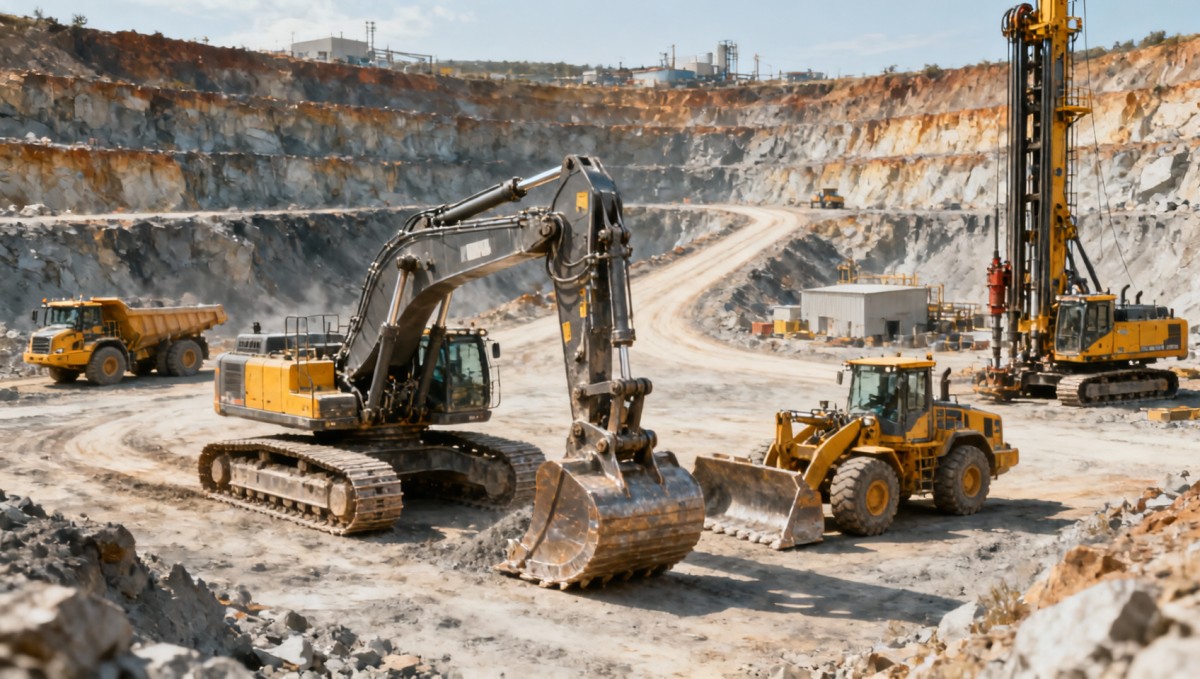
A low quotation from a mining equipment supplier can hide weak metallurgy, undersized hydraulic systems, poor sealing design, and limited after-sales support. These issues may not be visible during a brief factory inspection or a basic video demonstration. They usually appear after 500 to 1,500 hours, when load cycles, vibration, dust ingress, and operator stress expose design shortcuts.
This is especially relevant when sourcing from an lhd loader factory, mining excavator OEM, or drilling rig manufacturer for remote sites. A machine working 16 to 22 hours per day in underground or open-pit conditions has little tolerance for component mismatch. If a boom pin, final drive, filtration system, or onboard electronics are not rated for real duty cycles, maintenance frequency can double within the first year.
Compliance gaps also create hidden cost. Machines that do not align with ISO-based safety expectations, AS/NZS electrical practices, mine site braking rules, or local emissions and guarding requirements may require retrofits after delivery. That means extra engineering work, delayed commissioning, and possible rejection during site acceptance tests.
Operators feel the impact directly. An underground loader with poor cabin ergonomics, weak visibility, or unstable control response raises fatigue and error risk. A rock drill machine supplier may advertise high penetration rate, but if rod handling, dust suppression, and vibration isolation are inadequate, the unit can lose practical productivity over a 10-hour shift.
The most common hidden cost categories
- Unplanned downtime caused by premature wear in pumps, hoses, bearings, and undercarriage components.
- Long spare parts lead times, often 4 to 12 weeks for imported assemblies without regional inventory.
- Higher fuel or energy consumption from inefficient powertrain matching and poor load-sensing control.
- Training and safety adaptation costs where controls, alarms, and maintenance access are not site-friendly.
- Compliance modification costs for lighting, suppression systems, guarding, telemetry, and braking validation.
The table below shows how a lower purchase price can be outweighed by operating losses over a typical 12-month period.
The pattern is clear: a nominal saving of 10% can disappear fast if the machine loses availability, consumes more service labor, or requires extra site engineering. For decision-makers, the better metric is cost per productive hour, not price per unit.
How to evaluate a mining equipment supplier beyond the quotation
When comparing a roof bolter supplier, blast hole drill wholesale source, or autonomous haul truck factory, buyers should use a structured review process. A quotation should be only the starting point. The next layer is engineering evidence: bill of materials visibility, component brands, duty-cycle assumptions, maintenance intervals, and acceptance test scope.
Researchers should also look for consistency between advertised specifications and the intended mine application. For example, a drilling rig manufacturer may list strong feed force and nominal hole diameter, but that alone does not show how the unit performs in fractured rock, high humidity, or continuous operation above 1,800 meters. Site conditions always matter.
Operators need a different lens. They should ask whether service points are reachable in under 15 minutes, whether daily checks can be completed safely, and whether filters, hoses, and wear plates are standard or custom. Small maintenance design flaws often become major availability losses over 3 to 6 months.
An effective supplier assessment usually combines document review, technical interviews, factory verification, and post-delivery support analysis. If one of these four layers is weak, the procurement risk rises sharply.
Four key evaluation layers
- Technical suitability: payload, breakout force, drilling diameter, penetration rate, traction, gradeability, and thermal management must match the mine plan.
- Build quality: welding consistency, steel grade, hose routing, dust sealing, electrical protection, and frame reinforcement should be inspected.
- Support readiness: spare parts stock, response time, commissioning plan, and field technician access should be clarified in writing.
- Commercial safeguards: warranty terms, liquidated damages, inspection points, and performance acceptance criteria must be contractually defined.
Questions that reveal supplier maturity
Ask how the supplier defines service intervals for major assemblies. Ask what percentage of parts are shared across models. Ask how many critical spares are recommended for the first 12 months. Ask whether commissioning includes operator training, fault code interpretation, and preventive maintenance procedures. Detailed answers usually indicate a more reliable partner than a low-price seller focused only on shipment.
The following comparison table helps separate low-visibility offers from procurement-ready suppliers.
A reliable supplier does not need to be the most expensive. But it should be able to explain performance assumptions, service support, and compliance details with precision. If the answers stay general, the hidden cost risk remains high.
Critical technical checks for loaders, drills, excavators, and haul systems
Different machine categories fail in different ways, so technical due diligence should be tailored. An underground loader OEM should be assessed for articulation durability, axle load distribution, braking performance, and cooling efficiency in confined spaces. A mining excavator OEM should be checked for boom stress concentration, slew bearing serviceability, hydraulic contamination control, and bucket wear strategy.
For blast hole drills and rock drill machines, buyers should verify feed beam rigidity, compressor sizing, dust collector performance, hammer compatibility, and rod handling safety. A unit with strong theoretical drilling speed can still underperform if flushing efficiency is weak or consumables are difficult to source locally within 7 to 14 days.
Autonomous haul truck platforms add another layer: sensors, controls integration, fail-safe logic, and software support. Even when autonomy features are optional, the base truck must still be reviewed for payload match, braking redundancy, tire management, and communication architecture. Poor integration can create production bottlenecks rather than efficiency gains.
For operators and maintenance planners, the practical question is simple: can the machine deliver its rated function under your site’s actual heat, dust, grade, moisture, and shift schedule? Rated values without environment context can be misleading.
A practical inspection checklist
- Verify service intervals for engine, hydraulics, transmission, and final drives, ideally in hour bands such as 250, 500, and 1,000 hours.
- Check whether wear parts are standardized and whether first-year spare recommendations are itemized.
- Review ambient temperature range, for example -10°C to 45°C, and ask what changes are needed outside that range.
- Inspect guarding, emergency stops, camera coverage, braking logic, and fire suppression interface points.
- Confirm whether test loads and acceptance trials reflect real payload, gradient, or drilling depth conditions.
Component transparency matters
If a supplier avoids naming major component categories or cannot clarify interchangeability, that is a warning sign. Buyers do not always need premium branded assemblies across the whole machine, but they do need clarity on what is installed, what the replacement path is, and how long critical parts will remain available. In remote mining, uncertainty around pumps, motors, electronics, and consumables can be more expensive than a higher invoice price.
The table below summarizes technical red flags by machine type.
The key takeaway is that technical fit must be verified at machine level, component level, and operating-environment level. Wholesale deals fail most often when one of these three layers is ignored.
Procurement process controls that reduce risk before and after delivery
The best protection against costly mining equipment deals is a disciplined procurement workflow. Many failures occur not because the equipment could never work, but because the buyer accepted unclear specifications, weak inspection rights, or incomplete commissioning support. A well-designed process can reduce this exposure significantly.
At minimum, mining procurement teams should define 5 control stages: requirement mapping, technical clarification, pre-shipment inspection, site acceptance, and first-90-day performance review. Each stage should produce a documented sign-off. This is especially important for mixed fleets where an underground loader OEM, roof bolter supplier, and drilling rig manufacturer may each have different support models.
Commercial terms also need discipline. Warranty periods should specify whether they are time-based, hour-based, or whichever comes first. Spare parts packages should distinguish fast-moving wear items from critical long-lead assemblies. Training scope should include operator controls, maintenance routines, and fault reporting procedures, not just startup demonstration.
For cross-border sourcing, logistics and documentation can be as important as the machine itself. Packing, preservation, customs coding, electrical compatibility, and local registration requirements can add 2 to 8 weeks if not prepared properly. That delay can erase any savings from wholesale purchasing.
Recommended 5-step control sequence
- Define the application: ore type, tunnel size, haul distance, bench height, ambient temperature, and daily operating hours.
- Lock the technical scope: payload, engine range, drilling diameter, bucket volume, safety options, and compliance requirements.
- Approve inspection points: welding review, no-load tests, load tests, documentation pack, and consumables verification.
- Plan commissioning: site assembly, calibration, operator training, maintenance training, and spare parts onboarding.
- Track early-life performance: uptime, fuel or energy use, wear rates, fault logs, and corrective actions during the first 90 days.
Contract terms worth negotiating
Buyers should request a clear spare parts list for the first 1,000 to 2,000 hours, response-time commitments for critical failures, and acceptance language tied to measurable outputs. For drills, that may include drilling consistency and dust control. For loaders and excavators, it may include hydraulic stability, braking response, and temperature behavior under load. Measurable terms create accountability and reduce disputes.
Strong process control does not slow procurement. It makes outcomes more predictable, especially where remote sites cannot tolerate repeated vendor visits, uncertain lead times, or trial-and-error commissioning.
FAQ for researchers and operators comparing wholesale mining equipment
Search behavior around wholesale mining equipment is usually practical: buyers want to know what to check, how long delivery may take, and which specifications matter most. The answers below address the most common decision points across loaders, drills, excavators, bolters, and haul systems.
How do I know if a low-price machine is under-specified for mining duty?
Look beyond rated output and ask for duty-cycle assumptions. Review axle loads, cooling reserves, filtration, wear plate thickness, and maintenance intervals. If the machine is expected to run 18 to 20 hours per day, but service plans look more suitable for intermittent construction work, the specification is likely too light for mining.
What delivery timeline is realistic for wholesale mining equipment?
For standard configurations, 8 to 16 weeks is common, but this varies by machine size, customization, inspection scope, and shipping route. A larger mining shovel, underground loader, or autonomous haul truck can take longer when site-specific electrical, safety, or digital integration features are added. Always separate factory completion date from port-to-site arrival date.
Which three indicators matter most for operators?
Operators usually care most about control stability, visibility, and serviceability. If visibility is restricted, alarms are unclear, or daily checks take too long, practical productivity drops. Machines that save 20 minutes per shift in inspection and fueling access can produce meaningful gains over 250 to 300 operating days per year.
Should I always avoid a cheaper lhd loader factory or drill supplier?
Not necessarily. Lower pricing is not automatically a problem. The issue is undocumented risk. A competitively priced supplier can still be a strong option if it provides transparent specifications, inspection access, clear spare parts planning, and realistic after-sales support. The decision should be based on verified lifecycle value, not price alone.
Wholesale mining equipment can create real value when procurement teams compare more than invoice totals. The strongest decisions come from combining technical due diligence, operator feedback, compliance planning, and lifecycle cost analysis. That approach helps buyers avoid false economies and secure equipment that remains productive after the shipment arrives.
For organizations evaluating an lhd loader factory, mining excavator OEM, roof bolter supplier, blast hole drill wholesale source, mining shovel factory, rock drill machine supplier, underground loader OEM, drilling rig manufacturer, or autonomous haul truck factory, a data-driven review process is the safest path to long-term asset performance.
If you need support benchmarking suppliers, reviewing specifications, or narrowing equipment options for a specific mine environment, contact us to get a tailored assessment, discuss product details, and explore more procurement-ready mining equipment solutions.
- wholesale mining equipment
- autonomous haul truck factory
- drilling rig manufacturer
- underground loader oem
- rock drill machine supplier
- mining shovel factory
- blast hole drill wholesale
- roof bolter supplier
- mining excavator oem
- lhd loader factory
- mining equipment
- heavy machinery
- excavators
- mining procurement
Recommended News
 Oct 22, 2026How import tariffs affect mining equipment procurement costsExplore mining industrial trade insights to see how import tariffs affect equipment costs. Compare landed costs, verify duty relief, and make smarter procurement decisions.
 Oct 19, 2026How to use trade insights to assess mining equipment import costsUse trade insights to assess mining equipment import costs, verify duties, compare freight routes, and uncover hidden charges. Build a reliable landed-cost estimate before you buy.
 Oct 24, 2026How Do Standardized Specs Affect Cross-Manufacturer Comparisons?How does equipment parameter standardization affect cross-manufacturer comparison? Discover how shared test methods clarify performance and help you make smarter equipment choices.
 Oct 23, 2026How Can You Verify a Mining Supplier Meets Global Quality Standards?How to verify if a mining equipment supplier meets international quality standards? Explore certificate checks, technical evidence, and factory audits to reduce risk and buy with confidence.