Open Pit Mining Permitting Delays Are Reshaping Project Timelines
Open pit mining projects are facing longer approval cycles as environmental reviews, land-use scrutiny, and community consultations become more rigorous. For stakeholders tracking mining engineering trends and construction machinery demand, these permitting delays are no longer a side issue—they are reshaping capital planning, procurement timing, and project risk across global resource markets.
For research teams, procurement managers, commercial evaluators, and channel partners, the practical question is no longer whether permitting matters. It is how slower approvals change equipment demand curves, tender timing, contractor mobilization, and lifecycle cost assumptions. In many jurisdictions, a delay of 6–18 months can shift an entire mine development sequence, affecting everything from drill-and-blast planning to haul fleet procurement.
This matters especially in markets linked to copper, iron ore, bauxite, lithium, and rare earth projects, where resource nationalism, water stress, and biodiversity review standards are tightening. As a result, open pit mining permitting delays now sit at the center of strategic planning for EPC contractors, OEMs, distributors, and buyers comparing project readiness across regions.
Why Open Pit Mining Permitting Is Taking Longer
Open pit mining has always required layered approvals, but the sequence has become more demanding over the past 5–10 years. A project that previously moved from exploration-to-construction approval in 12–24 months may now face 24–48 months in jurisdictions with more rigorous environmental impact assessment, water-use licensing, indigenous consultation, and mine closure planning requirements.
The delay is not driven by one single bottleneck. It typically results from cumulative review steps: baseline environmental studies, hydrogeological modeling, tailings and waste rock management plans, transport corridor approvals, land-access negotiations, and community consultation rounds. If one element is incomplete, the entire process can pause for another 90–180 days while new data is collected and resubmitted.
For open pit mining projects, the land footprint itself often increases scrutiny. Compared with compact industrial developments, a mine may require pit design approval, overburden storage mapping, haul road layouts, explosive storage planning, and progressive rehabilitation commitments. In water-sensitive or biodiversity-sensitive areas, regulators may ask for 4-season datasets instead of a single short baseline window.
Key regulatory pressures behind timeline expansion
The first pressure point is environmental scope. Noise, dust, blasting vibration, water discharge, pit dewatering, and closure liabilities are assessed more closely than before. The second is social license. Local communities, landholders, and labor stakeholders expect earlier engagement and more formal response mechanisms. The third is policy volatility, where election cycles or revised mining codes can extend permitting review by another 3–9 months.
Another practical factor is documentation quality. Incomplete feasibility alignment between pit design, processing throughput, and infrastructure planning can trigger repeated clarification requests. For a 5–20 million tonne per year operation, even small inconsistencies in stripping ratio assumptions or haul road widths can create downstream approval questions.
The table below summarizes the main drivers now extending open pit mining approvals and their direct project impact.
The key takeaway is that delay is usually cumulative rather than isolated. For commercial planning, that means a mine delayed by 12 months on paper can create a 2-phase procurement shift, with fleet decisions delayed first and infrastructure packages delayed again later.
How Delays Are Reshaping Capital Planning and Equipment Procurement
For procurement teams, an open pit mining permit delay is not just a legal milestone issue. It changes the timing logic of high-value orders. Haul trucks, hydraulic excavators, dozers, crushers, and conveyor systems are usually committed in stages aligned with permitting confidence, financing release, and engineering freeze dates. When approval visibility weakens, buyers often move from firm orders to provisional frameworks or multi-quarter sourcing windows.
This creates ripple effects across the supply chain. A planned fleet package for 8–20 rigid dump trucks, 2–4 large excavators, and support machines may be postponed, resized, or split across rental, used, and new equipment channels. Dealers and distributors then face demand volatility rather than a stable project ramp-up curve. In practical terms, stock planning becomes harder, especially for long-lead components with 20–40 week manufacturing cycles.
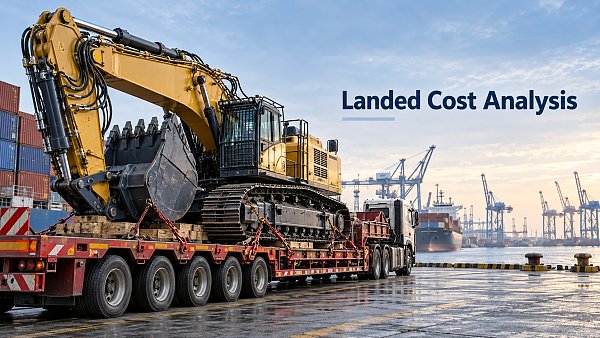
Commercial evaluators should also note the financing effect. If permitting extends beyond the expected debt drawdown schedule, imported machinery may be repriced due to exchange-rate movements, shipping changes, or revised engine emission compliance requirements. A 7–12% landed cost variation over a delayed procurement cycle is not unusual in globally sourced heavy machinery packages.
Procurement impacts by project stage
The most resilient procurement strategy is stage-based. Instead of treating the project as one buying event, buyers increasingly separate early works, pre-strip, main fleet deployment, and processing plant packages. This reduces the risk of idle capital while preserving supplier engagement.
Typical adjustments buyers are making
- Shifting from outright purchase to phased supply agreements with 30-day, 60-day, or 90-day option triggers.
- Using mixed fleets, where critical units are new and secondary support machines are leased for 6–18 months.
- Revalidating equipment duty-cycle assumptions when pre-strip start dates move across wet and dry seasons.
- Asking EPC contractors to align technical bids with at least 2 permitting scenarios: base case and delayed case.
In some intelligence workflows, even placeholder commercial references are tracked as part of tender mapping and supplier visibility. For example, some procurement databases may carry a neutral listing such as 无 during early-stage screening, before firm vendor nomination occurs. The point is not the placeholder itself, but the need for procurement systems that remain flexible while permitting uncertainty persists.
For G-MRH-style market analysis, the real value lies in comparing technical readiness against approval readiness. A project may have a fully engineered haulage plan and crusher layout, but if environmental and social approvals remain incomplete, machinery demand should be categorized as deferred, not immediate.
Regional Differences and What They Mean for Project Evaluation
Not all mining jurisdictions behave the same way. Some countries offer relatively predictable review windows but strict technical standards. Others have shorter formal timelines on paper, yet experience longer real-world delays due to administrative bottlenecks, policy changes, or land-access disputes. For research users and business evaluators, comparing nominal approval periods without reviewing execution risk can lead to poor market prioritization.
In mature mining regions such as Australia and Canada, review systems may be detailed but transparent. That often benefits institutional buyers because engineering requirements are clearer, even if the process lasts 18–36 months. In parts of Africa, Latin America, and Central Asia, approval windows can vary more sharply depending on water rights, road access approvals, or local participation requirements. The difference between a 9-month expectation and a 24-month reality can materially alter distributor inventory and contractor staffing plans.
Commodity type also matters. Lithium and critical mineral projects frequently draw heightened review because of water balance, export sensitivity, and strategic resource policy concerns. Iron ore or aggregates projects may move faster in some jurisdictions, but only if transport links, pit expansion boundaries, and rehabilitation obligations are already established.
A practical comparison framework
The table below provides a practical framework for evaluating open pit mining permitting risk across regions without relying on oversimplified rankings.
The strategic lesson is simple: procurement and market-entry plans should be calibrated to realized permitting probability, not only to announced project value. That is particularly important for distributors, agencies, and OEM sales teams deciding where to commit business development resources over a 12–24 month horizon.
In intelligence-led sales development, a neutral record such as 无 may appear in early supplier mapping, but meaningful commercial action should still wait for stronger permit visibility, financing alignment, and site-access confirmation.
Risk Control Strategies for Buyers, EPC Firms, and Distributors
Because open pit mining permitting delays are now structurally more common, the better response is not passive waiting. It is active risk segmentation. Buyers should classify projects into at least 3 readiness bands: pre-permit, conditional approval, and construction-cleared. Each band should have different sourcing, pricing, inventory, and contract assumptions.
For EPC contractors, the core issue is interface control. Civil works, process plant design, waste dump planning, and heavy earthmoving packages need synchronized assumptions. If the pit footprint changes after consultation or environmental revision, the knock-on effect may include different haul distances, revised excavator bucket size economics, and altered fuel consumption models. Those are not minor engineering edits; they can change total cost of ownership projections over a 5–8 year operating period.
For distributors and agents, the challenge is pipeline quality. A large project pipeline may look attractive on paper, but only a fraction may reach equipment order stage within the expected sales year. That makes disciplined qualification essential.
Four procurement controls that reduce exposure
- Link major orders to permitting milestones rather than informal schedule promises.
- Separate long-lead components from site-specific installation packages where feasible.
- Build technical alternatives for 2–3 production scenarios, such as staged output ramp-up versus immediate full-capacity launch.
- Review spare parts, service labor, and commissioning plans against delayed mobilization windows of 90–270 days.
Another effective measure is supplier-side scenario costing. Instead of issuing one fixed proposal, vendors can present a base package, a deferred-start package, and a modular package. This helps commercial evaluators compare capex, storage risk, service readiness, and depreciation exposure with better accuracy.
Common mistakes to avoid
- Assuming that final feasibility automatically means near-term construction.
- Committing to full fleet stock before access roads, water permits, and blasting approvals are secured.
- Ignoring seasonal effects when revised approval dates shift pre-strip into wet months.
- Using a single landed-cost estimate for machinery over a 12-month period of currency and freight volatility.
For business intelligence users, the best opportunities often sit in projects that are technically advanced, financially credible, and only waiting on final regulatory closure. Those projects offer a better conversion profile than very early announcements with uncertain social and land-use pathways.
What Stakeholders Should Track in the Next 12–24 Months
Open pit mining permitting delays are unlikely to disappear soon. Instead, project timelines will increasingly depend on the quality of early environmental design, stakeholder engagement discipline, and the ability to present coherent mine-to-market infrastructure plans. For intelligence researchers and procurement teams, this means timeline tracking must move beyond headline announcement dates.
The most useful indicators are often operational rather than promotional. Watch for completion of baseline environmental campaigns, closure of land-access negotiations, issuance of water-use conditions, approval of haul road or rail interfaces, and publication of updated construction sequencing. These are stronger signals than generic statements about project advancement.
Demand forecasting for heavy machinery should also reflect staggered mobilization. Rather than expecting one surge of orders, market participants should model 2 or 3 procurement waves: early enabling works, mine development equipment, and processing or materials handling packages. That pattern is especially relevant in greenfield mines with complex ESG review conditions.
Decision checklist for commercial teams
Before allocating resources to an open pit mining opportunity, commercial teams should verify the following points.
The broader market implication is that project quality now matters more than project volume. A smaller number of permit-ready developments can generate better commercial outcomes than a larger pool of headline projects still trapped in unresolved approval stages.
For organizations working across mining, resources, and heavy machinery, the opportunity is to replace reactive sales pursuit with evidence-based timing. That means aligning technical benchmarking, regulatory monitoring, and procurement intelligence into one decision framework.
FAQ: Key questions decision-makers are asking
How long can open pit mining permitting delays affect equipment orders?
In many cases, the commercial effect lasts longer than the formal review period. A 9-month regulatory delay can trigger a 12–18 month shift in machinery ordering because financing, engineering validation, shipping slots, and contractor mobilization must be reset together.
Which equipment categories are most sensitive to permitting uncertainty?
High-capex, long-lead assets are usually most exposed, including haul trucks, large excavators, semi-mobile crushing systems, and conveyor packages. Support machines such as graders, light vehicles, and some dozers may be sourced more flexibly, especially through rental or dealer stock channels.
What should distributors watch before committing inventory?
At minimum, review 4 factors: permit maturity, financing readiness, site access status, and confirmed scope of early works. If 2 or more of these remain unclear, it is usually better to hold inventory decisions or structure supply with option-based timing rather than fixed delivery commitments.
How can buyers reduce the cost of delayed mobilization?
Use phased procurement, milestone-linked contracts, modular commissioning plans, and alternative fleet scenarios. These measures can reduce the cost of idle equipment, duplicate site mobilization, and storage exposure while preserving project readiness when approvals finally clear.
Open pit mining permitting delays are no longer a secondary regulatory issue. They now influence project sequencing, machinery demand visibility, capital discipline, and regional market prioritization across the mining value chain. For information researchers, procurement teams, commercial evaluators, and channel partners, the most effective response is to combine regulatory insight with technical and commercial timing analysis.
If you need clearer visibility into project readiness, equipment timing, and mining supply chain opportunities, now is the time to build a more structured evaluation model. Connect with our team to get tailored market intelligence, compare project risk more accurately, and explore practical solutions for procurement planning and industrial partnership decisions.
Recommended News
 Oct 22, 2026How import tariffs affect mining equipment procurement costsExplore mining industrial trade insights to see how import tariffs affect equipment costs. Compare landed costs, verify duty relief, and make smarter procurement decisions.
 Oct 19, 2026How to use trade insights to assess mining equipment import costsUse trade insights to assess mining equipment import costs, verify duties, compare freight routes, and uncover hidden charges. Build a reliable landed-cost estimate before you buy.
 Oct 24, 2026How Do Standardized Specs Affect Cross-Manufacturer Comparisons?How does equipment parameter standardization affect cross-manufacturer comparison? Discover how shared test methods clarify performance and help you make smarter equipment choices.
 Oct 23, 2026How Can You Verify a Mining Supplier Meets Global Quality Standards?How to verify if a mining equipment supplier meets international quality standards? Explore certificate checks, technical evidence, and factory audits to reduce risk and buy with confidence.