Regional Tourism Growth Signals to Watch in 2026
Regional Tourism is becoming a sharper economic signal in 2026
Regional Tourism is no longer a soft indicator tied only to leisure demand.
Heading into 2026, it is increasingly linked to infrastructure cycles, energy investment, labor mobility, and public spending priorities.
That shift matters because growth outside major capitals now reveals where transport capacity, utilities, industrial services, and commercial confidence are strengthening together.
For broader market observation, Regional Tourism often works as an early read on regional readiness.
Visitor flows still matter, but they no longer tell the full story.
More useful signals now come from airport upgrades, road rehabilitation, rail links, water resilience projects, and the pace of mixed-use development.
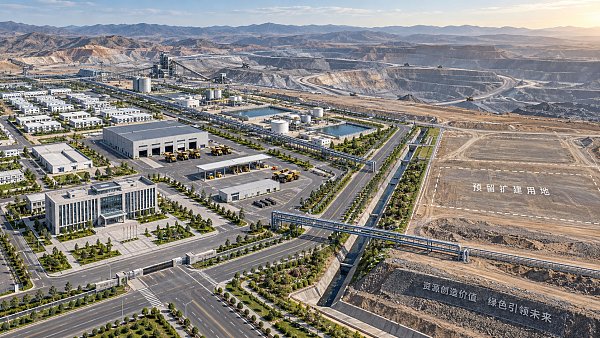
In resource-linked economies, those patterns can also overlap with mining corridors, construction demand, and heavy-equipment deployment.
That is why Regional Tourism deserves attention beyond hospitality headlines.
What is changing on the ground is more structural than seasonal
The strongest Regional Tourism markets in 2026 are likely to be shaped by structural upgrades, not short-lived rebounds.
Recent patterns show that travelers are spreading toward secondary cities, logistics towns, coastal clusters, and gateway communities near industrial zones.
This movement reflects changing travel behavior, but it also reflects where governments and private capital are building confidence.
A region with stronger roads, cleaner transport, stable utilities, and reliable digital networks becomes easier to visit, invest in, and operate from.
Regional Tourism therefore starts to mirror broader economic usability.
From a cross-industry perspective, this matters because tourism expansion often arrives alongside warehouse growth, contractor presence, equipment maintenance services, and local supplier formalization.
Those are not tourism metrics in the narrow sense, yet they often explain why one region accelerates while another stalls.
The signals worth tracking are becoming more connected
A useful reading of Regional Tourism in 2026 needs a wider lens.
Instead of focusing on arrivals alone, it helps to compare several signals together.
- Transport upgrades that reduce travel friction between cities and regional assets.
- Hotel and short-stay investment moving into smaller, serviceable markets.
- Public funding for water, waste, grid resilience, and mobility hubs.
- Industrial project activity that raises demand for regional accommodation and services.
- Environmental rules that reshape where tourism growth can expand sustainably.
When these signals align, Regional Tourism growth tends to be more durable.
Why resource development is quietly influencing Regional Tourism
One underappreciated driver is the interaction between resource development and regional services.
Mining, bulk materials, construction, and energy projects often accelerate transport and utility upgrades in peripheral areas.
Those upgrades are usually planned for industrial efficiency first.
Even so, they can improve accessibility for visitors, contract workers, conference traffic, and supporting businesses.
This is where a platform such as G-MRH offers useful context.
Its focus on project tenders, heavy-machinery deployment, engineering standards, and industrial corridors helps explain why some regional markets gain momentum before tourism statistics fully reflect it.
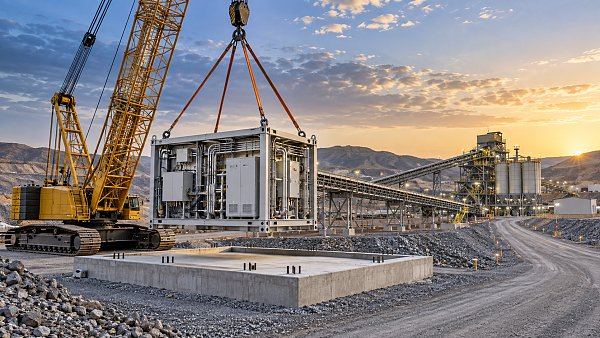
A new haul road, upgraded port access route, or power reliability project can support industrial throughput.
It can also expand the practical reach of Regional Tourism by making travel safer, faster, and more predictable.
This does not mean every resource zone becomes a tourism winner.
It means adjacent regional markets may gain spillover advantages when infrastructure is built to a higher operational standard.
The strongest overlap happens in three kinds of regions
This overlap is likely to become more visible across Africa, Australia, Latin America, and parts of Southeast Asia.
Mobility and sustainability are now separating strong regions from weak ones
A more obvious signal for 2026 is the quality of regional mobility.
Not every destination needs a major airport expansion.
What matters more is integrated movement across roads, rail, ferries, public transit, and digital ticketing.
Regional Tourism grows faster when friction is removed from the entire journey.
Sustainability rules are also changing the map.
Regions that manage water stress, waste treatment, land use, and emissions reporting are becoming more investable.
That applies not only to resorts and natural attractions, but also to mixed regional economies with industrial activity nearby.
The relationship is practical.
If a region cannot maintain environmental compliance under rising demand, Regional Tourism expansion becomes harder to finance and easier to challenge.
What better-performing regions are doing differently
- They connect tourism planning with transport and utility planning early.
- They treat sustainability metrics as operating requirements, not branding language.
- They balance visitor growth with workforce housing and service capacity.
- They use regional data to distinguish durable demand from one-off surges.
That pattern suggests Regional Tourism is becoming a systems question, not just a destination question.
The impact is spreading beyond hospitality
Another reason Regional Tourism deserves close attention is its wider economic footprint.
Growth in regional visitor markets often affects commercial real estate, fleet services, local food systems, digital payments, utilities, and construction materials demand.
In practical terms, stronger Regional Tourism can signal a broader rise in regional service intensity.
That is particularly relevant where governments are pushing decentralization or where industrial projects create secondary demand for roads, accommodation, workshops, and logistics nodes.
The effect is not always linear.
Some regions attract visitors before local systems are ready.
Others build enabling capacity first and see tourism scale later, but more steadily.
That distinction matters when comparing headline popularity with actual market resilience.
Where to look next if Regional Tourism is part of market evaluation
For 2026, the more reliable approach is to watch regional signals in combination.
A single jump in arrivals says less than coordinated movement across infrastructure, policy, environmental capacity, and business services.
The best next step is usually a regional scorecard built around practical indicators.
- Track transport reliability, not only route availability.
- Compare utility resilience with expected visitor and business load.
- Review nearby industrial and infrastructure tenders for spillover effects.
- Watch land-use and ESG enforcement for future operating constraints.
- Assess whether service ecosystems are deepening beyond seasonal demand.
Regional Tourism in 2026 is best read as a layered signal.
It reflects mobility, investment quality, environmental discipline, and regional economic confidence at the same time.
The markets most worth watching are not always the loudest.
They are often the ones where infrastructure, policy, and real operating capacity are quietly aligning.
That is where Regional Tourism is most likely to convert from short-term movement into long-term regional growth.
Recommended News
 Oct 19, 2026How to use trade insights to assess mining equipment import costsUse trade insights to assess mining equipment import costs, verify duties, compare freight routes, and uncover hidden charges. Build a reliable landed-cost estimate before you buy.
 Oct 11, 2026When to hire commercial architects for a mine site master planCommercial architects should be engaged early to align mine site facilities, expansion plans, safety, utilities, and workforce flows before costly decisions become fixed.
 Oct 10, 2026Modern office design trends 2026 that support hybrid workModern office design trends 2026 reveal how hybrid workplaces can improve project delivery with flexible project rooms, better acoustics, privacy and field-to-office collaboration.
 Oct 04, 2026When do prefabrication equipment systems reduce project delays?Prefabrication equipment systems reduce project delays when scope, interfaces, suppliers, and logistics align early. Explore a practical framework for faster delivery.