How political risk affects investment in Africa's Copperbelt
The stronger Copperbelt investment is not necessarily the deposit with the highest grade or the lowest forecast operating cost. A project with secure rights, workable community agreements and credible access to power can be more attractive than a richer deposit exposed to a licence dispute or an unpredictable tax burden. The comparison becomes clearer when political risk is translated into specific effects on cash flow, construction schedules and the ability to operate.
Across Zambia and the Democratic Republic of the Congo (DRC), those effects differ by jurisdiction, project stage and the agreements attached to each asset. A mine that is already producing faces a different set of exposures from an exploration licence or a project awaiting construction approval. Country-level indicators are therefore a starting point for africa copper belt investment, not a substitute for examining the rights and obligations of an individual project.
Translate political exposure into project economics
Political risk affects value through several channels. A tax change can reduce cash generated from each tonne sold. A delayed permit can push first production further into the future while interest and site costs continue to accumulate. A dispute over land access can prevent development of a pit, tailings facility or power line even when the mining licence itself remains valid.
These events should not all be represented by a single increase in the discount rate. A higher discount rate reduces the present value of forecast cash flows, but it does not show whether a project has enough cash to survive a construction delay or a period without exports. Separate scenarios reveal those pressures more clearly: a later commissioning date, a higher effective tax burden, restricted access to foreign currency, or a temporary interruption to a transport route.
The distinction matters when comparing projects. A mine with lower expected margins may still support financing if its exposure is concentrated in costs that can be managed. A high-margin project can become difficult to finance if a single unresolved approval controls the start of construction and there is no reliable timetable for obtaining it.
Fiscal terms: look beyond the headline royalty
Mining royalties, income taxes, customs duties and other charges affect returns at different points in the project cycle. A royalty linked to production or sales can remain payable when the mine is profitable on an operating basis but has not recovered its construction costs. Income tax generally depends on taxable profit, making deductions, loss carryforwards and depreciation rules relevant to the timing of payments.
A comparison based only on the stated royalty rate can therefore be misleading. The calculation base matters: whether charges apply to sales value, a prescribed reference price or another measure changes the result. Treatment of transport, refining and other deductions can also affect the amount payable. Where copper is sold in concentrate rather than as refined metal, the commercial settlement terms and the fiscal calculation need to be understood together.
Tax stability provisions deserve the same scrutiny as the rates themselves. Establish whether a provision applies to the project, which obligations it covers, how long it lasts and what happens if legislation changes. A clause in an agreement does not eliminate enforcement risk; its value also depends on the legal framework, the parties bound by it and the available dispute process.
Refund timing is another source of exposure. During construction, substantial spending on imported equipment and services can create tax credits before production begins. If refunds are delayed, a project may need additional working capital even though the amounts are recorded as recoverable. A cash-flow model that assumes immediate recovery can understate peak funding requirements.
Licence security depends on the whole route to production
A mining title is only one part of the permission structure. The project may also require environmental approvals, land access arrangements, water rights, construction authorisations and permits for associated infrastructure. An apparently secure mining area can still be inaccessible if the road, transmission line or processing site crosses land governed by separate rights.
The relevant question changes with the stage of the asset. At exploration stage, an investor needs to understand the duration of the right, renewal conditions, work commitments and the path to a mining licence. For a development project, the focus shifts to whether approvals cover the proposed mine design and whether material changes require additional review. At an operating mine, compliance with reporting, payment and environmental obligations can affect continuity and renewal.
Examine the chain of title and the status of any competing claims alongside the terms of the current licence. A valid-looking document is less reassuring if the transfer history is incomplete, boundaries are contested or required fees and filings are unresolved. Where a project relies on a joint venture or state participation, the governing agreements should also clarify funding obligations, transfer restrictions and the consequences of a partner failing to contribute.
Political announcements and enacted requirements should be treated separately. A proposed policy may alter expectations and delay commitments, but its financial effect cannot be calculated as though its final wording, effective date and treatment of existing projects were already settled.
Zambia and the DRC: compare assets, not labels
Both countries contain substantial copper opportunities, yet a country ranking alone says little about the risk attached to a particular mine. Differences in administrative practice, fiscal terms, power arrangements and routes to market matter, but so do the project’s permit history and local circumstances. An operating asset with established infrastructure should not be compared directly with an undeveloped deposit solely on the basis of national risk scores.
The same exposure can have different consequences on either side of the border. A change in electricity tariffs, for example, has a larger direct effect on an electrically intensive operation than on a project whose power costs are fixed under an enforceable contract. Even then, a fixed tariff does not resolve the separate risk of inadequate supply or restrictions on imports.
Community relations become a financial variable
Land acquisition and resettlement are often treated as preliminary tasks, yet their effects can continue throughout the mine life. A project may need access to new land for waste storage, water infrastructure, road diversions or expansion. Agreements that cover the initial mine footprint do not automatically resolve those later requirements.
Assess both the commitments made and the means of carrying them out. Compensation records, livelihood restoration arrangements, grievance procedures and responsibilities for public infrastructure help show whether an agreement is operational. A signed document has less value if affected households dispute eligibility, payments are incomplete or the party responsible for maintaining a replacement road is unclear.
Different disputes also call for different financial treatment. A disagreement over the location of a power line may delay construction while leaving the deposit accessible. A dispute over resettlement at the planned pit could prevent mining from starting. A model that assumes both issues cause the same generic delay loses information needed to compare alternatives.
Local procurement and employment commitments can influence the project’s social licence as well as its cost base. The commercial implications depend on what the agreements require, whether suitable capacity exists and how compliance is measured. Commitments should be reflected in contracts and schedules rather than left as unsupported assumptions in an operating model.
Power, transport and equipment decisions carry policy exposure
Copper production depends on infrastructure that a mine may not control. Electricity shortages, changing allocation rules or delays in approving cross-border supply can reduce plant throughput. When assessing a power arrangement, distinguish a signed supply agreement from a demonstrated ability to deliver energy at the required connection point. The consequences of an interruption also depend on whether the operation can safely restart and whether critical processes require continuous power.
Transport exposure is similarly route-specific. Concentrate and refined copper can face different handling requirements, border procedures and downstream processing arrangements. A project with access to several routes has a useful alternative only if capacity, permits and commercial contracts allow it to use that alternative when disruption occurs. Additional distance and handling must be included in the contingency economics.
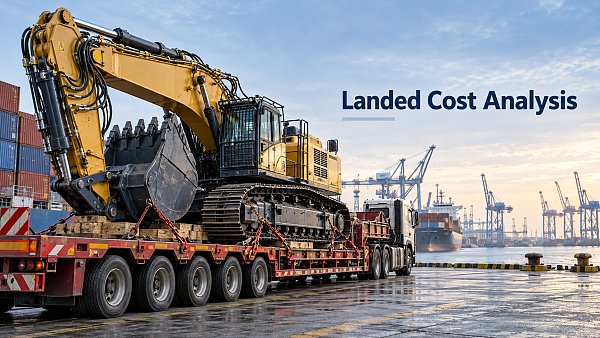
Political and administrative uncertainty also affects equipment procurement. Import duty treatment, customs clearance and foreign-exchange access influence the landed cost and arrival date of crushers, pumps, mobile equipment and electrical components. A machine delivered to a port is not equivalent to a machine available for commissioning at the mine. Contracts should make the allocation of clearance responsibilities, taxes, storage costs and delay consequences explicit.
Long-lead orders expose capital before all project conditions are necessarily settled. Staging commitments around defined approvals can reduce exposure, although cancellation charges, manufacturing slots and mobilisation schedules must be considered. Deferring every order until the final permit is secured may protect cash while extending construction; the trade-off belongs in the project schedule and financing plan.
Test scenarios against available cash
A useful comparison combines a base case with a small number of project-specific stress cases. For a development asset, these could include delayed environmental approval, later equipment clearance and a slower tax refund. For an operating mine, a power restriction or a change in the effective fiscal burden may be more revealing. Each case should state its trigger, duration and effect on production, spending and financing.
Pay particular attention to the point at which several exposures interact. A delayed power connection can postpone revenue while construction debt continues to accrue; a simultaneous delay in tax refunds increases the cash required to reach production. Running those events independently can understate the funding gap. Conversely, combining every adverse assumption without a credible link between them can obscure which risks actually determine the investment decision.
Risk allocation is part of the valuation. Insurance, contractual protections and financing reserves can reduce particular losses, subject to their exclusions and limits. They do not automatically restore a cancelled licence, secure community access or guarantee electricity. The strongest comparison identifies the residual exposure after those protections and tests whether the project can continue if it materialises.
Before relying on a valuation, trace its most consequential assumptions to current project documents and identify when they were last verified. A copper price forecast can be updated quickly; an unresolved land claim or an uncertain permit pathway may take far longer to resolve and can change the investment case even when the orebody remains attractive.
Recommended News
 Nov 14, 2026How political risk affects investment in Africa's CopperbeltExplore africa copper belt investment risks, from taxes and licences to power and community relations, and make better-informed decisions in Zambia and the DRC.
 Nov 04, 2026How to find mining tenders in Southeast AsiaFind mining tenders Southeast Asia suppliers can pursue with practical tips for tracking opportunities, verifying notices, and preparing competitive bids.
 Oct 22, 2026How import tariffs affect mining equipment procurement costsExplore mining industrial trade insights to see how import tariffs affect equipment costs. Compare landed costs, verify duty relief, and make smarter procurement decisions.
 Oct 19, 2026How to use trade insights to assess mining equipment import costsUse trade insights to assess mining equipment import costs, verify duties, compare freight routes, and uncover hidden charges. Build a reliable landed-cost estimate before you buy.