How import tariffs affect mining equipment procurement costs
How import tariffs affect mining equipment procurement costs
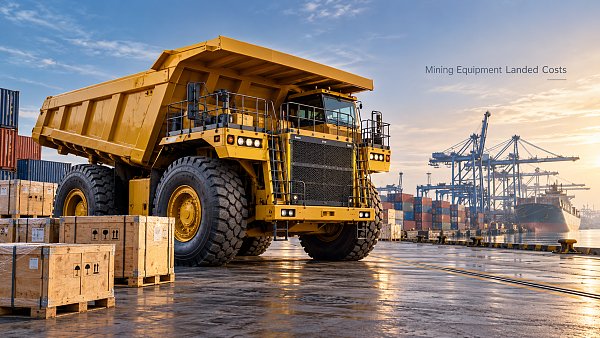
A competitive equipment quote can become a costly procurement decision once import tariffs enter the calculation. For mining procurement teams, duties on haul trucks, excavators, crushers, and replacement parts can reshape landed costs, supplier comparisons, and project budgets. Drawing on mining industrial trade insights, this article examines how tariff classification, country-of-origin rules, and changing trade policies affect equipment purchasing decisions. It also outlines how buyers can evaluate sourcing alternatives, verify potential duty relief, and integrate tariff exposure into lifecycle cost analysis without compromising equipment reliability or regulatory compliance.
The central issue is not simply whether an import duty applies. It is whether competing bids have been assessed on the same customs assumptions—and who carries the cost if those assumptions prove wrong. A tariff allowance buried in a supplier spreadsheet is not the same as a documented import-cost assessment.
Start with the landed-cost gap, not the quoted duty rate
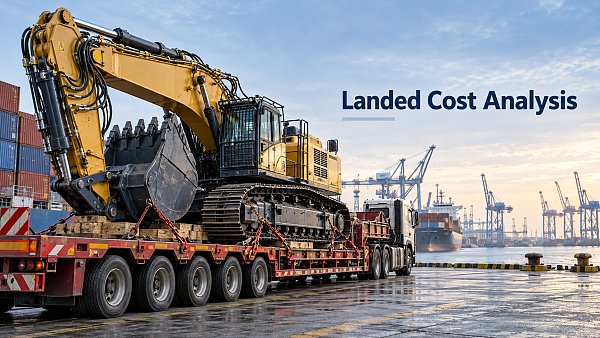
Import tariffs add a direct charge to equipment purchases, but the calculation does not necessarily start with the invoice total. Customs value is determined under the importing jurisdiction’s valuation rules. Depending on those rules and the transaction, freight, insurance, tooling contributions, certain royalties, or other adjustments may affect the assessable value. Buyers should not assume that an ex-works price is the duty base.
A useful commercial model separates three layers:
- Equipment and logistics: purchase price, export packing, freight, insurance, terminal handling, and inland delivery.
- Border charges: ordinary customs duty, applicable additional duties, clearance fees, and import taxes.
- Site-ready costs: assembly, commissioning, mandatory modifications, inspections, and initial spares.
Keep recoverable import VAT or GST separate from permanently incurred costs. Where recovery is available, the tax may still create a substantial financing requirement before the credit or refund is received. In some jurisdictions, duty also enters the import-tax calculation. The cash required at clearance can therefore increase by more than the tariff amount alone.
For bid comparison, show both the net economic cost and the peak cash requirement. A project can have an acceptable capital budget yet insufficient liquidity to release equipment from port.
Classification deserves engineering input
“Mining equipment” is a purchasing category, not a single customs classification. Excavators, haulage vehicles, crushing machinery, electric motors, conveyor components, and control cabinets may fall under different tariff provisions. The Harmonized System provides an international framework, while national tariff schedules add detail and determine applicable rates.
This becomes particularly important when buying a processing package. A crusher, feeder, structural steelwork, electrical equipment, and spare wear parts may arrive under one commercial contract, but that does not automatically make them one customs item. Conversely, machinery shipped unassembled may, under applicable classification rules, still be treated as the complete machine. Splitting an invoice does not by itself change that treatment.
Give the customs adviser enough technical information to make a defensible assessment: operating function, drawings, bill of materials, assembly condition, and shipment configuration. A description such as “mine plant accessories” leaves too much unresolved.
For a high-value or unusual asset, consider an advance classification ruling where the destination authority offers one. Confirm its scope and validity, and ensure the goods imported match the facts submitted. The supplier’s export code is useful background, but it is not a substitute for checking the destination-country classification.
Origin can matter as much as the machine’s specification
The seller’s address, shipping port, and manufacturing origin are not interchangeable. Equipment purchased through a regional distributor may retain the origin of its manufacturing country. Moving it through another warehouse does not normally establish a new origin.
Preferential tariffs under a trade agreement require the goods to satisfy the relevant origin rules and documentary conditions. Those rules may involve tariff classification changes, regional value content, specified manufacturing operations, or other agreement-specific tests. Non-preferential origin, used for other trade measures, must also be assessed under the applicable rules.
A locally assembled haul truck is therefore not automatically entitled to preferential treatment. The treatment of imported engines, transmissions, frames, and other assemblies depends on the agreement and production process. Ask for evidence supporting the claim before entering a reduced duty rate into the approved budget.
Additional tariffs or trade-remedy duties can also change the comparison. Check the scope of the relevant measure, including product descriptions, origin requirements, and any producer-specific treatment. A low ordinary tariff does not establish the total border liability.
Tariff uncertainty belongs in the purchase contract
Mining equipment often has a long manufacturing lead time. The tariff position at tender submission may differ from the position when goods enter the destination market. The legally relevant date depends on local rules and the customs procedure; placing a purchase order does not necessarily lock in the duty rate.
Record the baseline assumptions in the commercial evaluation: classification, origin, customs value methodology, applicable measures, and verification date. Where a policy change has been announced, distinguish its confirmed scope and effective date from proposals or press commentary. Use the destination customs tariff, official notices, relevant trade-agreement text, and written professional advice rather than a generic online duty calculator.
The contract should then address who bears a change in duties, which evidence supports an adjustment, and whether any supplier markup applies. A broad “all taxes extra” clause can leave the buyer with exposure that was never visible during bid approval.
Incoterms help allocate delivery obligations and costs, but they do not determine tariff classification or override customs law. Under a delivered-duty-paid arrangement, verify that the seller can lawfully manage import clearance and that the documentation supports any tax recovery the buyer expects. A delivered price deserves scrutiny when the importer arrangements remain unclear.
Duty relief is valuable only when the project qualifies
Some jurisdictions offer concessions for specified capital goods, temporary admission, bonded procedures, or other forms of duty relief. Their availability is highly project-specific. Equipment used domestically for the life of a mine should not be budgeted on the assumption that a temporary-import procedure will apply.
Before treating relief as a saving, establish:
- Whether the importer, equipment, and intended use are eligible.
- Whether approval must be secured before shipment or importation.
- Whether bonds, guarantees, reporting, or end-use records are required.
- What happens if the asset is sold, transferred, leased, or retained beyond an authorized period.
Also distinguish exemption from deferral. A bonded arrangement may postpone payment rather than eliminate it. Include administrative costs, guarantee costs, and potential repayment obligations in the evaluation.
Where approval remains outstanding, carry an unrelieved base case and show the potential concession separately. That prevents a contingent saving from becoming an unfunded commitment.
A lower tariff does not automatically mean a better supplier
Changing manufacturing origin can reduce border costs, but the alternative machine still has to perform the work. For an excavator, assess compatibility with the digging conditions and truck fleet. For a crusher, examine feed characteristics, wear behavior, maintainability, and the required product specification. A duty advantage has little value if the equipment creates a production bottleneck.
This is where mining industrial trade insights need to connect with engineering evidence. Global Mining, Resources & Heavy-Machinery (G-MRH) brings trade-policy analysis and technical benchmarking into the same procurement discussion. The useful comparison is not simply imported versus locally supplied; it is the cost of compliant, maintainable capacity under the actual duty cycle.
Local sourcing may shorten delivery routes and simplify service, but locally supplied equipment can still contain imported assemblies whose tariffs are embedded in the price. Ask whether the quotation is firm and which imported inputs can trigger adjustment. Do not count an apparent tariff saving twice.
Technical and safety acceptance remain separate gates. Preferential origin does not demonstrate compliance with applicable mine-safety, electrical, emissions, or site requirements. Likewise, a reference to an ISO or AS/NZS standard does not establish customs eligibility.
Model the spare-parts stream before approving the asset
The initial machine is only the first import decision. Engines, hydraulic pumps, undercarriage components, liners, bearings, and electronic modules can have different classifications and duty treatment. A concession granted for capital equipment may not extend to replacement parts or consumables.
Build the lifecycle assessment around expected maintenance requirements and component replacement intervals supported by operating information or supplier documentation. Then test tariff exposure on those parts separately. For repaired components sent overseas, check the available outward-processing or returned-goods treatment before export; documentation gaps can complicate reimportation.
Urgent orders deserve particular attention. A failed component can bring together premium freight, customs charges, and production losses. Holding a critical spare locally may increase inventory carrying costs while reducing outage exposure. The decision should reflect component criticality and replenishment time, not a blanket preference for minimum stock.
Before award, the procurement file should contain a dated tariff assessment, supporting origin evidence, a clear importer arrangement, and a landed-cost comparison that separates confirmed charges from unresolved assumptions. If a bidder wins only because an unverified exemption or origin claim has been accepted, the award is not ready. Resolve that uncertainty while there is still room to change the contract—not when the machine is waiting for customs release.
Recommended News
 Oct 22, 2026How import tariffs affect mining equipment procurement costsExplore mining industrial trade insights to see how import tariffs affect equipment costs. Compare landed costs, verify duty relief, and make smarter procurement decisions.
 Oct 19, 2026How to use trade insights to assess mining equipment import costsUse trade insights to assess mining equipment import costs, verify duties, compare freight routes, and uncover hidden charges. Build a reliable landed-cost estimate before you buy.
 Oct 21, 2026What Should a Mining Safety Compliance Pre-Audit Report Include?What should be included in a mining safety compliance pre-audit report? Discover essential scope, evidence, risk ratings, and corrective actions to strengthen inspection readiness.
 Oct 20, 2026Mining Regulations in Australia: Permits Required Before Site DevelopmentNavigate mining regulations in Australia with a practical guide to permits, land access, environmental approvals and safety obligations. Learn what to secure before development to avoid costly delays.