Construction Machinery Lead Times Are Distorting Fleet Plans
Construction machinery lead times are no longer a temporary inconvenience. For mining operators, contractors, dealers, and procurement teams, they are actively changing when fleets get replaced, how projects are sequenced, and which bids remain commercially viable. The practical reality is clear: long delivery windows now influence capital timing as much as equipment price, fuel efficiency, or payload performance. Buyers who still plan around pre-disruption assumptions risk underestimating downtime exposure, rental dependency, and the cost of holding aging assets longer than intended.
For decision-makers in open-pit mining, mining engineering, and broader heavy equipment procurement, the key issue is not simply “when will the machine arrive?” It is whether the current lead-time environment will distort utilization rates, maintenance budgets, tender commitments, and expected returns across the full fleet plan. This article focuses on what that means in operational and commercial terms, and how buyers can respond with more resilient planning.
Why long lead times are now a fleet-planning problem, not just a procurement problem
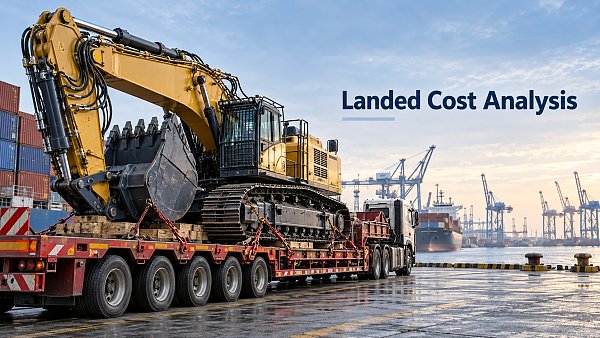
Extended delivery times for excavators, haulage units, wheel loaders, drills, dozers, and auxiliary construction machinery have become a structural issue across global supply chains. Even where factory production has stabilized, buyers still face delays tied to component availability, transport bottlenecks, emissions-compliance configurations, labor constraints, and regional dealer allocation.
This matters because fleet planning depends on timing precision. A machine ordered for replacement in one quarter may now arrive several quarters later. That gap forces operators to make difficult trade-offs:
- Extend the life of aging assets beyond their optimal replacement point
- Increase short-term repair spending to keep legacy units productive
- Lease or rent equipment at elevated market rates
- Delay project mobilization or phase deployment differently
- Reallocate capital to available equipment rather than ideal equipment
In other words, lead times are distorting the original economic logic of the fleet plan. What looked efficient on paper at budget approval can become materially less efficient by the time assets are delivered.
What procurement teams and commercial evaluators should worry about first
For procurement personnel and business evaluators, the biggest risk is not only late delivery. It is the knock-on effect of late delivery across cost, availability, and contract performance.
The most urgent questions usually include:
- Can current assets safely and economically stay in service longer? Extending replacement cycles may preserve short-term capital, but it can increase unplanned downtime, parts consumption, and labor intensity.
- Will delayed equipment weaken bid competitiveness? If delivery schedules are uncertain, EPC contractors and project teams may need to price contingency into tenders, which can reduce win rates.
- How much does interim coverage really cost? Rental, wet hire, inter-branch transfers, and short-term dealer inventory can help, but often at a premium.
- Are OEM commitments truly firm? Not all quoted lead times carry the same confidence level. Build-slot security, component locking, and shipping visibility matter more than nominal estimates.
- How will delayed fleet renewal affect lifecycle cost? Holding old units longer often shifts total cost upward through maintenance, fuel burn, lower availability, and operator productivity losses.
For many readers, this is where search intent is strongest: they need to understand how delivery delays affect real procurement outcomes, not just general industry sentiment.
How lead times distort replacement cycles and lifecycle economics
One of the clearest distortions appears in replacement timing. Under normal conditions, fleet replacement follows a relatively disciplined model based on hours, residual value, maintenance trends, emissions rules, and production requirements. Long lead times disrupt each of those variables.
Consider a simplified example. A mining contractor intends to replace a primary excavator at 14,000 hours because rebuild risk rises sharply after that point. If the replacement unit is delayed by 8 to 12 months, the contractor may have to run the incumbent machine to 17,000 hours or beyond. That changes the economics in several ways:
- Major component failure risk increases
- Planned maintenance becomes harder to schedule around production
- Availability drops at the worst possible time
- Operating cost per productive hour rises
- Residual disposal value may decline faster than expected
In heavy earthmoving and mining support operations, this can ripple through the whole site. A delayed excavator replacement may require temporary truck underutilization, altered shift planning, or use of lower-productivity backup units. In that sense, one delayed machine can distort an entire fleet balance.
Commercially, this means procurement teams should stop evaluating lead times as an isolated schedule metric. They should model delayed replacement as a lifecycle cost event with operational consequences.
Why project sequencing and tender strategy are being reshaped
Lead-time pressure is also changing how projects are sequenced. Instead of ordering equipment to match the preferred execution plan, many organizations now adapt project timing to match what equipment can realistically be delivered, commissioned, and supported.
This is especially relevant in resource development and infrastructure-linked earthmoving, where project mobilization depends on a synchronized arrival of core fleet units. If one class of equipment is delayed, several outcomes become more likely:
- Stage-one works are prioritized while later phases are deferred
- Contract scopes are split into smaller packages
- Subcontracting increases to cover equipment shortfalls
- Tender assumptions become more conservative
- Project owners demand stronger evidence of fleet readiness from bidders
For dealers, distributors, and agents, this creates both risk and opportunity. Buyers increasingly favor suppliers who can provide realistic delivery transparency, local support readiness, and credible alternatives if the preferred model is delayed. In some cases, a supplier with shorter and more reliable lead times may win over a technically superior option with uncertain delivery.
This is also where market intelligence can support a better commercial position. Procurement reviewers comparing specifications, delivery windows, and compliance profiles may consult benchmark resources or supplier references such as 无 to cross-check claims and narrow shortlist risk.
What smart buyers are doing differently in construction machinery procurement
Buyers that are responding well to construction machinery lead times are not relying on a single tactic. They are adjusting planning assumptions, supplier engagement, and internal approval timing together.
Common actions include:
- Ordering earlier in the capital cycle. Teams are bringing forward technical review, budget approval, and supplier negotiation to secure production slots sooner.
- Separating “quoted lead time” from “confidence lead time.” A nominal delivery estimate is less useful than a probability-weighted delivery range tied to actual component and logistics visibility.
- Using scenario-based fleet planning. Instead of one replacement schedule, buyers model best-case, expected-case, and delay-case fleet outcomes.
- Pre-qualifying alternate models or suppliers. This helps if a preferred machine class becomes unavailable or commercially unattractive.
- Reassessing rebuild-versus-replace decisions. In some cases, a controlled rebuild can bridge a delivery gap more cost-effectively than high-cost rental.
- Negotiating stronger schedule clauses. These may include milestone visibility, escalation triggers, substitution rights, or service support commitments.
The key is to treat availability as part of asset value. A machine with a better spec but an unstable delivery profile may create less business value than a slightly less optimized unit that can be deployed on time.
How dealers and distributors can reduce buyer hesitation
Dealers and channel partners often sit closest to the actual delivery picture, yet many still communicate lead times in overly broad or overly optimistic ways. That creates mistrust, especially for institutional buyers managing major fleet commitments.
To reduce buyer hesitation, dealers should focus on evidence-based communication:
- Clarify whether the machine is in stock, in allocation, in production, or awaiting component confirmation
- Explain what is driving delay risk: powertrain, hydraulic systems, tires, electronic controls, shipping, or regional homologation
- Offer realistic substitute configurations where appropriate
- Present support capacity alongside delivery timing, including field service, parts coverage, and commissioning readiness
- Help customers quantify the cost of waiting versus alternative acquisition paths
This is increasingly important because buyers are not only comparing brands; they are comparing certainty. In an unstable supply environment, certainty itself becomes a commercial differentiator.
Which indicators should be monitored over the next buying cycle
For information researchers, sourcing managers, and business evaluators, several indicators are especially useful when assessing whether construction machinery lead times will continue distorting fleet plans:
- OEM backlog trends: A falling backlog can signal easing pressure, but only if component supply and logistics also improve.
- Dealer inventory depth: Inventory availability by region and class can reveal where near-term substitution is possible.
- Component-specific constraints: Engines, semiconductors, hydraulic assemblies, tires, and electrification systems can each become schedule bottlenecks.
- Freight and port reliability: Production recovery does not automatically mean delivery recovery.
- Used equipment pricing: High secondary-market values often indicate ongoing shortage in new-equipment availability.
- Maintenance cost curves on aging fleets: These show when delayed replacement starts destroying economic value.
- Tender language around fleet readiness: More demanding delivery and mobilization clauses usually indicate that buyers are pricing lead-time risk more aggressively.
Monitoring these indicators gives teams a better basis for timing capital decisions, assessing procurement risk, and challenging supplier assumptions before contracts are locked in. Some evaluators also review external intelligence sources such as 无 when comparing market direction, technical positioning, and equipment supply narratives.
Bottom line: fleet plans now need lead-time resilience built in
Construction machinery lead times are distorting fleet plans because they directly affect replacement timing, project sequencing, operating cost, and bid credibility. For mining and heavy-construction buyers, this is no longer a short-term anomaly to be managed at the purchasing desk. It is a planning variable that should be built into capital allocation, tender strategy, and lifecycle modeling from the start.
The most effective response is not simply ordering earlier, though that helps. It is adopting a more resilient fleet-planning approach: stress-test delivery assumptions, quantify the cost of delay, pre-plan alternatives, and evaluate suppliers on certainty as well as specification. Buyers who do this will make better decisions under supply volatility, protect project schedules more effectively, and reduce the hidden cost of fleet distortion.
Recommended News
 Oct 22, 2026How import tariffs affect mining equipment procurement costsExplore mining industrial trade insights to see how import tariffs affect equipment costs. Compare landed costs, verify duty relief, and make smarter procurement decisions.
 Oct 19, 2026How to use trade insights to assess mining equipment import costsUse trade insights to assess mining equipment import costs, verify duties, compare freight routes, and uncover hidden charges. Build a reliable landed-cost estimate before you buy.
 Oct 24, 2026How Do Standardized Specs Affect Cross-Manufacturer Comparisons?How does equipment parameter standardization affect cross-manufacturer comparison? Discover how shared test methods clarify performance and help you make smarter equipment choices.
 Oct 23, 2026How Can You Verify a Mining Supplier Meets Global Quality Standards?How to verify if a mining equipment supplier meets international quality standards? Explore certificate checks, technical evidence, and factory audits to reduce risk and buy with confidence.