Sustainable Tailings Disposal News: What Signals Real Progress?
As sustainable tailings disposal news accelerates, real progress is no longer measured by headlines alone but by verified mining standards, evolving mining regulations, and measurable site performance. For procurement leaders, engineers, and decision-makers, the key signals lie in technology adoption, ESG alignment, and supplier credibility across modern resource projects. This article explores how these indicators reshape risk evaluation, capital planning, and long-term competitiveness in global mining.
What actually counts as real progress in sustainable tailings disposal?
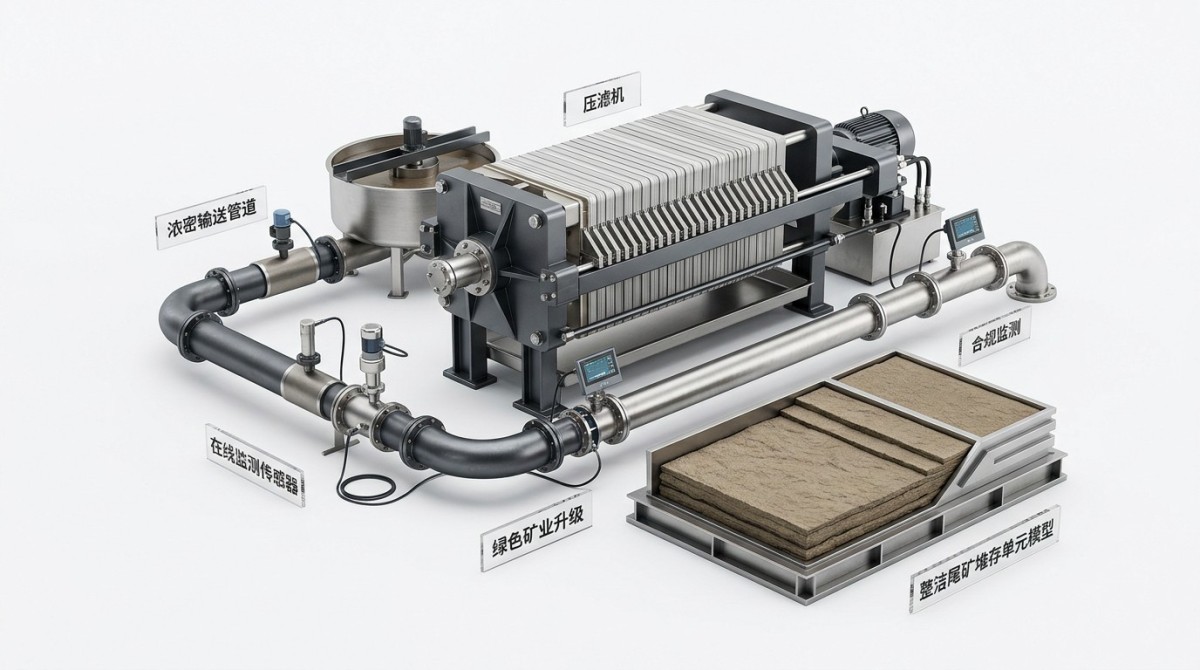
In mining, sustainable tailings disposal is no longer judged by a single equipment purchase or a public sustainability statement. Real progress usually shows up across 3 connected layers: engineering controls, governance discipline, and verifiable operating results over 12–36 months. That is the difference between a pilot project and a site-level transition that can withstand technical review, procurement scrutiny, and investor due diligence.
For information researchers and technical evaluators, the strongest signal is consistency between design intent and field execution. A mine may announce filtered tailings, thickened tailings, or water recovery upgrades, but the real question is whether the system performs under seasonal variation, ore variability, and maintenance interruptions. A credible sustainable tailings disposal program should show stable throughput windows, defined moisture targets, and documented contingency procedures.
For procurement and commercial teams, progress also means the supplier ecosystem has matured. It should be possible to compare dewatering equipment, pumping systems, liners, monitoring tools, and civil interfaces against clear technical criteria rather than marketing claims. In practice, this means evaluating not only capital expenditure but also 5 key decision points: water balance, land footprint, closure implications, power demand, and compliance traceability.
Why headlines are not enough
Tailings news often highlights incidents, policy changes, or new technologies. Useful as that may be, headlines rarely reveal whether a project has resolved the harder issues: geotechnical stability, duty-cycle reliability, emergency response, and long-term reclamation obligations. A site can appear innovative while still carrying high operational risk if system integration remains weak or if monitoring data is incomplete.
This is where G-MRH adds value. By linking technical benchmarking with mining regulations, equipment reliability review, and lifecycle cost interpretation, the platform helps decision-makers separate visible announcements from durable progress. In heavy-industry procurement, that distinction matters because the consequences of poor tailings decisions can extend for decades, not just one budget cycle.
Three practical markers of progress
- A defined operating envelope, such as target solids concentration, water recovery range, and planned inspection frequency per shift, rather than a generic claim of “improved sustainability.”
- Alignment between engineering design, procurement specification, and regulatory reporting, so the mine is not buying one system while promising another to stakeholders.
- Evidence that performance is reviewed across multiple phases, commonly commissioning, first 6 months, and annual reassessment, instead of only at project launch.
When these markers are present, sustainable tailings disposal news becomes decision-grade information. When they are absent, buyers and project leaders should treat the news flow as an early signal only, not as proof of readiness.
Which technical and regulatory signals should buyers track first?
The first signal is whether the disposal method matches the site reality. Tailings strategy depends on ore characteristics, climate profile, water constraints, seismic context, haulage distance, and closure planning. A filtered tailings solution may be attractive in water-stressed regions, while thickened or conventional systems may still appear where throughput is very high and infrastructure is already established. The point is not to prefer one method universally, but to test fit-for-purpose logic.
The second signal is regulatory movement. Mining regulations and corporate standards are tightening around accountability, independent review, and consequence classification. Procurement teams should check whether a supplier understands how design documentation, inspection records, and monitoring outputs can support internal governance and external audits. A technically acceptable package that cannot support reporting workflows may create hidden compliance costs 6–18 months later.
The third signal is instrumentation and data quality. Real progress in sustainable tailings disposal increasingly depends on measurable performance, including pore pressure monitoring, deposition behavior, water return, and embankment condition where relevant. Digital monitoring does not eliminate risk, but it shortens response time and improves decision visibility for site teams, owners, and EPC interfaces.
The table below helps technical and commercial stakeholders map which signals deserve early attention when screening tailings-related announcements, tenders, or vendor proposals.
A buyer reading sustainable tailings disposal news should be able to place each announcement into one of these categories within the first review cycle. If the news item lacks enough detail to support that screening, it should trigger questions rather than confidence.
How standards and certification shape credibility
No single standard solves every tailings issue, but international engineering references remain useful anchors. ISO-based management systems, AS/NZS design practices where relevant, mine safety legislation, and owner-controlled technical standards together create a framework for reviewing discipline. For project managers, this means asking whether a proposed solution can be verified through documents, inspections, and operating records, not only factory documentation.
At G-MRH, this cross-reference approach matters because buyers in mining, processing, bulk handling, and green mining often need to compare complex assets under different regulatory settings. Sustainable tailings disposal is not isolated from the rest of the plant. It interacts with pumps, thickening circuits, filtration units, earthmoving fleets, power systems, and digital twins. A standards-aware review prevents siloed purchasing.
A practical 4-step screening flow
- Confirm site constraints: water, climate, geotechnical setting, and throughput band.
- Match the disposal concept to likely operating demands across 2–3 seasonal conditions.
- Check whether the supplier package supports documentation, maintenance, and monitoring.
- Test total decision quality against compliance, closure exposure, and lifecycle cost.
This sequence helps reduce the common problem of buying on capital price alone while underestimating permitting complexity, long-term water management, or operating resilience.
How do major tailings disposal pathways compare in real project decisions?
Decision-makers often face three broad pathways: conventional slurry disposal, thickened tailings, and filtered tailings. Each option carries a different balance of water recovery, land demand, power intensity, materials handling complexity, and closure planning. The right answer depends on site context, but comparison discipline is essential because sustainable tailings disposal news frequently promotes one pathway without showing the trade-offs.
For example, filtered tailings may improve water recovery and reduce reliance on large impoundments, yet filtration adds mechanical complexity and can increase sensitivity to maintenance quality. Thickened systems can offer a middle path, but deposition behavior and pumping strategy must be carefully managed. Conventional systems may remain in service where legacy infrastructure is extensive, though risk governance and monitoring expectations are now much higher than before.
The comparison below is not a universal ranking. It is a procurement aid for teams that need to align engineering, ESG review, and budget planning within 2–4 investment rounds.
The key takeaway is that sustainable tailings disposal should be assessed as a system choice, not as a single machine choice. Buyers should look at dewatering, transport, deposition, monitoring, and closure together. If one element is weak, the entire business case can erode.
Where many comparisons go wrong
A common mistake is to compare only direct capital cost. In real projects, total ownership cost also includes water handling, maintenance labor, spare parts, civil works, training time, compliance reporting, and closure exposure. That means a lower purchase price can become a more expensive decision over a 5–15 year operating horizon.
Another mistake is to overlook interface risk. Tailings solutions sit between process plant output, mobile equipment, pumping systems, and environmental obligations. If responsibilities between OEMs, EPCs, and site teams are unclear, reliability losses tend to appear during ramp-up, when schedule pressure is highest.
Questions buyers should ask before shortlisting
- What operating range is the solution designed for, and how does performance change during wet or dry seasonal extremes?
- Which 4–6 maintenance items are critical during the first year, and what spare parts lead times are typical?
- How does the solution support closure planning, land use constraints, and water stewardship commitments?
- What evidence is available from comparable duty cycles, not only from ideal pilot conditions?
These questions help transform sustainable tailings disposal news into a structured comparison exercise that procurement, engineering, and executive teams can jointly review.
What should procurement teams include in a practical evaluation and implementation plan?
A workable evaluation plan begins with cross-functional alignment. Tailings procurement should involve at least 4 decision groups: process engineering, geotechnical or environmental oversight, procurement, and project or operations leadership. Without that alignment, sites often receive technically strong proposals that fail on operability, documentation, or commercial structure.
A practical sourcing package should define performance criteria, scope boundaries, data requirements, and acceptance logic. For many mining and heavy-industry projects, the review process unfolds across 3 stages: concept screening, technical-commercial clarification, and implementation readiness. Each stage should narrow uncertainty rather than simply repeat vendor presentations.
The table below outlines a procurement-oriented framework for sustainable tailings disposal evaluation. It is especially useful when multiple bidders propose different technologies or when a project must compare retrofit and greenfield options under time pressure.
This structure helps teams compare bids on the same basis. It also reduces the risk that important details, such as monitoring responsibilities or startup support, remain unresolved until late in the project schedule.
A 6-point buyer checklist
- Confirm whether the solution has been evaluated against expected throughput variation, not only nameplate conditions.
- Review how water recovery and disposal performance will be measured monthly and quarterly.
- Check the realism of spare parts, maintenance access, and operator competency assumptions.
- Clarify which party owns instrumentation, alarms, and data interpretation responsibilities.
- Assess the closure and land-use implications before final commercial approval.
- Verify document quality for internal governance, lender review, and regulatory interaction.
Why this matters for project managers
Project leaders operate under schedule pressure, budget limits, and stakeholder visibility. In that environment, sustainable tailings disposal decisions can easily become fragmented across disciplines. A clear evaluation framework allows the project team to identify whether a proposal is procurement-ready, merely technically interesting, or not yet mature enough for capital approval.
G-MRH supports this process by connecting technical benchmarking, commodity context, tender intelligence, and equipment scrutiny. That broader view helps buyers understand not just what a supplier promises, but whether the proposed solution fits larger project economics and industry direction.
What risks, misconceptions, and future trends should decision-makers watch?
One misconception is that sustainable tailings disposal is mainly an environmental branding issue. In reality, it affects water security, permitting resilience, social license, capital allocation, maintenance planning, and closure liabilities. That is why more boards and investment committees now treat tailings strategy as a core operational risk topic rather than a downstream environmental line item.
Another misconception is that digital monitoring alone proves progress. Sensors, dashboards, and digital twins are valuable, but they only add meaning when the mine has clear operating thresholds, trained response teams, and disciplined review intervals. Data without response logic can create false confidence. A useful benchmark is whether the site can move from alarm to verified action within defined hours, not undefined future reviews.
Looking ahead, sustainable tailings disposal news is likely to focus more on integrated systems than isolated technologies. Expect stronger attention on water reuse, lower-emission materials handling, autonomous inspection support, and decision intelligence that links processing, deposition, and compliance records. Over the next 3–5 years, buyers will increasingly favor solutions that simplify verification, not just those that promise innovation.
FAQ for researchers, buyers, and project leaders
How should we read sustainable tailings disposal news without overreacting?
Use a simple filter. Ask whether the news provides evidence of design basis, site conditions, implementation timeline, and measurable outcomes. If it only mentions intent, partnerships, or broad ESG language, treat it as an early market signal. If it includes operating scope, standards alignment, and phased performance targets over 6–12 months, it is more useful for procurement and benchmarking.
Which sites are better candidates for filtered or thickened tailings?
Sites facing water scarcity, land constraints, or elevated stakeholder scrutiny often examine filtered or thickened options first. However, candidate quality depends on throughput, ore behavior, climate, and maintenance capability. A high-volume operation with limited technical support may face a different answer than a mid-scale mine with strong water recovery priorities and a disciplined operating team.
What are the most common procurement mistakes?
The most common mistakes are comparing on purchase price alone, underestimating interface risk, and accepting vague performance language. Buyers should request clear operating assumptions, spare parts philosophy, training scope, document lists, and monitoring responsibilities. If any of these remain unclear after the clarification phase, the proposal is not ready for confident approval.
How long does a typical evaluation cycle take?
For many projects, early screening can be completed in 1–3 weeks, technical-commercial clarification in another 2–4 weeks, and implementation readiness review in a similar period, depending on site complexity and data availability. Brownfield retrofits may move faster if existing information is strong, while new projects usually require more detailed cross-functional review.
Why choose us for sustainable tailings disposal intelligence and procurement support?
G-MRH is built for decision-makers who need more than surface-level mining news. We connect sustainable tailings disposal developments with equipment benchmarking, mining regulations, duty-cycle review, ESG expectations, and project-commercial context. That matters when your team must compare suppliers, justify capital planning, or assess whether a proposed solution is truly fit for site conditions.
You can contact us for focused support on parameter confirmation, technology shortlisting, compliance and standards mapping, delivery-cycle assessment, bid comparison, and tailored solution review across open-pit, underground, processing, and green mining environments. If you are screening a tailings upgrade, preparing a tender package, or testing vendor credibility, G-MRH can help structure the evaluation with verifiable technical and commercial criteria.
For teams working under tight approval windows, we can also support practical review checkpoints: scope clarification, lifecycle cost interpretation, operating risk questions, and documentation expectations before commercial negotiation begins. That gives procurement, engineering, and executive stakeholders a shared basis for faster and more defensible decisions.
Recommended News
 Oct 23, 2026Ductile Iron Pipe Installation Planning: Route and Utility ChecksPlan ductile iron pipe installation with verified routes, utility checks, and clear hold points. Discover practical steps to reduce conflicts, avoid delays, and keep crews ready.
 Sep 25, 2026How to measure mine water recycling efficiency before upgrading a systemMine water recycling efficiency: learn how to measure recovery, water quality, reliability, losses, and operating costs before choosing a system upgrade.
 Sep 11, 2026How to size a mine wastewater treatment plant for peak flowMine wastewater treatment plant sizing guide: calculate peak flow, equalization, contaminant loads, storm storage, and scalable capacity for reliable compliance.
 Sep 14, 2026Preventing Joint Leakage in Ductile Iron Pipe Installations: Torque Specifications, Gasket Compatibility, and Field Verification ChecksPrevent ductile iron pipe joint leakage with proven torque specs, gasket compatibility checks, and field verification—avoid rework, failures, and compliance risks.