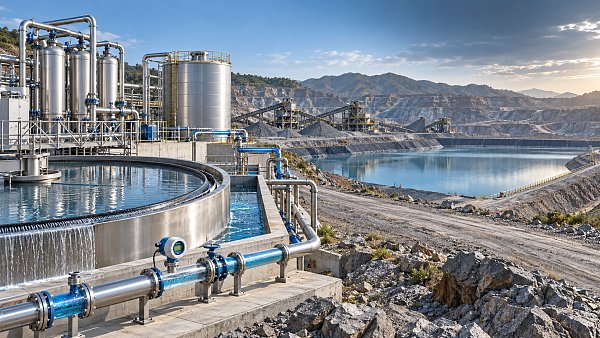
Open Pit Mining Faces a New Water Management Problem
Open pit mining is entering a new era of water risk, where pit dewatering, runoff control, and ESG pressure are reshaping project viability. For professionals in mining engineering and industrial procurement, this challenge is no longer just operational—it directly affects asset selection, compliance strategy, and lifecycle cost. As construction machinery and mine systems adapt, understanding this shift is becoming essential for informed evaluation and competitive decision-making.
For information researchers, procurement teams, commercial evaluators, and distributors, water management is now a board-level issue rather than a site-only concern. A pit that once relied on conventional pumps and perimeter drains may now require integrated hydrogeological modeling, real-time monitoring, diversified storage, and stricter discharge treatment. In many mining jurisdictions, a 1-in-100-year rainfall event is no longer treated as a remote design edge case, but as a planning baseline.
This shift matters across the industrial chain. Haul road stability, shovel productivity, crusher uptime, tailings coordination, and energy demand can all change when excess water enters the mine plan. For companies following global mining and heavy-machinery trends, the practical question is clear: how should mine operators and industrial buyers respond when water risk starts influencing equipment specification, project economics, and market access at the same time?
Why Water Has Become a Strategic Open Pit Mining Constraint
Open pit mining has always managed water, but the operating context has changed sharply over the last 5–10 years. More mines are moving into deeper pits, higher rainfall regions, arid zones with water scarcity, or geologically complex basins where groundwater inflows are less predictable. At the same time, regulators and investors are asking for stronger evidence that site water balances can withstand seasonal extremes, emergency events, and closure obligations.
The old view treated dewatering mainly as a pumping problem. The new reality is broader. Water now influences slope stability, bench access, blasting schedules, wheel slip rates, dust suppression demand, sediment control, and social license to operate. In some operations, even a 48-hour storm can reduce haulage efficiency, increase tire wear, and trigger temporary shutdowns in lower benches, creating production losses that far exceed the direct pumping cost.
There is also a timing issue. Water management failures often become visible only after major capital has already been committed. By the time procurement teams discover that pumping head is higher than expected, treatment volumes have doubled, or drainage channels are undersized, the mine may already be locked into unsuitable equipment packages and escalating operating expenditure.
Three forces driving the new risk profile
- Climate variability is increasing the frequency of intense rainfall, prolonged wet seasons, and runoff spikes that exceed older design assumptions.
- Deeper pits and more complex ore bodies are intersecting aquifers, fractured rock zones, and perched water systems that demand more than standard sump-and-pump responses.
- ESG and compliance pressure now require traceable data on abstraction, discharge quality, recycling rates, and community water impacts over a multi-year horizon.
For G-MRH audiences, this means water must be evaluated as a capital planning variable. It affects equipment duty cycle, maintenance intervals, electrical infrastructure sizing, and contractor scope definition. A procurement decision made without hydrological context can distort total cost of ownership over a 7–15 year mine phase.
The table below summarizes how the water problem has expanded from a narrow site utility issue into a wider commercial and engineering challenge.
The key conclusion is that water exposure now changes mine design assumptions earlier in the project cycle. That is why open pit mining operators, EPC teams, and heavy-equipment suppliers are paying more attention to integrated water strategies instead of isolated drainage fixes.
Operational Impacts: From Bench Access to Equipment Lifecycle Cost
When water enters an open pit faster than expected, the first losses are often operational rather than regulatory. Lower benches can become inaccessible, blast holes may collapse, and haul roads can lose compaction within a single shift. In practical terms, this means lower equipment utilization. A haul truck fleet scheduled for 18–20 productive hours per day may fall well below target if road maintenance frequency doubles during wet periods.
Water also changes wear patterns. Pumps handling solids-rich inflow see higher impeller erosion. Excavators working in saturated ground face reduced digging efficiency and undercarriage stress. Wheel loaders and service vehicles operating through mud cycles often require more frequent tire inspection, brake cleaning, and lubrication. These are not minor housekeeping issues; they accumulate into measurable lifecycle cost increases over quarterly and annual maintenance budgets.
For procurement teams, the challenge is that many equipment decisions still focus on nameplate performance under ideal conditions. Yet the relevant question is how assets perform through 3 conditions: normal dry operation, seasonal wet operation, and extreme-event recovery. Pumps, pipelines, portable generators, monitoring systems, and sediment-control units all need to be assessed against these duty scenarios.
Common cost channels affected by poor water control
- Higher fuel or electricity demand due to longer pumping head and extended runtime.
- More unplanned stoppages for pit floor cleanup, road repair, and sump maintenance.
- Reduced component life in pumps, hoses, seals, bearings, tires, and electrical systems.
- Extra contractor cost for emergency dewatering or temporary diversion works.
- Delayed ore access, which can affect grade sequencing and processing continuity.
Industrial buyers should therefore evaluate water-related equipment on total operational fit rather than purchase price alone. In some cases, a higher-capacity system with corrosion-resistant materials and remote telemetry may cost 15%–25% more upfront, but reduce emergency intervention, spare consumption, and labor exposure over a 24-month operating window.
Where distributors and agents should look more closely
Distributors and channel partners serving mining clients should pay close attention to accessory packages and aftermarket support. Hose management, float systems, variable frequency drives, spare pump assemblies, and site training often determine whether a dewatering package performs reliably in the field. A catalog-level offer is no longer enough when clients are comparing resilience, not just capacity.
In commercial benchmarking discussions, some buyers also review reference items such as response time for spares, standard lead times of 2–6 weeks for critical consumables, and whether technical support can be delivered within 24–72 hours during peak rainfall events. These practical service metrics increasingly influence supplier qualification.
How to Evaluate Dewatering and Runoff Control Systems More Effectively
A sound open pit mining water strategy starts with separating the problem into distinct categories: groundwater inflow, direct rainfall accumulation, ramp runoff, contact water, and sediment-laden discharge. Too many projects combine these streams into one procurement scope, which creates specification errors. Each stream has different flow behavior, solids content, treatment need, and risk profile.
From a buyer’s perspective, a practical evaluation model should include at least 4 layers: hydraulic demand, material durability, control visibility, and compliance readiness. A system that looks adequate on flow rate alone may underperform if static head rises by 30 meters, if suspended solids exceed expected limits, or if discharge records are too manual for audit use.
This is also where technical intelligence platforms matter. Comparative equipment analysis, duty-cycle benchmarking, and standards alignment help buyers avoid under-scoped or overbuilt systems. In some sourcing discussions, supporting materials may even be linked with placeholder references such as 无 when catalog structures are incomplete, but the engineering review still has to rely on measurable field criteria rather than generic marketing descriptions.
Key selection criteria for water systems in open pit mining
The table below provides a practical screening framework for procurement and project teams assessing pumps, channels, storage, and monitoring packages.
The most effective buyers translate this framework into a bid comparison sheet before tender release. That allows EPC teams, OEMs, and local suppliers to quote against the same technical assumptions. It also lowers the risk of post-award scope creep, which is common when dewatering systems are specified only by pump size.
Minimum questions to ask before supplier shortlisting
- Can the system sustain peak wet-season inflow for 12–24 hours without manual reset?
- What is the expected wear interval under abrasive water conditions?
- How quickly can spare assemblies or seal kits be delivered to remote mining regions?
- Does the supplier provide performance curves across multiple head conditions rather than nominal flow only?
These questions are especially important in projects where pit geometry and climate conditions can change over time. A water system that is suitable in Year 1 may become undersized by Year 4 if the pit deepens or the mine expands to adjacent benches.
ESG, Compliance, and Commercial Risk Are Now Linked
The new water problem in open pit mining is not only about keeping the pit dry enough to work. It is also about demonstrating control to regulators, financiers, communities, and downstream customers. Water abstraction limits, discharge permits, sediment release thresholds, and emergency response obligations are becoming more visible in mine approvals and contract due diligence.
For commercial evaluators, this creates a broader risk map. If a site repeatedly exceeds discharge limits or fails to document water movement accurately, the impact may include delayed permits, higher insurance attention, constrained expansion plans, and weaker procurement confidence from partners. In resource sectors linked to critical minerals, scrutiny can be even stronger because supply chain buyers increasingly examine environmental operating controls before signing long-term agreements.
This explains why data discipline matters. Mines are moving from monthly water reporting to more continuous monitoring structures, especially where seasonal storm events can alter storage levels within hours. A site with real-time measurement of inflow, discharge, pond capacity, and pump status is in a stronger position than one relying on fragmented manual logs.
Compliance areas procurement teams should not overlook
- Whether equipment materials and controls support safe operation in contaminated or acidic water conditions.
- Whether monitoring devices can generate records suitable for inspections and internal audit trails.
- Whether emergency overflow pathways and temporary storage options are built into the site water plan.
- Whether suppliers can align with common engineering and safety frameworks such as ISO-related practices, local Mine Safety Acts, and regional environmental permit conditions.
In market intelligence terms, this is where water management intersects with supplier credibility. A low-cost offer that lacks documentation, commissioning support, or performance traceability may create hidden exposure. By contrast, a well-documented package supports commercial transparency and reduces the chance of disputes over operating responsibility.
Some procurement files may include incomplete or generic catalog entries, occasionally cross-referenced in internal review workflows through placeholders like 无. Even in those cases, evaluation should return to audit-ready criteria: monitoring scope, maintenance traceability, and how the proposed solution performs under site-specific inflow conditions.
The practical takeaway is that compliance risk and equipment risk are now connected. If a pump station fails during a major runoff event, the result is not just downtime; it can become a reportable environmental incident with contractual consequences.
A Procurement Framework for Buyers, Evaluators, and Industrial Channels
To respond effectively, buyers in open pit mining should move from reactive purchasing to staged water-risk procurement. That means matching sourcing decisions to mine development phases, climate windows, and regulatory checkpoints. A single RFQ released too late in the project can lead to rushed selection, uneven supplier comparison, and weak integration between civil works, pumping systems, and digital monitoring tools.
A practical framework often works best in 5 steps: baseline assessment, scenario definition, equipment screening, commercial validation, and post-installation review. This sequence helps prevent one of the most common mining mistakes: buying hardware first and testing suitability after delivery. In wet or hydrogeologically sensitive pits, that mistake can cost months of rework.
Suggested 5-step procurement workflow
- Define inflow sources and likely peak conditions using mine planning, rainfall history, and groundwater interpretation.
- Set design cases for daily operation, seasonal peak, and emergency event response.
- Prequalify suppliers on technical fit, spare support, response time, and documentation quality.
- Compare bids using lifecycle cost, not just acquisition price, over a 12-month and 36-month horizon.
- Review field performance after commissioning and adjust pumping, storage, or monitoring configuration as the pit deepens.
The comparison table below can help information researchers and commercial teams structure supplier evaluation in a more consistent way.
The main message from this comparison is simple: open pit mining water management now rewards structured procurement discipline. Buyers that treat water systems as strategic production infrastructure usually make more resilient decisions than those that treat them as temporary site accessories.
FAQ for market researchers and buyers
How early should water management be integrated into mine planning?
Ideally during pre-feasibility or at the latest before final equipment tendering. Waiting until construction can force design changes, especially when pit depth, ramp layout, or discharge infrastructure must be revised.
What metrics matter most in supplier evaluation?
At minimum, review peak flow handling, total dynamic head, solids tolerance, wear interval, energy demand, response time for spares, and data visibility. Those 6–7 metrics provide a stronger basis than purchase price alone.
Is modular equipment better for changing pit conditions?
In many cases, yes. Modular pumping and monitoring packages are easier to relocate or expand as pit geometry changes, which is useful over multi-year mine development stages.
Open pit mining is facing a new water management problem because the issue now extends beyond drainage into economics, compliance, equipment selection, and supply chain confidence. Deeper pits, volatile weather, tighter ESG expectations, and more complex project financing are forcing operators to rethink how dewatering and runoff control are specified and managed.
For researchers, procurement professionals, business evaluators, and industrial channel partners, the most effective response is to use structured technical benchmarking, lifecycle-based comparison, and audit-ready performance criteria. That approach supports better equipment decisions, more predictable operating cost, and stronger resilience through seasonal and regulatory stress.
If you are assessing mine water systems, comparing heavy-equipment options, or building a more defensible procurement strategy, now is the right time to refine your evaluation framework. Contact us to discuss tailored insight, request a more detailed solution pathway, or learn more about practical mining and heavy-industry decision support.
Recommended News
 Oct 23, 2026Ductile Iron Pipe Installation Planning: Route and Utility ChecksPlan ductile iron pipe installation with verified routes, utility checks, and clear hold points. Discover practical steps to reduce conflicts, avoid delays, and keep crews ready.
 Sep 25, 2026How to measure mine water recycling efficiency before upgrading a systemMine water recycling efficiency: learn how to measure recovery, water quality, reliability, losses, and operating costs before choosing a system upgrade.
 Sep 11, 2026How to size a mine wastewater treatment plant for peak flowMine wastewater treatment plant sizing guide: calculate peak flow, equalization, contaminant loads, storm storage, and scalable capacity for reliable compliance.
 Sep 14, 2026Preventing Joint Leakage in Ductile Iron Pipe Installations: Torque Specifications, Gasket Compatibility, and Field Verification ChecksPrevent ductile iron pipe joint leakage with proven torque specs, gasket compatibility checks, and field verification—avoid rework, failures, and compliance risks.