What Causes the Most Downtime in Underground Mining Operations?
What causes the most downtime in underground mining operations? Usually, it is not one isolated breakdown but a chain of operational, technical, and supply-related constraints.
For mine operators, EPC contractors, and procurement leaders, the largest losses often originate where equipment reliability, mine conditions, workforce coordination, and infrastructure availability intersect.
Mobile equipment failures can stop an entire production heading, but poor ventilation, electrical interruptions, ground-control events, and parts shortages may create longer production delays.
The practical question is therefore not simply which machine fails most often. It is which failure mode creates the greatest lost production hours, safety exposure, and recovery cost.
Underground mines operate with limited access, confined working areas, complex haulage routes, and strict safety controls. These conditions make downtime more difficult and expensive to resolve.
Leaders should distinguish between frequent short stoppages and infrequent high-consequence outages. The latter often determine whether a mine meets its monthly development and ore-production targets.
A robust downtime strategy combines maintenance data, production data, critical-spares planning, infrastructure redundancy, and operational discipline. It must also account for the specific mining method and geological environment.
Equipment Failures Remain the Most Visible Downtime Driver
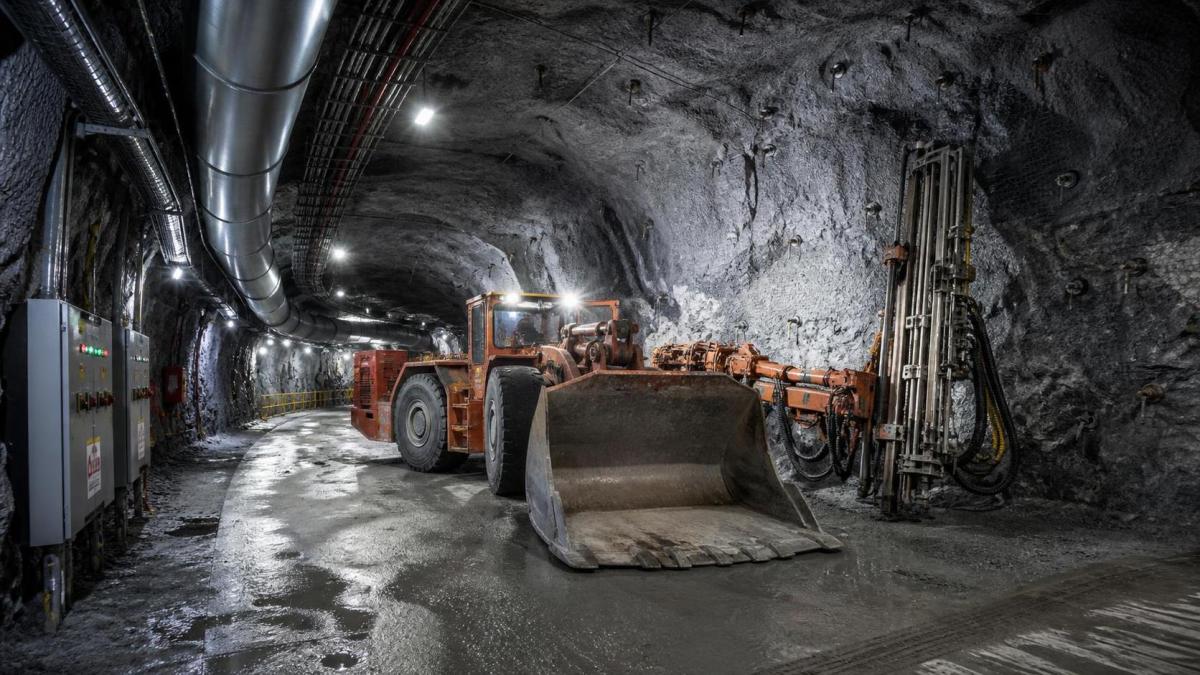
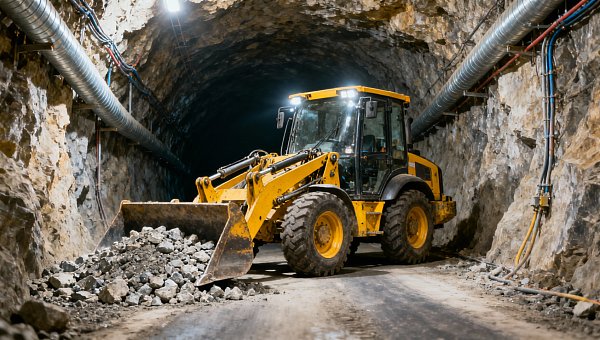
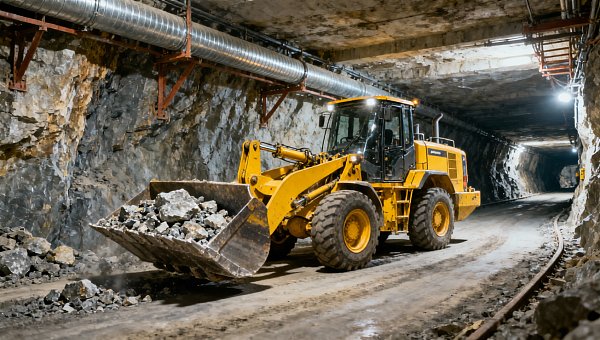
Failures in underground mobile equipment are among the most visible causes of downtime because loaders, trucks, drills, bolters, and utility vehicles directly support production continuity.
A single failed load-haul-dump machine can restrict ore movement from a production area, particularly where the mine has limited fleet redundancy or narrow operating windows.
Diesel engines, transmissions, hydraulic systems, axles, brakes, electrical harnesses, and cooling systems are recurring reliability risks in high-duty-cycle underground environments.
Heat, dust, vibration, water ingress, steep gradients, and repeated loading cycles accelerate component wear. Inadequate inspection routines can allow minor defects to become major failures.
Drilling equipment also creates substantial indirect downtime. A failed jumbo, longhole drill, or roof bolter can delay blasting, ground support, development, and downstream loading activities.
Maintenance planners should identify equipment based on operational criticality, rather than relying only on failure frequency. A rarely failing primary crusher feeder may be more consequential than multiple utility vehicles.
Mean time between failures, mean time to repair, availability, utilization, and production impact should be reviewed together. No single metric adequately explains the economic cost of downtime.
Condition monitoring can improve equipment decisions when it detects deterioration before a functional failure occurs. Oil analysis, vibration monitoring, thermal imaging, and onboard telematics are especially valuable.
However, predictive maintenance only delivers value when teams have authority, labor capacity, and spare components to act on early warnings before scheduled production is disrupted.
Ventilation Constraints Can Shut Down Productive Areas
Ventilation constraints are a major but sometimes underestimated source of underground mine downtime. Production cannot continue safely when airflow, gas dilution, temperature, or dust control requirements are not met.
Diesel fleets require sufficient ventilation to manage exhaust emissions, while blasting activities create temporary exclusion periods that can delay re-entry and restart schedules.
As mines deepen, ventilation systems face higher resistance, longer airways, elevated rock temperatures, and greater cooling demands. These conditions can reduce productive time without a mechanical breakdown.
Ventilation-on-demand systems can help mines direct airflow toward active areas. Yet poorly configured controls, unreliable sensors, or insufficient fan capacity can introduce operational bottlenecks.
Fan outages are particularly serious when they affect primary ventilation. A failed main fan, damaged duct, or electrical supply interruption may halt multiple headings simultaneously.
Mine managers should measure ventilation downtime separately from equipment downtime. Combining them can obscure the real infrastructure constraint and lead to incorrect capital or maintenance priorities.
Planning teams should model ventilation capacity against expected fleet growth, development sequencing, and future heat loads. Capacity that appears adequate today may constrain the next production phase.
Clear re-entry protocols, gas monitoring, blast scheduling, and communication between ventilation engineers and production supervisors reduce avoidable delays after routine underground activities.
Electrical Power Interruptions Create Wide-Area Production Losses
Power interruptions are one of the highest-consequence causes of downtime because they can affect pumping, ventilation, hoisting, crushing, communications, lighting, and charging systems at once.
Underground mines increasingly depend on electrically powered infrastructure and battery-electric equipment. This creates opportunities for lower emissions but raises the importance of resilient electrical distribution.
Common causes include substation faults, cable damage, transformer failures, switchgear trips, poor protection coordination, and unstable external grid supply in remote mining regions.
Water ingress, mechanical damage from mobile equipment, and inadequate cable management can create recurring electrical risks. These failures may also require lengthy safety inspections before restoration.
Electrical downtime should be classified by affected production area and system dependency. A brief trip affecting an isolated pump has a different consequence than a primary substation failure.
Critical infrastructure should have appropriate redundancy, sectionalizing capability, documented switching procedures, and regularly tested emergency generation where technically and economically justified.
For battery-electric fleets, charging availability becomes another production variable. Insufficient charger capacity, queueing, charger faults, or incompatible battery scheduling can reduce equipment availability.
Procurement teams should assess electrical systems as integrated mine assets, not isolated purchases. Interface compatibility, service support, spares access, and commissioning quality influence long-term uptime.
Ground-Control Problems Can Cause the Longest Recovery Periods
Ground-control events may occur less frequently than equipment failures, but they often cause the longest and most serious production interruptions in underground mining operations.
Rockfalls, seismic events, unstable backs, damaged ground support, orepass blockages, and deformation can close access routes, isolate work areas, or require extensive rehabilitation.
These events affect both safety and schedule certainty. Before mining resumes, geotechnical teams may need to inspect conditions, install additional support, modify designs, and establish exclusion zones.
Weak geological models, delayed mapping, unsupported exposure, poor drilling practices, and inadequate adherence to ground-support standards can increase the likelihood of unplanned stoppages.
Ground-control risk is especially significant in deep mines, highly stressed rock masses, faulted zones, and operations using aggressive extraction sequences or large underground openings.
Reliable ground management requires current geotechnical data, disciplined scaling procedures, appropriate support selection, monitoring instruments, and rapid communication of changing underground conditions.
Mine plans should include recovery scenarios for blocked declines, damaged intersections, and restricted drawpoints. Without contingency access, a localized event can become a mine-wide constraint.
Senior management should evaluate ground-control downtime through lost production, rehabilitation cost, safety exposure, and schedule disruption, rather than treating it as a standalone technical issue.
Water Management and Pumping Failures Can Stop Access and Production
Water inflows can interrupt underground operations by flooding travelways, damaging electrical systems, restricting access, and reducing the safe operating range of mobile equipment.
Pump failures are especially disruptive where mines depend on staged dewatering systems. A failure at one level can overload downstream infrastructure and create cascading operational problems.
Blocked sumps, worn pump components, failed level sensors, damaged pipes, and insufficient standby capacity are common causes of water-related downtime across underground operations.
Seasonal rainfall, changing hydrogeological conditions, nearby surface water systems, and breakthrough into water-bearing structures can create inflows beyond original design assumptions.
Water management should therefore be treated as a production-critical system. Inspection routines must cover pumps, pipelines, sumps, backup power, alarms, and maintenance access.
Emergency response plans should define authority levels, pump deployment procedures, evacuation triggers, and communication protocols. Fast decisions matter when water begins affecting electrical or haulage infrastructure.
Capital planning should account for future mine depth and development expansion. Dewatering capacity often becomes insufficient gradually, until an unusual inflow reveals the underlying constraint.
Spare Parts Delays Turn Repairable Failures Into Extended Outages
Delayed parts availability is a major commercial cause of downtime. A repair that should take hours can extend for days when critical components are unavailable underground or onsite.
Long-lead components often include engines, transmissions, hydraulic pumps, electronic control modules, powertrain assemblies, specialized tires, drill components, and electrical switchgear parts.
Global supply-chain disruption has made this issue more important. Shipping delays, manufacturer allocation, customs clearance, supplier insolvency, and limited repair capacity can extend outage duration.
Inventory decisions should be based on criticality, lead time, failure probability, replacement cost, repair alternatives, and the production consequence of a stockout.
Holding every spare is uneconomic, but holding too few critical spares creates avoidable exposure. The correct balance depends on fleet size, supplier support, and mine production dependency.
Procurement leaders should require suppliers to provide realistic lead-time data, repair turnaround commitments, obsolescence notices, and regional service capability before finalizing equipment contracts.
Framework agreements, vendor-managed inventory, component exchange programs, and local rebuild partnerships can reduce downtime risk when they are matched to actual equipment operating conditions.
Parts data should be connected to maintenance history. Repeated demand for certain components may reveal a design issue, poor operating practice, or preventive-maintenance interval requiring revision.
People, Planning, and Information Gaps Often Amplify Technical Failures
Many downtime events become longer because of planning failures rather than the initial defect. Missing work packs, unavailable labor, unclear responsibilities, and delayed approvals slow recovery.
Shift handovers are particularly important underground. Incomplete information about equipment condition, work-area status, isolation requirements, or pending repairs can cause repeated delays across shifts.
Maintenance teams need accurate asset histories, fault codes, inspection records, and repair procedures. Poor data quality leads to incorrect diagnosis, unnecessary part replacement, and repeat failures.
Production teams also need realistic maintenance windows. Pressuring crews to defer essential work may preserve short-term output while increasing the probability of a longer unplanned outage.
A practical weekly reliability review should include operations, maintenance, supply chain, ventilation, electrical, and geotechnical representatives. Downtime drivers rarely remain within one department.
The review should focus on recurring losses, high-consequence events, overdue corrective work, constrained spares, upcoming infrastructure risks, and accountability for corrective actions.
Digital twins, fleet-management systems, and computerized maintenance management platforms can improve visibility, but only when data governance and frontline adoption are consistently maintained.
How Mining Leaders Should Prioritize Downtime Reduction Investments
The most effective investment is not always the project addressing the most common failure. Priority should go to constraints with the highest safety, production, and recovery consequences.
Start by ranking events using lost tonnes, lost development meters, repair duration, safety exposure, recurrence, and the cost of implementing a corrective action.
Then separate root causes into equipment, infrastructure, geotechnical, supply-chain, and organizational categories. This prevents maintenance departments from inheriting problems they cannot independently solve.
For mobile fleets, investment may include condition monitoring, component rebuild programs, technician training, fleet standardization, and critical-spares holdings. These measures can improve availability measurably.
For infrastructure, the business case may support redundant pumps, upgraded substations, ventilation capacity, improved communications, or alternative access routes for critical production areas.
For ground control, value may come from better monitoring, earlier geological interpretation, revised support standards, improved rehabilitation readiness, and mine-plan flexibility around hazardous zones.
Every intervention should include a defined target, owner, timeframe, and verification method. Reliability programs lose credibility when they track activity rather than realized downtime reduction.
Conclusion: The Largest Downtime Risk Is Usually a System Failure
What causes the most downtime in underground mining operations? Equipment failure is often the immediate trigger, but the largest losses usually arise from interconnected system weaknesses.
Ventilation limitations, power failures, ground-control events, pumping problems, spare-parts shortages, and poor coordination can extend a manageable issue into a major production interruption.
Mine operators should prioritize downtime based on consequence, not visibility. The correct focus is the failure mode that most threatens safe access, production continuity, and recovery capability.
For procurement and EPC teams, equipment selection must include serviceability, parts support, infrastructure requirements, and lifecycle reliability. Purchase price alone does not define operational value.
Underground mines that connect technical reliability with disciplined planning, resilient infrastructure, and data-driven governance are better positioned to protect output targets and control lifecycle costs.
Recommended News
 Oct 16, 2026Underground Tunnel Loaders: Planning Muck Removal in Narrow HeadingsChoose the right underground tunnel loader for narrow headings. Explore clearance, haulage, cycle times, and power options to reduce delays and plan reliable muck removal.
 Oct 14, 2026Choosing an Underground Loader: Payload, Clearance, and Ventilation NeedsChoose the right underground loader by comparing payload, clearance, and ventilation needs. Discover how to boost mine productivity and avoid costly sizing mistakes.
 Sep 07, 2026How automation is changing job roles in underground miningExplore the impact of automation on mine jobs, from remote operations and predictive maintenance to new skills, safer workflows, and workforce planning.
 Sep 02, 2026How to use bucket fill factor calculation to estimate loader productivityBucket fill factor calculation made practical: learn to estimate loader productivity with real payload, loose density, cycle time, and efficiency data.