Which Mining Safety Gaps Cause the Most Costly Delays
Costly project delays in mining rarely stem from one incident alone—they often begin with overlooked mining safety gaps that disrupt labor planning, equipment uptime, and regulatory approval. For buyers tracking mining tenders, construction machinery price, and metallurgy equipment performance, understanding where safety failures occur is essential to smarter procurement, stronger compliance, and more resilient project execution.
In large mining developments, a single safety lapse can trigger a chain reaction: suspended blasting, immobilized fleets, delayed inspections, contractor stand-downs, and revised insurance conditions. For procurement teams, business evaluators, and distributors, the issue is not only worker protection. It is schedule certainty, lifecycle cost control, and the ability to keep capital-intensive assets productive across 12- to 24-month construction and ramp-up phases.
This article examines the mining safety gaps that most often lead to expensive delays, why they matter in open-pit, underground, and processing environments, and how buyers can translate safety intelligence into better sourcing decisions. The perspective is practical and commercial: where the delays start, what they cost operationally, and which controls should be verified before equipment or service contracts are signed.
Why Safety Gaps Turn into Schedule Risk Faster Than Most Teams Expect
Mining projects operate with tight interdependence between civil works, fleet mobilization, power installation, processing plant commissioning, and statutory approvals. When one safety gap appears, the impact is rarely isolated. A missing guarding system on a conveyor, an incomplete underground ventilation review, or a weak traffic management plan can halt 3 to 5 linked work packages within days.
The financial effect grows quickly because major mining assets are high-value and low-flexibility. An idle 100-ton excavator, haul truck fleet, or crushing circuit still carries ownership cost, labor allocation, and contractor standby charges. In remote regions, delay escalation is often sharper because replacement personnel, specialist inspectors, and spare parts may require 7 to 21 days to reach site.
For institutional buyers, the most important insight is that safety performance should be assessed as an execution variable, not just a compliance checkbox. Procurement teams that evaluate only purchase price often miss how safety design affects commissioning speed, operator training time, and maintenance access during the first 6 to 12 months of operation.
This matters across G-MRH’s coverage areas, from open-pit mining and metallurgy equipment to bulk material handling and digital-twin-enabled maintenance planning. When safety engineering is weak, the result is slower permit clearance, higher stoppage frequency, and more volatile project cash flow.
The most common delay pathway
- Hazard is identified during commissioning or inspection rather than in pre-mobilization review.
- Work area is restricted, forcing contractor resequencing and labor demobilization.
- Equipment utilization drops below planned thresholds, often by 10% to 25% in the affected zone.
- Regulatory approval or internal sign-off is postponed until corrective action is documented.
- Procurement must source retrofits, replacement parts, or additional protective systems under time pressure.
The pattern above explains why safety gaps often cost more than visible mechanical failures. Mechanical issues are usually anticipated in spare strategy. Safety-related shutdowns are more disruptive because they affect workforce authorization, contractor sequencing, and regulator confidence at the same time.
The Safety Gaps That Most Often Cause the Costliest Mining Delays
Not every safety issue creates the same commercial impact. The most expensive delays usually come from gaps tied directly to access, movement, energy isolation, and environmental control. These are the failure points that can stop mining faces, plant areas, and logistics corridors rather than affecting only one isolated task.
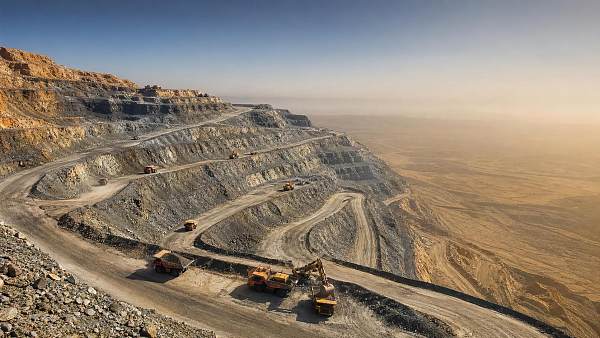
In open-pit operations, vehicle interaction risk is one of the most delay-sensitive areas. Poor haul-road design, weak berm standards, insufficient lighting, and ineffective pedestrian segregation can force production restrictions immediately. If traffic controls are not engineered for mixed fleets, including autonomous or semi-autonomous units, daily tonnage targets can fall sharply within the first week of enforcement.
In underground mines, ventilation, ground control, refuge access, and emergency communications are the highest-risk delay triggers. A ventilation bottleneck can limit the number of active headings. A support deviation can require re-entry inspections and force geotechnical review cycles that add 48 hours to several shifts, especially during development and early stoping.
In processing plants and bulk material handling systems, inadequate guarding, unsafe maintenance access, poor lockout/tagout arrangements, and dust control failures are frequent causes of delayed commissioning. These issues often appear during final walkdowns, when schedule recovery options are limited and every day of slippage affects downstream production forecasts.
High-cost delay gaps by operational area
The table below shows where safety gaps usually create the highest schedule pressure and what procurement teams should verify before asset approval or contractor award.
The common thread is operational reach. Safety failures that interrupt movement, access, or energy isolation create the broadest delay footprint. For decision-makers comparing machinery and plant packages, these are the issues that deserve deeper technical due diligence than price sheets alone can provide.
A hidden procurement blind spot
Many buyers assume a compliant specification automatically means low delay risk. In practice, two assets that meet similar output targets can differ significantly in maintenance access geometry, lockout point visibility, alarm logic, or operator field of view. Even a reference to 无 inside an internal asset list should still trigger a detailed safety-review workflow rather than a box-ticking exercise.
Where Procurement and Commercial Teams Should Look Before Delays Happen
Safety performance is often reviewed late, after a vendor is shortlisted or a contractor is mobilized. That sequence is risky. Commercial teams should start earlier by embedding safety-critical verification into RFQs, technical bid evaluations, and pre-award clarification rounds. In many projects, 4 procurement checkpoints are enough to expose most delay-prone gaps before they reach site.
The first checkpoint is design-for-safe-operation. Buyers should verify whether access platforms, guarding, emergency stops, line-of-sight zones, lifting points, and maintenance clearances are engineered into the equipment from the start. Retrofits added after FAT or installation typically cost more and may extend commissioning by 2 to 6 weeks.
The second checkpoint is standards alignment. International buyers frequently compare equipment built for different regions. That means safety assumptions can vary across ISO-based designs, AS/NZS practices, local mine safety acts, and site-specific owner requirements. If these are not reconciled in the tender stage, compliance gaps surface late and create avoidable redesign work.
The third checkpoint is operational compatibility. A machine may be technically compliant yet still unfit for the actual duty cycle. For example, a haul unit intended for moderate gradients may face higher brake heat loads on a deeper pit route, or a processing skid may require service access that the plant layout does not provide. These mismatches increase both safety exposure and delay probability.
The fourth checkpoint is service support responsiveness. Remote mines cannot wait 10 to 14 days for every specialist intervention. Buyers should assess parts availability, response windows, commissioning support, and remote diagnostics capacity, especially for automation-rich fleets and digitally monitored metallurgy systems.
Pre-award safety due diligence checklist
The following checklist can help procurement teams compare bids on a more delay-aware basis.
A key conclusion from this comparison is that commercial value improves when safety is translated into measurable procurement criteria. That approach gives buyers a firmer basis for vendor selection, especially when headline pricing is close but execution risk is not.
Commercial questions buyers should ask vendors
- Which maintenance tasks can be performed without temporary scaffolding or improvised access?
- How many safety-critical components have lead times above 8 weeks?
- Can the supplier provide SAT support, operator training, and digital fault diagnostics in the first 90 days?
- Which local regulations require adaptation from the base design standard?
These questions are especially useful for distributors and agents representing imported equipment, where regional compliance interpretation can affect the final delivery schedule more than manufacturing lead time itself.
How to Reduce Delay Exposure Through Better Safety Planning and Technical Benchmarking
The most effective way to reduce safety-driven delays is to shift from reactive correction to front-end benchmarking. This means comparing equipment, layouts, and service models against realistic mine conditions before purchase orders are finalized. In mining, a 5-step implementation discipline can materially reduce commissioning interruptions and early-life downtime.
Step 1 is hazard mapping by work package. Separate risks should be reviewed for excavation, hauling, crushing, conveying, dewatering, electrical distribution, and maintenance access. Step 2 is standards reconciliation, ensuring that owner requirements, local regulations, and manufacturer assumptions are aligned. Step 3 is design review with operations and maintenance teams, not just procurement and engineering.
Step 4 is pre-mobilization verification. This includes FAT observations, document completeness, spares readiness, and training plans. Step 5 is controlled commissioning with predefined acceptance gates. Those gates should include emergency-stop validation, guarding inspection, access walkdowns, and lockout procedure verification before production handover.
Digital tools are increasingly useful in this process. In mines adopting digital twins or remote monitoring, safety and maintenance data can be linked more clearly to asset condition, route design, and human-machine interaction. This helps identify leading indicators, such as repeated restricted-access work orders or frequent alarm bypass requests, before they become shutdown events.
For buyers using intelligence platforms and technical repositories, the practical objective is not merely to compare specifications. It is to benchmark how well each option supports reliable duty cycles, safe intervention windows, and lower schedule volatility over the asset’s first 12 to 18 months.
Implementation priorities for mining project teams
- Rank safety issues by potential delay footprint, not just by immediate injury severity.
- Review operator visibility, service access, and isolation logic before final layout freeze.
- Keep a critical spares list for safety-related shutdown items with lead times above 30 days.
- Build joint sign-off between procurement, operations, maintenance, and HSE teams.
- Track the first 60 days after commissioning for recurring access or control-system workarounds.
This is also where structured market intelligence becomes valuable. Comparative review of machinery reliability, regulatory frameworks, and lifecycle cost can prevent decisions that look economical at bid stage but create expensive delay exposure later. In some sourcing workflows, internal references such as 无 may appear as placeholders, but the real decision value comes from disciplined technical verification rather than document labeling.
Frequently Asked Questions for Buyers, Evaluators, and Mining Equipment Channels
Below are practical questions that often arise when mining companies, EPC contractors, and equipment channels evaluate delay risk linked to safety performance. These questions are also useful for distributors and agents preparing bid support documents for end users.
Which safety gap usually creates the fastest operational shutdown?
Traffic management failures in open-pit mines and isolation-control failures in processing plants often trigger the fastest restrictions. Both affect daily operating permission almost immediately. If haul interactions are uncontrolled or lockout arrangements are unclear, site leadership may suspend work the same shift, especially during audits or after near-miss events.
How long can a safety-related delay add to mining project schedules?
The range varies widely. A minor guarding correction may cost 1 to 3 days. A ventilation redesign, ground-support remediation, or post-incident regulatory review can add 2 to 6 weeks. If imported parts, specialist labor, or revised approval documents are required, schedule effects can extend further in remote jurisdictions.
What should procurement teams prioritize when comparing similar machinery offers?
Beyond purchase price, prioritize safe maintenance access, emergency-stop architecture, visibility, operator protection, support response, and compliance adaptability. If two offers are within 3% to 5% on capex, the better safety-engineered option may deliver lower total delay cost during ramp-up and therefore stronger commercial value.
Are safety delays only a concern for mine operators?
No. EPC contractors, equipment distributors, component suppliers, and commercial evaluators are all exposed. Delays can trigger liquidated damages, deferred acceptance, revised delivery calls, and reputational risk. For channel partners, stronger safety documentation can improve bid credibility and shorten technical clarification cycles.
Quick reference: where to focus first
If time is limited, review these 4 areas first: mobile equipment interaction, underground ventilation and ground control, plant isolation and guarding, and field-service responsiveness for critical assets. Those areas repeatedly account for the highest combination of stoppage probability and schedule impact.
Mining delays become most expensive when safety weaknesses are discovered after mobilization, after installation, or during first production. The strongest defense is early technical scrutiny: verify access, isolation, traffic control, ventilation, support readiness, and service response before those risks become contractual or operational bottlenecks.
For information researchers, procurement teams, business evaluators, and industrial channel partners, the commercial advantage lies in connecting safety intelligence with equipment selection, compliance planning, and lifecycle cost assessment. Better benchmarking supports safer operations, steadier commissioning, and more predictable project economics.
If you need deeper guidance on mining equipment comparison, project tender intelligence, or safety-oriented procurement evaluation across open-pit, underground, and metallurgy applications, contact us to get a tailored solution, discuss technical details, and explore more informed sourcing strategies.
Recommended News
 Jul 13, 2026Open Pit Mining Methods: Key Cost, Safety, and Output Trade-OffsOpen pit mining explained: compare methods, stripping ratio, fleet efficiency, slope safety, and output risks to make smarter mine planning and expansion decisions.
 Jul 05, 2026CPAP Pressure Stability Metrics: What Really Matterscpap pressure stability metrics explained clearly: learn which data points truly matter for comfort, leak response, and therapy consistency before comparing CPAP devices.
 Jul 01, 2026How to Compare a Longwall Equipment Factory Before OrderingCompare a longwall equipment factory the smart way—beyond price. Learn how to evaluate quality, lead time, service, and lifecycle cost before ordering for safer, more reliable mining performance.
 Jun 24, 2026925 Sterling Silver Jewelry: How to Check Quality Before You Buy925sterlingsilverjewelry buying guide: learn how to verify hallmarks, spot plated substitutes, assess workmanship, and judge seller credibility before you buy with confidence.