How Do Surface and Underground Mining Equipment Specs Differ?
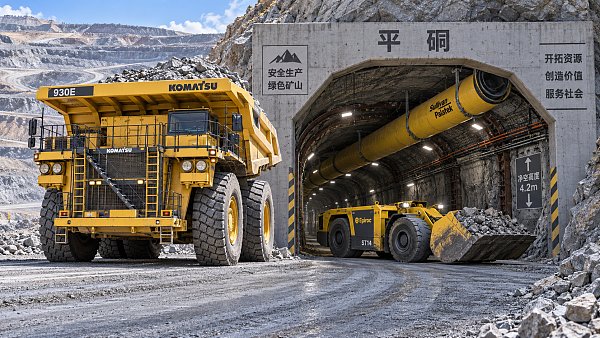
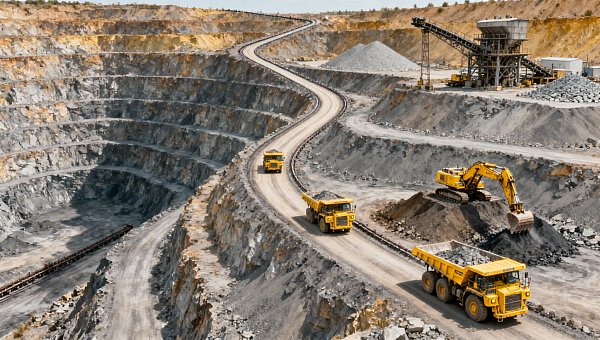
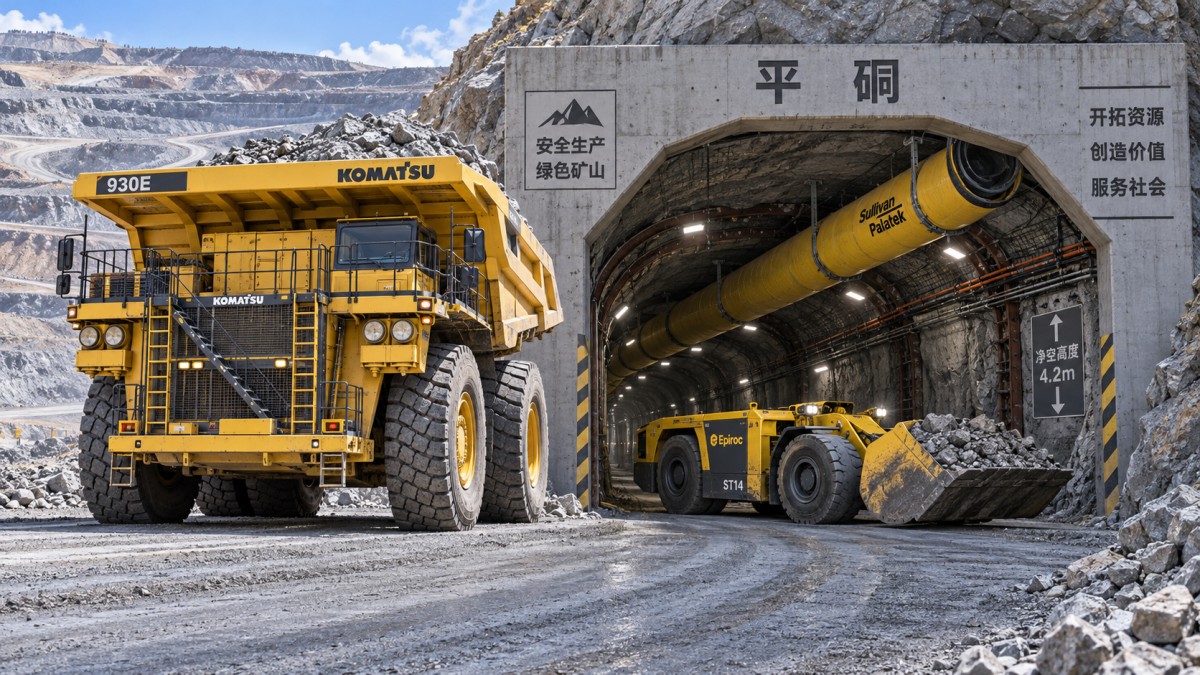
Surface and underground mining equipment differ most in what limits their useful performance. In open-pit operations, specifications emphasize payload, digging reach, haul-road performance, and production over large working areas. Underground, the same production goals must fit within tunnel geometry, ventilation capacity, ground conditions, and restricted access. A higher horsepower or payload rating is therefore not automatically an improvement.
The distinction is not simply “large versus small.” An underground haul truck may need substantial power to climb a ramp while remaining low enough to clear services overhead. A surface excavator may have ample working space but face strict limits on ground-bearing pressure. Meaningful comparisons connect each specification to the operating conditions under which the machine must deliver it.
Compare the production task before comparing the machine
Surface mining fleets can include excavators, rope shovels, wheel loaders, haul trucks, drills, and dozers. Underground fleets may combine development jumbos, production drills, load-haul-dump machines (LHDs), trucks, continuous miners, roof bolters, and conveyors. These machines do not always have direct equivalents.
An open-pit shovel and an underground LHD both move broken material, but their production constraints differ. The shovel loads trucks from a relatively fixed working position; the LHD loads, travels, and dumps within confined excavations. Comparing bucket capacity alone ignores travel time, turning requirements, dumping clearance, and loading resistance.
Mining method also changes the specification priorities. Hard-rock development emphasizes drilling accuracy, maneuverability, and rock-handling capability. Underground coal equipment may require permissibility or explosion-protection provisions that are not applicable to every hard-rock mine. “Underground suitable” is not a sufficiently precise equipment category.
Dimensions must describe movement, not just parked size
Surface equipment dimensions affect bench layout, haul-road design, loading arrangements, and assembly logistics. Underground dimensions can determine whether a machine can operate at all. Overall width and height are only the beginning: a machine that fits through a straight drift may still be unable to negotiate an intersection or dump into an ore pass.
A useful underground geometry assessment includes:
- Loaded and unloaded height, including protective structures and attachments.
- Inner and outer turning radii, articulation limits, and the full swept path.
- Bucket or body movement through its complete loading and dumping cycle.
- Ground clearance and approach, departure, and breakover angles.
- Clearance for personnel, ventilation ducting, cables, pipes, and uneven ground.
Turning-radius figures require particular care. Different specification sheets may report the wheel path, outside body radius, or another reference point. Articulated machines also create changing clearances around the joint and rear frame. A layout check needs comparable dimensional drawings, not a single advertised radius.
Low-profile design introduces trade-offs. Reducing height changes component packaging and available service space. It can also constrain the loading or dumping arrangement. Nominal capacity remains valuable only if the machine can fill and discharge effectively within the actual excavation.
Payload ratings do not establish production capacity
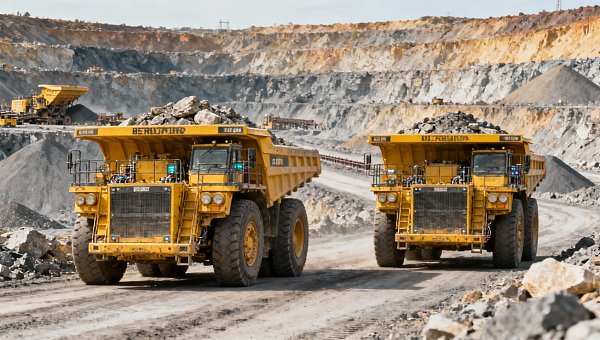
Surface fleets often seek higher payloads to reduce the number of haul cycles needed for a given tonnage. However, a larger truck requires compatible loading equipment, adequate road geometry, suitable dumping facilities, and sufficient tire and braking capacity. The relevant target is a balanced loading-and-hauling system, not maximum truck size.
Underground payload selection is closely tied to route geometry. Increasing capacity can require a larger cross-section or longer wheelbase, reducing maneuverability and increasing excavation requirements. A smaller machine may achieve better effective output on a route with tight bends, limited passing places, or short loading cycles.
Bucket and body volumes must also be distinguished from mass ratings. An approximate payload relationship is:
Payload mass = usable volume × loose bulk density × fill factor.
This calculation must remain within the rated payload and applicable axle or structural limits. Dense ore can reach the mass limit before the bucket is volumetrically full; low-density material can fill the available volume before reaching the rated tonnage. Heaped and struck capacities are not interchangeable.
Production estimates should include loading, travel, dumping, queuing, and operational delays. Underground routes add potential interference from shared access, ventilation controls, and other mobile equipment. Comparing tonnes per operating hour is more informative than comparing tonnes per load alone.
Power specifications need a route and a duty cycle
Rated engine or motor power does not directly reveal climbing performance, acceleration, or sustainable productivity. Machine mass, rolling resistance, gradient, transmission efficiency, traction, and auxiliary loads all affect the power available for useful work.
For surface haulage, long climbs and descents can dominate the duty cycle. For underground haulage, a relatively short ramp may still impose a sustained high load, particularly when combined with repeated acceleration and turning. Gradeability should therefore be assessed at the intended gross operating mass, with a stated speed and operating duration.
A maximum gradeability figure may describe a low-speed capability rather than continuous production performance. Better evidence includes rimpull–speed–gradeability curves, loaded travel-speed estimates, and cooling limits. The return route matters too: brake and retarder performance can restrict descent speed even when the powertrain can climb faster.
Electric specifications require similar discipline. Peak motor power is not continuous power, and nominal battery capacity is not usable energy. Battery performance depends on temperature, allowable state-of-charge range, auxiliary demand, and battery condition. Shift endurance cannot be inferred from kilowatt-hours without an energy balance for the actual cycle.
Underground powertrains interact directly with ventilation
A surface diesel machine operates in an open environment, although emissions compliance and worker exposure still matter. Underground, exhaust contaminants and heat enter a constrained ventilation system. Engine selection can therefore affect infrastructure requirements as well as machine performance.
Relevant diesel specifications include the engine configuration, emissions certification, exhaust aftertreatment, operating restrictions, and heat rejection. An emissions label alone does not establish that an engine is acceptable underground. Approval requirements and ventilation calculations depend on the jurisdiction, mine conditions, engine installation, and operating fleet.
Exhaust treatment also has operating requirements. Particulate-filter regeneration, exhaust temperatures, fuel quality, and maintenance arrangements must be compatible with the application. A certification statement should be supported by documentation identifying the installed engine and aftertreatment configuration.
Battery-electric equipment removes onboard diesel exhaust during operation, but it does not remove every ventilation load. Motors, hydraulic systems, batteries, brakes, and charging equipment generate heat; dust control and other ventilation functions remain necessary. Any ventilation reduction requires an engineering assessment rather than a fixed percentage assumption.
The equipment specification must also identify charging power, charging time under defined conditions, battery thermal management, connector arrangements, and protection functions. Tethered electric equipment introduces different limits, including cable handling, cable protection, and movement range. These are production constraints, not merely infrastructure details.
Ground loading and braking remain decisive in both environments
Surface equipment may operate on weak benches, dump areas, or variable haul-road foundations. Underground equipment can encounter wet floors, uneven rock, steep ramps, and localized ground weakness. In either environment, operating weight alone is insufficient to judge suitability.
For tracked machines, published ground pressure is generally an average based on defined contact assumptions. It does not fully describe localized loading during digging, slewing, or travel over irregular ground. For wheeled machines, axle loads, tire selection, inflation pressure, and loaded weight distribution are more useful than an unsupported “low ground pressure” claim.
Braking specifications should separate service braking, secondary or emergency braking, parking or holding capability, and continuous retardation. A machine’s ability to stop once does not demonstrate its ability to control speed repeatedly on a long loaded descent without exceeding thermal limits.
Regenerative braking adds another qualification. Its available capacity can be restricted by battery state of charge or temperature. The braking system must accommodate conditions in which energy recovery is limited. Similarly, a quoted maximum gradient needs to distinguish climbing, descending, and stationary holding capability.
Safety requirements depend on the mine, not just the equipment label
Both surface and underground equipment require protection against hazards such as fire, loss of control, poor visibility, and moving components. Underground conditions add restricted escape routes, enclosed fire consequences, and potentially limited communication or emergency access.
Specification reviews should address protective structures where applicable, emergency stops, visibility aids, fire protection, access and egress, and isolation arrangements. Underground communication and positioning systems may require mine infrastructure because satellite positioning is unavailable inside workings. A collision-warning feature should be assessed for detection coverage, operating limitations, and compatibility with the site system.
Potentially explosive atmospheres require a separate assessment. An ordinary diesel or battery machine cannot be assumed acceptable in a gassy mine because it is marketed for underground use. Explosion protection or permissibility can affect electrical equipment, batteries, surface temperatures, and other components, according to the applicable approval regime.
Standards must be matched to machine type and jurisdiction. ISO 3450 addresses braking systems for wheeled and high-speed rubber-tracked earth-moving machinery, while ISO 19296 addresses machine safety for underground mobile mining machines. Neither reference alone demonstrates complete legal acceptance for a particular mine. Applicable editions, scope, local requirements, and evidence of conformity still need examination.
Serviceability can change the meaning of availability
A component that is accessible in a surface workshop may be difficult to replace underground. The relevant specifications include maintenance clearances, component dimensions and weights, lifting points, diagnostic access, and the ability to recover a disabled machine from its operating route.
Delivery access matters as well. Equipment intended for shaft transport may require dismantling into modules that fit cage dimensions and lifting limits. Decline access requires checks on bends, gradients, transport configuration, and route clearances. These constraints should be resolved before the machine configuration is finalized.
Underground recovery delays can interrupt a shared route as well as immobilize one asset. Conversely, very large surface machines can require specialized cranes, assembly areas, and substantial maintenance infrastructure. Availability estimates should reflect the planned servicing and recovery arrangements rather than a generic reliability claim.
A comparable specification needs a defined operating basis
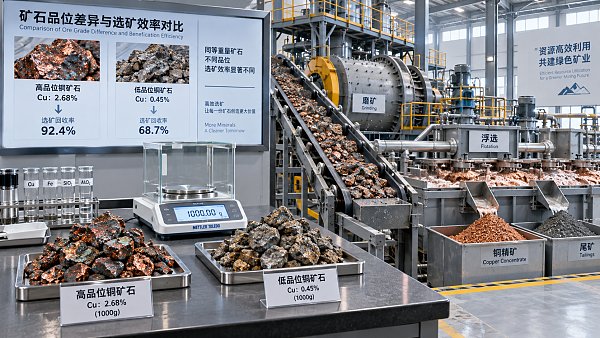
The strongest equipment comparison starts with common inputs: material density, target production, route length, gradients, rolling resistance, minimum clearances, ambient conditions, and operating schedule. Each proposed machine should then be evaluated against those same inputs.
Request performance evidence that connects the advertised ratings to the task: loaded travel curves, dimensional envelopes, braking and cooling limits, energy consumption assumptions, and applicable approval documentation. Where calculations or simulations are supplied, their assumptions should be explicit.
The decisive difference is that surface equipment specifications often describe how much material a machine can move across an engineered open working area, while underground specifications must also establish whether it can work safely and continuously within a tightly constrained physical and environmental envelope. The better choice is the machine that delivers the required output inside those limits—not the one with the largest number on its specification sheet.
Recommended News
 Oct 20, 2026How Do Surface and Underground Mining Equipment Specs Differ?What are the key differences between surface and underground mining equipment specs? Compare payload, clearance, power, and ventilation needs to choose the right machine for your mine.
 Oct 14, 2026How mining benchmarking methodology accounts for ore grade differencesDiscover how mining benchmarking methodology accounts for ore grade, recovery, and operating conditions to reveal fair cost comparisons and support smarter equipment decisions.
 Oct 19, 2026Mining Equipment Benchmarking Studies: Which KPIs Enable Fair Comparisons?Mining equipment performance benchmarking studies: discover the KPIs that enable fair comparisons, reveal hidden costs, and guide smarter equipment selection.
 Oct 13, 2026Open Pit Mining Costs: How Strip Ratio and Haul Distance Shape Cost per TonneOpen pit mining costs rise with strip ratio and haul distance. Discover how to compare bids, optimize fleet capacity, and reduce cost per tonne of ore delivered.