Hydrogen Mine Truck Range: What Affects Real Haul Distance?
Hydrogen Mine Truck Range: What Affects Real Haul Distance?
Hydrogen mine truck range depends on far more than nominal storage capacity.
In mine planning, the real question is not laboratory distance.
The real question is how far a truck can haul under actual production loads.
That makes hydrogen mine truck range a systems issue, not a single specification.
Payload, elevation gain, rolling resistance, idle time, and refueling windows all matter.
Fuel-cell performance also changes with temperature, altitude, and transient power demand.
For technical benchmarking, that means headline range figures need careful context.
A realistic comparison should focus on haul distance per shift, per route, and per duty cycle.
Why Nameplate Range Rarely Matches Field Performance
Manufacturers often publish controlled estimates for hydrogen mine truck range.
Those figures can be useful, but they rarely represent mine-site reality.
Open-pit and underground routes create very different energy profiles.
A truck climbing with a full payload consumes hydrogen much faster than one descending empty.
Stop-start activity at loading points also lowers effective range.
So does queuing at crushers, dumps, or fueling stations.
More importantly, mines care about delivered tonnes, not theoretical kilometers.
That is why real haul distance should be linked to productivity, not just fuel storage.
The Main Variables Behind Hydrogen Mine Truck Range
1. Payload and Gross Vehicle Weight
Payload is one of the biggest drivers of hydrogen mine truck range.
Higher gross weight increases traction demand during acceleration and uphill haulage.
Even small overload patterns can compound fuel consumption across a shift.
Range estimates should therefore reflect average and peak payload conditions.
2. Route Gradient and Elevation Profile
Gradient has a direct effect on hydrogen consumption.
A steep ramp can drain usable range much faster than route distance suggests.
Two mines with identical haul lengths may show very different truck endurance.
The difference usually comes from elevation change, not tank size.
3. Road Condition and Rolling Resistance
Poor haul-road maintenance reduces hydrogen mine truck range in a quiet but constant way.
Soft surfaces, loose material, potholes, and water buildup increase rolling resistance.
That raises the energy required for every loaded and unloaded cycle.
In practice, road quality improvements can extend effective range without changing the truck.
4. Duty Cycle and Auxiliary Loads
Duty cycle includes loading, travel, waiting, dumping, and idling.
A truck with frequent starts and stops generally sees lower range.
Auxiliary systems also count, especially cooling, heating, and onboard electronics.
These loads may seem secondary, but over long shifts they become material.
5. Ambient Temperature and Altitude
Temperature affects both hydrogen storage behavior and fuel-cell efficiency.
Cold starts can reduce immediate system responsiveness.
High heat can increase thermal management demand.
At high altitude, lower oxygen availability can also influence stack performance.
That means hydrogen mine truck range should be validated in site-specific climate conditions.
Fuel Cell, Battery Buffer, and Power Management
Most hydrogen haul trucks are hybridized with battery support.
This architecture matters because mine duty cycles include heavy transient loads.
The fuel cell supplies sustained power, while the battery handles peaks and recovery.
If the energy management strategy is weak, efficiency drops quickly.
That directly shortens hydrogen mine truck range under demanding cycles.
Regenerative braking can improve total energy use on downhill segments.
Still, recovery potential depends on route design, traction control, and battery acceptance rate.
So buyers should assess the complete propulsion strategy, not only the hydrogen tank volume.
How Refueling Strategy Changes Practical Range
Practical range is also an operational planning issue.
A truck may have enough onboard fuel for longer use.
Yet poor fueling logistics can limit its usable shift distance.
Station location, dispenser speed, queue time, and pressure management all shape outcomes.
This is especially important for large fleets with synchronized cycles.
A well-placed fueling node can preserve production continuity.
A poorly placed one can create bottlenecks that erase the benefit of longer nominal range.
In real operations, hydrogen mine truck range must be paired with fueling throughput analysis.
What Metrics Matter More Than Kilometer Claims
For technical evaluation, broad distance claims are not enough.
Decision quality improves when range is expressed through production-linked metrics.
- Hydrogen consumed per tonne-kilometer
- Loaded uphill distance per refuel
- Shift coverage at rated payload
- Range variation by season and altitude
- Idle and queue losses as a share of total energy use
These indicators make hydrogen mine truck range easier to compare across sites.
They also support procurement, fleet modeling, and ESG reporting with stronger technical grounding.
A Practical Benchmarking Framework
A structured review makes hydrogen mine truck range claims more reliable.
The strongest evaluations usually include five layers.
- Map the route by payload, gradient, speed band, and stop frequency.
- Measure energy demand across loaded, empty, and idle phases.
- Test seasonal conditions, including heat, cold, dust, and altitude.
- Model fueling windows against fleet dispatch timing.
- Compare range against tonnes moved, not distance alone.
This method reflects how heavy equipment is actually selected.
It also aligns better with engineering standards and lifecycle cost analysis.
Common Misreads in Hydrogen Mine Truck Range Analysis
Several mistakes appear repeatedly in early-stage assessments.
- Treating flat-ground testing as equal to ramp haulage conditions
- Ignoring queue time at loaders, dumps, or fueling stations
- Using average payload data instead of peak operating reality
- Assuming all fuel-cell systems respond equally to climate stress
- Comparing trucks without checking route-specific energy recovery potential
Each of these errors can distort hydrogen mine truck range conclusions.
The result is usually a mismatch between pilot expectations and operating reality.
What Realistic Range Assessment Should Deliver
A useful hydrogen mine truck range study should answer three business-critical questions.
Can the truck complete the required haul cycle at rated payload?
Can it do so across weather shifts and route degradation?
And can the fueling system support fleet uptime without hidden delays?
When those answers are evidence-based, range becomes a planning tool.
It stops being a marketing number.
That shift is central to evaluating zero-emission haulage at scale.
In practical terms, hydrogen mine truck range should always be tested against mission profile data.
That includes payload bands, road condition trends, climate factors, and refueling availability.
With that approach, technical teams can compare hydrogen haul trucks on a fair basis.
They can also identify where design improvements or site changes will deliver more usable range.
The most credible evaluations combine field telemetry, route simulation, and fueling analysis.
That is the standard needed for serious benchmarking in modern mining fleets.
For any procurement or research review, start with real duty cycles, then test every range claim against them.
Recommended News
 Sep 27, 2026Lifecycle cost optimization methods for reducing haul truck downtimeLifecycle cost optimization methods reduce haul truck downtime through smarter maintenance, critical spares, road reliability, and production-focused fleet planning.
 Sep 03, 2026How worn steering components affect haul truck tire wearSteering components wear can accelerate haul truck tire damage. Learn how to spot alignment-related patterns, reduce downtime, and protect tire life.
 Jul 06, 2026Hydrogen Mine Truck Range: What Affects Real Haul Distance?Hydrogen mine truck range depends on payload, gradients, road conditions, climate, and refueling strategy. Learn what really determines haul distance in mining operations.
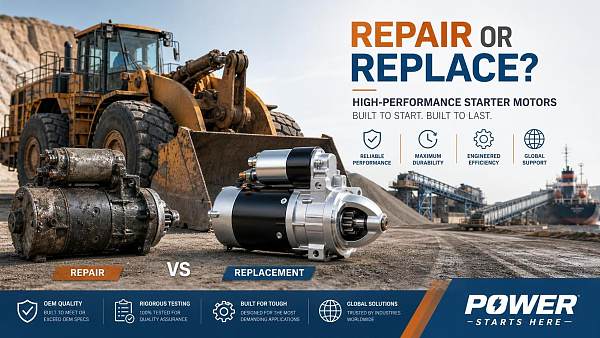
 Jul 03, 2026Starter Motors: When Repair Costs More Than ReplacementStarter motors can cost more to repair than replace in mining and heavy fleets. Learn when a new unit protects uptime, reduces risk, and lowers lifecycle cost.