Heavy Duty Trailer Wholesale: Cost vs Service Life
For teams comparing heavy duty trailer wholesale options, the headline price rarely tells the full story.
A lower purchase cost may look attractive, yet weak frame design, premature axle wear, or poor parts support can shorten usable life dramatically.
In mining, construction, bulk logistics, and infrastructure supply chains, trailer value is measured by uptime, payload stability, compliance, and rebuild potential.
This guide explains how to judge heavy duty trailer wholesale decisions through cost, service life, maintenance exposure, and lifecycle economics.
Understanding Heavy Duty Trailer Wholesale in Industrial Use
Heavy duty trailer wholesale refers to bulk or project-based procurement of trailers built for high-capacity, repetitive, and severe-duty transport tasks.
These units may include lowbeds, flatbeds, side wall trailers, tipper trailers, skeletal trailers, modular platforms, and specialized mining support transporters.
In industrial markets, selection goes beyond dimensions and rated load.
The evaluation usually covers steel grade, welding quality, axle brand, suspension type, brake system, anti-corrosion treatment, and regional certification requirements.
A sound heavy duty trailer wholesale strategy treats the trailer as a long-life production asset rather than a simple transport accessory.
That approach is especially important where roads are rough, haul cycles are continuous, and downtime disrupts larger equipment schedules.
Core lifecycle cost elements
- Initial acquisition price and shipping cost
- Registration, certification, and localization cost
- Maintenance parts frequency and service intervals
- Tire, brake, suspension, and axle replacement exposure
- Downtime losses caused by structural or component failure
- Residual value, rebuildability, and resale potential
Why Cost Alone Can Distort Heavy Duty Trailer Wholesale Decisions
In competitive sourcing rounds, the lowest quote often wins early attention.
However, cheaper trailers can shift cost into repairs, spare shortages, compliance gaps, and lower payload reliability.
This distortion becomes larger when the trailer works in mining corridors, quarry roads, ports, or long-distance heavy haul operations.
A trailer that lasts eight years with controlled maintenance may outperform a low-price option needing major structural work in year three.
The right heavy duty trailer wholesale comparison therefore requires a time-based view, not only a purchase-based view.
Industry Signals Shaping Service Life Expectations
Across resource and heavy-equipment sectors, several operating trends are changing how buyers assess heavy duty trailer wholesale programs.
- Higher payload pressure is increasing stress on chassis, kingpins, and suspension assemblies.
- Remote sites require stronger parts availability because recovery time is expensive.
- ESG scrutiny favors durable equipment with longer use cycles and lower replacement frequency.
- Cross-border projects demand compliance with braking, lighting, dimensions, and axle-load regulations.
- Digital maintenance tracking now makes hidden ownership cost easier to compare.
These signals mean service life is no longer a secondary technical detail.
It is now a commercial risk factor directly linked to project continuity and transport efficiency.
Common causes of shortened trailer life
- Frequent overloading beyond rated design intent
- Poor road surfaces and repeated shock loading
- Inadequate rust protection in coastal or wet environments
- Weak alignment control causing tire and suspension losses
- Irregular greasing, torque checks, and brake inspection
How Service Life Creates Business Value
A durable trailer supports more than transport capacity.
It improves planning certainty, lowers emergency repair dependence, and protects the movement of high-value cargo across long project cycles.
In heavy duty trailer wholesale procurement, service life creates value in four practical ways.
- Lower annualized ownership cost through slower depreciation and fewer capital replacements.
- Better fleet uptime because critical assemblies fail less often under severe duty.
- Higher safety confidence through stable braking, load retention, and structural integrity.
- Stronger resale or refurbishment value when the frame remains sound.
This is why many industrial buyers compare cost per operating year, not simply cost per unit.
That metric reveals whether a heavy duty trailer wholesale offer is genuinely economical.
Typical Trailer Categories and Lifecycle Priorities
Different trailer classes face different wear patterns.
A useful heavy duty trailer wholesale review aligns design choices with the most likely duty cycle.
The right specification should reflect route conditions, legal axle limits, cargo center of gravity, and loading frequency.
Mismatch between design and application is one of the fastest ways to lose service life.
Practical Evaluation Points Before Ordering
Before confirming a heavy duty trailer wholesale contract, a structured technical review helps reduce hidden lifecycle risk.
Specification checks
- Verify payload rating against actual maximum operating load, not nominal load only.
- Request steel grade certificates and frame thickness details.
- Confirm axle, suspension, landing gear, and braking component brands.
- Check paint process, blasting standard, and corrosion warranty terms.
- Review drawings for stress concentration points and maintenance access.
Commercial and support checks
- Compare spare parts lead times for wearing assemblies.
- Ask for inspection records, test reports, and reference projects.
- Clarify warranty coverage for structural and component failures.
- Evaluate whether local service partners can support the fleet.
- Estimate cost per year using realistic maintenance assumptions.
This process turns heavy duty trailer wholesale from a price comparison into a disciplined asset decision.
Recommended Decision Framework for Cost Versus Service Life
A practical framework can simplify final comparison when several suppliers meet the basic requirement.
- Set the intended operating life in years or haul cycles.
- Score structural design, components, compliance, and support quality.
- Model maintenance cost under normal and severe operating conditions.
- Add downtime risk for non-standard parts or weak service coverage.
- Compare annualized total cost against expected reliability.
When applied consistently, this framework reveals whether a higher quote may actually offer lower long-term cost.
That is often the key insight in heavy duty trailer wholesale sourcing.
Next-Step Focus for Industrial Sourcing
The strongest heavy duty trailer wholesale outcomes come from balancing purchase efficiency with engineering durability and support readiness.
A trailer should be judged by how safely and consistently it performs across years of real work.
Use a shortlist process that compares structural quality, component pedigree, maintenance burden, and expected operating life side by side.
Then validate the final option with technical documents, lifecycle assumptions, and parts support commitments before placing volume orders.
That disciplined approach helps convert heavy duty trailer wholesale from a procurement event into a durable industrial value decision.
Recommended News
 Sep 27, 2026Lifecycle cost optimization methods for reducing haul truck downtimeLifecycle cost optimization methods reduce haul truck downtime through smarter maintenance, critical spares, road reliability, and production-focused fleet planning.
 Sep 03, 2026How worn steering components affect haul truck tire wearSteering components wear can accelerate haul truck tire damage. Learn how to spot alignment-related patterns, reduce downtime, and protect tire life.
 Jul 06, 2026Hydrogen Mine Truck Range: What Affects Real Haul Distance?Hydrogen mine truck range depends on payload, gradients, road conditions, climate, and refueling strategy. Learn what really determines haul distance in mining operations.
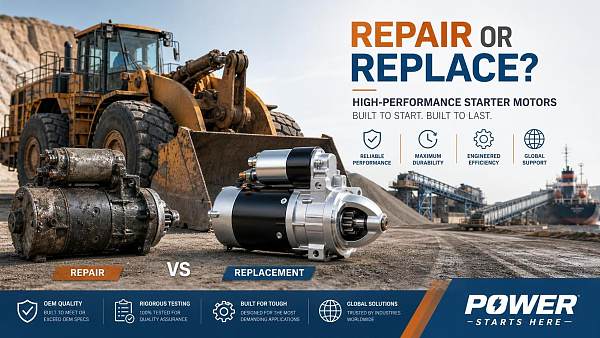
 Jul 03, 2026Starter Motors: When Repair Costs More Than ReplacementStarter motors can cost more to repair than replace in mining and heavy fleets. Learn when a new unit protects uptime, reduces risk, and lowers lifecycle cost.