What Drives Drilling Penetration Rate in Hard Rock Mining
In hard rock mining, penetration rate is never a simple function of pushing harder on the bit. The real outcome comes from an interaction between rock properties, machine capability, drilling method, and operating discipline. That is why drilling penetration rate mining remains a core benchmark in both production planning and technical equipment evaluation.
The issue matters even more now because hard rock projects sit at the center of critical mineral supply, energy transition infrastructure, and capital-intensive expansion programs. A few percentage points in drilling efficiency can alter cost per meter, downstream blasting quality, maintenance intervals, and project economics across the mine life.
Why penetration rate is more than a speed metric
At face value, penetration rate measures how quickly a drill advances into rock. In practice, it also reflects how well the entire drilling system is matched to site conditions.
A higher rate is useful only when it remains stable, controllable, and economical. Fast drilling with poor hole deviation, excessive bit wear, or unstable vibration can increase total cost rather than reduce it.
For that reason, drilling penetration rate mining is commonly assessed alongside bit life, meter cost, fuel or power use, hole accuracy, and machine availability. Looking at one figure in isolation usually leads to weak decisions.
Rock mass conditions set the starting limit
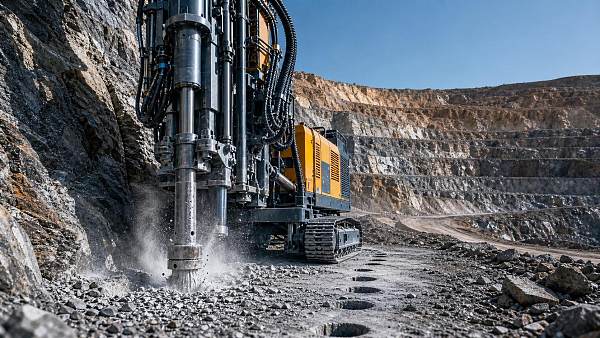
Hard rock is not a single condition. UCS, abrasiveness, fracture frequency, silica content, and weathering profile all influence how quickly the bit can cut or crush the formation.
Very competent rock often reduces instantaneous advance, especially when the formation is massive and unbroken. By contrast, fractured ground may drill faster, but can create instability, deviation, and uneven tool loading.
Water inflow also changes performance. It affects cuttings removal, hole wall stability, and sometimes the energy transferred through the drill string. In deep benches or underground headings, these changes become more pronounced.
Geology variables that often explain performance gaps
- Uniaxial compressive strength and tensile strength
- Rock abrasiveness and quartz content
- Jointing, bedding, and fracture orientation
- Groundwater presence and moisture condition
- Variation between ore zone and waste zone lithologies
When drilling penetration rate mining data is compared across fleets or sites, geology normalization is essential. Without that step, benchmark results can look precise while being technically misleading.
Energy transfer through the drill system
Once geology sets the baseline, the next question is how efficiently the rig transfers energy to the rock face. This depends on feed force, impact energy, rotation torque, and string stability.
Too little weight on bit reduces contact efficiency. Too much can choke the bit, increase vibration, and accelerate wear. The best operating window is usually narrower than field assumptions suggest.
Rotation speed must also match the bit type and rock response. In very hard formations, excess rotation can polish cutters or overheat contact surfaces. In other cases, low rotation leaves the bit underutilized.
Drill string alignment matters just as much. Bent rods, poor coupling condition, and excessive axial or lateral vibration reduce usable energy at the face. That lost efficiency often appears as inconsistent penetration rather than total failure.
Bit design often determines whether input power becomes output
Bit selection is one of the most visible drivers of drilling penetration rate mining in hard rock. The right design converts machine power into effective rock breakage. The wrong one converts power into heat, wear, and downtime.
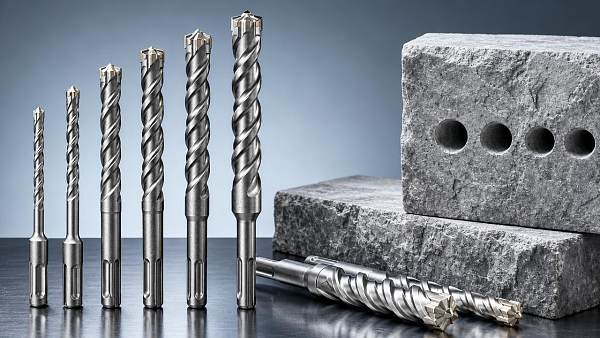
Button geometry, bit diameter, face pattern, carbide grade, and flushing port layout all affect penetration. Even small changes in bit profile can alter chip formation and hole cleaning behavior.
As hole diameter grows, penetration often declines unless the rig has enough impact energy and torque reserve. Larger tools improve blast design flexibility, but they demand stronger matching across the entire drilling package.
Flushing quality is often underestimated
Cuttings have to leave the hole efficiently, or the bit starts regrinding broken material. When that happens, penetration rate drops, heat rises, and wear accelerates.
Air volume, water flow, pressure, and hole depth all influence flushing performance. In long-hole drilling, poor flushing can erase the benefit of a powerful rig very quickly.
This is one reason field reports sometimes misread underperformance as a rig power issue. The actual constraint may be compressor capacity, blocked ports, poor bit condition, or unsuitable drilling fluid practice.
Control systems and operator technique still matter
Automation has improved consistency, but drilling remains sensitive to setup quality and real-time control. Collar accuracy, feed adjustment, rod handling, and response to changing ground still shape final results.
Modern rigs with digital controls can hold optimized pressure and rotation settings more consistently than manual systems. They can also log drilling penetration rate mining data in a form suitable for fleet benchmarking.
That matters for organizations comparing assets across regions. A data-driven view is far more useful than anecdotal claims about which rig is faster. Repeatable operating windows are usually more valuable than isolated peak rates.
This aligns with the broader G-MRH approach to heavy-equipment evaluation. Performance has to be read through reliability, duty cycle, standards compliance, and lifecycle cost, not through headline output alone.
Where the benchmark matters most
Hard rock drilling decisions affect more than the drill and consumables budget. They influence blast fragmentation, loading efficiency, crusher feed consistency, and energy demand across the downstream value chain.
In underground mining, penetration rate also interacts with development advance, ventilation planning, cycle time, and ground support scheduling. Delays at the face can ripple through the entire production sequence.
In open-pit operations, the benchmark supports equipment selection for bench geometry, ore hardness variation, and target annual movement. The economic impact becomes especially visible where drilling meters are high and stripping ratios are tight.
Typical evaluation scenarios
- Comparing rotary, DTH, and top hammer suitability in hard formations
- Assessing whether a larger rig improves total meter economics
- Reviewing consumable performance by rock domain
- Checking whether automation improves consistency enough to justify capital cost
- Linking drilling results with blast and comminution outcomes
How to interpret drilling data without oversimplifying it
The strongest evaluations separate headline speed from usable productivity. A record penetration shift means little if hole quality declined or maintenance spikes followed two weeks later.
A practical review normally compares several variables together:
- Average and peak penetration by lithology
- Bit life and cost per drilled meter
- Hole deviation and re-drill frequency
- Energy consumption and idle time
- Availability, maintenance hours, and component failure pattern
This broader lens is central to drilling penetration rate mining analysis in mature operations. It turns a narrow productivity number into a decision tool for fleet strategy, tender review, and technical due diligence.
What to examine next
The next useful step is to map penetration results against geology, consumables, and rig settings at a more granular level. That usually reveals whether the limiting factor is rock mass, machine sizing, bit choice, flushing, or operating practice.
From there, comparison becomes more credible. Benchmarks should be aligned with standards, duty-cycle context, and total asset performance, especially where capital allocation and long-term supply security depend on hard rock output.
For any organization reviewing drilling penetration rate mining in hard rock, the most reliable conclusions come from integrated evidence. Meter speed matters, but only when it is read together with tool life, hole quality, safety margin, and downstream operational effect.
Recommended News
 Aug 02, 2026How to Evaluate a Crawler Piling Rig Manufacturer for Foundation ProjectsCrawler piling rig manufacturer selection can make or break foundation projects. Learn how to assess quality, compliance, support, and lifecycle value before you buy.
 Jul 08, 2026What Drives Drilling Penetration Rate in Hard Rock MiningDrilling penetration rate mining in hard rock depends on geology, bit design, energy transfer, flushing, and operator control. Discover what really improves meters, cost, and drilling performance.
 Jun 29, 2026Crawler Drilling Rig Manufacturer Checklist for Reliability and Parts SupportCrawler drilling rig manufacturer checklist covering reliability, parts support, service depth, and lifecycle risk—compare suppliers smarter and protect uptime.
 May 31, 2026Masonry Drill Bits for Hard Rock: Selection Mistakes to Avoidmasonrydrillbits for hard rock: avoid costly selection mistakes, compare carbide quality, shank fit, tip design, and lifecycle value before bulk buying.