Piling Rig Manufacturer Selection: 5 Risks to Check First
Choosing the right piling rig manufacturer can determine project safety, equipment uptime, and long-term return on investment. For procurement teams, the real issue is rarely brochure comparison alone. The decisive task is to detect hidden supplier risks early.
In practice, the best supplier is not always the one with the lowest unit price or the biggest product catalog. It is the manufacturer that can prove compliance, deliver consistent build quality, support the machine after commissioning, and protect lifecycle value.
For buyers in infrastructure, foundation engineering, mining-adjacent construction, and heavy civil projects, five risks deserve immediate review before any shortlist is approved. If these checks are missed, the purchase may create delays, claims, safety exposure, and expensive operational instability.
Understand the Search Intent First: Buyers Want Risk Reduction, Not Marketing Claims
When procurement professionals search for guidance on selecting a piling rig manufacturer, they are usually not looking for generic product definitions. They want a practical framework to reduce supplier risk before issuing RFQs, evaluating bids, or approving capital expenditure.
Their main concerns are clear. Will the rig comply with required standards? Will it perform reliably under real site conditions? Can the supplier deliver on time? Will spare parts and field service be available when breakdowns occur? And will the total ownership cost stay within forecast?
That means the most useful article is one that helps buyers judge evidence, compare suppliers objectively, and challenge weak claims early. Broad descriptions of piling methods matter far less than due diligence steps, verification questions, and measurable selection criteria.
Risk 1: Compliance Gaps That Create Safety, Legal, and Project Exposure
The first risk to check is compliance. A piling rig may appear technically capable, but if the manufacturer cannot demonstrate conformity with the standards and regulatory requirements relevant to your market, the procurement decision carries immediate legal and operational risk.
Buyers should verify more than a basic certificate pack. Ask whether the machine design, hydraulic systems, electrical assemblies, guarding, load charts, emissions package, noise profile, and operator safety systems align with the regulations required in the project jurisdiction.
For international procurement, this becomes even more important. A manufacturer may be compliant in its domestic market but not ready for export requirements tied to CE expectations, ISO-aligned quality systems, regional safety codes, or local registration and inspection rules.
Procurement teams should request a complete compliance dossier, not just sales literature. This should include factory quality certifications, welding qualifications, testing records, traceability of critical components, operating manuals, risk assessments, and third-party verification where applicable.
It is also wise to check whether the manufacturer has a documented process for design updates when regulations change. A supplier that treats compliance as a one-time paperwork exercise is far riskier than one that manages it as part of controlled engineering governance.
One of the strongest warning signs is inconsistency between brochures, nameplate data, and technical documentation. If rated torque, mast configuration, winch capacity, or engine specification differs across documents, deeper technical and legal review is necessary before commercial discussion progresses.
In short, compliance should be treated as a gateway criterion. If a piling rig manufacturer cannot clearly prove conformity, procurement should not move directly to price comparison. The apparent savings can be erased quickly by site rejection, retrofit cost, delayed approvals, or liability issues.
Risk 2: Build Quality That Looks Competitive but Fails Under Duty Cycle
The second risk is hidden build-quality weakness. Many rigs can look similar in photos and specification sheets, but durability differences become obvious only after sustained use in demanding duty cycles, abrasive environments, variable ground conditions, and long shift patterns.
Procurement buyers should look beyond headline metrics such as drilling diameter, depth, or engine power. The more revealing questions concern structural integrity, steel grade, fabrication consistency, hydraulic layout, component protection, fatigue resistance, and assembly discipline.
Ask the manufacturer where critical components are sourced. Reputable suppliers typically disclose the brands used for engines, pumps, valves, electronics, slewing systems, bearings, and control systems. Unknown substitutions may reduce initial price, but often increase failure risk and maintenance uncertainty.
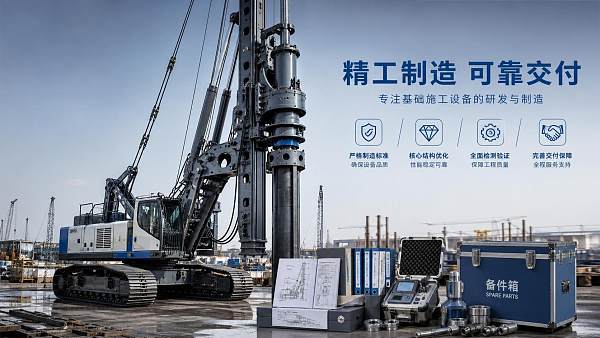
Factory audit findings are highly valuable here. If possible, inspect welding quality, machining accuracy, paint preparation, harness routing, hose protection, and testing procedures before shipment. A disciplined production line often tells more about future reliability than any polished sales presentation.
Another key issue is whether the rig has been validated in conditions similar to your intended application. A machine that performs well on light urban foundation jobs may not hold up in continuous heavy-duty work, hard strata, remote sites, or mining-related infrastructure construction.
Reliable manufacturers should be able to share field references, machine-hour data, major failure trends, and improvement history. If the supplier avoids performance transparency or cannot provide credible reference projects, procurement should treat the offer with caution.
Build quality risk also affects resale value. Machines from manufacturers with weak structural reputation or poor component consistency often suffer accelerated depreciation. For buyers planning fleet renewal cycles, this has a direct impact on total capital efficiency.
Risk 3: Weak After-Sales Support That Turns Minor Issues into Major Downtime
The third risk is underestimating after-sales capability. Even a well-built piling rig will require commissioning support, operator training, scheduled maintenance, troubleshooting, and spare parts over its service life. Procurement should evaluate service capacity as carefully as machine specification.
A common mistake is assuming distributor presence automatically equals service readiness. The real question is whether the supplier can deliver fast technical response, parts availability, trained field engineers, remote diagnostics, and escalation support when operational problems arise.
Ask for measurable service commitments. These may include spare-parts fill rate, standard lead times, emergency dispatch windows, commissioning scope, training coverage, warranty response process, and availability of digital service documentation in the language your teams actually use.
It is also important to understand where parts are stocked. If critical wear items and hydraulic or electronic components must always ship from a distant central warehouse, downtime risk increases substantially, especially for remote projects or countries with customs complexity.
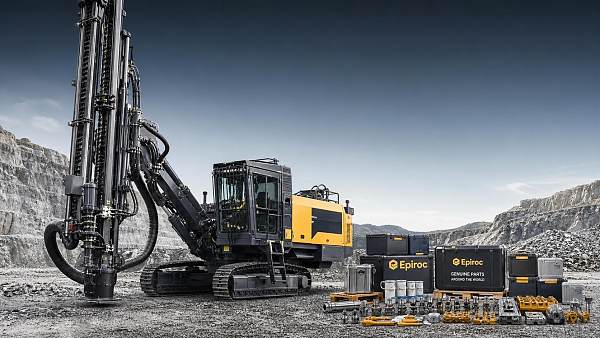
Procurement teams should request a recommended spare-parts package tied to the first 12 to 24 months of expected operating hours. This helps reveal whether the manufacturer understands the maintenance profile of the rig and whether ownership planning is realistic.
Another useful test is to ask technical questions during evaluation and measure response quality. Suppliers with mature support systems usually provide structured answers, service documentation, and escalation paths quickly. Weak suppliers often rely on vague promises and delayed communication.
For buyers managing project-critical equipment, support risk should be weighted heavily in bid scoring. A lower purchase price loses its advantage very quickly when a rig remains idle due to missing sensors, unavailable seals, software issues, or poor field service coordination.
Risk 4: Delivery and Supply Chain Reliability That Disrupts Project Schedules
The fourth risk is delivery failure. In piling and foundation work, equipment arrival timing can be as important as machine capability. If the manufacturer cannot deliver according to the project schedule, the buyer may face contractual penalties, idle crews, and cascading downstream delays.
Procurement should not accept production lead time at face value. Instead, ask how much of the rig is built to order, what major components are externally sourced, which parts create bottlenecks, and how the manufacturer manages supply chain disruption and production scheduling.
It is particularly important to review dependencies on engines, hydraulic systems, electronic control components, and steel fabrication. A supplier may quote an attractive delivery date but rely on optimistic assumptions about vendors, shipping windows, or customs clearance.
Request a documented production and delivery plan with milestone visibility. This should include engineering freeze dates, procurement status of long-lead items, assembly schedule, factory testing window, inspection readiness, packing, shipment mode, and commissioning timeline at destination.
Buyers should also examine the supplier’s export experience. A piling rig manufacturer with limited international delivery history may underestimate transport frame design, disassembly requirements, port handling, shipping documentation, and import compliance. These errors create expensive schedule slippage.
Contract terms matter here as well. Procurement should define liquidated damages where appropriate, milestone reporting obligations, pre-shipment inspection rights, and clear acceptance criteria. Without contractual structure, delivery promises can become difficult to enforce once production pressure increases.
In volatile markets, delivery reliability often distinguishes top-tier manufacturers from merely aggressive sellers. If project timing is critical, a supplier with slightly higher pricing but proven execution discipline may offer the better commercial outcome overall.
Risk 5: Low Purchase Price but High Lifecycle Cost
The fifth risk is focusing too narrowly on acquisition cost. A piling rig that looks cheaper in the tender stage may become far more expensive over five to eight years when fuel consumption, wear-part replacement, maintenance burden, downtime, operator productivity, and resale value are included.
This is why procurement should compare total cost of ownership rather than ex-works price alone. A more expensive machine from a credible manufacturer may deliver better utilization, lower component failure, longer service intervals, and stronger residual value at fleet disposal.
Start by asking for a lifecycle cost model. This should include preventive maintenance schedules, major overhaul expectations, average parts consumption, drilling tools compatibility, fuel profile, lubricant requirements, technician hours, and assumptions about annual operating utilization.
Also review how quickly productivity drops when the rig faces demanding geology or continuous shift work. Some low-cost machines maintain nominal performance only under ideal conditions, which means planned output and actual output can diverge sharply on real projects.
Training and control-system usability also influence cost. If the rig is difficult to operate, operator error, inefficient drilling cycles, and avoidable wear can increase. A manufacturer that provides strong training, intuitive controls, and diagnostic clarity often protects ownership economics more effectively.
Do not ignore financing, warranty depth, and buyback potential either. These factors can materially affect procurement value. A supplier willing to stand behind residual performance usually signals more confidence in product quality than one competing only on headline discount.
For procurement leaders reporting to finance and project management, lifecycle cost analysis turns the selection process from a price debate into an investment decision. That shift usually leads to stronger alignment between engineering, operations, and commercial teams.
How Procurement Teams Can Build a Safer Manufacturer Shortlist
To make these five risks actionable, procurement should use a structured prequalification model. The goal is not simply to collect brochures, but to eliminate weak suppliers before tender comparison becomes time-consuming and commercially distorted.
Start with mandatory pass-fail criteria for compliance, export capability, and service support. Then apply weighted scoring across build quality, delivery confidence, lifecycle cost, reference performance, and commercial terms. This keeps price from overpowering more important risk factors.
Cross-functional review is essential. Procurement should involve technical, HSE, maintenance, operations, and project teams early. A piling rig manufacturer that looks attractive to sourcing on commercial terms may present engineering or service risks that other departments identify immediately.
Reference checks should be done directly with end users where possible. Ask about actual uptime, recurring failures, spare-parts lead times, responsiveness during warranty claims, and whether the buyer would select the same manufacturer again under similar conditions.
Finally, document assumptions clearly. Many procurement problems begin when expected machine duty, site conditions, mobilization constraints, or operator skill level are not properly communicated to the supplier. The stronger the requirement definition, the more meaningful the supplier comparison becomes.
Conclusion: The Best Piling Rig Manufacturer Is the One That Reduces Operational Risk
Selecting a piling rig manufacturer is not just a sourcing exercise. It is a risk-management decision with direct consequences for project safety, schedule control, equipment uptime, and long-term capital efficiency.
Before shortlisting suppliers, procurement teams should first check five areas: compliance integrity, real build quality, after-sales capability, delivery reliability, and lifecycle cost. These are the factors most likely to separate a dependable industrial partner from a short-term commercial offer.
In heavy-equipment procurement, the safest decision is usually the one supported by verifiable evidence, not the strongest claim. If buyers apply disciplined due diligence early, they improve not only supplier selection, but also the performance and resilience of the projects that depend on it.
Recommended News
 Aug 02, 2026How to Evaluate a Crawler Piling Rig Manufacturer for Foundation ProjectsCrawler piling rig manufacturer selection can make or break foundation projects. Learn how to assess quality, compliance, support, and lifecycle value before you buy.
 Jul 08, 2026What Drives Drilling Penetration Rate in Hard Rock MiningDrilling penetration rate mining in hard rock depends on geology, bit design, energy transfer, flushing, and operator control. Discover what really improves meters, cost, and drilling performance.
 Jun 29, 2026Crawler Drilling Rig Manufacturer Checklist for Reliability and Parts SupportCrawler drilling rig manufacturer checklist covering reliability, parts support, service depth, and lifecycle risk—compare suppliers smarter and protect uptime.
 May 31, 2026Masonry Drill Bits for Hard Rock: Selection Mistakes to Avoidmasonrydrillbits for hard rock: avoid costly selection mistakes, compare carbide quality, shank fit, tip design, and lifecycle value before bulk buying.