Blast hole drill wholesale prices can hide service gaps
Low blast hole drill wholesale prices may look attractive, but they often conceal service gaps that raise downtime, safety risk, and lifetime cost. For buyers comparing a drilling rig manufacturer, mining excavator OEM, roof bolter supplier, or wholesale mining equipment source, real value lies in parts support, field response, and proven performance. This guide helps researchers and operators assess suppliers beyond price alone.
Why the lowest blast hole drill wholesale price is rarely the lowest total cost
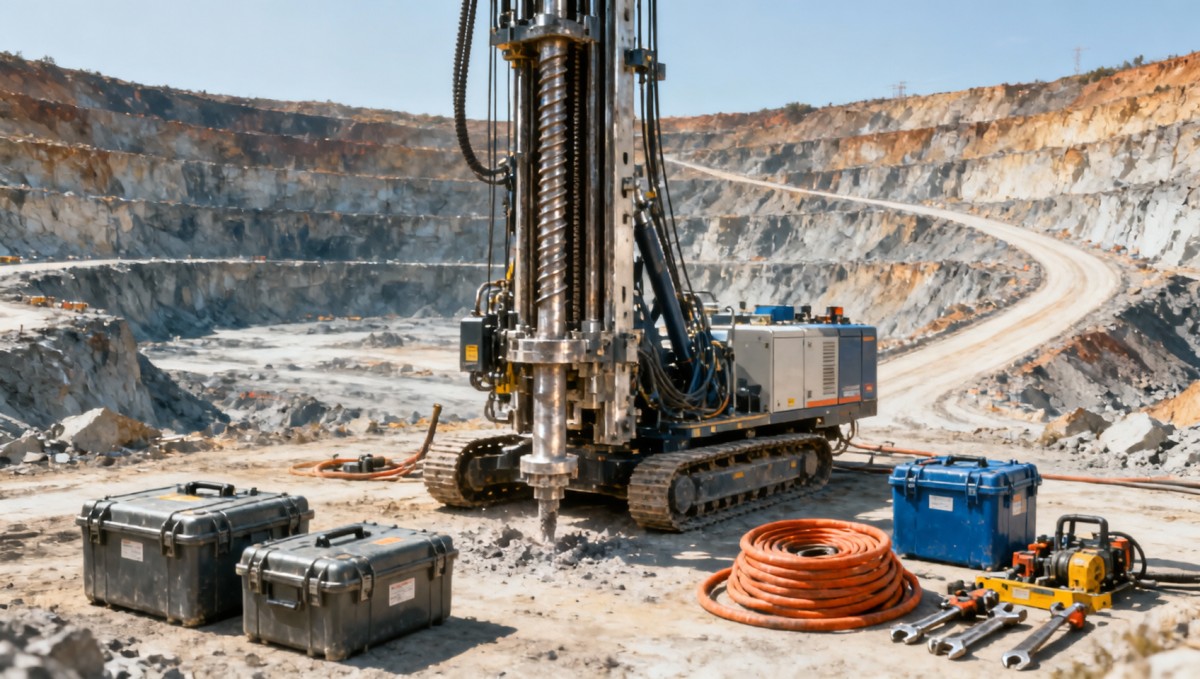
The core search intent behind this topic is practical: buyers and operators want to know whether a low upfront price on a blast hole drill is a real saving or a hidden risk. In most cases, the answer depends less on the machine’s quotation and more on what happens after delivery.
A blast hole drill works in a high-load, high-dust, production-critical environment. If the rig stops, drilling stops. If drilling stops, blasting schedules slip, loading fleets wait, and production costs spread across the entire mine plan. That is why a cheaper machine can quickly become more expensive than a higher-priced alternative.
For target readers such as equipment researchers and field users, the biggest issue is not only “What does it cost to buy?” but “What will it cost to keep running safely and consistently?” A low wholesale mining equipment offer may hide weak commissioning, poor spare-parts access, limited technician support, weak training, or unreliable component quality. Those gaps are where lifecycle cost rises.
What researchers and operators actually care about before choosing a supplier
For information researchers, the priority is supplier credibility and procurement risk. They need evidence that a drilling rig manufacturer can support the asset for years, not just ship it once. For operators and maintenance teams, the priority is uptime, safe operation, and fast problem resolution.
In real buying decisions, the most important questions are usually these:
- How fast can the supplier provide critical spare parts?
- Is there field service coverage in the mine’s country or region?
- How long does commissioning and operator training take?
- What is the drill’s actual performance in similar rock conditions?
- Are hydraulic, rotary, compressor, and control systems based on proven components?
- Can the supplier provide maintenance documentation, fault codes, and troubleshooting support?
- What is the expected availability over 12 to 24 months?
These questions matter more than a headline discount because blast hole drilling is production-linked equipment. A machine with weak support can create daily losses that exceed the original purchase saving.
Where low-price offers usually hide service gaps
Not every competitively priced machine is a poor choice. However, buyers should be cautious when a quotation is significantly below market without a clear technical or supply-chain reason. Common hidden gaps include:
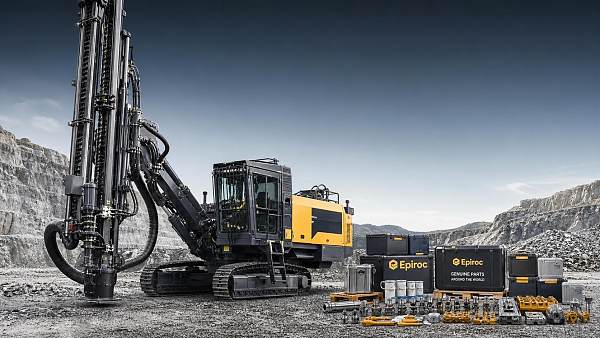
- Limited spare-parts inventory: The supplier may not stock wear parts, seals, hoses, rotary-head parts, or electronic modules locally.
- Slow field response: No regional service team means longer waiting times for breakdown support.
- Weak commissioning support: Installation, calibration, and startup may be left largely to the buyer.
- Insufficient operator training: Poor training increases misuse, drilling deviation, safety issues, and premature wear.
- Unclear warranty process: Warranty may exist on paper but be difficult to claim in practice.
- Non-standard component sourcing: Replacement parts may require long lead times or lack interchangeability.
- Minimal technical documentation: Incomplete manuals and diagrams slow maintenance and troubleshooting.
These are not small issues. In mining, support quality affects penetration rate, fuel efficiency, consumable usage, shift productivity, and safety outcomes.
How service gaps affect uptime, safety, and mine economics
Service gaps usually appear first as minor friction, then become major cost drivers. A delayed filter kit, unavailable sensor, or missing software support may seem manageable at first. But when several small delays combine, the result is lower equipment availability and unstable production planning.
From an operations perspective, the impact can include:
- Higher unplanned downtime
- More drilling interruptions and delayed blasting windows
- Increased overtime for maintenance crews
- More unsafe workarounds in the field
- Higher cost per drilled meter
- Reduced confidence in fleet planning
Safety is also a major concern. Poor service support can push teams to keep operating machines with unresolved faults, temporary repairs, or worn components. On heavy drilling equipment, that can increase risk around hydraulics, high-pressure air systems, mast movement, and hole alignment performance.
For procurement teams comparing a mining excavator OEM, roof bolter supplier, or blast hole drill supplier, this lesson is consistent across equipment categories: unsupported machines carry hidden commercial and operational risk.
How to evaluate a drilling rig manufacturer beyond the quotation
To make a better decision, buyers need a structured evaluation model. Price should be one factor, not the whole decision. A useful supplier review should cover five areas.
1. Technical fit for the job
Check whether the drill is genuinely matched to bench height, hole diameter range, rock hardness, altitude, dust load, and utilization target. A low-cost machine that is undersized or poorly configured will underperform even with decent support.
2. Service network strength
Ask where service engineers are located, how many are available, and what response times are contractually offered. “Remote support available” is not the same as “technician on site within 24 to 48 hours.”
3. Spare-parts readiness
Request a recommended critical-spares list, lead times, regional warehouse information, and fill-rate data. If the supplier cannot clearly answer, that is a warning sign.
4. Commissioning and training quality
Ask for a defined startup plan, training scope, operator certification support, and maintenance handover process. Proper onboarding often determines first-year reliability.
5. Proven field performance
Seek references from comparable mines. Ideal reference points include rock type, altitude, climate, drilling pattern, and annual operating hours. Marketing claims are less useful than verified fleet performance.
A practical checklist for comparing wholesale mining equipment suppliers
If you are screening suppliers, use a simple decision checklist before focusing on price:
- Does the supplier provide machine population data in your region?
- Can they show uptime records or case studies from similar applications?
- Do they have local or regional parts warehousing?
- Are key components sourced from recognized industrial brands?
- Is there a written SLA for service response and parts supply?
- What training is included for operators and maintainers?
- How are warranty claims handled, and who approves them?
- What digital diagnostics or remote monitoring tools are available?
- Can they support the machine for five to ten years?
- What is the estimated cost per operating hour, not just purchase price?
This approach helps procurement researchers build a stronger shortlist and helps site teams avoid equipment that becomes difficult to maintain after arrival.
When a low-price offer can still be a good decision
A lower-priced blast hole drill is not automatically a poor investment. It can be a good decision if the supplier has a strong service structure, proven components, realistic delivery commitments, and transparent lifecycle support. In some cases, a manufacturer may offer aggressive pricing due to market entry strategy, factory scale, favorable component sourcing, or lower distribution overhead.
The key is verification. If a supplier can demonstrate strong after-sales capability, available parts, application success, and responsive technical support, then a competitive price may represent real value rather than hidden compromise.
That is why experienced buyers compare not only machine specifications but also operational support maturity. A supplier’s ability to keep the drill turning is often more valuable than a discount on day one.
Conclusion: price matters, but support determines value
Blast hole drill wholesale prices can be misleading when they are evaluated in isolation. For researchers and operators, the best buying decision usually comes from balancing capital cost with service coverage, parts availability, field response, training quality, and real-world reliability.
When comparing a drilling rig manufacturer, mining excavator OEM, roof bolter supplier, or broader wholesale mining equipment source, the smartest question is not “Who is cheapest?” but “Who can support production with the least risk over the life of the machine?”
In mining, uptime is value. A lower quote without dependable support is often not a saving at all. Buyers who assess total lifecycle performance, not just purchase price, are far more likely to secure safe, stable, and cost-effective drilling capacity.
Recommended News
 Aug 02, 2026How to Evaluate a Crawler Piling Rig Manufacturer for Foundation ProjectsCrawler piling rig manufacturer selection can make or break foundation projects. Learn how to assess quality, compliance, support, and lifecycle value before you buy.
 Jul 08, 2026What Drives Drilling Penetration Rate in Hard Rock MiningDrilling penetration rate mining in hard rock depends on geology, bit design, energy transfer, flushing, and operator control. Discover what really improves meters, cost, and drilling performance.
 Jun 29, 2026Crawler Drilling Rig Manufacturer Checklist for Reliability and Parts SupportCrawler drilling rig manufacturer checklist covering reliability, parts support, service depth, and lifecycle risk—compare suppliers smarter and protect uptime.
 May 31, 2026Masonry Drill Bits for Hard Rock: Selection Mistakes to Avoidmasonrydrillbits for hard rock: avoid costly selection mistakes, compare carbide quality, shank fit, tip design, and lifecycle value before bulk buying.