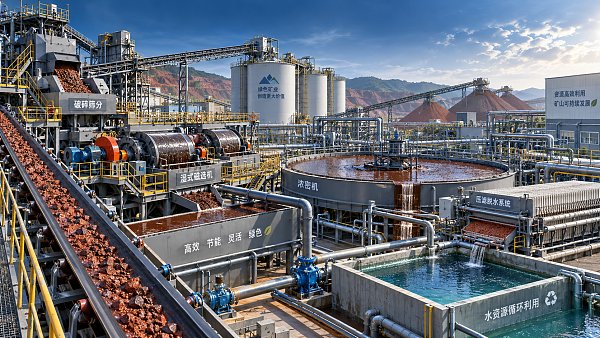
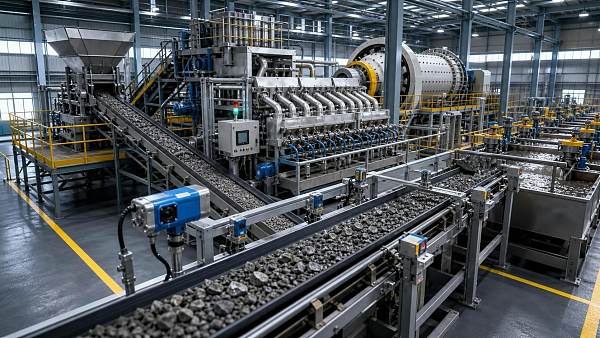
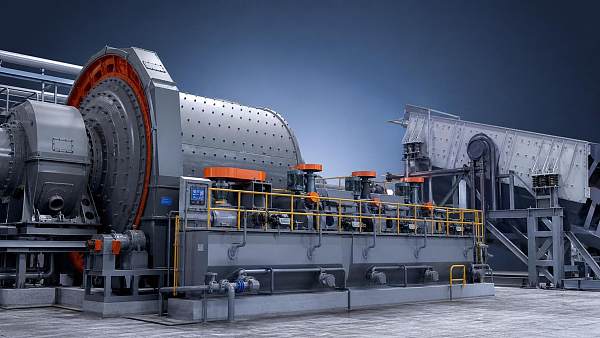
Modular Processing Plant Trends: Faster Builds, Lower CAPEX?
As mining projects face tighter budgets, longer permitting cycles, and pressure to accelerate production, modular processing plant trends are moving to the center of procurement strategy. For buyers comparing speed, risk, and total project value, understanding whether modular builds can truly shorten schedules and lower CAPEX is now essential before committing to new mineral processing investments.
Why are modular processing plant trends gaining ground in mining procurement?
The strongest driver behind modular processing plant trends is not fashion. It is project pressure. Ore bodies are often remote, labor is expensive, construction windows are shorter, and financing committees demand tighter capital discipline.
For procurement teams, a modular approach can reduce site labor exposure, simplify package control, and shift a larger share of fabrication into workshop conditions. That matters when weather, logistics bottlenecks, and contractor shortages threaten schedule certainty.
At the same time, modularization is no universal shortcut. Faster delivery depends on engineering maturity, transport constraints, utility interfaces, and commissioning planning. Lower CAPEX is also conditional, especially when oversize transport or repeated module lifting is required.
- Earlier off-site fabrication can overlap with civil works and permitting milestones, improving schedule compression.
- Workshop assembly may improve weld quality, dimensional control, and pre-commissioning readiness compared with full stick-build execution.
- Standardized modules can support phased expansion, useful when demand forecasts or ore reserve confidence remain uncertain.
- However, transport envelopes, cranage plans, and interface management can offset headline savings if not reviewed at procurement stage.
What procurement teams are really buying
In practical terms, buyers are not only buying steel, tanks, crushers, mills, pumps, or switchrooms. They are buying execution certainty. That includes the confidence that the plant can be fabricated, shipped, installed, and ramped up with controlled risk.
This is where G-MRH adds value. Its benchmarking approach helps procurement directors compare equipment reliability, lifecycle cost, ESG implications, and standards alignment across mining, mineral processing, material handling, and heavy industrial supply chains.
Do modular builds really reduce schedule and CAPEX?
The answer is often yes for schedule, sometimes yes for CAPEX, and almost always yes for certain categories of project risk. Buyers should separate these benefits instead of assuming they arrive together.
The table below summarizes how modular processing plant trends compare with conventional stick-built plants in procurement decision terms.
This comparison shows why modular processing plant trends are especially attractive for remote projects, brownfield debottlenecking, and phased developments. But the economics are project-specific. CAPEX should be reviewed as installed cost, not purchase price alone.
Where savings usually come from
Savings usually come from reduced field labor, fewer temporary facilities, shorter camp duration, tighter construction sequencing, and earlier revenue generation. In high-altitude, desert, Arctic, or politically complex regions, those advantages can be substantial.
Where extra costs often appear
Extra costs often appear in structural reinforcement for transport, module splitting and reconnection, abnormal road permits, heavy-lift logistics, and duplicated instrumentation terminations. These items are frequently underestimated during early procurement screening.
Which applications benefit most from modular processing plant trends?
Not every processing flow sheet suits the same degree of modularization. Procurement teams should match the concept to ore type, plant scale, location, and planned expansion path rather than assuming one model fits all.
The application matrix below helps buyers identify where modular processing plant trends usually deliver the strongest value.
This matrix also explains why interest in modular processing plant trends is rising across lithium, copper, rare earths, iron ore beneficiation, and selective coal upgrade projects. The business case strengthens when schedule slippage carries a high opportunity cost.
Typical plant areas that modularize well
- Crushing and screening packages with integrated structural steel, chutes, and dust suppression interfaces.
- Reagent handling skids, pump stations, MCC or E-house units, and water treatment packages.
- Dense media, flotation, filtration, and tailings support systems where equipment arrangement can be standardized.
- Containerized control rooms and digital monitoring units aligned with green mining and digital twin strategies.
What should buyers evaluate before selecting a modular plant package?
A disciplined procurement review should start well before vendor comparison. Many modular projects fail to meet expectations because the owner team approves the concept before validating interfaces, logistics, and operating philosophy.
Core procurement checklist
- Confirm design basis: throughput, ore variability, water balance, recovery target, maintenance access, and expansion philosophy.
- Review transport envelope: road, rail, port, bridge, axle load, convoy restrictions, and border clearance requirements.
- Check module breakpoints: decide what is pre-assembled, what is shipped loose, and where mechanical and electrical reconnections occur.
- Define standards alignment: ISO references, AS/NZS applicability where relevant, electrical codes, guarding, dust control, and mine safety obligations.
- Validate commissioning scope: FAT, loop checks, dry commissioning, wet commissioning, operator training, and spare parts coverage.
Buyers also need clean commercial definitions. A supplier quotation that appears lower may exclude foundations, cranage, site installation supervision, control system integration, or performance testing support. That distorts the CAPEX picture.
In some sourcing workflows, generic placeholders may appear in package documentation such as 无. Procurement teams should ensure such entries are clarified before bid comparison so technical and commercial reviews stay aligned.
How should CAPEX, OPEX, and lifecycle risk be compared?
Procurement decisions improve when modular processing plant trends are measured through total installed cost and lifecycle value, not just fabrication price. A lower upfront quote can still create higher operating cost, harder maintenance access, or longer commissioning delays.
The following cost framework can be used during bid normalization.
This framework helps procurement teams avoid a common error: comparing supplier scope A with supplier scope B on an uneven basis. G-MRH’s data-driven benchmarking is especially useful here because lifecycle cost optimization depends on clear scope mapping and realistic duty-cycle expectations.
A practical decision rule
If schedule certainty, remote labor cost, and safety exposure are the dominant project risks, modularization often wins. If the site is accessible, labor is available, and the process layout is highly customized, a conventional or hybrid approach may be more economical.
What standards, compliance, and ESG issues matter most?
Modular processing plant trends are closely linked to compliance because off-site fabrication does not remove owner obligations. Buyers still need assurance that equipment design, guarding, electrical integration, emissions controls, and structural details align with project jurisdiction and mine safety rules.
- Mechanical and structural packages should reference applicable ISO practices or equivalent recognized engineering standards.
- Electrical systems should be reviewed against project-specific codes, hazardous area requirements where relevant, and utility interface conditions.
- Dust suppression, noise control, water management, and waste handling should be integrated from the design stage, not added late.
- ESG review should include embodied logistics impact, energy efficiency, maintainability, and alignment with decarbonization plans.
For institutional buyers, compliance is now inseparable from commercial approval. Financing committees, EPC partners, and board-level risk teams increasingly ask whether plant packages support safer construction methods, predictable maintenance, and transparent documentation.
Common misconceptions about modular processing plant trends
“Modular always means lower CAPEX”
Not always. It may lower installed cost in remote or labor-constrained locations, but transport and lifting complexity can erode savings. The right question is whether the full project economics improve.
“A modular plant is less robust”
Robustness depends on engineering quality, duty specification, and maintainability. A poorly designed site-built plant can be less reliable than a well-engineered modular package assembled under controlled workshop conditions.
“Standardized modules cannot handle variable ore”
This is only partly true. Highly variable metallurgy may need tailored circuits, but many support systems and several processing areas can still be modularized while preserving process flexibility.
“Lead time depends only on fabrication speed”
Lead time also depends on engineering freeze dates, permits, heavy-haul planning, customs clearance, and site readiness. Procurement teams should insist on integrated schedule logic, not isolated supplier promises.
FAQ: what do buyers most often ask?
How should we compare modular and conventional bids fairly?
Use a normalized scope sheet covering fabrication, transport, foundations, site assembly, electrical terminations, controls integration, FAT, SAT, commissioning support, spares, and operator training. Without this, price comparison is misleading.
Which projects are least suited to modularization?
Projects with severe transport limitations, highly irregular layouts, very large single-train process equipment, or uncertain design basis may struggle. In such cases, hybrid modularization often works better than a fully modular strategy.
What lead-time assumptions are realistic?
There is no universal number. Realistic planning depends on engineering maturity, long-lead equipment, fabrication slot availability, transport corridor approvals, and site readiness. Buyers should request milestone logic rather than a single headline delivery date.
Can modular processing plant trends support future decarbonization goals?
Yes, especially when modular power distribution, water systems, electrified auxiliaries, and digital monitoring are specified from the start. The benefit comes from easier staged upgrades, better data capture, and lower disruption during retrofits.
Why choose us for modular processing plant evaluation and sourcing support?
For procurement teams, the challenge is rarely lack of supplier offers. The real challenge is deciding which offer delivers the right mix of schedule confidence, cost discipline, standards compliance, and operational durability. That is exactly where G-MRH is positioned to assist.
Our value lies in independent industrial intelligence across mining, mineral processing, bulk handling, heavy equipment, and green mining transition. We help buyers move beyond brochure claims by benchmarking execution risk, lifecycle cost factors, compliance alignment, and practical fit for duty.
- Parameter confirmation for plant scope, throughput assumptions, and module boundaries before RFQ release.
- Bid comparison support for modular versus conventional options, including hidden cost and interface review.
- Delivery cycle assessment covering long-lead items, logistics exposure, and site installation readiness.
- Customized sourcing guidance for standards, safety expectations, ESG alignment, and lifecycle performance priorities.
- Commercial discussion support for quotation scope, spare parts strategy, commissioning responsibility, and technical clarifications.
If your team is reviewing modular processing plant trends for a new mine, an expansion, or a fast-track critical minerals project, contact us with your process basis, location constraints, expected schedule, and compliance requirements. We can help structure the evaluation, identify risk gaps early, and support a more defensible procurement decision.
Recommended News
 Oct 03, 2026Global iron ore processing trends reshaping plant design decisionsGlobal iron ore processing trends are reshaping resilient plant design—explore smarter strategies for ore variability, energy, water, tailings, and product flexibility.
 Sep 06, 2026What Are the Latest Automation Trends in Mineral Processing Equipment?What are the latest trends in mineral processing equipment automation? Explore AI control, ore sorting, digital twins, predictive maintenance, and energy optimization for smarter plants.
 Jul 22, 2026How to Evaluate a Mineral Processing Equipment ManufacturerMineral processing equipment manufacturer selection affects recovery, uptime, and cost. Learn how to assess technical fit, reliability, service, and lifecycle value before you buy.
 Jul 21, 2026Common Inspection Points When Sourcing a Used PE Pipe Extrusion LineUsed PE pipe extrusion line buyers: learn the key inspection points for mechanics, controls, tooling, and safety to avoid hidden costs and source with confidence.