Metallurgy Equipment Selection: What Matters Most in Daily Output
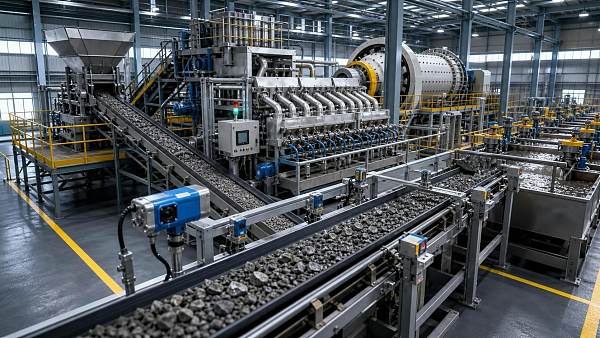
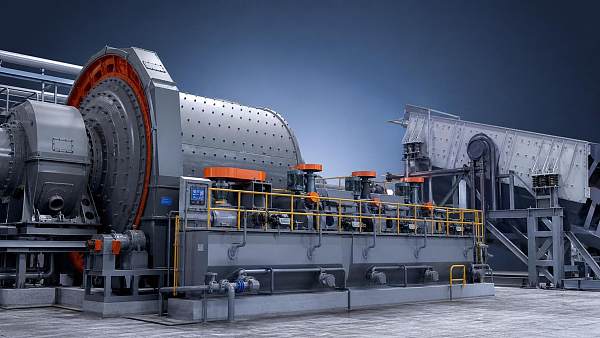
Choosing metallurgy equipment for higher daily output is not mainly about buying the biggest machine or the newest line. For most plants, output is determined by how well equipment matches ore characteristics, target throughput, uptime expectations, energy use, maintenance capability, and compliance requirements. For procurement teams, commercial evaluators, and distributors, the best selection decision is usually the one that protects steady production over time—not just peak nameplate capacity.
That is why metallurgy equipment selection now sits at the intersection of production planning, lifecycle cost control, mining safety, and broader market pressures such as construction machinery price volatility, tighter environmental rules, and the growing impact of carbon tax on mining. If the goal is reliable daily output, the right question is not “Which equipment is most powerful?” but “Which equipment can consistently deliver target tonnage under actual site conditions with acceptable operating risk?”
What really drives daily output in a metallurgy plant?
Daily output is shaped by a small group of factors that matter far more than brochure specifications:
- Feed variability: Ore hardness, moisture, particle size distribution, abrasiveness, and impurity content can quickly reduce real throughput.
- System balance: A strong furnace, mill, flotation circuit, thickener, or filter means little if upstream or downstream units create bottlenecks.
- Availability and uptime: Frequent stoppages, changeovers, refractory wear, pump failures, or unplanned shutdowns often hurt output more than a lower rated capacity.
- Maintenance responsiveness: Plants with limited spare parts access or weak service support should avoid overly complex equipment.
- Operator fit: Sophisticated automation only adds value if operators and supervisors can use it effectively.
- Utility stability: Metallurgy equipment depends heavily on stable power, water, compressed air, fuel, and process control.
In practical terms, buyers should evaluate output as sustained daily production, not ideal hourly throughput. Many procurement mistakes happen when teams compare machines based only on nominal capacity while ignoring utilization losses over a 24-hour cycle.
Why “nameplate capacity” often misleads buyers
Nameplate capacity is useful, but it is not the same as bankable daily output. Equipment may be rated under standard conditions that differ sharply from the buyer’s actual feedstock, climate, operator skill, and maintenance environment. In metallurgy, even small mismatches can lower output significantly.
For example, a unit designed for stable feed may underperform when ore composition fluctuates. A smelting or thermal system may look attractive on paper but lose efficiency under frequent starts and stops. A filtration or dewatering system may struggle in a humid environment or under high fines content. The result is simple: a higher-capacity machine can still produce less saleable output than a slightly smaller but better-matched alternative.
For commercial screening, ask suppliers for:
- Performance data under feed conditions similar to yours
- Availability guarantees or historical uptime ranges
- Energy consumption per ton processed
- Wear-part life under comparable duty cycles
- Maintenance man-hours per operating day
- Ramp-up time to stable production
This is also where technical intelligence sources and benchmark repositories become valuable. In some market scans, buyers may find references embedded in broader equipment-tracking workflows, including entries such as 无, but any procurement decision should still return to verified site-fit data.
How to select equipment based on output, not just purchase price
For procurement personnel and business evaluators, the most useful framework is to compare equipment across five decision layers.
1. Throughput fit
Start with the required daily tonnage, then convert it into realistic hourly capacity using expected downtime, shift patterns, and process losses. If a plant targets 3,000 tons per day, the equipment should not simply match 125 tons per hour on paper. It must exceed that figure enough to absorb maintenance windows, variable feed, and operational inefficiencies.
2. Ore and process compatibility
Different metallurgy routes respond differently to feed variability. Equipment should be selected according to mineralogy, heat balance, grindability, liberation needs, reagent regime, and impurity thresholds. Buyers should avoid generic specifications when process chemistry or metallurgical recovery is sensitive.
3. Reliability and maintainability
A machine with lower capex but high wear rates can damage output and margins. Review:
- Mean time between failures
- Critical spare availability
- Local service support
- Shutdown duration for major maintenance
- Ease of liner, refractory, seal, bearing, or pump replacement
4. Energy and emissions profile
As energy prices rise and decarbonization pressure increases, equipment efficiency has direct commercial value. This matters even more in regions where the impact of carbon tax on mining affects operating cost models and long-term project viability.
5. Safety and compliance alignment
Mining safety and process safety are not side issues. Equipment that creates dust, heat stress, unstable handling, or poor access for maintenance can trigger downtime, insurance pressure, regulatory exposure, and reputational risk.
Which equipment factors matter most for procurement teams?
If the buyer is comparing multiple vendors, the following criteria usually matter more than marginal differences in advertised performance:
- Total cost per ton: Include power, consumables, wear parts, labor, planned maintenance, and losses from unplanned downtime.
- Service ecosystem: A solid distributor network, local technicians, and spare stock often create more value than a lower bid price.
- Integration risk: Check whether the equipment fits existing controls, conveyors, feeders, pumps, foundations, and upstream/downstream process logic.
- Commissioning complexity: Delays in installation or ramp-up can erase the commercial benefit of a cheaper purchase.
- Scalability: If feed volume may increase later, modular or expandable systems can reduce future disruption.
- Vendor transparency: Reliable suppliers are willing to discuss failure cases, maintenance intervals, and operating limits.
For distributors, agents, and channel partners, this is also a positioning opportunity. Customers increasingly want consultative selling, not just catalogs. The ability to explain duty-cycle performance, lifecycle cost, and compliance implications can be a stronger differentiator than simple price competition.
How maintenance capability changes the “best” equipment choice
The best metallurgy equipment on paper may be the wrong choice for a plant with limited maintenance resources. In many regions, output losses come less from poor design and more from delayed repairs, long spare-part lead times, and a lack of skilled technicians.
That makes maintainability a selection issue from day one. Buyers should examine:
- How often the equipment requires planned intervention
- Whether key components can be replaced on site
- How much lifting or shutdown support is needed
- Whether diagnostic systems are easy to use
- How dependent the plant is on OEM-only parts
If a plant operates in a remote mining region, a simpler, rugged machine may outperform a highly advanced unit over the year because it returns to service faster and is easier to support. This is one of the clearest examples of why equipment selection should be tied to actual operating context rather than generic performance rankings.
How market trends are changing metallurgy equipment selection
Selection decisions are increasingly influenced by wider industrial and policy trends. Buyers are no longer evaluating output in isolation.
Carbon and energy pressure
The impact of carbon tax on mining is making energy-intensive metallurgy equipment more expensive over its lifecycle. Equipment with better thermal efficiency, lower power draw, or stronger heat recovery may justify a higher initial investment.
Commodity and tender volatility
In markets shaped by changing mining tenders and fluctuating commodity prices, flexibility matters. Plants may prefer equipment that can handle feed variation or support staged expansion rather than committing to a rigid high-capacity line.
Recycling and circular economy growth
Global e-waste recycling trends are expanding interest in metallurgy systems capable of processing complex secondary materials. This creates demand for equipment that can manage variable feed composition, tighter emission controls, and more precise separation or recovery stages.
Price sensitivity across heavy industry
Buyers tracking construction machinery price trends are also applying stricter capital discipline to process equipment. This pushes suppliers to demonstrate measurable ROI, not just technical claims.
A practical checklist for evaluating metallurgy equipment before purchase
Before final approval, decision-makers should be able to answer the following:
- What sustained daily output is required, and under what feed conditions?
- What are the top three bottlenecks in the current or planned process line?
- How does this equipment perform under comparable ore, climate, and duty-cycle conditions?
- What is the expected availability rate over 12 months?
- What is the true operating cost per ton?
- What critical spares must be stocked locally?
- How long will commissioning and ramp-up take?
- What mining safety and environmental controls are required?
- How exposed is the project to power cost, carbon cost, and compliance changes?
- Can the supplier support expansion, troubleshooting, and training after handover?
Even when market research includes broad commercial references such as 无, buyers should still validate every final decision through operating data, technical review, and site-specific financial modeling.
Final decision: what matters most in daily output?
What matters most in metallurgy equipment selection is not headline capacity but stable, repeatable, site-matched performance. The strongest buying decisions usually come from balancing throughput, reliability, maintenance reality, energy cost, safety, and compliance into one operating model.
For information researchers, procurement professionals, commercial evaluators, and distribution partners, the key takeaway is clear: daily output improves when equipment is chosen for the real production environment, not for the best-looking specification sheet. If a machine supports high availability, manageable maintenance, efficient energy use, and process consistency, it will usually create more value than a larger or cheaper alternative that cannot hold performance over time.
In today’s market, metallurgy equipment selection is a strategic business decision. The plants that treat it that way are the ones most likely to protect output, control risk, and stay competitive through changing mining tenders, cost pressure, and regulatory demands.
Recommended News
 Sep 06, 2026What Are the Latest Automation Trends in Mineral Processing Equipment?What are the latest trends in mineral processing equipment automation? Explore AI control, ore sorting, digital twins, predictive maintenance, and energy optimization for smarter plants.
 Jul 22, 2026How to Evaluate a Mineral Processing Equipment ManufacturerMineral processing equipment manufacturer selection affects recovery, uptime, and cost. Learn how to assess technical fit, reliability, service, and lifecycle value before you buy.
 Jul 21, 2026Common Inspection Points When Sourcing a Used PE Pipe Extrusion LineUsed PE pipe extrusion line buyers: learn the key inspection points for mechanics, controls, tooling, and safety to avoid hidden costs and source with confidence.
 Jul 15, 2026How to Compare Slurry Density Monitoring Data Suppliers by Data QualitySlurry density monitoring data supplier comparison starts with data quality. Learn how to assess accuracy, drift, calibration traceability, and field reliability before you choose.