Industrial Mining Equipment Selection Gets Harder in Mixed Ore
Selecting industrial mining equipment is getting harder because mixed ore no longer behaves like a stable feed. In practice, that means crushers, mills, screens, pumps, flotation circuits, wear parts, haulage systems, and even control logic can all perform differently as ore hardness, moisture, abrasiveness, density, and mineral association shift across the pit or underground headings. For researchers and operators, the core issue is not simply “which machine is best,” but “which equipment set remains reliable, efficient, compliant, and economically defensible when ore variability increases.” The most useful answer is usually a structured selection process: characterize ore variability early, connect that variability to duty-cycle demands, test equipment against realistic operating windows, and use benchmarking plus digital twins to reduce failure risk before capital is committed.
For target readers such as information researchers and equipment users/operators, the real concern is straightforward: how to avoid choosing equipment that looks strong on paper but loses throughput, recovery, reliability, or safety margin once mixed ore enters the system. The most valuable content therefore focuses on decision criteria, operating trade-offs, common failure points, lifecycle cost implications, and practical ways to compare options under mining industry standards. Broad definitions of mining equipment matter less than guidance that helps readers judge suitability under unstable ore conditions.
Why mixed ore makes mining equipment selection more difficult
Mixed ore bodies create uncertainty across the entire mining and processing chain. A deposit may contain changing blends of soft and hard rock, oxide and sulfide zones, clay-rich pockets, wet and dry material, or variable concentrations of contaminants that affect downstream metallurgy. When the feed is inconsistent, equipment sizing based on average ore characteristics becomes risky.
For example, a primary crusher chosen for nominal throughput may struggle when a harder ore fraction dominates for several weeks. Grinding circuits may consume more power and still miss liberation targets when competency changes. Screens can blind with sticky fines. Pumps and pipelines can experience instability when slurry density fluctuates. Haul trucks and loading tools may see reduced cycle efficiency if blasted material fragmentation becomes less predictable. In mixed ore, equipment performance is defined less by peak brochure specifications and more by how well the machine handles variation.
This is why industrial mining equipment selection is becoming more complex. Buyers and operators are no longer evaluating isolated units. They are evaluating an interconnected system under variable material conditions, rising energy costs, tighter ESG scrutiny, and stronger expectations for equipment reliability.
What researchers and operators are really trying to find out
When users search for guidance on equipment selection in mixed ore, their intent usually falls into a few practical questions:
- Which equipment types are most sensitive to ore variability?
- How should ore characteristics be translated into selection criteria?
- How can teams compare vendors beyond nameplate capacity?
- What reliability and maintenance data matter most?
- How can digital twins mining tools improve equipment decisions?
- How do compliance, decarbonization, and lifecycle cost affect the final choice?
These questions reflect a need for operationally useful benchmarking, not generic product overviews. Information researchers want a defensible framework for procurement and technical comparison. Operators want equipment that will not create avoidable downtime, unstable performance, or unsafe conditions once ore blending becomes difficult to control.
Start with ore variability, not equipment catalogs
The most common selection mistake is starting with available machines instead of the ore body. In mixed ore environments, the first task is to build a variability model that captures the full operating envelope, not just the average case. That should include:
- Hardness range and competency variation
- Abrasiveness and expected wear behavior
- Moisture content and stickiness
- Bulk density and fragmentation profile
- Mineralogy, liberation response, and metallurgical recovery behavior
- Presence of clays, fines, deleterious elements, or oversize material
Once these variables are understood, teams can map them against process bottlenecks. For instance, high clay content may matter more to screening and conveying than to drilling. Sudden hardness shifts may drive mill power constraints before they affect loading. Sulfide-oxide transitions may change flotation reagent demand and residence time requirements more than front-end mining productivity. Equipment selection becomes stronger when each ore characteristic is tied to a measurable operating consequence.
Which equipment categories are most exposed to mixed ore risk?
Not all assets are equally vulnerable. In most operations, the highest sensitivity appears in the following categories:
Crushing and screening equipment
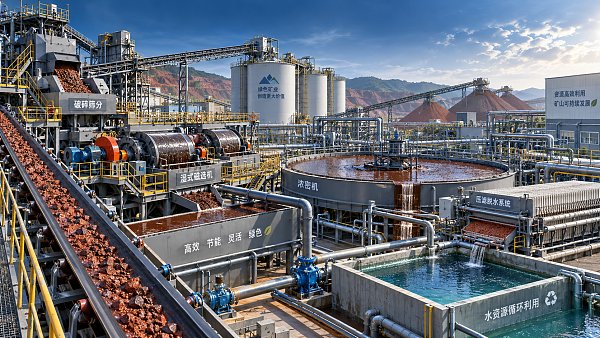
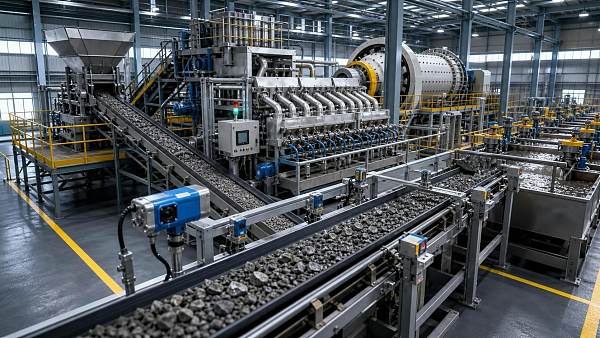
These systems are highly exposed to changes in feed size distribution, hardness, moisture, and fines content. A crusher that performs efficiently on consistent rock can see liner wear accelerate and choke risk increase when mixed ore alters fragmentation behavior. Screens may lose efficiency rapidly with sticky or clay-rich material.
Grinding and classification circuits
Mills, cyclones, and classifiers are often where ore variability becomes most expensive. Changes in competency can affect throughput, particle size control, energy intensity, and downstream recovery. If the circuit was selected on limited sample data, mixed ore can quickly expose underdesign.
Flotation, separation, and dewatering systems
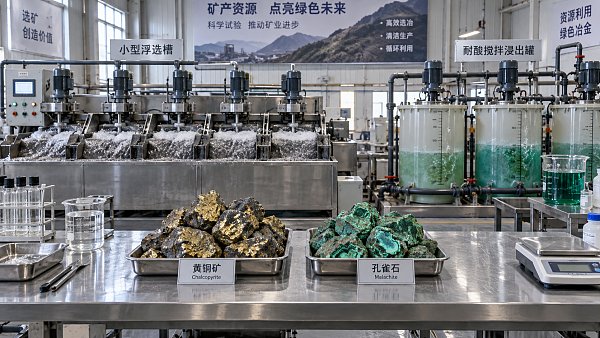
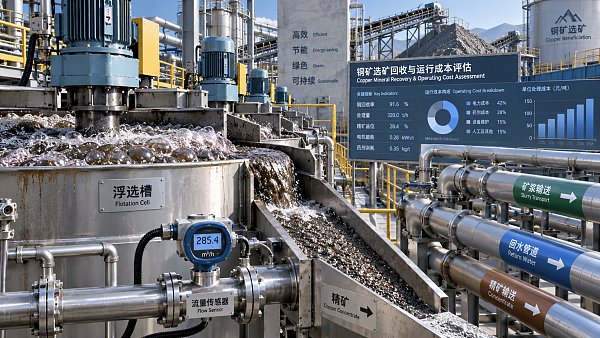
Metallurgy equipment selection becomes harder when mineral associations change across the ore body. Mixed ore can alter reagent consumption, froth stability, separation efficiency, concentrate quality, and tailings handling performance.
Wear components and materials handling systems
Conveyors, chutes, feeders, slurry pumps, and pipe systems are heavily affected by abrasiveness, moisture, and density shifts. These are often underestimated because the main capital equipment gets more attention during procurement.
Loading and haulage fleets
Mining fleet efficiency can fall when fragmentation consistency deteriorates, diggability changes, or haul road conditions worsen due to material behavior. Mixed ore can indirectly increase fuel use, tire wear, and cycle-time variation.
How to compare equipment when brochure data is not enough
In mixed ore conditions, standard vendor claims such as throughput, installed power, or maximum bucket capacity are only a starting point. Better selection decisions use a layered comparison model.
1. Check operating window, not single-point performance
Ask how the equipment performs across a range of feed hardness, moisture, density, and particle size conditions. A machine with slightly lower peak capacity may be the better asset if it remains stable across wider ore variation.
2. Focus on reliability under duty-cycle stress
Equipment reliability matters more than headline output if ore variability causes repeated stoppages, overloads, or excessive wear. Mean time between failures, liner life variation, maintenance access, and restart behavior after upset conditions are highly relevant.
3. Review maintainability from the operator perspective
Operators should assess how quickly the system can be inspected, cleaned, reset, or reconfigured. In mixed ore operations, small interventions happen often. Maintainability can materially affect availability.
4. Compare lifecycle cost, not only capex
A lower purchase price may be outweighed by higher energy draw, consumables use, wear-part spend, lost recovery, or labor burden. Mixed ore amplifies these hidden costs.
5. Evaluate control system adaptability
Automation and advanced process control can help stabilize performance when ore changes. Equipment that integrates well with plant control architecture may create more value than a mechanically similar alternative with weaker data visibility.
What mining benchmarking should include in mixed ore projects
Good mining benchmarking is not just a ranking of brands. It should help buyers and operators judge whether equipment will perform in their specific ore and operating context. Useful benchmarking criteria include:
- Throughput stability across ore types
- Specific energy consumption under variable feed conditions
- Wear rate and component replacement intervals
- Availability, utilization, and unplanned downtime patterns
- Recovery performance linked to ore domains
- Operator intervention frequency
- Safety performance and compliance alignment
- OEM support quality, spare parts lead time, and field service response
For information researchers, these metrics create a stronger foundation for procurement recommendations and technical due diligence. For operators, they reveal whether the equipment will be manageable in day-to-day conditions rather than only during acceptance testing.
Why equipment reliability data becomes more important than average capacity
Mixed ore punishes assets that are optimized too narrowly. Reliability data is therefore one of the most valuable inputs in industrial mining equipment selection. A crusher with high nameplate output but unstable operation under sticky feed may create more production loss than a slightly smaller machine with better uptime. A mill that runs close to its limit under hard ore may raise recovery risk across the whole plant. A pump selected without enough variability margin may fail repeatedly when slurry conditions shift.
Teams should pay close attention to reliability records tied to similar deposits, similar duty cycles, and comparable environmental conditions. Generic fleet-wide statistics are less useful than evidence from operations with variable ore blends, remote logistics, or maintenance constraints. Practical questions include:
- How does failure frequency change as ore conditions move away from design assumptions?
- Which components fail first under mixed ore stress?
- Can failures be predicted through condition monitoring?
- How much production is lost per failure event?
- Are critical spares regionally available?
How digital twins mining tools improve equipment selection decisions
Digital twins mining applications are especially useful where mixed ore creates uncertainty that static engineering studies cannot fully capture. A digital twin can combine geological models, process data, equipment constraints, and operating logic to simulate how systems respond under different ore blends and production scenarios.
That helps teams in several ways:
- Test equipment behavior across realistic ore variability ranges before purchase
- Identify process bottlenecks under changing feed conditions
- Estimate energy demand, wear, and throughput loss under specific scenarios
- Improve ore blending and dispatch decisions
- Support maintenance planning through predictive insights
For operators, this is not just a high-level digital concept. It can directly support more stable settings, fewer upset events, and faster identification of performance drift. For procurement and technical evaluation teams, digital twins provide a more defensible basis for choosing between equipment configurations.
How mining industry standards and compliance affect equipment choice
Selection decisions in mixed ore environments cannot be separated from mining industry standards. Equipment may face higher stress, more frequent interventions, and more variable operating modes, all of which increase the importance of compliance and engineering integrity.
Relevant standards and frameworks may include ISO requirements, regional safety regulations, electrical and machine guarding rules, emissions expectations, and site-specific mine safety acts. In practical terms, teams should check whether equipment:
- Maintains safe operation across variable loads and material conditions
- Supports traceable inspection and maintenance procedures
- Integrates with monitoring, alarms, and control interlocks
- Meets environmental and energy efficiency expectations
- Can be audited against internal ESG and risk-management criteria
This is increasingly important as mining decarbonization and regulatory scrutiny reshape procurement standards. Equipment that uses less energy, supports electrification, reduces rehandling, or enables tighter process control may have strategic value beyond immediate production output.
How commodity volatility changes the equipment decision
Mining commodities volatility adds another layer of complexity. When prices are strong, operations may prioritize throughput and rapid expansion. When prices weaken, resilience, maintenance cost, energy efficiency, and recovery optimization become more important. Mixed ore complicates both scenarios because it increases uncertainty in operating cost and output quality.
That means the best equipment is often not the option with the highest theoretical productivity, but the one that preserves margin across multiple market conditions. Flexible equipment configurations, modular upgrades, and systems that can accommodate ore variability without major redesign are often better aligned with long-term project risk management.
A practical selection framework for mixed ore operations
For readers who need a usable process, the following framework is often effective:
- Define ore variability: Build geometallurgical and geotechnical ranges, not just averages.
- Map critical impacts: Identify where variability affects throughput, wear, recovery, water balance, and safety.
- Set decision criteria: Include reliability, lifecycle cost, compliance, control flexibility, and support capability.
- Benchmark comparable operations: Use data from mines processing similar mixed ore profiles.
- Stress-test vendor proposals: Ask for performance evidence under variable feed conditions.
- Model scenarios: Use pilot work, simulation, or digital twins to compare options.
- Validate operability: Involve operators and maintainers early in the review.
- Plan for adaptation: Choose designs with enough flexibility for blending, control tuning, and future ore changes.
This approach helps reduce the gap between technical selection and real operating performance. It also supports clearer communication between engineering teams, procurement leaders, site operators, and executive decision-makers.
The key mistake to avoid
The biggest mistake in mixed ore projects is assuming average ore defines average equipment performance. It does not. In reality, short periods of difficult ore often determine downtime, wear cost, recovery loss, and operator workload. Equipment selection should therefore be based on variability tolerance, not just nominal design fit.
If readers remember one point, it should be this: mixed ore turns equipment choice into a system-level risk decision. The strongest selections come from combining ore knowledge, mining benchmarking, equipment reliability data, operator input, digital twins mining analysis, and compliance review into one integrated evaluation.
As mixed ore bodies become more common and project conditions grow more demanding, industrial mining equipment selection will keep getting harder—but also more data-driven. For researchers, the priority is to build evidence-based comparisons. For operators, the priority is to favor equipment that remains stable, maintainable, and safe when material conditions shift. The best decision is rarely the most aggressive specification on paper; it is the solution that protects performance, cost control, and operational confidence across the full reality of the ore body.
Recommended News
 Oct 22, 2026Selecting Metallurgy Equipment for Copper Ore: Flotation or Leaching?Choose metallurgy equipment for copper ore with confidence. Compare flotation and leaching, assess testwork and lifecycle costs, and discover how to reduce procurement risk.
 Oct 13, 2026Using mineral recovery rate data to estimate cost per tonne recoveredUse mineral recovery rate data cost analysis to calculate cost per tonne recovered, compare process upgrades, and uncover better investment decisions. Learn the practical framework.
 Oct 03, 2026Global iron ore processing trends reshaping plant design decisionsGlobal iron ore processing trends are reshaping resilient plant design—explore smarter strategies for ore variability, energy, water, tailings, and product flexibility.
 Sep 06, 2026What Are the Latest Automation Trends in Mineral Processing Equipment?What are the latest trends in mineral processing equipment automation? Explore AI control, ore sorting, digital twins, predictive maintenance, and energy optimization for smarter plants.