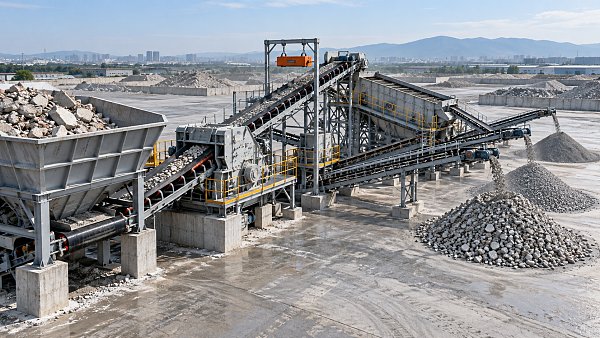
Abrasive ore can turn a crusher selected for nominal capacity into a source of excessive wear, unplanned downtime, and escalating operating costs throughout its service life.
For technical evaluators assessing industrial mining equipment, the challenge is matching crusher design, liner materials, and operating parameters to ore characteristics and required product specifications.
For abrasive ore, compression crushers usually provide the starting shortlist. Final selection requires representative ore testing, circuit analysis, and credible estimates of wear and availability.
This guide connects crusher suitability with feed variability, product quality, maintenance access, and lifecycle cost, helping evaluation teams challenge supplier claims and compare defensible alternatives.
What Ore Data Should Determine Your Crusher Shortlist?
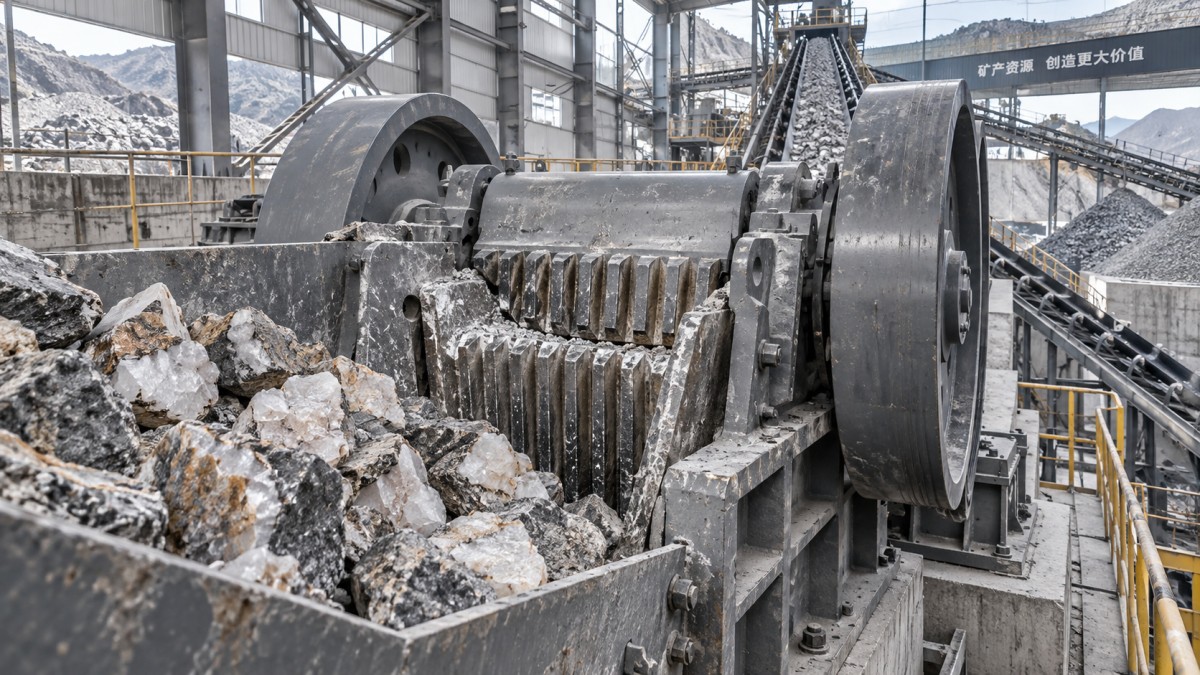
Begin with the orebody, because similar-looking rocks can behave differently during crushing. Mineral composition, texture, fracture patterns, and moisture affect both breakage and equipment wear.
Hardness and abrasiveness describe different problems. Hardness influences resistance to breakage, while abrasiveness indicates the potential to remove material from liners and other exposed components.
A high quartz content warrants investigation, but mineral percentages alone cannot predict liner life. Grain size, mineral liberation, and operating conditions also influence wear mechanisms.
Request representative samples across geological domains and expected mining phases. A composite sample can conceal harder or more abrasive zones that later constrain plant performance.
Useful characterization includes particle-size distribution, bulk density, moisture, clay content, unconfined compressive strength, and an abrasion test appropriate to the equipment and evaluation objective.
The Bond Abrasion Index supports comparative wear assessment, but it does not directly determine guaranteed liner life. Suppliers must explain their correlations and supporting operating experience.
Bond crushing work index testing can inform crushing energy assessment. Drop-weight testing provides additional breakage information, particularly when evaluating broader crushing and grinding circuit alternatives.
Document test methods, sample preparation, and variability alongside reported values. Results from different procedures should not be treated as interchangeable without a justified technical correlation.
The resulting design basis should describe typical feed and credible extremes. Crusher selection must accommodate difficult operating periods without excessive oversizing for normal production conditions.
Which Crusher Types Belong on an Abrasive-Ore Shortlist?
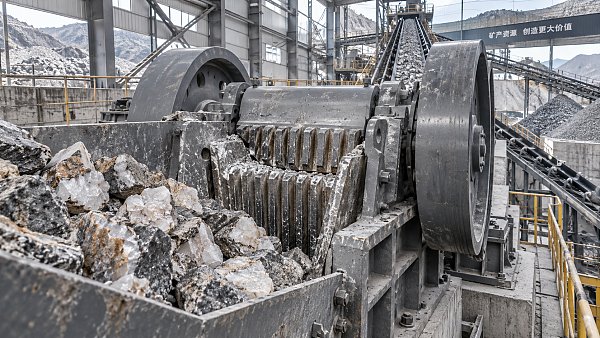
Jaw crushers commonly suit primary crushing where feed is coarse, duties are intermittent, or project scale favors a comparatively straightforward installation and manageable maintenance arrangements.
Their suitability depends on feed opening, rock strength, capacity, and discharge requirements. Abrasive feed still demands careful jaw-profile selection, wear monitoring, and reliable downstream handling.
Gyratory crushers are strong candidates for large, continuous primary duties. Their feed acceptance and throughput can justify greater installation complexity when production requirements support the investment.
Compare gyratory options using actual feed distributions and operating conditions. Excavation, structural requirements, lifting arrangements, and maintenance access can materially change the overall project economics.
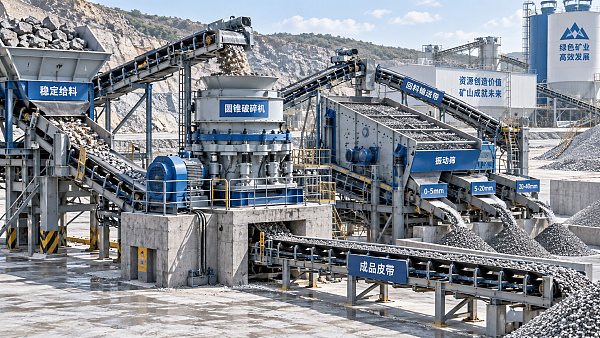
Cone crushers usually form the main shortlist for secondary and tertiary crushing of hard, abrasive rock, where controlled compression supports product sizing and staged reduction.
However, cone performance depends heavily on chamber selection, feed distribution, and operating controls. An unsuitable chamber can cause localized wear, unstable loading, and disappointing capacity.
Horizontal-shaft impact crushers often incur substantial wear when processing highly abrasive ore. Their fragmentation and shape benefits require a clear economic justification under these conditions.
Vertical-shaft impact crushers may suit specific shaping duties, including configurations using rock-on-rock action. Evaluate rotor wear, energy consumption, and saleable yield through relevant application testing.
No crusher family wins universally. Technical evaluators should shortlist machines by duty, then compare evidence for performance across the project's expected ore and operating envelope.
Can the Proposed Circuit Deliver Your Required Product?
A crusher operates within a circuit, so machine selection must begin with the required product size, acceptable oversize, downstream sensitivity, and sustained production target together.
Distinguish fresh feed from total crusher throughput. In closed circuits, recirculating material adds equipment load even when the plant's incoming tonnage remains unchanged during operation.
Ask suppliers to state capacity assumptions for feed grading, bulk density, moisture, chamber configuration, and discharge setting. Catalog capacity ranges cannot establish project-specific production guarantees.
Review both the largest expected lump and the complete feed distribution. Excessive oversize can obstruct feeding, while excessive fines may consume capacity or impair operation.
Scalping can remove material already below the required crushing size. Its value depends on screening efficiency, ore moisture, and the destination of the bypassed stream.
A high single-stage reduction target may compromise capacity, product consistency, or wear. Staged crushing can distribute duty more effectively, although it increases equipment and transfer requirements.
Closed-side setting influences product grading and capacity, but it does not independently guarantee a particular product size distribution. Ore behavior and chamber geometry remain important.
Require predicted product curves and mass balances for relevant ore domains. Check screen efficiency and circulating load assumptions rather than accepting a single nominal throughput figure.
Include downstream grinding requirements in the comparison. Finer crushing may reduce grinding demand, but additional crushing energy, wear, and screening costs can offset those benefits.
How Should You Specify Liners for Abrasive Duty?
Liner selection must balance abrasion resistance with toughness and the actual loading environment. The hardest available material may fail prematurely if impact causes cracking or spalling.
Austenitic manganese steel is widely used because it combines toughness with work-hardening behavior. Its performance depends on sufficient loading and the specific alloy and casting quality.
Higher manganese content does not automatically provide longer service life. Ore characteristics, contact stresses, liner geometry, and operating practice can outweigh a simple alloy comparison.
For some applications, alternative alloys, inserts, or composite designs improve wear resistance. Require evidence from comparable duties and examine potential failure modes before specifying them.
Chamber profile matters as much as metallurgy. A poorly matched profile can concentrate pressure, accelerate localized wear, and reduce useful production before scheduled liner replacement.
Ask how the proposed profile changes throughout its wear cycle. Throughput and product grading may deteriorate well before the liner reaches its physical discard limit.
Assess fastening systems, backing requirements, dimensional tolerances, and casting traceability. These details influence installation reliability and whether replacement parts consistently reproduce the intended chamber geometry.
Compare liner consumption using kilograms per tonne processed and cost per tonne of compliant product. Always interpret these measures alongside ore conditions and operating settings.
A controlled trial should record throughput, product grading, energy, wear distribution, and replacement time. Longer liner life only creates value if acceptable production performance continues.
Which Operating Conditions Accelerate Wear or Reduce Availability?
Uneven feed distribution can overload one side of a crusher, producing asymmetric wear and unstable operation. Examine chutes, feeders, and transfer geometry during technical evaluation.
For many cone applications, a stable, appropriately choke-fed chamber supports consistent crushing. Follow manufacturer guidance because suitable feed levels and control strategies vary between designs.
Avoid treating choke feeding as permission to overload the machine. Power, hydraulic pressure, level, and temperature limits should remain integrated into the operating control strategy.
Clay and moisture can promote buildup, obstruct screening, and destabilize feed. Dry laboratory performance may therefore overstate achievable capacity during wet-season operation at the mine.
Tramp metal protection deserves explicit attention. Assess detection, removal, relief systems, and recovery procedures against the consequences of damage and interrupted production across the circuit.
Monitor trends in power draw, product grading, vibration, and liner condition. Changes can indicate feed variation, chamber deterioration, or developing mechanical problems requiring timely investigation.
Digital monitoring adds value when measurements support operational decisions. Require defined sensor accuracy, alarm logic, data access, and practical integration with existing plant maintenance systems.
Maintenance access should be assessed through actual replacement sequences, including isolation, lifting, confined access, and tooling. A serviceability claim needs more evidence than an access hatch.
Estimate downtime using the full maintenance cycle, including preparation and restart. Verify crane capacity, spare assemblies, specialist labor availability, and replacement-part lead times at site.
How Do You Compare Lifecycle Cost Without Misleading Assumptions?
The relevant economic measure is cost per tonne meeting the required specification. Purchase price and nominal tonnes per hour provide only part of that calculation.
Include annualized capital, electricity, wear parts, maintenance labor, consumables, and realistic production losses. Define the evaluation period and financial assumptions consistently across all shortlisted alternatives.
For a simple comparison, divide total annual ownership and operating costs by annual compliant output. Use discounted cash flow where timing materially affects investment decisions.
Availability assumptions must reflect site conditions and maintenance strategy. A machine with higher instantaneous capacity may deliver less annual output if liner changes are frequent.
Separate crusher energy from circuit energy when reviewing supplier claims. Screening, conveyors, recirculation, and downstream grinding can change the preferred option when evaluated together properly.
Use sensitivity analysis for abrasion variability, electricity prices, liner life, and utilization. A selection that succeeds only under optimistic assumptions carries a substantial commercial risk.
For example, fewer liner changes may justify a higher equipment price when each shutdown interrupts a constrained plant. Confirm that benefit using documented replacement durations.
Avoid double-counting downtime through both reduced production and a separate lost-margin charge without a consistent model. Finance and engineering teams should agree on the method.
Evaluate supply resilience alongside calculated costs. Local inventory, interchangeable parts, repair capability, and supplier response can influence operating continuity more than a modest purchase discount.
What Evidence Should Suppliers Provide Before You Commit?
Issue a common technical specification to every bidder, including ore test results, feed variability, required product, operating schedule, site conditions, and expected maintenance resources available.
Request a stated operating envelope for each proposal. Suppliers should identify limitations involving moisture, fines, maximum lump size, power draw, and chamber loading during operation.
Seek reference installations processing comparable ore at similar duties. A successful application on softer material provides limited evidence for performance on highly abrasive feed conditions.
Require predicted wear consumption with its basis, uncertainty, and exclusions. Where evidence is weak, consider representative trials or a clearly defined commissioning validation program instead.
Performance guarantees should specify measurement methods, test duration, feed conditions, and product acceptance criteria. Agree how deviations will be diagnosed and remedied before contract award.
Review safety and compliance against applicable jurisdictional requirements. Machinery risk assessment, guarding, isolation, dust control, noise, and lifting provisions require equipment-specific engineering review before acceptance.
ISO 12100 can guide machinery risk assessment, but citing a standard does not establish complete compliance. Request evidence addressing the machine, installation, and applicable obligations.
From an independent benchmarking perspective, comparable evidence should drive ranking. Score technical fit, maintainability, lifecycle economics, and supplier support using disclosed assumptions and weighted criteria.
Before final approval, record unresolved uncertainties and their consequences. Assign each a validation action, responsible party, and acceptance threshold so procurement proceeds with transparent technical conditions.
Make the Selection Defensible Across the Orebody
For abrasive ore, start with compression-based options matched to each crushing stage. Then validate chamber design, liner performance, and circuit capacity against representative ore variability.
The strongest industrial mining equipment proposal demonstrates sustained compliant output, practical maintenance, and credible cost per tonne. Headline capacity alone cannot establish that operating value.
Choose the configuration whose evidence survives realistic changes in ore and operating conditions. Documented assumptions, comparable testing, and measurable acceptance criteria make the decision defensible.