Mining Stackers Explained: How They Build Consistent Stockpiles
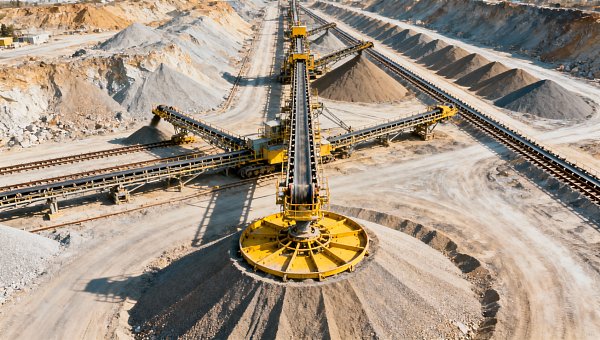
A mining stacker is a bulk-material handling machine designed to place ore, coal, concentrates, limestone, or other mined materials into a controlled stockpile. Its purpose may appear straightforward—move material from a conveyor and deposit it in a pile—but its influence extends far beyond storage. The way a stacker builds a pile affects material segregation, reclaim performance, blending quality, dust generation, available inventory, and ultimately the stability of crushing, screening, beneficiation, rail-loading, or port-export operations.
In large mining systems, stockpiles are not simply buffers between one process and another. They are working inventory systems. A poorly built pile can create grade fluctuations, moisture variation, oversized material zones, reclaim interruptions, and unnecessary wear in downstream equipment. A well-designed stacker mining system makes the stockpile more predictable, allowing the plant and logistics chain to operate with fewer avoidable disturbances.
Why stockpile consistency matters
Most mines face variation before material reaches the stockyard. Run-of-mine ore changes by bench, blast pattern, lithology, and moisture condition. Even where the mine plan is tightly controlled, feed quality can shift during a shift or across a campaign. Stockpiles provide a practical way to absorb some of that variation, but only if material is placed in a pattern that supports blending rather than amplifying differences.
Consider an iron ore operation receiving material from several crushers, or a copper concentrator handling ore from multiple pits. If each stream is dumped in isolated blocks, the reclaim system may encounter abrupt changes in grade, hardness, particle-size distribution, or moisture. This can destabilize mill throughput and recovery. The same principle applies at coal terminals, where inconsistent stacking can increase the risk of loading vessels with cargo outside contractual quality limits.
A stacker gives the operator control over where material lands, how the pile advances, and how layers are formed. This does not eliminate geological variation, but it can turn a series of discrete incoming batches into a more manageable and recoverable inventory.
The basic operating principle
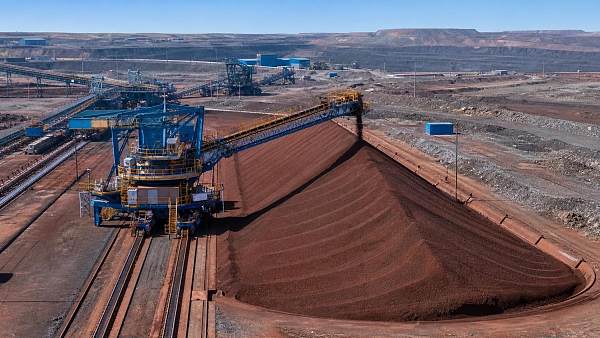
A typical stacker receives bulk material from a yard conveyor and transfers it along a boom conveyor. Material discharges from the boom head onto the stockpile. The machine’s movement—usually a combination of slewing, luffing, and travelling—determines the geometry of the pile.
- Slewing rotates the boom around the stacker’s central axis, sweeping material across an arc.
- Luffing raises or lowers the boom to control discharge height and suit the growing stockpile profile.
- Travelling moves the machine along rails or a designated track, allowing it to cover the length of a stockyard.
- Conveyor speed and feed rate determine the tonnage delivered and influence layer thickness and pile formation.
These motions are coordinated through the machine’s control system. On older yards, much of the pattern may be selected manually by the operator. Newer installations commonly use programmable stacking sequences, position feedback, laser or radar stockpile measurement, belt-scale information, and integration with plant control systems. Automation is valuable not because it makes the machine “smart” in isolation, but because it makes stacking patterns repeatable when the material stream and yard operating plan are known.
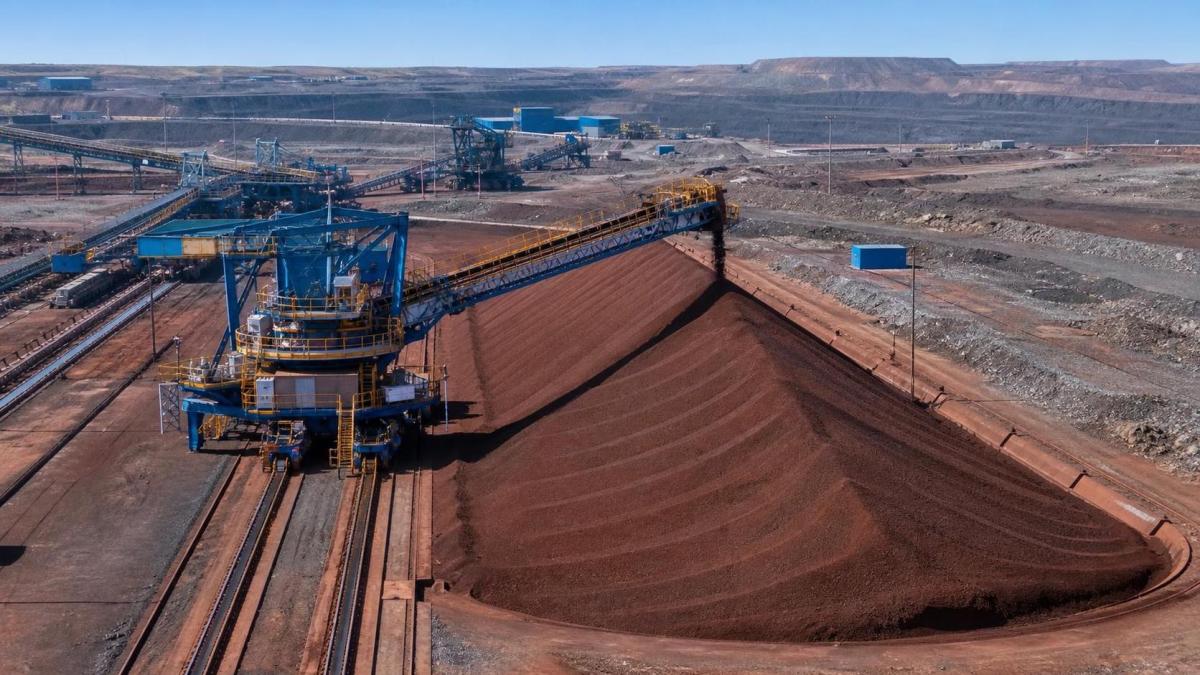
How a stacker builds a pile
Material discharged from the boom does not form a perfectly uniform layer. It flows down the pile face at its natural angle of repose. Coarser particles often roll farther than fines, while wet or sticky materials may cling to the pile surface and build more steeply. This is the central physical challenge of stockpiling: gravity naturally tends to sort material by particle size.
For this reason, a stacker is judged not only by its rated capacity in tonnes per hour, but also by the stacking method it can execute reliably. The most common approaches include cone shell stacking, chevron stacking, windrow stacking, and variations adapted to site geometry.
Cone shell stacking
In cone shell stacking, the stacker deposits material in a succession of cones or crescent-shaped shells. The boom slews over a defined arc while the pile gradually grows outward. This method is relatively simple and can suit operations where storage capacity and operational flexibility are more important than high-quality blending.
Its limitation is segregation. Each cone can retain internal size variation, with finer material closer to the discharge point and coarser material travelling down the slope. If reclaiming occurs unevenly or from a narrow area of the pile, that variation may pass directly into downstream processing.
Chevron stacking
Chevron stacking is widely associated with blending stockpiles. The stacker travels along the pile while depositing material in alternating layers, creating a longitudinal, chevron-like pattern when viewed from above. Reclaiming across the full face of the pile can then cut through many layers at once.
The advantage is that short-term feed variations are distributed through a larger stockpile volume. A reclaimer working across the pile face can recover portions of multiple layers simultaneously, producing a more consistent output than reclaiming individual cones. Chevron methods are especially relevant where feed chemistry, ash, sulfur, calorific value, or ore grade must remain within a relatively narrow operating range.
Chevron stacking is not automatically the best method in every case. It needs sufficient pile length, appropriate reclaimer geometry, stable material flow, and a reclaim method that actually traverses the pile as intended. Building a carefully layered chevron pile and then reclaiming from one side with uncontrolled loaders will not deliver its blending benefit.
Windrow and layered stacking
Windrow stacking places material in long, relatively narrow rows. Multiple rows are built side by side or in layers, depending on the machine’s travel path and stockyard arrangement. It can support blending when paired with a reclaiming method that cuts across the windrows. It may also offer practical advantages in yards with restricted space or specific pile-height limits.
The key point is that stockpile quality is created by the combined stacker-and-reclaimer system. The stacker creates a material pattern; the reclaimer must recover that pattern in a way that preserves the intended averaging effect.
Stacker configurations seen in mining and export terminals
The term “stacker” covers several machine arrangements. Their differences are important because yard geometry, material type, operating philosophy, and required capacity all shape the appropriate configuration.
Radial stackers rotate around a fixed pivot and are common in smaller facilities, quarries, and temporary or lower-complexity storage areas. They can create broad arc-shaped piles but generally have less coverage than a rail-mounted travelling machine.
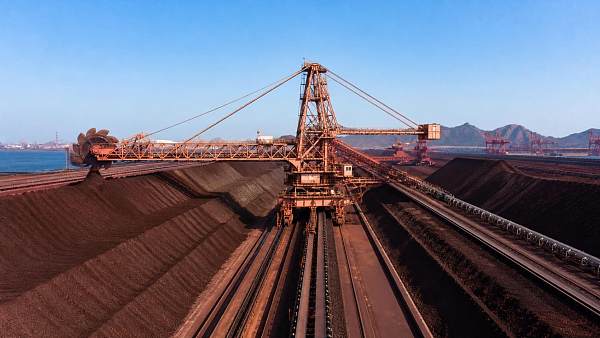
Travelling stackers move along the length of the stockpile, usually on rails. They are widely used in permanent mining, processing, and port facilities because they can build long piles with controlled placement patterns. Rail alignment, wheel loads, power supply arrangements, and machine travel limits become major design considerations.
Luffing stackers adjust boom elevation, allowing better control of discharge height as the pile rises. Lower drop heights can reduce dust and degradation, although there must still be enough clearance to avoid contact with the pile and accommodate operating tolerances.
Fixed stackers serve compact yards or specific transfer points. They may be appropriate where storage is secondary to simple surge capacity, but their limited placement flexibility can make consistent blending more difficult.
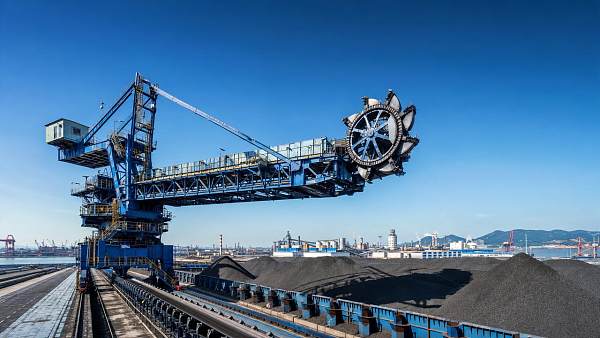
In larger integrated yards, the stacker may be combined with a bucket-wheel reclaimer, bridge scraper reclaimer, portal scraper, or circular storage system. The selection is less about choosing the most sophisticated machine and more about matching the equipment to the desired inventory strategy. A high-capacity stacker feeding a poorly matched reclaimer can create a bottleneck rather than solve one.
What determines stockpile quality in practice
Machine specifications alone do not guarantee a consistent stockpile. Several operating conditions often have equal or greater influence.
Material characteristics are fundamental. Particle size distribution, bulk density, moisture content, clay content, abrasiveness, angle of repose, and tendency to compact or stick all affect pile shape. Fine, dry concentrate behaves very differently from crushed hard rock, wet lateritic ore, or high-moisture coal. A stacking pattern that works for one material may cause carryback, chute blockage, excessive dust, or segregation in another.
Drop height is a frequent source of underperformance. Large drops can increase dust, particle breakage, belt wear, and segregation. Yet extremely low boom positions can raise collision risks and restrict movement. Effective operation depends on maintaining discharge height within the working envelope designed for the pile profile.
Feed continuity also matters. Frequent starts and stops create local overbuilding and inconsistent layers. Where possible, stacking plans should account for changes in upstream crusher availability, train unloading schedules, shift transitions, and material-source changes.
Stockyard discipline is often overlooked. If mobile equipment creates ad hoc access roads across the pile, if emergency dumping occurs without record, or if reclaim starts from an unintended area, the designed stacking sequence quickly loses value. The stockyard needs clear operating rules, accurate pile inventory, and communication between mine, plant, rail, and shipping functions.
Common misconceptions about stacker mining systems
One common misconception is that bigger stacking capacity always improves the yard. Rated capacity must be compatible with upstream conveyor capacity, transfer chute design, downstream reclaim rate, and the actual operating schedule. An oversized machine may run well below its design range while adding capital cost, structural complexity, and maintenance exposure.
Another is that automation automatically creates better blending. Automated control can execute defined patterns with high repeatability, but it cannot compensate for poor material characterization, a reclaim system with limited cross-section recovery, or inaccurate stockpile-level data. The process logic must reflect how material truly behaves on the pile.
It is also misleading to treat stockpile volume as fully usable capacity. Design volume may differ from recoverable working inventory because of safe standoff distances, pile slopes, reclaimer reach, dead zones, fire lanes, weather constraints, and the need to separate material grades or campaigns. The practical question is not simply how many tonnes fit in the yard, but how many tonnes can be stored, blended, and reclaimed without compromising operations.
Reliability and maintenance are part of the material-handling decision
Stackers operate in abrasive, dusty, high-duty environments. Their availability depends on more than the main drive. Conveyor idlers, pulleys, belt cleaners, chutes, slew bearings, bogies, rails, cable-reeling systems, lubrication points, limit switches, and structural steel all require attention.
Transfer points deserve particular scrutiny. Poor chute design can cause belt mistracking, blockages, dust escape, and accelerated liner wear. In high-abrasion ore applications, liner material selection and maintainable access are not minor engineering details; they directly affect shutdown duration and safety exposure.
Wind loading is another critical factor, especially in exposed coastal export terminals and elevated inland stockyards. Stackers require defined operating, parking, and storm conditions. Rail clamps, storm anchors, travel brakes, and wind-speed interlocks must be matched to site conditions and operating procedures. These requirements should be evaluated as part of the overall yard design rather than added as an afterthought.
Where the market is moving
Bulk-material handling is increasingly shaped by pressure to improve throughput without expanding physical footprints, reduce dust and spillage, and make inventory data more reliable. This is encouraging wider use of position sensors, online belt scales, stockpile scanning, condition monitoring, and integration between stacker controls and production-planning systems.
There is also greater attention to energy use and emissions around stockyards. Electrified conveyor-based systems can reduce dependence on diesel mobile equipment for routine material movement, although their benefit depends on power supply, site layout, maintenance capability, and utilization. Enclosures, dust suppression, improved chute engineering, and lower-drop stacking strategies are becoming more relevant where environmental permits and community expectations are stringent.
The enduring role of the mining stacker remains practical rather than technological for its own sake. It is the machine that converts a fluctuating material stream into usable inventory. When its travel path, stacking pattern, pile geometry, reclaim method, and operating controls are aligned, the stockpile becomes a stabilizing asset. When they are not, it becomes a hidden source of variability that downstream plants and logistics teams must continually absorb.
Recommended News
 Oct 15, 2026Mining Stackers: When to Use Radial vs. Traveling Designs for StockpilesCompare stacker mining designs: radial vs. traveling systems. Learn how stockpile geometry, reclaim needs, and lifecycle costs guide smarter equipment choices.
 Sep 07, 2026Stackers and Reclaimers: Key Selection Factors for High-Volume StockyardsStackers reclaimers selection guide for high-volume stockyards—optimize capacity, blending, reliability, automation, and lifecycle value.
 Sep 01, 2026Mining Stackers Explained: How They Build Consistent StockpilesStacker mining explained: discover how controlled stacking patterns improve stockpile consistency, blending, reclaim performance, and plant reliability.
 May 27, 2026Stacker Reclaimer OEM Selection: Key Risks in Custom Yard ProjectsStacker reclaimer OEM selection can make or break custom yard performance. Discover key risks, scenario-fit checks, and smart evaluation points before you shortlist suppliers.