Semiconductor Benchmarking: Metrics That Matter in 2026
In 2026, Semiconductor benchmarking has moved well beyond node labels, headline yield, or isolated speed claims. The more useful view is operational: how a device performs under thermal stress, how stable supply remains across geopolitical shifts, how predictable lifecycle cost becomes, and how quickly compliance evidence can be verified. That shift matters across the wider industrial economy, especially where mining, processing, automation, and heavy machinery now depend on advanced electronics as much as steel and hydraulics.
For platforms such as G-MRH, which connect resource development with industrial supply chains, Semiconductor benchmarking is increasingly tied to strategic decisions. Chips shape fleet electrification, sensor reliability, edge analytics, digital twins, motor drives, and safety systems. In other words, semiconductor quality now influences uptime, ESG alignment, and procurement resilience far beyond the semiconductor sector itself.
Why the benchmark has changed
A benchmark used five years ago often emphasized transistor density, wafer output, or nominal power efficiency. Those indicators still matter, but they no longer explain the full business risk.
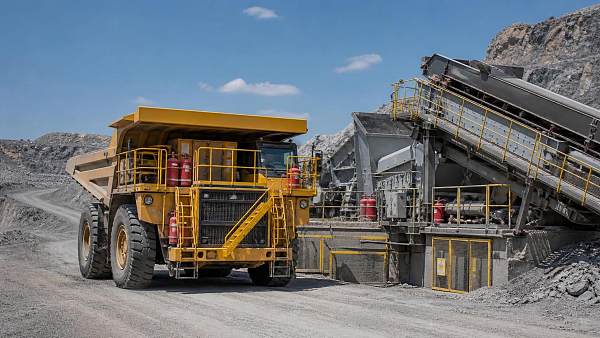
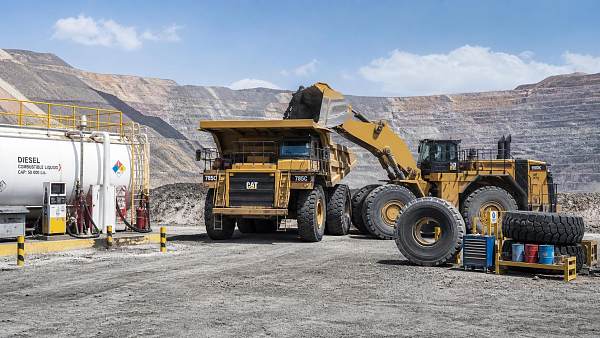
Industrial systems now operate in harsher and more interconnected conditions. Autonomous haul trucks, crushing control systems, battery management units, and remote telemetry nodes all rely on semiconductors that must survive vibration, dust, heat cycles, and long service intervals.
That is why Semiconductor benchmarking in 2026 is less about abstract superiority and more about fit-for-duty evidence. The best part is not always the fastest chip. It is often the one with the strongest balance of endurance, traceability, availability, and compliance readiness.
What Semiconductor benchmarking should actually measure
Useful evaluation starts with metrics that can be compared across vendors and interpreted in operational context. A narrow spec sheet review is rarely enough.
Performance stability under real load
Peak throughput can be misleading. What matters more is sustained behavior during long duty cycles, variable temperature, and fluctuating power conditions.
- Thermal derating behavior under continuous load
- Latency variance, not only average latency
- Error rates during vibration or electromagnetic interference
- Power efficiency across realistic duty cycles
In industrial electronics, a stable curve often carries more value than a high peak followed by throttling.
Reliability and field endurance
Reliability metrics show whether a component can survive the operating life expected in heavy industry, transport, and remote assets.
- Mean time between failures
- Failure in time rates at target temperatures
- Qualification against automotive or industrial grades
- Resistance to moisture, corrosion, and thermal shock
For mining and heavy-machinery environments, these figures directly influence maintenance intervals and replacement planning.
Supply-chain resilience
Semiconductor benchmarking now includes where parts are made, how many fabrication routes exist, and how exposed the vendor is to regional concentration risk.
A technically excellent chip can still become a weak choice if lead times are unstable or second-source options are absent. This is especially important where project schedules depend on synchronized delivery of drives, controllers, sensors, and communications modules.
Compliance and documentation quality
Regulatory alignment is no longer a paperwork issue at the end of procurement. It has become a screening metric at the start.
Documentation depth should cover material declarations, conflict minerals reporting, export controls, cybersecurity disclosures, and product change notices. In sectors tracked by G-MRH, this documentation supports equipment certification, ESG reporting, and cross-border sourcing decisions.
Key metrics that matter most in 2026
The table below highlights the benchmark categories that now carry the most practical weight.
These metrics give Semiconductor benchmarking a broader and more decision-ready structure. They turn a device comparison into a project-level assessment.
Where these metrics show up in industrial practice
The relevance becomes clearer when connected to actual equipment and infrastructure.
Electrified heavy equipment
Power semiconductors shape inverter efficiency, motor response, and thermal management. Benchmarking should focus on switching losses, temperature margins, and fault tolerance under repetitive high loads.
Autonomous and remote operations
Edge processors, memory, and communications chips support navigation, machine vision, and remote diagnostics. Here, Semiconductor benchmarking should assess deterministic latency, resilience to interference, and secure firmware support.
Processing plants and material handling
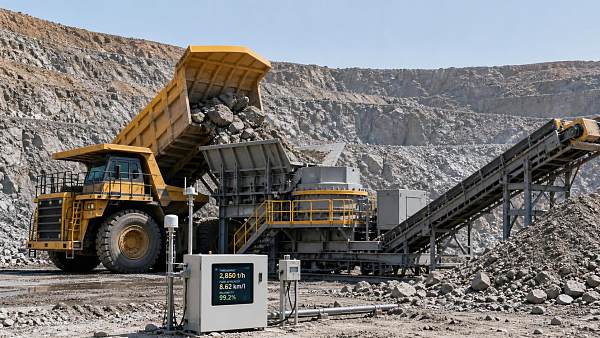
Controllers and sensor electronics operate continuously and often in contaminated conditions. Reliable semiconductors reduce nuisance shutdowns and protect process continuity.
This is where G-MRH’s wider benchmarking model becomes relevant. Equipment performance, lifecycle cost, and ESG readiness increasingly depend on component intelligence as much as on mechanical design.
How to interpret benchmark results without overreading them
One common mistake is treating all benchmark data as equivalent. Test conditions, package variants, cooling assumptions, and firmware settings can distort comparison.
- Check whether thermal and power results come from lab peaks or sustained operation
- Confirm if reliability figures reflect the intended ambient temperature range
- Review change-notice policies and end-of-life commitments
- Look for package-level, not only die-level, performance data
- Compare compliance evidence with project jurisdiction and reporting needs
A strong Semiconductor benchmarking process also separates critical and non-critical metrics. Not every application needs the most advanced node. Some need mature process stability, proven longevity, and easier replacement sourcing.
A practical framework for 2026 evaluations
A workable framework usually starts with system exposure, then narrows to component suitability.
Step one: map the operating environment
Document heat, dust, shock, duty cycle, maintenance interval, and network dependence. This prevents irrelevant benchmarks from driving the shortlist.
Step two: rank metric importance
Assign weight to reliability, efficiency, availability, cybersecurity support, and compliance traceability. The weighting should reflect project consequences, not marketing claims.
Step three: compare vendor evidence quality
Two vendors may publish similar numbers, yet only one may provide auditable test methods, supply continuity plans, and change management discipline.
Step four: translate metrics into lifecycle cost
The most useful Semiconductor benchmarking outcome is a lifecycle decision. Better thermal efficiency may reduce enclosure cost. Longer availability may avoid redesign. Better traceability may shorten audits.
What deserves closer attention next
The next round of benchmarking will likely put more weight on advanced packaging, security assurance, gallium nitride and silicon carbide maturity, and regional manufacturing diversification.
At the same time, the connection between semiconductors and critical minerals will grow more visible. That makes cross-sector intelligence increasingly useful. A chip benchmark is no longer isolated from resource strategy, trade policy, or decarbonization planning.
For a more grounded evaluation, the next step is to build a metric set around the actual operating scenario, test vendor claims against field conditions, and compare not only performance but resilience. That approach gives Semiconductor benchmarking lasting value, especially where industrial assets must perform reliably for years, not just impress on paper.
Recommended News
 Sep 10, 2026What Compliance Documents Should a Mining Equipment Supplier Provide?What documents should a mining equipment supplier provide for compliance proof? Explore essential certificates, safety records, testing evidence, and traceable documentation.
 Sep 07, 2026Do Mining Equipment Safety Standards Differ by Country?Do different countries use different standards for mining equipment safety? Explore ISO, MSHA, CE, ATEX, and local compliance rules before ordering equipment.
 Sep 05, 2026How Do You Calculate Total Cost of Ownership for Mining Machinery?How to calculate total cost of ownership for construction machinery in mining? Explore TCO factors, downtime, fuel, maintenance, and lifecycle savings.
 Sep 01, 2026How Reliable Are Mining Equipment Manufacturers’ Performance Claims?How reliable are performance claims from mining equipment manufacturers? Learn how to verify OEM data, benchmark reliability, and turn claims into measurable commitments.