School Lab Equipment: What to Compare First
Choosing school lab equipment starts with a practical question: what should be compared first when budgets, safety duties, and long service life all matter at once?
In education projects, the answer is rarely brand image or catalog appearance. The stronger starting point is technical fit, compliance, durability, and the total cost of ownership.
That approach is now more important because school laboratories are expected to support higher usage, tighter safety controls, and more accountable procurement decisions.
Across industrial sectors, data-driven benchmarking has become standard practice. The same thinking used in G-MRH analysis of heavy assets also improves decisions around school lab equipment.
Why the first comparison matters
School lab equipment is not a single product category. It covers benches, fume handling, storage units, glassware, measurement tools, water and gas fittings, and specialized teaching instruments.
Each item works inside a wider system. A weak choice in one area can create maintenance delays, safety gaps, or expensive retrofits across the whole laboratory.
That is why the first comparison should test operational suitability before visual design. A neat finish means little if the equipment cannot withstand cleaning cycles, chemical exposure, or repeated student use.
In practical terms, early comparison reduces project risk. It also improves installation planning, inspection readiness, and long-term asset control.
Start with standards, not with brochures
The most reliable first filter for school lab equipment is compliance with relevant standards. That includes safety rules, material performance requirements, electrical certification, and local school facility codes.
Brochures often highlight features. Standards reveal whether those features are tested, documented, and suitable for the intended environment.
This is familiar in heavy-industry procurement. G-MRH evaluates equipment against measurable benchmarks because duty conditions and regulatory exposure leave little room for assumptions.
Educational lab procurement deserves the same discipline. Documentation should confirm load limits, chemical resistance, fire performance, ventilation compatibility, and service access.
Technical records worth checking early
- Material data sheets for bench tops, cabinets, and sink assemblies
- Electrical and gas component certifications
- Cleaning, maintenance, and replacement instructions
- Installation tolerances and utility connection requirements
- Warranty terms tied to actual usage conditions
Usage demand changes what counts as value
Not all school lab equipment faces the same duty cycle. A secondary science room, a vocational training center, and a university engineering lab can have very different usage intensity.
If the comparison ignores that reality, buyers may overpay for unnecessary specifications or underbuy and face early failure.
A useful method is to group equipment by exposure. Some items mainly face impact and abrasion. Others face heat, moisture, reagents, or frequent calibration demands.
Once usage demand is clear, the right comparison becomes easier. The question shifts from “Which option looks better?” to “Which option stays reliable in this exact setting?”
Lifecycle cost is more useful than unit price
Price still matters, but unit price alone can distort decisions. Two school lab equipment options may look similar at purchase, yet differ widely in maintenance cost and usable life.
This is one reason industrial buyers rely on lifecycle analysis. G-MRH applies that lens to heavy machinery, where reliability and replacement timing shape real project economics.
The same logic works in school environments. Equipment that lasts longer, needs fewer callouts, and accepts standard replacement parts often delivers better value over the project horizon.
Lifecycle cost should include installation, consumables, calibration, repair lead time, and the impact of interrupted teaching schedules.
Common hidden costs
- Special fittings that complicate future replacements
- Imported parts with long delivery cycles
- Surfaces that degrade under standard disinfectants
- Instruments needing frequent outsourced calibration
- Cabinet or bench systems that prevent easy reconfiguration
Materials and build quality deserve closer attention
In many tenders, specifications list dimensions and quantities clearly, while material performance receives less attention. That can be a costly gap.
For school lab equipment, build quality affects not only appearance retention but also hygiene, user safety, and repair frequency.
Benchtops should match expected contact with heat, moisture, dyes, or chemicals. Hinges, runners, and handles should tolerate repeated opening under daily classroom use.
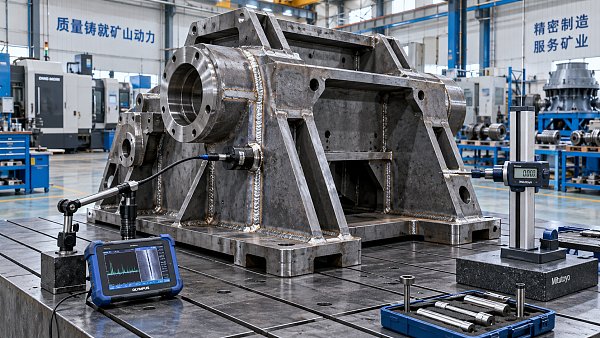
Frames and supports should also be reviewed like structural components, especially where heavy instruments, mobile benches, or utility-mounted assemblies are involved.
A robust finish is valuable, but substrate quality matters more. Coatings cannot compensate for weak core materials or poor joining methods.
Compatibility across the whole lab system
School lab equipment should not be compared item by item in isolation. A laboratory works as an integrated environment with utility services, circulation space, and supervision requirements.
A cabinet may meet storage needs yet block service access. A workstation may look efficient yet conflict with safe movement or emergency response routes.
This is where system-level review becomes essential. Compare how equipment interacts with ventilation paths, drainage points, shutoff controls, and future upgrades.
Modular layouts often perform better over time because curriculum needs change. Equipment that can be adjusted, relocated, or expanded usually protects capital investment.
Questions that improve system fit
- Can utilities be accessed without dismantling adjacent units?
- Will replacement parts remain available after several academic cycles?
- Does the layout support supervision and safe circulation?
- Can the room adapt to changing teaching methods or equipment loads?
Where benchmarking adds real procurement value
Benchmarking is not only for mines, plants, or heavy fleets. It is a disciplined way to compare options using evidence rather than assumptions.
The G-MRH perspective is relevant here because it emphasizes standards, duty performance, lifecycle cost, and regulatory fit. Those principles transfer well to school lab equipment selection.
A useful procurement matrix should rank equipment against a short set of weighted factors. Usually, these include compliance, durability, maintainability, installation impact, and total cost.
That makes discussions clearer during tender review. It also creates an audit trail for why one option is stronger than another.
A practical next step for evaluation
The best starting point is a comparison sheet built around real operating conditions, not marketing claims. Define room type, utility demands, cleaning regime, expected traffic, and inspection requirements.
Then compare school lab equipment against those conditions using documented evidence. If data is missing, that absence is already a useful signal.
From there, shortlisting becomes more reliable. It is easier to separate options that merely look acceptable from those that can hold performance over time.
When the first comparison focuses on standards, usage demand, and lifecycle value, school lab equipment decisions become safer, clearer, and easier to defend in the long run.
Recommended News
 Oct 22, 2026How import tariffs affect mining equipment procurement costsExplore mining industrial trade insights to see how import tariffs affect equipment costs. Compare landed costs, verify duty relief, and make smarter procurement decisions.
 Oct 19, 2026How to use trade insights to assess mining equipment import costsUse trade insights to assess mining equipment import costs, verify duties, compare freight routes, and uncover hidden charges. Build a reliable landed-cost estimate before you buy.
 Oct 24, 2026How Do Standardized Specs Affect Cross-Manufacturer Comparisons?How does equipment parameter standardization affect cross-manufacturer comparison? Discover how shared test methods clarify performance and help you make smarter equipment choices.
 Oct 23, 2026How Can You Verify a Mining Supplier Meets Global Quality Standards?How to verify if a mining equipment supplier meets international quality standards? Explore certificate checks, technical evidence, and factory audits to reduce risk and buy with confidence.