How Culture Shapes Global Business Decisions in 2026
In 2026, culture shapes global business decisions with a force that is visible in contract terms, supplier screening, compliance design, and investment timing. In mining, resources, and heavy machinery, that influence is especially clear because projects are capital intensive, politically exposed, and operationally long-lived. A technically strong proposal may still lose ground if it misreads local negotiation norms, reporting expectations, or the meaning of trust in a specific market.
That is why culture now sits beside engineering, pricing, and regulation as a practical decision variable. It affects how risk is discussed, how evidence is accepted, and how partners respond to delays, audits, and ESG commitments. For market analysis across critical minerals, infrastructure equipment, and industrial supply chains, cultural context often explains the gap between what a tender states and what a project actually rewards.
Culture is now part of commercial due diligence
Culture in business is not limited to etiquette or communication style. It includes shared assumptions about authority, accountability, speed, acceptable risk, and the balance between written rules and relationship-based judgment.
In 2026, those assumptions affect procurement and project delivery as directly as freight rates or exchange movements. A buyer may prioritize lifecycle transparency, while another values proven field relationships before technical innovation. Both decisions are rational within their own cultural and institutional setting.
This matters in cross-border industrial trade because large mining and heavy-equipment transactions rarely depend on one decision point. They move through technical committees, legal review, safety teams, local affiliates, financiers, and often government-linked stakeholders. Culture shapes how each layer interprets confidence and credibility.
Why the issue is sharper in mining, resources, and heavy machinery
Resource development sits at the intersection of geology, logistics, regulation, labor, community expectations, and national policy. Heavy machinery enters that system as both a technical asset and a strategic commitment.
An autonomous haul truck, a crushing plant, or a zero-emission fleet is never evaluated only on specification sheets. Decision makers also judge whether the supplier understands local safety culture, maintenance discipline, data governance, and workforce adaptation.
This is where intelligence platforms such as G-MRH become relevant. Benchmarking against ISO, AS/NZS, Mine Safety Acts, duty-cycle performance, and lifecycle cost is essential, but culture helps explain how those benchmarks are prioritized in different regions.
A market focused on resilience may favor proven uptime over aggressive innovation. Another may reward decarbonization leadership if policy pressure, export positioning, and financing conditions align. Culture turns the same technical dataset into different business choices.
Where culture changes decisions in practice
Procurement criteria
In some markets, formal compliance evidence dominates early-stage selection. In others, operational references and established field presence carry equal weight. Culture influences whether trust begins with documents, reputation, or repeated performance.
Partnership structure
Joint ventures, service agreements, and dealer networks depend on different expectations around control and decision rights. A culturally misaligned structure can create friction even when the economics appear strong.
Compliance and ESG
Culture affects how organizations interpret ESG beyond published policy. In one setting, environmental reporting may be a strategic identity issue. In another, social license and labor stability may define the real threshold of legitimacy.
Investment pacing
Some business cultures accept phased deployment and pilot testing before scale. Others prefer full commitment once approval is granted. This difference changes capital planning, warranty design, and rollout expectations.
Signals that matter in 2026
Several shifts make cultural analysis more important this year. The first is supply chain regionalization. Strategic minerals and critical equipment now move through politically sensitive channels, which increases attention to local alignment and trusted operating models.
The second is the rise of green mining and digital twins. These technologies change not only equipment design, but also decision culture around data sharing, cybersecurity, operator autonomy, and maintenance ownership.
The third is stricter ESG scrutiny. Companies may publish similar commitments, yet their internal culture determines whether ESG is treated as a board-level discipline, a reporting exercise, or a license-to-operate requirement tied to communities and lenders.
The fourth is commodity volatility. When copper, iron ore, or battery minerals swing sharply, business culture influences whether firms preserve optionality, accelerate procurement, or delay commitments until market visibility improves.
How to read culture without reducing it to stereotypes
Useful cultural analysis is evidence-based. It does not rely on clichés about countries or regions. It looks at actual behavior in contracts, approvals, maintenance planning, community engagement, and dispute handling.
A practical approach combines technical data with institutional signals. Tender language, bid clarifications, audit frequency, incident reporting norms, localization rules, and after-sales expectations often reveal the operating culture behind a project.
G-MRH-style benchmarking is valuable here because it connects hard metrics with commercial context. Reliability curves, duty-cycle performance, and lifecycle cost analysis become more meaningful when read alongside local standards adoption and market behavior.
- Check whether decisions are driven by central headquarters or site-level authority.
- Compare stated compliance priorities with actual enforcement patterns.
- Review how service responsiveness is valued against upfront pricing.
- Look for cultural fit in reporting cadence, escalation style, and warranty expectations.
- Assess whether decarbonization goals are symbolic, funded, or operationalized.
Typical scenarios across the industrial chain
Open-pit and underground mining
Safety culture is often decisive. Two sites may buy similar equipment, yet demand different training depth, maintenance routines, and operator interfaces because their tolerance for procedural deviation is not the same.
Mineral processing and metallurgy
Process plants require disciplined coordination. Culture affects whether teams prioritize stability, incremental optimization, or aggressive throughput gains. That, in turn, changes how equipment upgrades are evaluated.
Heavy earthmoving and construction
Fleet utilization models vary widely. Some markets emphasize ownership control and long service life. Others favor outsourced support, flexible financing, and rapid replacement cycles.
Bulk material handling and decarbonization projects
Here, culture often shapes cross-functional coordination. Mechanical performance, energy efficiency, and emissions targets must align with procurement, operations, and policy expectations at the same time.
Turning cultural insight into better decisions
The most effective use of culture is not symbolic awareness. It is structured comparison. Decision quality improves when cultural factors are mapped beside engineering data, legal requirements, and commercial risk.
That means building a review framework for each target market. Include technical standards, procurement behavior, ESG enforcement, service expectations, financing preferences, and local partnership patterns. Culture becomes actionable when it is translated into observable indicators.
It also helps to separate non-negotiable standards from adaptable practices. Safety thresholds, audit integrity, and core compliance should remain fixed. Communication format, rollout pacing, and stakeholder engagement can often be adjusted without weakening control.
In 2026, the strongest global business decisions come from this balance. They respect cultural reality without abandoning technical rigor. They recognize that high-value industrial trade depends not only on what equipment can do, but also on how institutions decide to trust, verify, and commit.
A useful next step is to review one target region through both lenses at once: benchmark the asset, then benchmark the decision culture around it. That approach usually reveals more than price comparisons alone, especially in markets where regulation, ESG, and project execution are moving quickly.
Recommended News
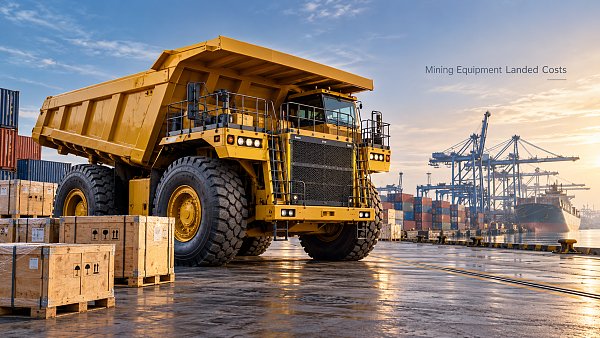
 Oct 22, 2026How import tariffs affect mining equipment procurement costsExplore mining industrial trade insights to see how import tariffs affect equipment costs. Compare landed costs, verify duty relief, and make smarter procurement decisions.
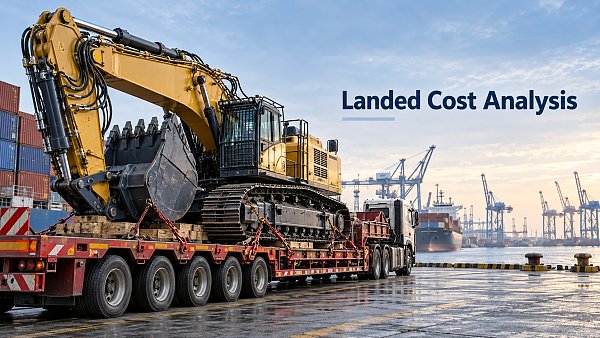
 Oct 19, 2026How to use trade insights to assess mining equipment import costsUse trade insights to assess mining equipment import costs, verify duties, compare freight routes, and uncover hidden charges. Build a reliable landed-cost estimate before you buy.
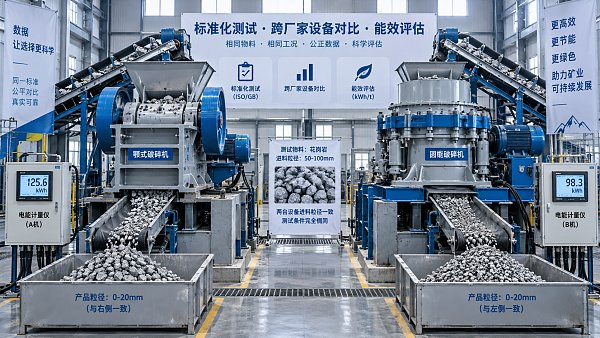
 Oct 24, 2026How Do Standardized Specs Affect Cross-Manufacturer Comparisons?How does equipment parameter standardization affect cross-manufacturer comparison? Discover how shared test methods clarify performance and help you make smarter equipment choices.
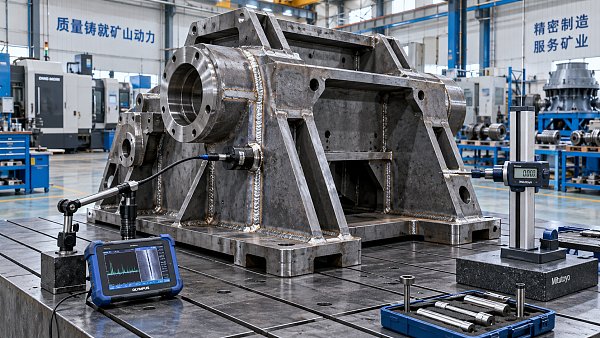
 Oct 23, 2026How Can You Verify a Mining Supplier Meets Global Quality Standards?How to verify if a mining equipment supplier meets international quality standards? Explore certificate checks, technical evidence, and factory audits to reduce risk and buy with confidence.